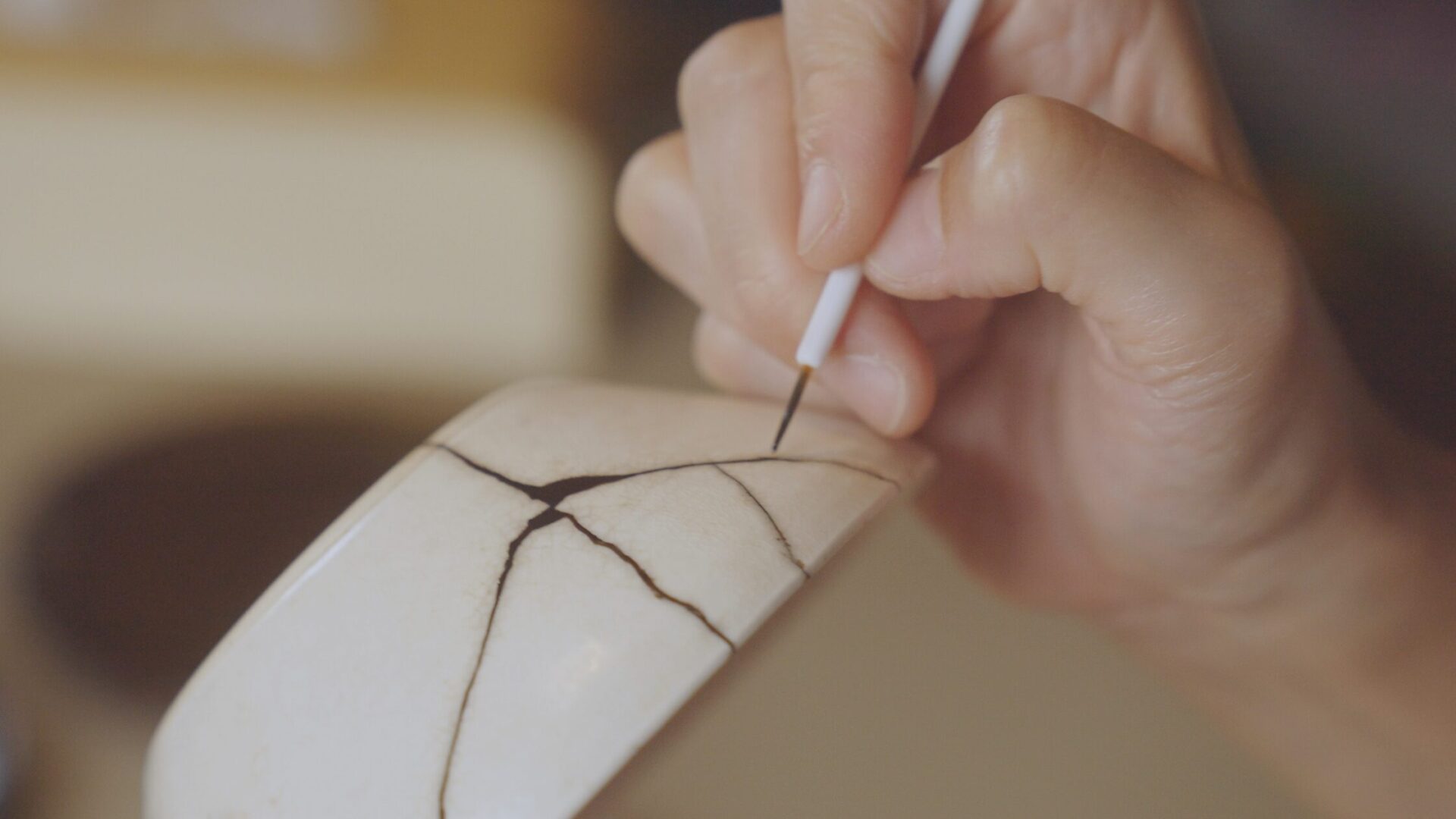

There is something quietly radical about kintsugi. Instead of throwing away a broken bowl, you fill its cracks with lacquer and dust them with gold. The repaired lines don’t disappear — they become part of the object’s story. In Japanese, this approach reflects ideas like mottainai (the regret of wasting something that still has value) and wabi-sabi (finding beauty in imperfection and impermanence). It is also, in the most practical sense, the opposite of disposable culture.
For travelers visiting Japan with an interest in both traditional craft and sustainable living, a kintsugi workshop is one of the most meaningful hands-on experiences available. This guide covers 8 studios and workshops in and around Tokyo where you can try it yourself — ranging from single-day beginner sessions to ongoing classes using traditional lacquer.
All information in this guide is based on official website content verified as of June 2026. Prices, schedules, and availability change, so please confirm directly with each studio before booking.
Related article: What Is Kintsugi? The Japanese Art of Repair and the Philosophy of Embracing Imperfection
What to Know Before You Go
Kintsugi workshops in Tokyo generally fall into two categories.
Traditional kintsugi uses hon-urushi (natural lacquer harvested from lacquer trees). It is durable, food-safe after full curing, and the technique used for centuries in Japan. Because natural lacquer takes time to harden, traditional kintsugi requires multiple sessions — you won’t finish in a single afternoon. There is also a small risk of skin irritation (urushi dermatitis) for some people.
Simplified kintsugi (sometimes called modern or craft kintsugi) uses synthetic adhesives and putty in place of natural lacquer, allowing you to complete and take home your piece in one session. The finish looks similar, but the materials, durability, and food-safety status vary by studio.
A note on food safety: Japan’s food sanitation positive-list system was fully enforced in June 2025, meaning not all synthetic materials used in simplified kintsugi automatically qualify for food-contact use. Where relevant, each entry below notes what the studio states about food safety — but always confirm details directly with the studio before assuming your repaired piece is safe to use as a dinner plate.
How We Selected These Studios
The 8 studios in this guide were selected based on the following criteria, verified through official sources.
- Information available and up to date on official websites
- Clearly stated technique (traditional lacquer vs. simplified/synthetic)
- Option to bring your own broken piece
- Open to beginners and first-time participants
- Verifiable background of the instructor or studio
- Whether repaired pieces can be used as functional tableware
Kogei Studio Circolo — Todoroki, Setagaya
Location: 7-minute walk from Todoroki Station (Tokyu Oimachi Line)
Todoroki is one of the few places in Tokyo where you can walk through a forested ravine within the city. The studio sits a short walk from it, in a quiet residential neighborhood. Kogei Studio Circolo offers a one-day kintsugi workshop listed on its official website, using an approach they call urushi kintsugi (the studio’s own term). Synthetic materials are used for bonding and filling — chosen for food-safety compliance, according to the studio — while natural lacquer is applied in the finishing stage. You can take your piece home the same day.
The session runs 90 minutes, with approximately 50 minutes of hands-on work. Classes are held on Tuesdays, Fridays, and Sundays, though schedules change, so check the website for current availability. Participants must be 18 or older. You can bring a broken ceramic or porcelain piece (chips, cracks, or broken fragments), or purchase one at the studio from 330 yen. Upgrading to pure gold or pure silver powder is available for an additional fee.
Because natural lacquer is used in the final step, there is a minor risk of skin irritation. Wearing long sleeves is recommended.
A multi-session membership course using traditional lacquer is also available for those who want to go deeper.
Details
 Rakuten Travel Experience
Kintsugi Kurashi — Jiyugaoka

Location: 4-minute walk from Jiyugaoka Station (Tokyu Toyoko / Oimachi Lines) — main location
Kintsugi Kurashi is one of the few studios in Tokyo that explicitly states its materials comply with Japan’s food sanitation positive-list regulations, meaning repaired pieces can be used as everyday tableware. That is a meaningful distinction in a landscape where many simplified kintsugi workshops cannot make the same claim.
The one-day workshop runs 2 to 2.5 hours and uses simplified kintsugi techniques. You bring your own piece, or purchase one at the studio. Same-day pickup is included. A multi-session course using traditional hon-urushi lacquer is also available for those interested in going further.
Details
Jalan Experience
Teshigotoya Kyuka — Suginami
Location: Narita-higashi, Suginami (nearest station listed on official website)
This small workshop is run by ceramic artist Yoshiichiro Kyuka, who has been teaching pottery and ceramic repair for 35 years. The one-day session (2 hours) uses synthetic materials for a simplified kintsugi experience, with same-day pickup. You can bring your own ceramic or porcelain piece — glass and lacquerware are not accepted. If you don’t have a broken piece to bring, the studio can provide one.
What makes Teshigotoya Kyuka notable is its flexibility. Beyond the single-day introduction, participants can return for 3 to 4 additional sessions to learn the full traditional process: sanding broken edges, applying substitute lacquer, and dusting with gold powder. It is one of the few studios that naturally bridges beginner experience and genuine craft study.
Groups of two or more are welcome, as is solo attendance.
Details
Uzumako Ceramic Art School — Shiba Koen, Minato
Location: Near Shiba-koen Station (Toei Mita Line) or Tamachi Station (JR)
For travelers who want to experience hon-urushi — real traditional lacquer — this is one of the few studios in Tokyo where that is possible through a pre-bookable program. The three-session course (5 hours total: 2 hours / 2 hours / 1 hour) walks participants through repairing a small sake cup: filling the chip with traditional lacquer paste, applying lacquer coats, and finishing with gold powder (typically brass or tin).
Instruction is led by a graduate of Tokyo University of the Arts (Tokyo Geidai), majoring in lacquer arts. The multi-session format is necessary because traditional lacquer requires time to cure between coats — it cannot be compressed into a single afternoon. Maximum 4 participants per session.
Natural lacquer can cause skin irritation in some people. The studio will advise on precautions before the session.
Details
Rakuten Travel Experience
KINTSUGI ENYA — Higashi-Kitazawa, Setagaya
Location: 3-minute walk from Higashi-Kitazawa Station (Odakyu Line) — note: the studio relocated in September 2025; confirm current address on the official website
KINTSUGI ENYA has a clear, consistent position: traditional lacquer only, no synthetic substitutes. The studio uses 100% natural hon-urushi in every session. It was founded in 2017 by lacquer artist Hikoko Endo, who trained under Shigeki Kudo at Studio On.
Classes run on Thursdays (morning and afternoon sessions) and on the first and third Saturdays of each month (morning), though schedules vary — check the website for current availability. Because traditional lacquer is used, finished pieces cannot be taken home after a single session; most participants complete their work over approximately four visits, depending on the condition of the piece.
Class fees include materials. Repair tools are not included but can be purchased at the studio (a basic set starts at around 3,000 yen). Booking is done directly through the official website — no third-party platform is involved.
If you are in Tokyo for more than a few days and want to work with genuine traditional lacquer in an intimate setting, this is one of the most straightforward options available.
Details
Matsuda Yoshimoto Maki-e & Kintsugi Studio — Tsukiji, Chuo
Location: 2-minute walk from Tsukiji Station, Exit 4 (Tokyo Metro Hibiya Line)
This studio is run by Yoshimoto Matsuda, a maki-e artist (a specialist in the Japanese craft of decorating lacquerware with powdered gold and silver) and recipient of the Minister of Agriculture, Forestry and Fisheries Award at the national lacquerware exhibition. He has exhibited work internationally.
The curriculum covers both hon-urushi and kanshitsu (a simplified lacquer technique), structured across 8 sessions. After completing the foundation, participants can continue into more advanced work including kintsugi on glass and maki-boke (gradated gold application). Two class types are available: the Yoshimoto Class, taught directly by Matsuda (11,000 yen per 2-hour session, or 33,000 yen for a 3-session ticket), and the Tsuchiya Class with an experienced instructor (7,700 yen per session, or 23,100 yen for 3 sessions). An enrollment fee and basic materials cost are required at the start.
This is not a drop-in workshop. It is designed for people who want to learn kintsugi as a lasting craft skill, with room to develop at their own pace over multiple sessions.
Details
Modern Kintsugi (Glue Repair) — Yokohama Hatoba Kaikan, Naka Ward

Location: Near Nihon-odori Station (Minatomirai Line), Yokohama — waterfront area near Osanbashi Pier
This workshop is held inside the historic Hatoba Kaikan (Pier Hall), a building that has stood near Yokohama Port since the early 20th century. The setting alone makes it worth mentioning for travelers passing through Yokohama.
The technique used here — called glue kintsugi — is built around a material called wGlue, described by the studio as mineral-based and food-contact safe, curing within 24 hours to a finish the studio says is dishwasher-compatible. This is a studio-side claim, not a public certification, so treat it as a starting point for your own inquiry. That said, it is one of the more explicitly stated food-safety positions among simplified kintsugi offerings in the area.
At 3,500 yen and up, it is among the most affordable kintsugi experiences in the Tokyo-Yokohama area. You must bring your own broken piece (one piece per person, up to two adhesion points). Sessions run mainly on Thursdays and Fridays.
The same instructor also teaches at Yomiuri Culture Center Yokohama, which adds scheduling flexibility.
Details
Jalan Experience
Heavenly by Lani & Kai Mood — Kugenuma-kaigan, Fujisawa

Location: 5-minute walk from Kugenuma-kaigan Station (Odakyu Enoshima Line)
If you are spending time in the Shonan area — Enoshima, Kamakura, or the beach towns of Fujisawa — this workshop offers a way to add something hands-on to the day. Heavenly is primarily a candle and aromatherapy atelier; the kintsugi workshop runs alongside those offerings, in a space close to the Pacific coast.
The session runs 1.5 to 2 hours. You can bring your own broken piece or choose from pieces available at the studio. Synthetic hobby-grade materials are used, so finished pieces are intended as decorative objects rather than functional tableware. Groups of up to 8 are welcome, and solo attendance is fine.
Before booking specifically for kintsugi, confirm with the studio that the kintsugi program is currently active — their primary offerings rotate.
Details
Jalan Experience
A Note on Language
Most kintsugi studios in Tokyo do not advertise English-language instruction. Some instructors speak conversational English; others do not. If language support matters to you, it is worth contacting studios in advance to ask. Several studios — particularly those with internationally-minded programming — have experience guiding participants through the process without verbal explanation alone, since much of kintsugi is demonstrated visually.
Choosing Your Experience
If you have one afternoon: Kogei Studio Circolo (Todoroki), Kintsugi Kurashi (Jiyugaoka), or Teshigotoya Kyuka (Suginami) all offer two-hour simplified sessions with same-day pickup. For Yokohama, Modern Kintsugi at Hatoba Kaikan is the most affordable entry point.
If you have multiple days: KINTSUGI ENYA and Uzumako Ceramic Art School are the clearest options for working with traditional lacquer across several sessions. Matsuda Yoshimoto’s studio suits those who want to learn kintsugi as a sustained craft practice.
If food safety matters: Kintsugi Kurashi explicitly states its materials comply with Japan’s food sanitation regulations. Kogei Studio Circolo and Modern Kintsugi both note food-safety considerations for their materials. Studios using traditional hon-urushi — KINTSUGI ENYA, Uzumako, and Matsuda Yoshimoto — work with a material that has been used on food vessels in Japan for centuries, though specific conditions (full curing, avoiding microwaves and dishwashers) apply.
If you are in Shonan/Kamakura: Heavenly in Kugenuma-kaigan is the most convenient option for combining kintsugi with a beach or coastal day.
Summary
Kintsugi is sometimes described as a philosophy, but it is also just a way of repairing things so they can keep being used. A cracked bowl does not have to become landfill. The gold lines are not cosmetic — they are structural, and they make visible what happened.
Whether you spend one afternoon pressing gold powder into a chipped teacup, or return over several weeks to learn the full traditional process, the experience tends to stay with you. We think it is worth trying.
The right studio depends on where you are in Tokyo, how much time you have, and what draws you to kintsugi in the first place. The eight places above are a good place to start.