
If you’re planning a trip to Ehime and searching for a “sustainable hotel in Japan,” you’ve probably noticed the term gets used loosely. Some properties hold real third-party certifications. Others simply use the word “eco-friendly” in their marketing without much behind it.
This guide only includes hotels and ryokan where we could verify specific sustainability practices directly on the official website or in the operating company’s own press releases — not from travel blogs, aggregator sites, or AI-generated summaries. Where a claim couldn’t be confirmed at the source, we’ve left it out or flagged it as unverified.
We’re not ranking these 11 properties from “best” to “worst.” Sustainability means different things depending on what you care about — carbon-neutral architecture, plastic reduction, historic preservation, or local sourcing. Use this as a reference to figure out what matters to you, not a checklist to complete.
How we chose these hotels
We looked for properties in Ehime Prefecture that could show at least one of the following, confirmed on an official source:
- Third-party certification or public recognition — for example, ZEB (Net Zero Energy Building) status, Japan’s “Eco-First Company” environmental designation, or inclusion in the “Sustainable Destinations Top 100” list
- Transparent disclosure — a published sustainability policy or specific targets, not just the word “eco” in a room description
- Concrete environmental measures — energy efficiency, water conservation, waste reduction, or plastic-reduction programs
- Ties to the local community — sourcing food regionally, working with local craftspeople, or preserving historic buildings
A hotel not appearing on this list doesn’t mean it has no sustainability practices — it means we couldn’t confirm specifics on an official source as of this writing (July 2026).
The 11 hotels
1. Hotel Kowakuen Haruka


Location | Dogo Onsen district, Matsuyama City
About the property
Operated by the Kowakuen Group, which got its start as a restaurant in Dogo Onsen not long after World War II.
Sustainability, according to the hotel itself
The hotel holds Ehime Prefecture’s first ZEB Ready rating — a Japanese government energy-efficiency designation — according to its own SDGs page. The operator states that the building’s design cuts primary energy use by 61% compared to conventional construction. (ZEB has several tiers — Ready, Nearly ZEB, ZEB, and ZEB Oriented — and this property holds the Ready tier, not the top tier.)
Hot water is supplied through a solar thermal collection system paired with heat pumps, with no fossil-fuel boiler on site. According to the hotel’s own announcement, in March 2024 the property added rooftop/retaining-wall solar panels totaling about 65kW, plus two 9.5kW battery units, as part of its commitment to Japan’s “RE Action” renewable energy pledge.
Other confirmed details: water-soluble toothbrushes made with 70% rice content, paper straws, menus featuring Ehime-grown ingredients (Taiichiro sea bream, citrus-fed yellowtail, and more), and step-free wheelchair access to Dogo Onsen Honkan. The operating company received Japan’s Ministry of the Environment “Climate Change Action Award” in fiscal year 2022.
One detail worth noting for transparency’s sake: the hotel notes on its own site that on-site solar generation currently covers only about 0.3% of the hotel’s lighting electricity. We appreciate that they didn’t inflate this number.


Who this is for
Travelers interested in net-zero building design, or anyone who needs step-free access to Dogo Onsen Honkan.
Worth knowing before you book
On-site renewable energy generation is still a small share of total usage. Some energy-cost figures circulating online for this hotel could not be confirmed on the official site.
Book

2. Dogo Miyu


Location | Dogo Onsen district (landscape-preservation zone), Matsuyama City
About the property
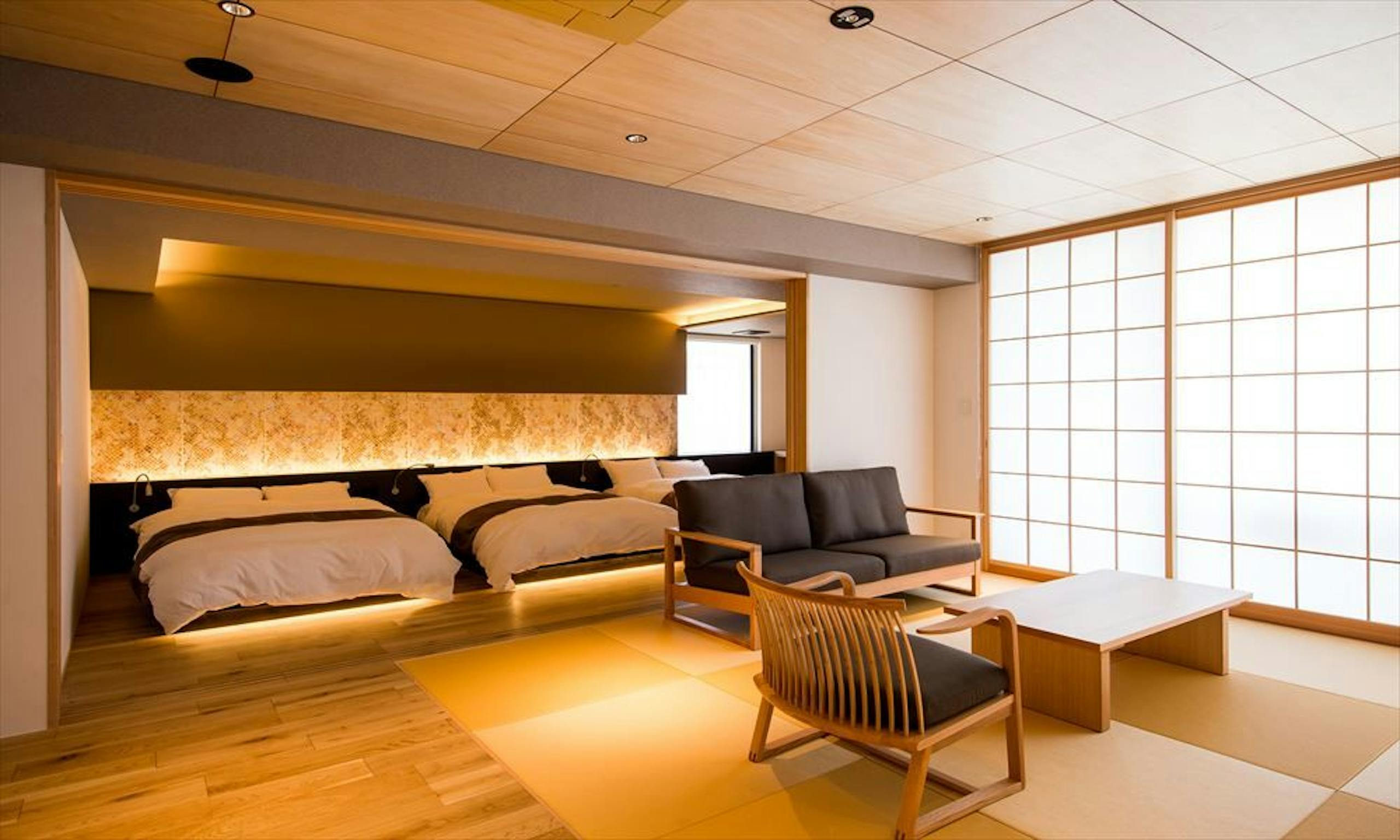
Operated by the Hosou Hotel Group, this ryokan sits inside a designated landscape-preservation zone within Dogo Onsen.
Sustainability, according to the hotel itself
The building’s contribution to Matsuyama’s streetscape earned it the “Kirameki Grand Prize” in the city’s 11th Matsuyama Landscape Awards, per the hotel’s SDGs page. Rooms with private open-air baths use individual climate control and card-key access systems, and rooftop solar panels support the building’s power use. All toilets use water-saving washlets, and showers use ultra-fine bubble heads to reduce water consumption.
The hotel states that most ingredients served come from Ehime or elsewhere in Shikoku. Dining is fully reservation-based, which lets the kitchen collect allergy and dietary information in advance and reduce over-preparation and food waste. Some dinner menus include local wild-game dishes, which the hotel states are sourced through regional programs aimed at controlling wildlife damage. The hotel is a “Platinum Supporter” of the ongoing preservation and restoration work at Dogo Onsen Honkan, one of Japan’s oldest public bathhouses.

Who this is for
Travelers who want to see hot-spring resource management paired with reservation-based food waste reduction.
Worth knowing before you book
We found no public reporting of quantitative KPIs like total CO2 or waste output.
Book

3. ITOMACHI HOTEL 0
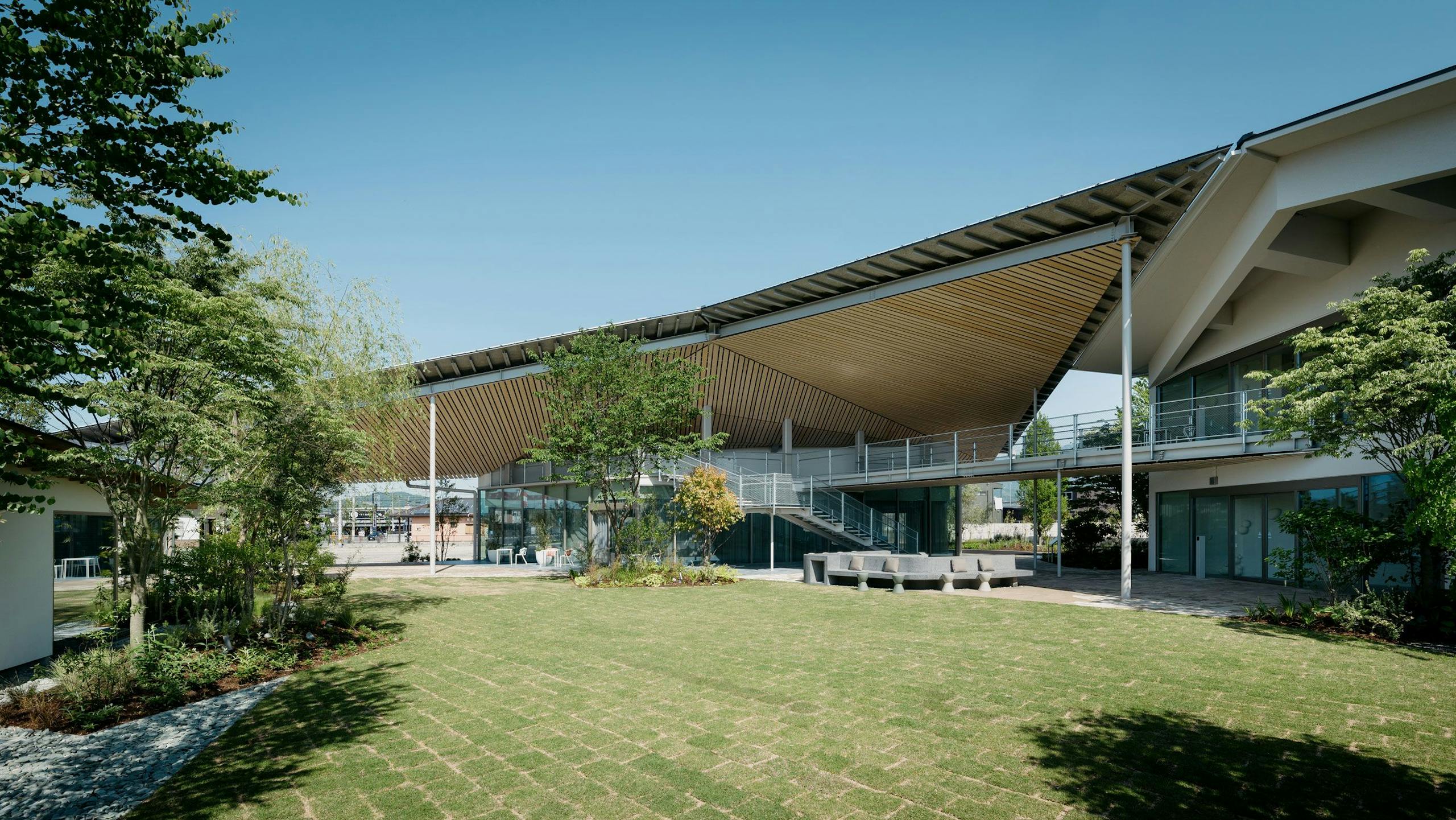
Location | Itomachi complex, Saijo City
About the property
Designed by architect Kengo Kuma, this hotel sits inside “Itomachi,” a regional-revitalization district developed by semiconductor equipment maker Advantech Co.
Sustainability, according to the hotel itself
The operator and press coverage describe ITOMACHI HOTEL 0 as the first hotel in Japan to obtain ZEB (Net Zero Energy Building) certification under Japan’s Ministry of the Environment framework. High-insulation construction and natural ventilation reduce energy use below that of a typical hotel, with solar power covering the remaining demand to reach net-zero electricity consumption, according to the operator. Solar panels are installed across the Itomachi complex’s roofs, including the hotel building. That said, we could not locate the exact certification tier or generation capacity figures on the hotel’s own website — if you need the precise tier (Ready, Nearly ZEB, ZEB, or ZEB Oriented) or generation numbers, we’d recommend contacting the property or the Ministry of the Environment’s ZEB registry directly, since different articles cite different figures.
The hotel does not stock disposable amenities (toothbrushes, hairbrushes, razors) in guest rooms by default, per its official site. Advantech Group joined Japan’s “RE Action” renewable-energy pledge in 2021, and the complex is designed to function as a disaster-relief hub, reportedly able to supply emergency power, water, and food for roughly 800 people over three days.


Who this is for
Travelers interested in net-zero building technology, and anyone who values disaster-preparedness infrastructure.
Worth knowing before you book
Solar panel counts and capacity figures vary across news sources. ZEB certification tier and exact figures for this property aren’t consistently published, so if precise numbers matter to you, it’s worth confirming directly with the hotel.
Book
4. Kutsurogi no Yado Juraku


Location | Toon City, near Matsuyama
About the property
A hot-spring inn drawing water from a geological layer roughly 200 million years old.
Sustainability, according to the hotel itself
The inn’s SDGs page is unusually detailed compared to others on this list. Confirmed policies include a food-waste reduction commitment, no single-use bath amenities offered by default, room amenities provided only on request, and no disposable tableware. The site also states that 80% of interior lighting uses high-efficiency fixtures (LED and similar).
Guests can opt out of towel and linen changes and daily housekeeping during multi-night stays, and all toilets, showers, and bathing facilities are water-saving models. Over 50% of ingredients are regionally sourced, with local dishes on the menu. The property states it does not engage in activities that harm local wildlife (capturing, breeding, feeding, or displaying wild animals), and it supports traditional crafts, sells local specialty products, and participates in community cleanups and festivals.

Who this is for
Travelers who want to see sustainability commitments broken down item by item, rather than described in vague terms.
Worth knowing before you book
We found no evidence of third-party certification — this is self-reported.
Book
5. Dogo Grand Hotel

Location | Dogo Onsen district, Matsuyama City
About the property
Known for its banquet and kaiseki dining, in the heart of Dogo Onsen.
Sustainability, according to the hotel itself
Its sustainability page describes refillable bath-amenity pump bottles (reducing new plastic bottle production), an “Eco Stay” program that supplies fresh linens only on request during multi-night stays, and drinking water served in glass pitchers instead of plastic bottles in guest rooms.
The most distinctive program here is cork recycling: corks from wine served in the hotel’s restaurants and banquet halls are collected, then sent through an NPO to a social welfare organization in Tokyo, which turns them into coasters and other products for sale, with a portion of proceeds supporting employment programs for people with disabilities. Retail packaging uses 25%-biomass plastic bags and paper materials, and the menu includes locally sourced dishes.

Who this is for
Travelers interested in how waste recycling can be tied to disability employment support, rather than treated purely as an environmental metric.
Worth knowing before you book
We couldn’t confirm a specific LED adoption percentage for the building, though some sources reference one.
Book
6. Old England Dogo Yamanote Hotel
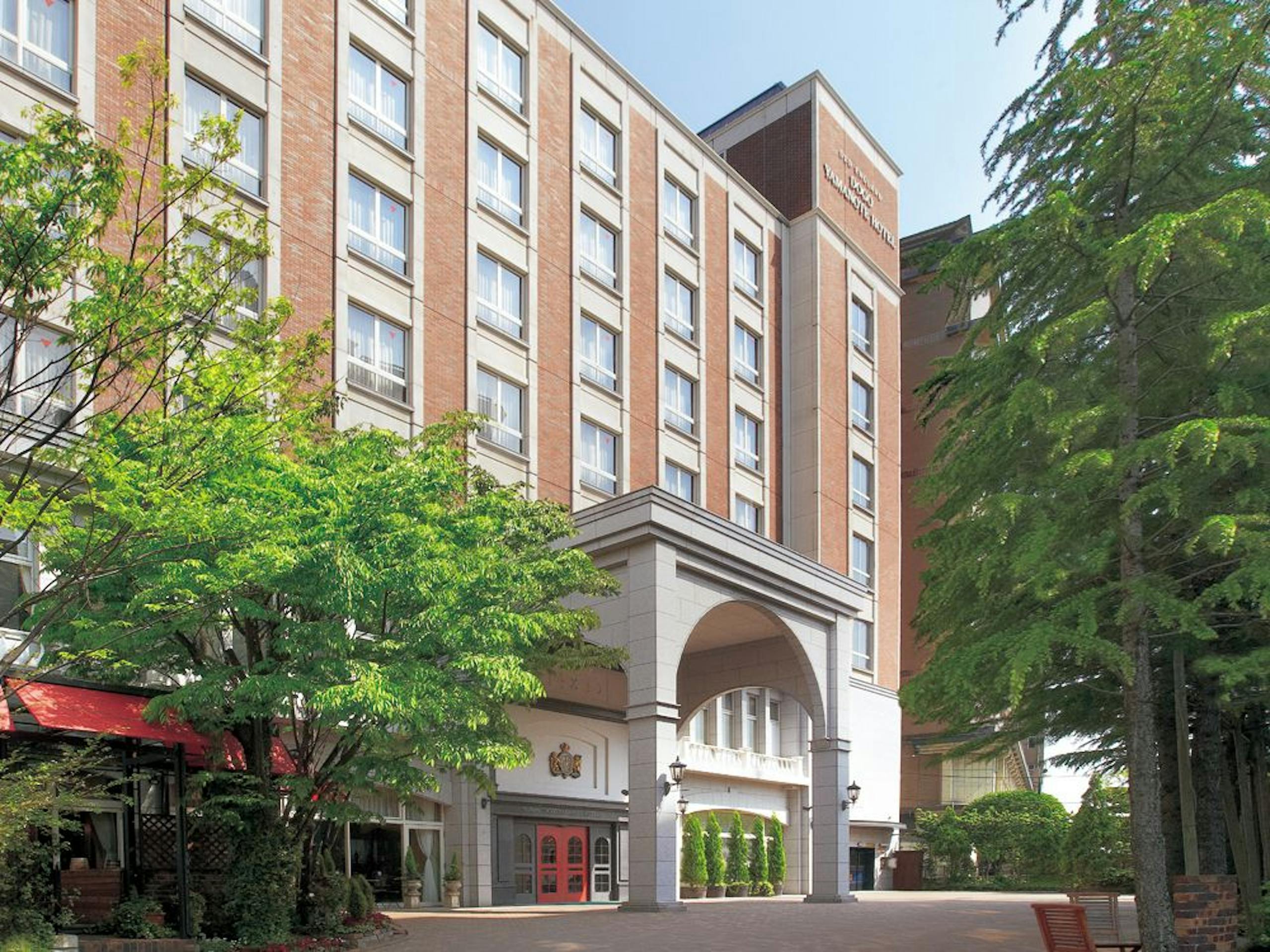
Location | Dogo Onsen district, Matsuyama City
About the property
Founded in 1885 — unusually old for a hotel — and rebuilt in its current English-manor style in 2004.
Sustainability, according to the hotel itself
Its SDGs page cites extensive LED lighting use, deliberately dimmed nighttime exterior lighting to save energy, and an EV charging station on the property. A set of seven private detached cottages called “Hagakure,” which opened in February 2023, was designed to sit among the existing trees on the site rather than clearing them, an intentional choice, according to the hotel, to preserve the land’s original vegetation.
On the food side, detailed advance handling of allergies and preferences helps reduce waste, and the kitchen sources long-established local Ehime ingredients. The hotel highlights an actively diverse workforce, including foreign nationals, staff with disabilities, and older workers; international students are currently employed in the kitchen and dining hall, per the hotel. In December 2024, the property secured financing through Iyo Bank’s “Sustainability-Linked Loan” program, with KPIs tied to the percentage of female managers and employee use of paid leave.


Who this is for
Travelers who care about workplace diversity commitments and sustainability-linked financing, not just physical building features.
Worth knowing before you book
We found no published energy-consumption or waste-volume figures.
Book

7. Setouchi Retreat Aonagi by ONKOCHISHIN
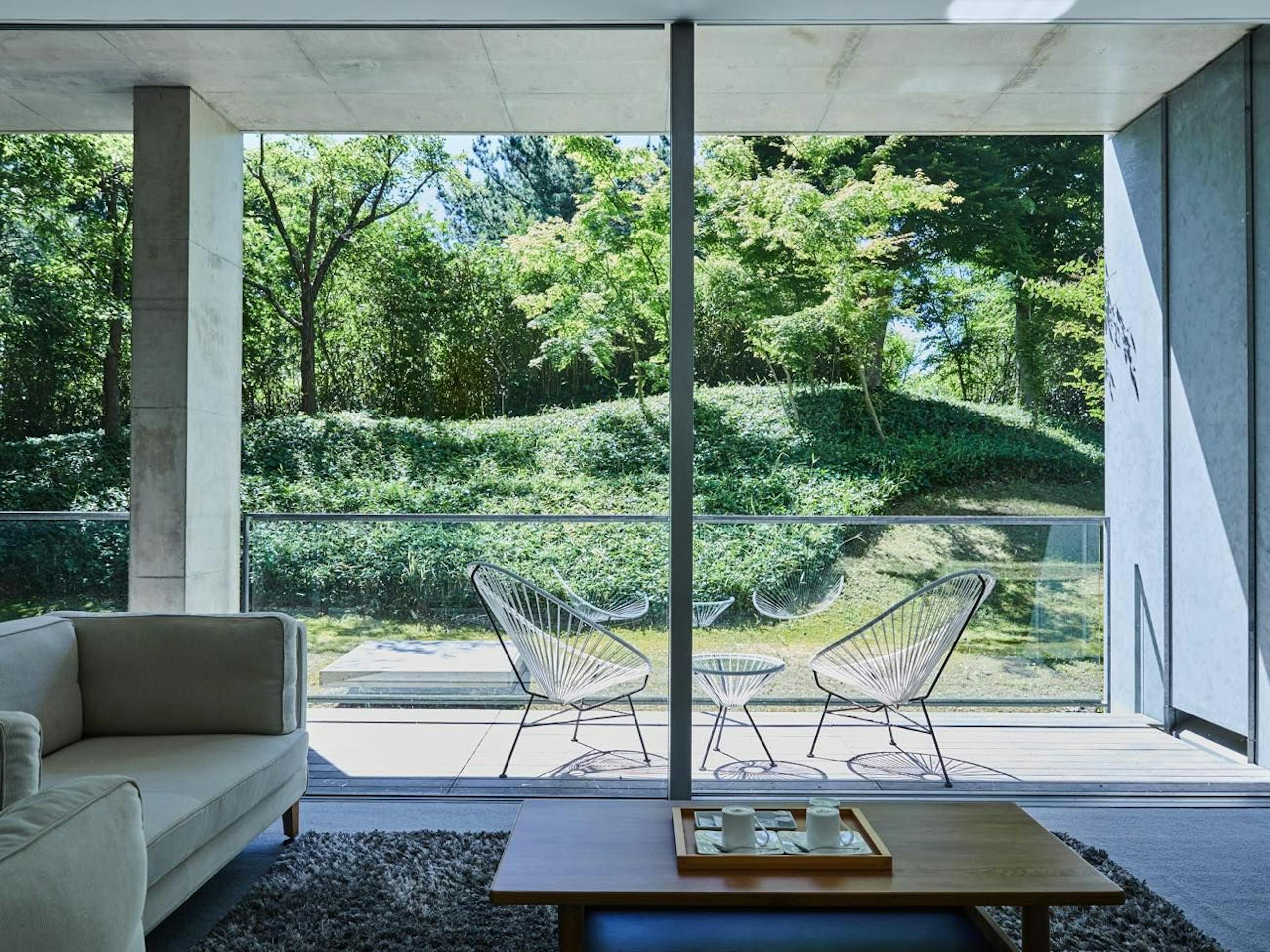

Location | Matsuyama City
About the property
A seven-suite, all-suite boutique property inside a building originally designed by renowned architect Tadao Ando, opened as an art museum and guesthouse in 1998.
Sustainability, according to the hotel itself
According to a press release from the operating company, ONKOCHISHIN, an aging heavy-oil boiler was replaced with a heat-pump system in fall 2021 using a Ministry of the Environment subsidy. Comparing 2022 performance to a baseline period (April 2017–March 2020 average), the company reports that heavy-oil consumption dropped 86% and annual CO2 emissions dropped 30%, even as the number of guests rose roughly 5%. Note that this figure comes from a company press release rather than a page on the hotel’s own permanent website.
Retrofitting a landmark Tadao Ando building without compromising its design intent reportedly took years to work out, and the case has been cited as an example of using government subsidies for energy efficiency in architecturally significant properties.


Who this is for
Design-focused travelers interested in how energy retrofits can work inside architecturally significant buildings.
Worth knowing before you book
We couldn’t confirm this property’s specific food-sourcing percentages or linen-reuse policy on its own page. The CO2 figures come from a press release, not a standing page on the hotel’s website.
Book
8. Super Hotel Ehime Ozu Interchange

Location | Ozu City, near the Ozu-Minami Interchange
About the property
Part of the nationwide Super Hotel budget chain, built around the concept “Natural, Organic, Smart.”
Sustainability, according to the hotel itself
Super Hotel received Japan’s “Eco-First Company” designation from the Ministry of the Environment in 2011; the company states it is the only hotel chain in Japan with that designation. Starting in October 2024, the chain began rolling out “CO2 Net-Zero Stays,” offsetting the carbon footprint of a guest’s electricity, water, and gas use, though the timeline for full chain-wide rollout varies depending on the source. The chain also uses non-fossil energy certificates to move toward carbon-free electricity, with the company’s own sustainability reporting citing an annual reduction impact of roughly 24,000 tons across the company.
Since 2008, guests who decline daily housekeeping, or who skip a disposable toothbrush, receive small rewards like bottled mineral water or regional snacks, a program the chain calls “Eco Hiiki” (eco-favoritism). Locally sourced wood furnishings (specific to each region) and food-waste composting are also documented on the official site. These are chain-wide policies that apply to every Super Hotel location, including this one in Ozu.

Who this is for
Travelers who want a predictable, chain-standardized approach to carbon offsetting near Ozu.
Worth knowing before you book
Everything described here is a company-wide policy. We couldn’t confirm any sustainability measures unique to this specific Ozu location.
Book
9. NIPPONIA HOTEL Ozu Castle Town

Location | Ozu’s historic castle town, Ozu City
About the property
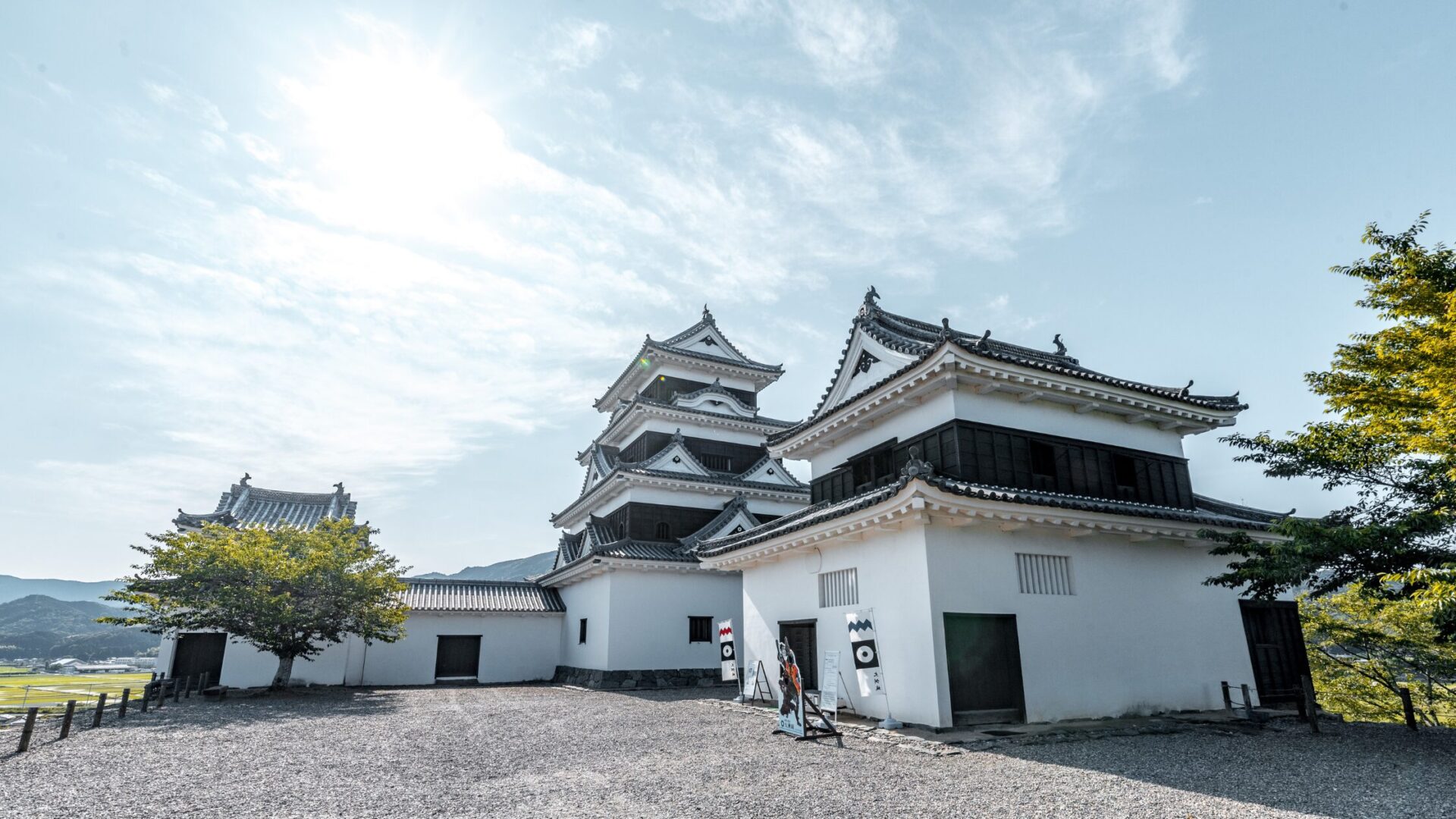
A dispersed hotel concept: instead of one building, guest rooms occupy restored historic buildings — old merchant houses, storehouses, and other structures — scattered across Ozu’s historic castle town.
Sustainability, according to the hotel itself
Per the official site, the project renovates buildings that had been vacated due to population decline and aging, as part of a broader “sustainable tourism-based town-making” effort. The approach favors minimal new construction, preserving the original structure of existing buildings rather than replacing them.
This work contributed to Ozu City’s selection for the “Sustainable Destinations Top 100” list (application submitted by the Kita Management general incorporated association). It’s worth being precise here: this recognition applies to the city and region as a whole, not to this hotel specifically as an individually certified property. The restaurant sources Seto Inland Sea seafood, vegetables from the Hiji River basin, and meat from local livestock farms, with a menu built around regional sourcing.

Who this is for
Travelers drawn to adaptive reuse of historic buildings as a form of sustainability, especially those who enjoy exploring a town on foot as part of their stay.
Worth knowing before you book
Some travel media reference specific award names (a “Green Destinations” silver award, a particular year’s design award) that we could not confirm through official sources. The only confirmed recognition is the “Sustainable Destinations Top 100” listing.
Book

10. Auberge Uchiko

Location | Uchiko Town
About the property
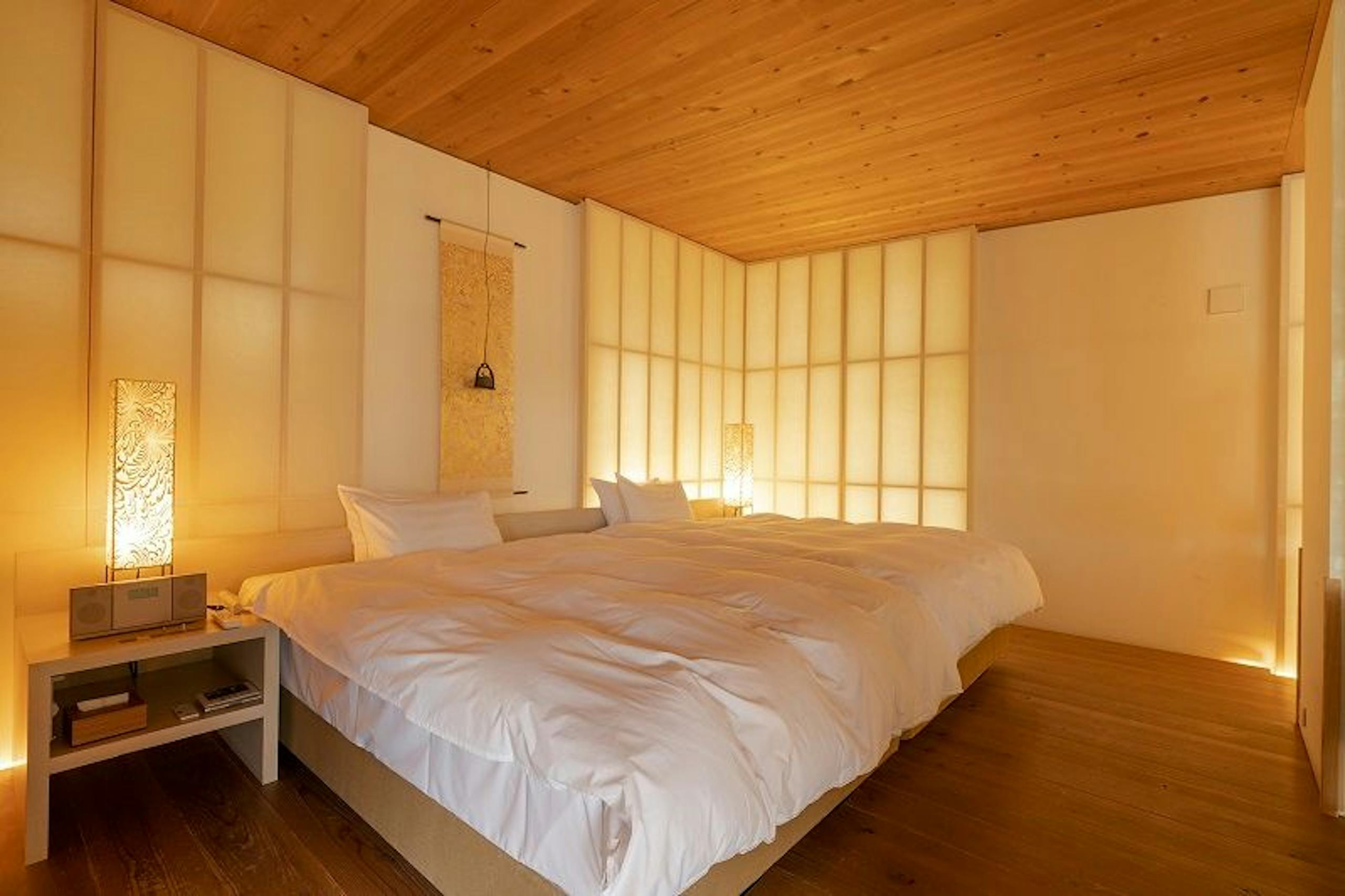
Five freestanding cottages set on a hillside in Uchiko, a town known for its preserved Edo- and Meiji-era streetscape.
Sustainability, according to the hotel itself
The official site describes cooking ingredients from Uchiko and elsewhere in Ehime over an open wood fire (“makibi”), a technique the property presents as a way of connecting food to place. Guest rooms incorporate local Uchiko washi paper and Uchiko cedar in their design.
Rakuten Travel’s listing for the property displays a “sustainable initiatives” badge, indicating the property has self-reported certain practices to the platform.
Who this is for
Travelers interested in food-focused, low-tech cooking methods and traditional local materials.
Worth knowing before you book
We found no specific figures on energy efficiency or waste reduction on the official site. Rakuten’s “sustainable initiatives” badge reflects the property’s own reporting, not independent third-party certification.
Book
11. Okudogo Ichiyu no Mori


Location | Okudogo area, Matsuyama City
About the property
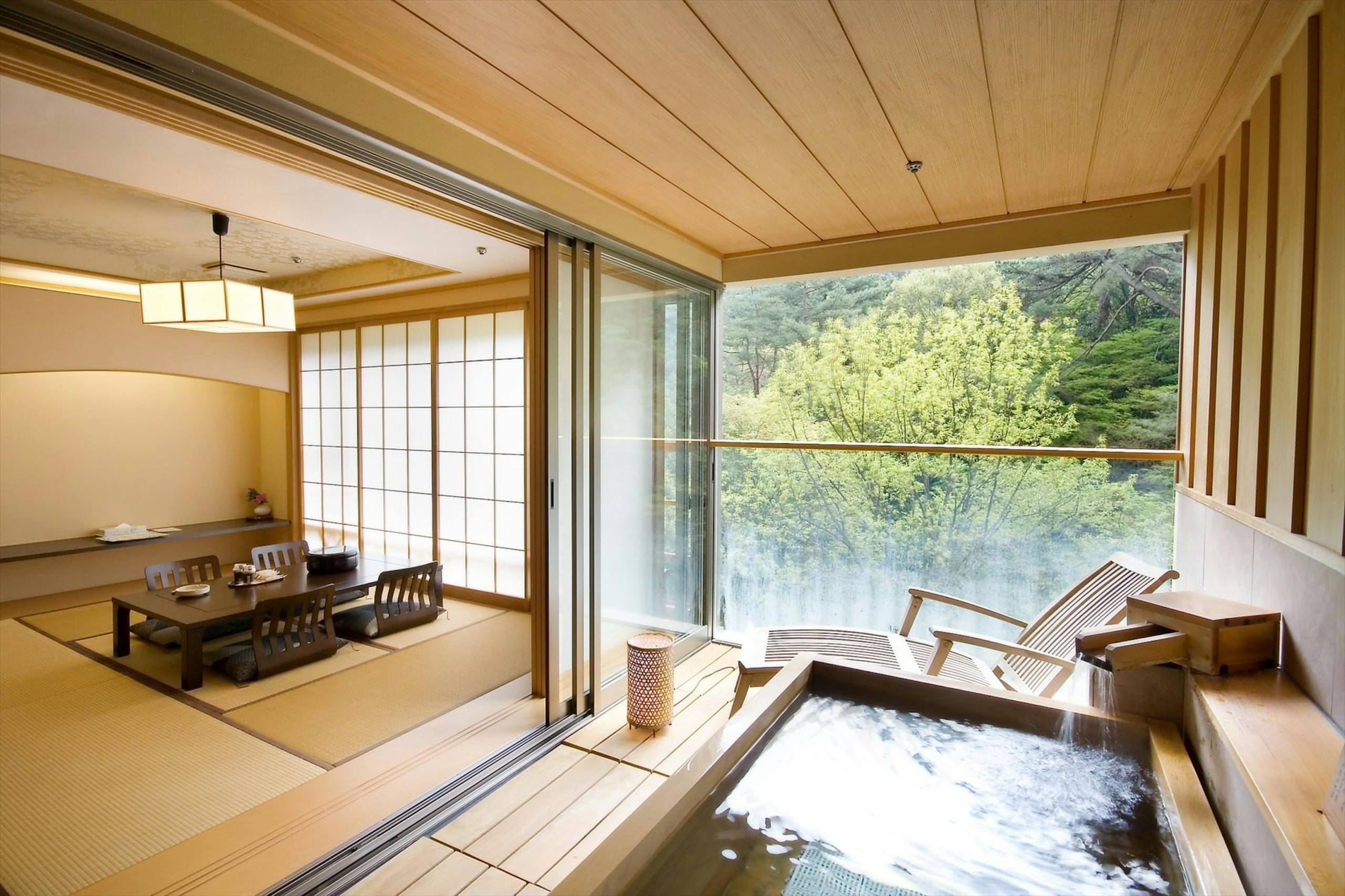
A large hot-spring hotel known for its expansive open-air bath, “Suimei no Yu,” described as one of the largest in western Japan.
Sustainability, according to the hotel itself
Per the hotel’s official site, in response to Japan’s 2022 Plastic Resource Circulation Act, the hotel has reconsidered its default provision of disposable room amenities (toothbrushes, razors, combs, shower caps, hairbrushes) as part of a broader plastic-reduction effort.
Who this is for
Travelers who want a large hot-spring resort experience alongside at least a documented step toward plastic reduction.
Worth knowing before you book
Specific CO2-reduction figures and participation in a regional used-cooking-oil recycling program, both referenced elsewhere online, could not be confirmed on the hotel’s own site. Compared to other properties on this list, disclosed information here is more limited.
Book
Before You Book: A Few Things Worth Knowing
- ZEB has tiers. “ZEB hotel” sounds impressive, but Ready, Nearly ZEB, ZEB, and ZEB Oriented represent very different levels of energy performance. Check which tier a property actually holds.
- “Sustainable Destinations Top 100” is a municipal designation, not an individual hotel certification. In this guide, it applies to the city of Ozu as a whole, not to any single hotel.
- Chain hotels apply policies company-wide. If a Super Hotel location advertises a sustainability program, that’s almost always a brand-level policy rather than something unique to the property you’re booking.
- Area-wide initiatives, like used-cooking-oil recycling around Dogo Onsen, are sometimes reported by third parties but not confirmed on individual hotel websites. If a specific program matters to you, it’s worth emailing the property directly to confirm.
Final Thoughts: What Are You Actually Looking For?
All 11 hotels here have some verifiable sustainability effort behind them, according to their own official sites or their operator’s press material. But what that effort actually looks like varies quite a bit from one property to the next.
Hotel Kowakuen Haruka and ITOMACHI HOTEL 0 both lean on net-zero building design, one through a ZEB Ready rating and the other through what its operator describes as Japan’s first full ZEB hotel certification. Super Hotel Ehime Ozu Interchange applies a chain-wide “Eco-First Company” framework to decarbonization. NIPPONIA HOTEL Ozu Castle Town takes a different approach entirely, restoring historic buildings as a form of town-wide preservation. Dogo Grand Hotel ties waste recycling to disability employment support, and Kutsurogi no Yado Juraku publishes one of the most itemized sustainability disclosures on this list.
Which of these approaches matters most to you probably says something about what you’re hoping to get out of this trip in the first place. We hope this guide gives you a useful starting point for figuring that out.
FAQ
Is Dogo Onsen sustainable to visit? Several hotels in the Dogo Onsen district, including Hotel Kowakuen Haruka, Dogo Miyu, Dogo Grand Hotel, and Old England Dogo Yamanote Hotel, publish specific sustainability policies covering energy, water, and waste. Dogo Onsen Honkan itself, one of Japan’s oldest public bathhouses, is supported by ongoing preservation funding from several nearby hotels.
What does ZEB mean, and which Ehime hotels have it? ZEB stands for Net Zero Energy Building, a Japanese government energy-efficiency framework with multiple certification tiers. In Ehime, Hotel Kowakuen Haruka holds a ZEB Ready rating, and ITOMACHI HOTEL 0 in Saijo is described by its operator as Japan’s first hotel to achieve full ZEB certification.
Are there hotels in Ehime built from restored historic buildings? Yes. NIPPONIA HOTEL Ozu Castle Town in Ozu converts old merchant houses and storehouses in the historic castle town into guest accommodations, as part of a broader town-preservation effort that contributed to Ozu’s recognition on the “Sustainable Destinations Top 100” list.
Information in this guide is based on each hotel’s official website, or its operating company’s press material, as of July 2026. Details may change without notice. Please check each hotel’s official site for the most current information before booking.