
Japan shows up on a lot of “most sustainable countries” lists. But scroll past the headline and you’ll often find the same handful of vague claims: rich nature, deep tradition, a culture of mottainai. None of that tells you what’s actually happening on the ground.
This guide looks at six places in Japan where sustainability isn’t a tagline, it’s a system you can check. Each one either publishes measurable data, participates in an internationally recognized framework or award, or both. And in every case, the people running the day-to-day work aren’t just city officials. They’re neighbors who started nonprofits because no one else was going to fix the problem.
If you’re curious about Japan beyond the postcard version, these six towns are a good place to start.
How These Six Places Were Chosen
Two filters decided which towns made this list.
The first is outside recognition: certification or benchmarking against a framework like the GSTC (Global Sustainable Tourism Council) criteria, a Green Destinations listing or award, or a designation like the FAO’s Globally Important Agricultural Heritage Systems (GIAHS) program. The second is transparency: measurable, publicly available data on a specific effort, even if the exact figures shift from year to year.
Every place below meets at least one of those bars, and several meet both, though the type of recognition varies from place to place: some hold a certification, some appear on an international benchmarking list, and some are best known for the data they publish rather than a badge. None of them are single hotels or resorts marketing themselves as “eco.” They’re municipalities or whole communities where the sustainability work is baked into local policy, local nonprofits, or both.
1. Kamikatsu, Tokushima: A Town That Refuses to Send Trash to a Landfill
In 2003, this small mountain town in Shikoku became the first place in Japan to declare “zero waste” as an official policy goal. Rather than standard curbside collection, residents bring their own waste to a centralized station and sort it into as many as 45 separate categories, and the town’s recycling rate now sits at roughly 80%, well above what most Japanese municipalities report, though recycling-rate definitions vary enough that direct comparisons should be read as broad strokes rather than precise ones.
That system doesn’t run itself. A resident-founded nonprofit, the Zero Waste Academy, has staffed the sorting station and run public education since 2005, and it also created an independent certification for local shops that commit to producing less waste. By cutting down on incineration, the system reduces both waste volume and the costs that come with burning it, and the Zero Waste Center (known as WHY) now doubles as a training site for other municipalities and companies studying the model.
Why it matters if you’re not from Japan: Kamikatsu is often cited as a reference point in circular-economy and zero-waste policy discussions worldwide, similar to how Kamikatsu is frequently compared to European zero-waste pilot towns. It’s a useful case study in what a genuinely bottom-up waste system looks like at municipal scale.
Check the sustainable hotels in Tokushima
2. Minamisanriku, Miyagi: Rebuilding a Coast Around Its Ocean
Local oyster farmers here became the first in Japan to earn ASC (Aquaculture Stewardship Council) certification, and the area also holds FSC forest certification, plus a spot on the Green Destinations Top 100.
The numbers back it up. A municipal biogas facility processes a significant share of the organic waste collected from town households, more than 1,000 tons in some reported years, converting it into biogas and liquid fertilizer. On the water, farmers thinned out their oyster rafts to reduce overcrowding, a change that has been credited with shortening growing time and improving quality in some seasons. After the 2011 tsunami, new seawalls and a changed coastline meant kids were growing up disconnected from the water. A group of local mothers and fishermen responded by founding the nonprofit Hamawarasu in 2012, which now runs year-round programs teaching children the traditional relationship between this community and the sea.
Check the sustainable hotels in Miyagi
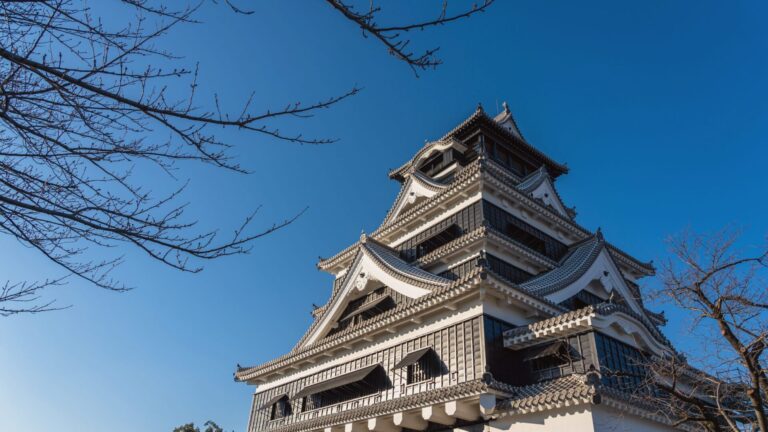
3. Aso and Kumamoto City, Kumamoto: Recharging an Entire Aquifer
Kumamoto City draws nearly 100% of its tap water from groundwater, which is unusual for a city its size. To keep that aquifer full, the city works with surrounding municipalities across the basin to flood fallow rice paddies with river water every winter, a practice that recharges several million cubic meters of groundwater a year, around 6 million in some reported years, though the exact figure shifts annually. When a major semiconductor plant moved into the area, the company signed an agreement to recharge more water than it consumes, tying industrial growth directly to the water table it depends on.
Up in the Aso caldera, a farming practice older than a thousand years, controlled burning, grazing, and mowing, maintains the grassland landscape the region is known for. That system is recognized as an FAO Globally Important Agricultural Heritage System. As the farmers who traditionally did this aging out, a nonprofit called Aso Green Stock stepped in back in 1995, organizing volunteers from cities across Japan. Roughly 1,000 volunteers now travel to Aso every year just to help with the controlled burns.
Check the sustainable hotels in Kumamoto
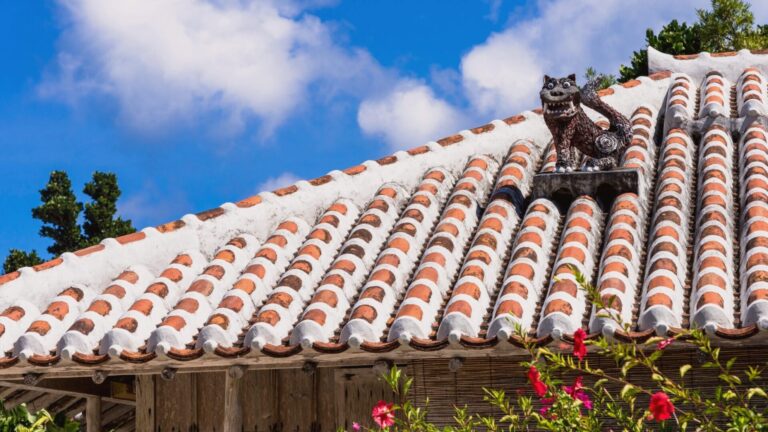
4. Taketomi and Iriomote Island, Okinawa: Limiting Visitors on Purpose
Iriomote Island earned UNESCO World Natural Heritage status in 2021. What sets it apart is a willingness to cap its own tourism.
Under the Iriomote Island Ecotourism Master Plan, the island manages visitor pressure through site-specific limits, mandatory certified guides, and advance permit systems rather than leaving access unrestricted. This is implemented through Japan’s Ecotourism Promotion Act combined with those practical, ground-level rules. At a moment when overtourism is a global headline, Iriomote is one of the few places actively choosing to hold the line on visitor numbers, and doing it through a documented management system rather than just a stated intention.
Check the sustainable hotels in Okinawa
5. Niseko, Hokkaido: Measuring Tourism Instead of Just Marketing It
Niseko has landed on the Green Destinations Top 100 list multiple times and has been recognized through the organization’s broader awards program. What makes it different from a typical ski town isn’t the recognition itself. It’s the follow-through: under its Sustainable Tourism Vision, the town has committed to tracking outcomes tied to visitor behavior and to a workforce-training program run with the local high school, rather than treating the vision as a one-time statement.
Setting a vision is easy. Following up on whether you hit it is the harder, less glamorous part, and that’s the piece Niseko has actually built into how it operates.
Check the sustainable hotels in Hokkaido
6. Kanazawa, Ishikawa: Showing Exactly Where the Tourist Tax Goes
Kanazawa belongs to the UNESCO Creative Cities Network in the crafts and folk art category, and the city actively funds the artisans behind traditions like Kaga-yuzen dyeing and gold leaf work. What stands out most, though, is money. In recent fiscal years, Kanazawa’s accommodation tax has brought in revenue reported in the hundreds of millions of yen, and the city publishes budget documents showing how that revenue supports tourism management and heritage preservation, the kind of paper trail anyone can go look up.
The city’s historic wooden townhouses, called machiya, weren’t saved by city hall alone either. A group of architects, researchers, and residents formed the nonprofit Kanazawa Machiya Research Group back in 2005, and they’ve since built a matching system connecting owners of vacant machiya with people who want to restore and use them. According to the group, that grassroots effort has now touched more than 300 buildings.
Check the sustainable hotels in Ishikawa
How to Spot the Real Thing
Across all six places, the same pattern shows up. None of them stop at a mission statement. Kamikatsu has a recycling percentage. Kumamoto has a groundwater volume, even if the exact figure moves year to year. Iriomote works through a defined permit and guide system instead of open access. Niseko has been benchmarked by an international sustainability program. Kanazawa has public budget documents. In every case, there’s something concrete you could, in theory, go check.
The second pattern is who’s actually doing the work. Local governments set the policy, but nonprofits like the Zero Waste Academy, Aso Green Stock, and the Kanazawa Machiya Research Group are the ones running it day to day, often because residents got there before any government program did. That combination, a real effort plus a real team executing it, is usually the difference between sustainability as a system and sustainability as a slogan.
If you’re evaluating any place claiming to be sustainable, three questions tend to cut through the marketing fast: Is there outside recognition or certification behind this? Is there data attached, and is it public? And who’s actually doing the work on the ground?
How to Support This From Outside Japan
You don’t need to book a flight to engage with any of this. Japan’s furusato nozei (hometown tax) system lets anyone with Japanese tax residency direct funds to specific municipalities, including ones running programs like the ones above, though it’s worth noting this option is generally limited to Japanese taxpayers rather than overseas donors. Some municipalities and nonprofits also accept direct donations or partnerships from abroad, though availability varies and is worth checking case by case. If you do visit Iriomote or a similarly regulated area, following the visitor caps and guide requirements is a direct, practical way to support the system rather than work around it.
And simply knowing these systems exist changes something. Programs like these tend to survive on continued local and national support, and awareness outside Japan feeds into that in small but real ways, whether it shapes how the destination gets covered in travel media or how it’s evaluated by international bodies like Green Destinations and GSTC.
The Takeaway
“Sustainable” means something different in each of these six places. One town refuses to send anything to a landfill. Another recharges an aquifer by hand, one flooded field at a time. An island capped its own visitor numbers before the crowds forced the issue. What ties them together isn’t a shared slogan. It’s the fact that none of them are asking you to just take their word for it.
Which of these systems would you want to see more of where you live?