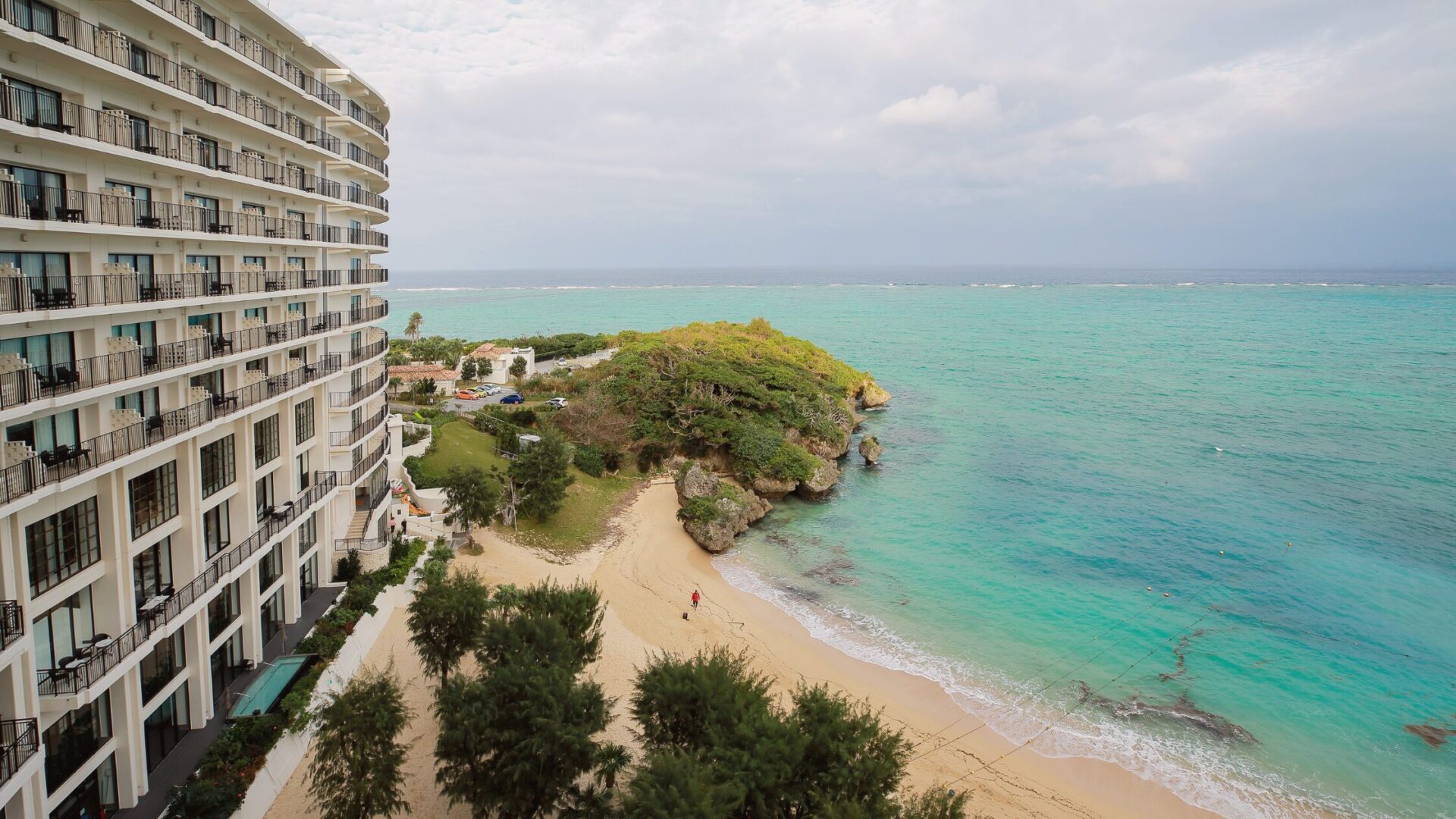

The word “sustainable” has become standard marketing language in travel — applied equally to properties with rigorous third-party certification and those with nothing more than a towel-reuse card in the bathroom. Okinawa is no exception.
What makes Okinawa a particularly interesting case is the stakes involved. Japan’s southernmost prefecture is an archipelago of roughly 160 islands spanning 1,000 kilometers of ocean, home to some of the most biodiverse coral reef systems in Asia and two UNESCO World Natural Heritage sites: the Yanbaru subtropical forest in northern Okinawa (designated in 2021) and the Iriomote-Ishigaki National Park in the Yaeyama islands. Tourism is the backbone of the local economy — and also one of the primary pressures on the very ecosystems that make these islands worth visiting.
This guide covers 9 properties where sustainability-related information was confirmed through official websites and press releases. We’re not ranking them or telling you which to choose. What we can do is lay out what each property has publicly documented — the certifications they hold, the practices they describe, and the questions they leave open — so you can decide what matters to you.
How We Selected These Properties
Every property in this guide was evaluated against four criteria. The benchmark throughout is “verifiable from official sources.” Properties not included here may have meaningful practices in place that simply aren’t publicly documented.
- Third-party certification Properties holding internationally recognized certification such as GSTC (Global Sustainable Tourism Council), Green Key (FEE), GREEN FINS, Eco Action 21 (Japan’s Ministry of the Environment), or Sakura Quality An ESG Practice (a GSTC-aligned standard) — and publicly disclosing this on their official sites.
- Transparency of disclosure When a property uses the word “sustainable,” they provide verifiable grounds: certification names, audit results, or quantitative targets on their official website.
- Specificity of environmental practice Concrete measures around renewable energy, water management, waste reduction, single-use plastic elimination, or marine conservation — stated in official communications, not inferred.
- Local and ecological engagement Documented involvement with local sourcing, community partnerships, Ryukyuan cultural programming, or conservation of Okinawa’s reef, mangrove, and forest ecosystems.
All information reflects what was publicly available as of May 2026.
A Brief Note on Japanese Certification Systems
Two certification frameworks appear frequently in this guide and may be unfamiliar to international readers.
Eco Action 21 is a sustainability management certification developed by Japan’s Ministry of the Environment. It requires organizations to establish environmental policies, set measurable targets, track performance, and undergo third-party review. It functions as a management system standard — closer in structure to ISO 14001 than to a product ecolabel.
Okinawa SDGs Partners (おきなわSDGsパートナー) is a registration program administered by Okinawa Prefecture. Participating organizations submit self-declarations of SDG-aligned activities. It is a disclosure framework, not an independently audited certification. Properties registered under this program have made public commitments — but the program does not verify those commitments through third-party audit.
This distinction matters when comparing properties in this guide.
The Properties
1. Hotel Anteroom Naha


Location | Maejima, Naha City — walkable from Miebashi Station (Yui Rail)
About the property
A design hotel a short walk from Kokusai-dori, Naha’s main commercial street. The property has built its identity around art, local culture, and community partnerships. In May 2025, it became the first lodging facility in Okinawa Prefecture to receive Green Key certification.
Sustainability practices (based on official information)
Green Key is an international eco-certification operated by FEE (Foundation for Environmental Education), a Denmark-based nonprofit. Certification covers 13 categories including energy management, water conservation, waste reduction, and environmental education, assessed through third-party audit. Hotel Anteroom Naha renewed its certification the following year, confirming ongoing compliance.
In-room bottled water has been eliminated and replaced with a refill station and carafes. Single-use guest amenities have been switched to bamboo and paper alternatives, and flow restrictors on taps and showers have been fitted to reduce water consumption — both detailed on the hotel’s official website.
Community sourcing is a visible part of the hotel’s approach: it purchases misshapen “Chura Carrots” from Itoman City farmers (carrots that fail cosmetic standards) and transforms them into juice for the menu. Soybean sprout smoothies are made using produce from Taman Fukushikai, a local welfare facility. Upcycled accessories from Okinawan apparel brands are sold in the hotel, and a lights-down event in shared spaces marks Earth Day each year.


This property may suit you if
You treat international third-party certification as a starting point for research. You’re interested in how sustainability connects to local food systems and community employment. You’re planning to base yourself in central Naha.
Worth knowing before you book
Whether the property publishes ongoing KPIs — energy consumption, CO2 emissions, waste volumes — is worth checking directly on their official site.
Book
Ikkyu
 JTB
Expedia
Yahoo!Travel
Rakuten Travel
Rurubu Travel
Jalan
JTB
Expedia
Yahoo!Travel
Rakuten Travel
Rurubu Travel
Jalan
2. Okinawa Kariyushi Beach Resort Ocean Spa

Location | Onna Village, Kunigami District — approximately 60 minutes by car from Naha
About the property
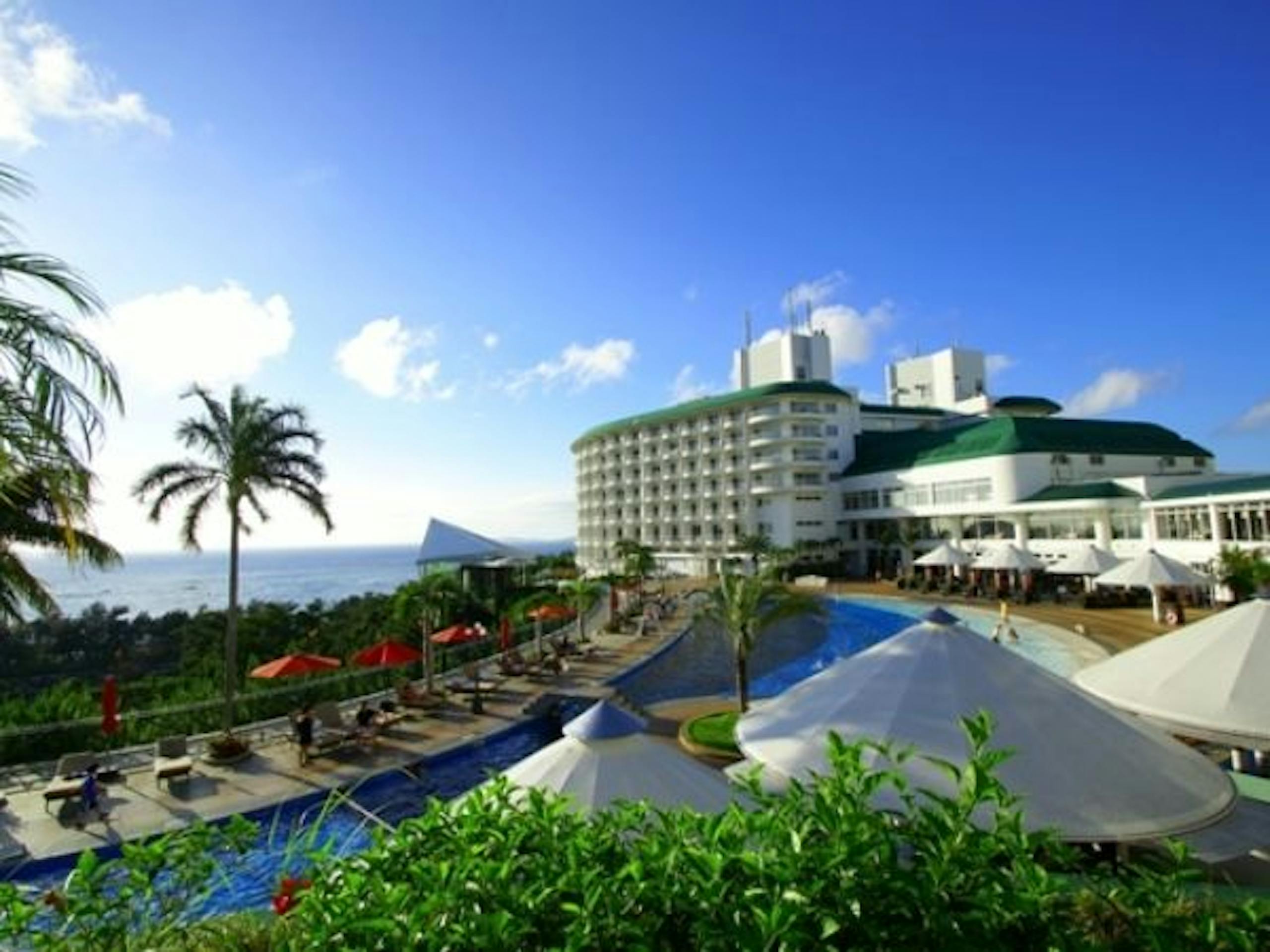
A large beachfront resort on the central west coast of Okinawa’s main island. In 2004, it became the first hotel in Okinawa Prefecture to receive Eco Action 21 certification — a distinction it has maintained for over 20 years, making it one of the longer-running certified properties in Japanese hospitality.
Sustainability practices (based on official information)
Eco Action 21 requires organizations to document environmental policies, establish measurable goals, track results, and undergo third-party review of the full cycle. Unlike a product ecolabel, it is a management system certification: the hotel sets its own targets and is audited on whether it measures and improves against them.
The property operates on-site power generation and runs a gas cogeneration system fueled by liquefied natural gas (LNG), as described on its official website. A greywater treatment system processes water for reuse as toilet flush water and vehicle washing. EV charging stations are available on the grounds.
The resort operates Kariyushi Farm, its own pesticide-free agricultural plot, and has sourced vegetables from local farmers through a direct-purchasing arrangement since 2009. Guest amenities are available at an “amenity station” where guests take only what they need, rather than being stocked in each room as single-use items.


This property may suit you if
Long-term certification track records factor into how you evaluate a property’s commitment. You want a property that has documented water recycling, on-site food production, and local sourcing as a combined system. You’re looking for a resort on the central west coast of the main island.
Worth knowing before you book
LNG is a fossil fuel. Views on its role in a sustainability transition vary, and this is a reasonable question to hold alongside the property’s other practices. Specific figures on the share of power covered by on-site generation are available on the official website.
Book
Ikkyu JTB
Yahoo!Travel
Rakuten Travel
Rurubu Travel
Jalan
JTB
Yahoo!Travel
Rakuten Travel
Rurubu Travel
Jalan
3. ANA InterContinental Manza Beach Resort
Location | Manza, Onna Village, Kunigami District — approximately 60 minutes by car from Naha
About the property
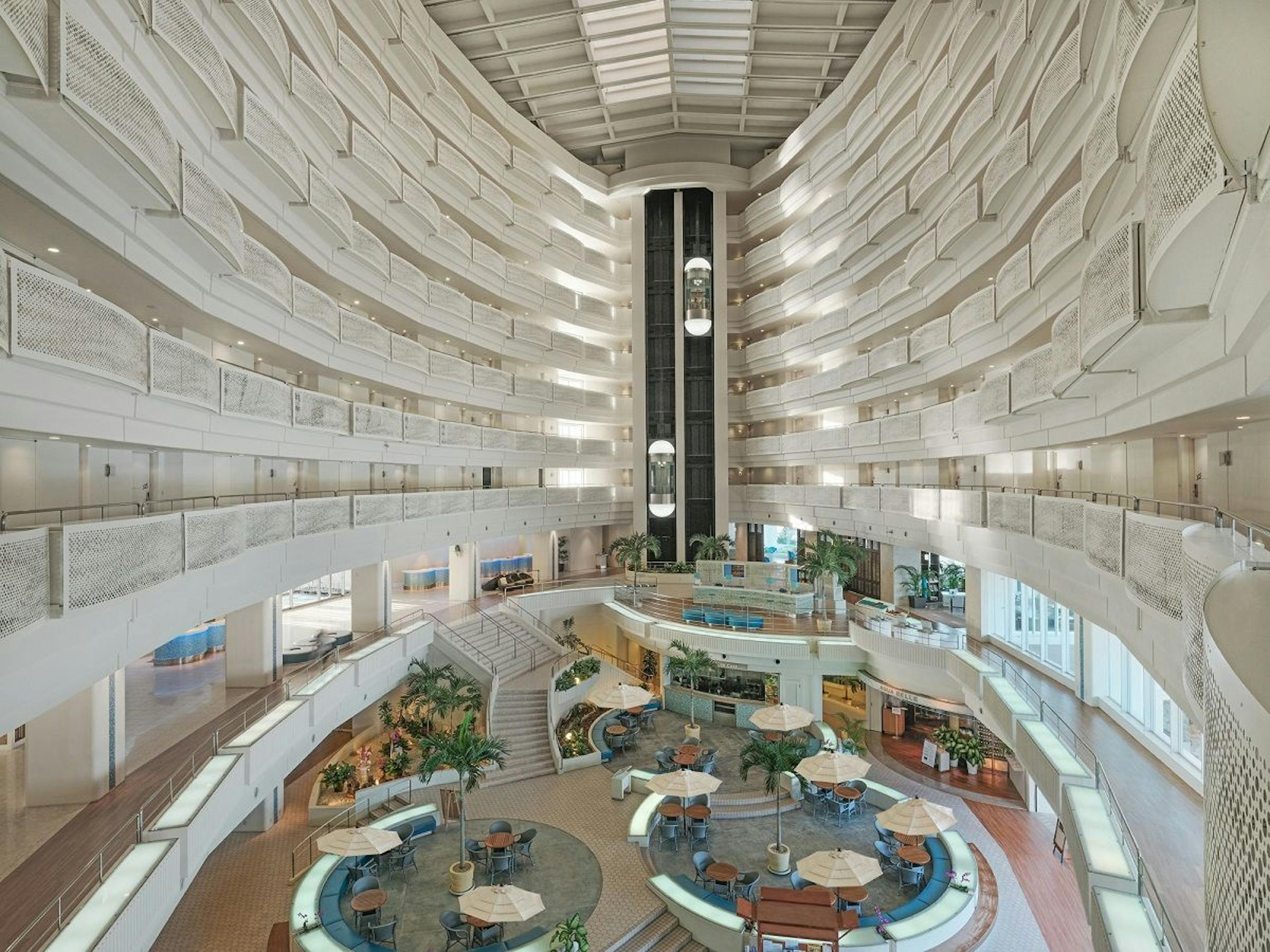
An IHG Group resort on the Manza coast in Onna Village. In 2022, the property became certified under GREEN FINS, an international marine environment certification program focused on coral reef protection. It has since become the first resort hotel in Japan to reach the program’s Gold Rank — the highest level of recognition. It has also been recognized as Japan’s first PADI Eco Center™, following an assessment of its sustained coral conservation work. (Confirm exact certification dates via the property’s official announcements.)
Sustainability practices (based on official information)
GREEN FINS is administered through an international reef conservation program and evaluates how dive and snorkel operators affect marine environments. Gold Rank recognition reflects consistent implementation of practices including: prohibition of feeding marine life, no touching or standing on coral, use of mooring buoys instead of anchors, and encouraging guests to use reef-safe sunscreen.
The property tracks energy, water, CO2 emissions, and waste through IHG’s Green Engage system, an online environmental management platform. A greywater treatment system processes kitchen and room wastewater and recycles it for toilet flushing. Boiler exhaust heat is redirected to the air conditioning system. LED lighting covers the full property. Room amenities have been converted to bulk dispensers, and single-use plastic straws and cups have been discontinued.
Food waste from the kitchen is composted, and the resulting compost is used to grow produce that the property then re-purchases — a loop the hotel describes as the “Food Loop” on its official website.


This property may suit you if
Marine conservation is central to why you’re choosing Okinawa. You want to know that the property operating your dive and snorkel trips has been independently assessed for environmental impact. You’re looking to combine time underwater with a deeper understanding of reef ecology.
Worth knowing before you book
Specific quantitative data is primarily managed through IHG’s internal system. Check the property’s official site for any data made public at the individual facility level.
Book
Ikkyu JTB
Expedia
Yahoo!Travel
Rakuten Travel
Rurubu Travel
Jalan
JTB
Expedia
Yahoo!Travel
Rakuten Travel
Rurubu Travel
Jalan
4. Hyatt Regency Seragaki Island Okinawa


Location | Seragaki, Onna Village, Kunigami District — approximately 55 minutes by car from Naha
About the property
A Hyatt resort on Seragaki Island, connected to the Okinawa mainland by bridge. The property’s sustainability work is built around a partnership with OIST — the Okinawa Institute of Science and Technology, a graduate research university known internationally for its work in marine and computational sciences. This collaboration shapes how the resort frames its engagement with the reef ecosystems surrounding the island.
Sustainability practices (based on official information)
In-room bottled water has been replaced with aluminum cans and floor-by-floor refill stations. Single-use plastic straws have been replaced with biodegradable alternatives made from pineapple leaf fiber; drink picks with bamboo. Food waste from the restaurant is composted and the compost is used to grow ingredients that return to the kitchen. The coffee served in restaurant and banquet spaces uses Rainforest Alliance-certified beans — though it’s worth noting that this is a product-level certification covering coffee specifically, not a property-wide environmental certification.
The OIST collaboration takes the form of a clownfish breeding and marine education program — confirmed through official marine program materials on the property’s website. The hotel’s official materials also describe directing a share of program revenue toward conservation, selling and recommending reef-safe non-chemical sunscreen, and an inclusive hiring commitment covering staff with disabilities and international employees. These specific details — revenue allocation, sunscreen availability, and hiring practices — were not independently confirmed in our research beyond the hotel’s own published descriptions. Check the official site for current program terms.


This property may suit you if
You’re drawn to the idea of a resort with an active scientific research partnership. You want to see plastic reduction and food circularity addressed together in a documented way.
Worth knowing before you book
No international environmental certification for the property as a whole was confirmed in our research. The OIST partnership is referenced in official materials, but revenue allocation details, sunscreen availability, and inclusive hiring specifics are based on the property’s own published descriptions rather than independently verified sources. Check the official site for current program details.
Book
Ikkyu JTB
Yahoo!Travel
Rakuten Travel
Rurubu Travel
Jalan
JTB
Yahoo!Travel
Rakuten Travel
Rurubu Travel
Jalan
5. The Busena Terrace

Location | Kise, Nago City — approximately 75 minutes by car from Naha
About the property
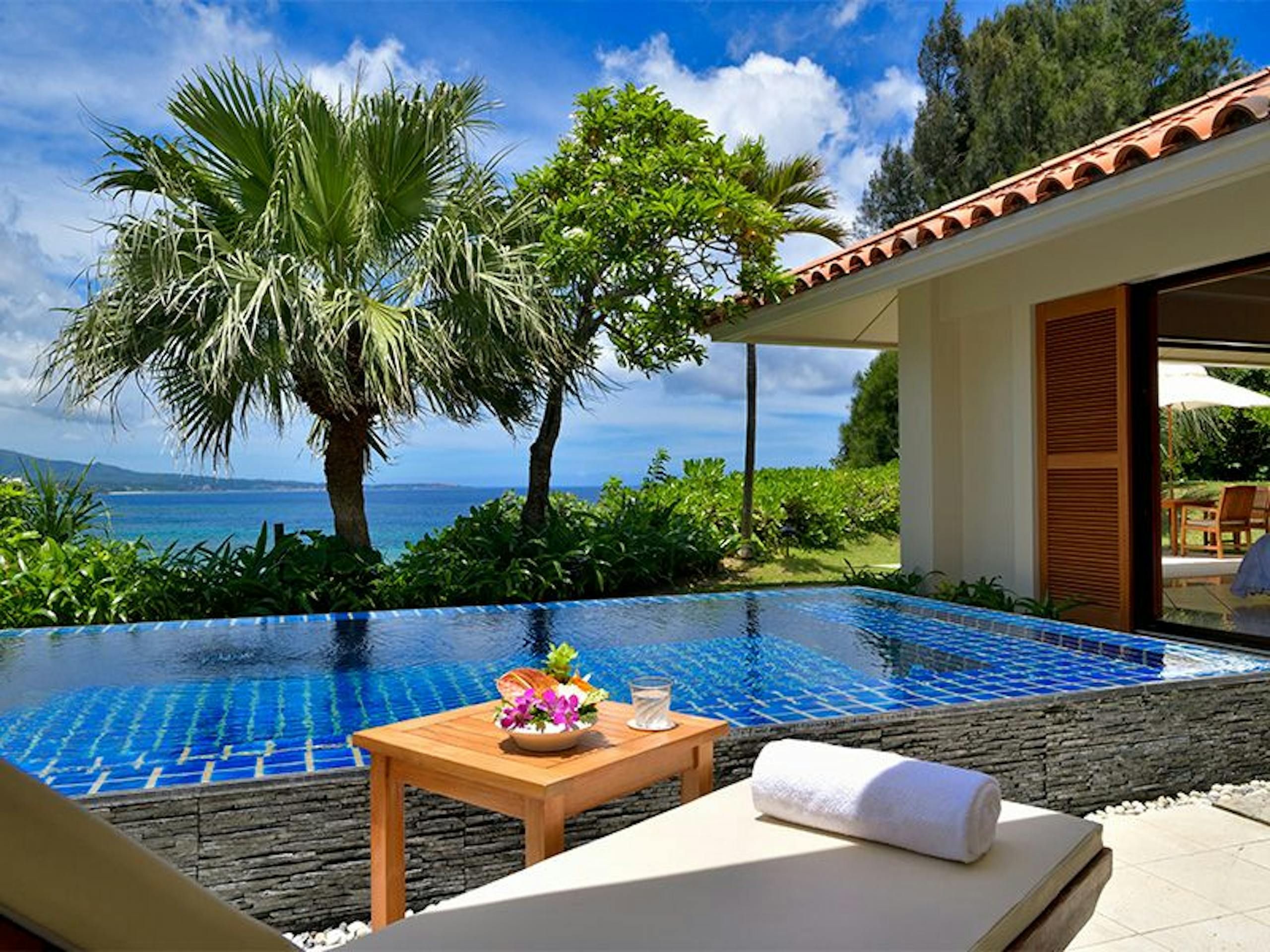
A Terrace Hotels Group resort on the Cape Busena peninsula in Nago, opened in 1997 with a stated concept of “harmony with nature.” The group publishes an annual Sustainability Report — a practice that remains uncommon among Japanese resort hotels — and is registered as an Okinawa SDGs Partner.
Sustainability practices (based on official information)
The group’s Sustainability Report, available on the official website, includes quantitative data on energy consumption, CO2 reduction, and waste management. Specific figures cited in the report include CO2 savings from recovering heat generated during on-site power generation and redirecting it to heat the pool and water supply, electric carts for on-property transport, and LED lighting coverage — all reported with year-on-year data.
Coral restoration work at Busena Marine Park involves cultivating heat-tolerant coral species, including Montipora species, and transplanting them using specially designed substrate structures — confirmed on the group’s official CSR pages. The property’s official materials also describe collaboration with OIST on environmental DNA monitoring of the reef, an annual juvenile fish release event on Marine Day in partnership with local children, and seasonal marine science seminars using glass-bottom boats and microscopes. These program descriptions have not been individually point-checked against OIST or event-specific sources; we recommend verifying current program status on the official property pages.
On food, the property’s official materials state a commitment to excluding seafood species listed on the IUCN Red List from its menus, and describe a flexible menu approach designed to reduce food waste from over-ordering. Single-use mini-bottle amenities have been converted to bulk dispensers.

This property may suit you if
You want to see quantitative sustainability reporting, not just policy language. Long-term coral reef restoration with measurable ecological outcomes matters to you. You’re planning to stay in the Nago area.
Worth knowing before you book
The Sustainability Report covers the Terrace Hotels Group as a whole. Some figures reflect group-wide performance rather than this specific property. Program descriptions for the OIST collaboration, the fish release event, and the Red List menu commitment are drawn from official group materials but were not individually cross-checked against OIST records or event sources. Verify the scope and current status of each initiative directly on the official property and group pages.
Book
Ikkyu JTB
Expedia
Yahoo!Travel
Rakuten Travel
Rurubu Travel
Jalan
JTB
Expedia
Yahoo!Travel
Rakuten Travel
Rurubu Travel
Jalan
6. Halekulani Okinawa

Location | Maekinjiku, Onna Village, Kunigami District — approximately 55 minutes by car from Naha
About the property
The Okinawa outpost of the Halekulani brand, which originated in Hawaii. Registered as an Okinawa SDGs Partner, the property explicitly frames sustainability and community involvement as part of its official mission — published on the official website under a dedicated section.
Sustainability practices (based on official information)
Tube-format single-use bathroom amenities have been removed from all rooms and replaced with large refillable dispensers. According to the hotel’s official sustainability pages, the plastic used in those dispensers is sourced from “Ocean Bound Plastic” (OBP) — waste plastic collected from coastal areas before it enters the ocean — and the formulations are SLS-free (free of sodium lauryl sulfate). Amenities also reportedly include items made from upcycled pineapple leaf fiber, a byproduct of Okinawa’s pineapple industry. These material and formulation claims are based on official hotel communications; verifying them line by line on the property’s SDGs page is advisable before treating them as independently confirmed.
The property’s most locally distinctive initiative is its support for the “Green Belt” project run by Onna Village — a red soil erosion prevention program. Red soil runoff from inland agricultural land is one of the documented threats to Okinawa’s coastal coral reefs. The Green Belt approach plants sunflowers and vetiver grass on farmland slopes to stabilize soil while also establishing beehives, giving participating farmers a supplementary income from honey. Halekulani Okinawa’s support for this program is described on the official website, though the specific form of involvement — financial, organizational, or otherwise — is worth verifying directly.

This property may suit you if
You want to know the material composition and formulation of what’s in your bathroom. The intersection of ocean plastic recovery and local agricultural land management is a combination that interests you. You’re looking for a property on the Onna coast.
Worth knowing before you book
Whether the property publishes ongoing KPIs covering energy, water, and waste is not confirmed in our research to date. The exact nature of Halekulani’s involvement in the Green Belt project is worth checking on the official site.
Book
Ikkyu JTB
Expedia
Yahoo!Travel
Rakuten
Rurubu Travel
Jalan
JTB
Expedia
Yahoo!Travel
Rakuten
Rurubu Travel
Jalan
7. Okuma Private Beach & Resort


Location | Okuma, Kunigami Village, Kunigami District — approximately 100 minutes by car from Naha
About the property
A resort in Kunigami Village, the northernmost village of Okinawa’s main island, adjacent to the Yanbaru UNESCO World Natural Heritage area. Yanbaru — the name means “mountain wilderness” in Okinawan — is home to endemic species including the Okinawa rail (Yanbaru kuina), a flightless bird found nowhere else. The resort offers multiple nature-based programs using the surrounding forest as their setting. The property’s official website notes that Okuma Beach maintains a Ministry of the Environment water quality grade of AA (the highest level), though we were unable to cross-reference this directly with Ministry data in our research.
Sustainability practices (based on official information)
Guided forest and nature programs use an electric bus for transport. The programs themselves include Yanbaru forest trekking, mangrove kayaking, early-morning Yanbaru rail spotting tours, and stargazing, guided by locally experienced naturalists — as described on the official website. Independent confirmation of on-site emission figures or vehicle specifications was not obtained in our research.
The property describes a “skip plan” for housekeeping — guests who opt out of sheet changes and amenity restocking receive a 1,000-yen in-property credit — and states that the kitchen works with Kunigami Fisheries Cooperative and sources Okinawan Agu pork and local root vegetables. These descriptions are drawn from official hotel communications and have not been independently verified beyond that.

This property may suit you if
Yanbaru’s endemic species and forest ecology are a reason you’ve chosen northern Okinawa. You want a resort base for nature-based programs rather than beach amenities. You’re comfortable with the longer drive from Naha.
Worth knowing before you book
The property’s proximity to a UNESCO World Heritage site reflects geography, not a formal conservation partnership. Quantitative environmental data — energy, waste, emissions — was not found in our research. From Naha, the drive is substantial; plan your itinerary accordingly.
Book
Ikkyu
JTB
Yahoo!Travel
Rakuten Travel
Rurubu Travel
Jalan
8. Ishigakijima Beach Hotel Sunshine

Location | Ishigaki City, Ishigaki Island, Yaeyama Islands
About the property
A hotel on Ishigaki Island in the Yaeyama archipelago — the southernmost group of inhabited islands in Japan, closer to Taiwan than to the Okinawa mainland. In December 2025, it became certified under the GSTC (Global Sustainable Tourism Council) standard, as announced officially in January 2026. GSTC certification covers four domains — environmental, social, cultural, and economic sustainability — and is issued to individual properties following third-party assessment. The property is also registered as an Okinawa SDGs Partner.
Sustainability practices (based on official information)
Alongside the GSTC certification, the property has published a sustainability policy on its official website. Unnecessary outdoor lighting has been reduced as a light pollution mitigation measure — protecting the dark skies that the Yaeyama islands are known for, and reducing the disruption of nocturnal wildlife. A refill water station is available in the lobby; guests are encouraged to bring reusable bottles.
Five categories of single-use plastic amenities (toothbrush, razor, comb, hairbrush, shower cap) have been removed from all rooms. Guests access what they need from an “amenity bar” near reception. Takeout containers and tableware are paper-based or reusable.
The property runs a nighttime stargazing tour called the “Shani Shani Star Tour,” which combines Yaeyama star lore with information about the ecological importance of light pollution reduction. Local producers across Ishigaki and the wider Yaeyama islands supply the restaurant. Regular beach cleanups take place, and the property has developed an “interpretation plan” — a structured framework for communicating the natural history, cultural heritage, and ecology of the island to guests.

This property may suit you if
GSTC certification — a standard that integrates community, cultural, economic, and environmental dimensions — is meaningful to you as a selection criterion. You want to experience Ishigaki’s night skies as part of a conservation story, not just a scenic backdrop. You’re planning to base yourself in the Yaeyama islands.
Worth knowing before you book
GSTC certification was received in December 2025 and is newly established at this property. Whether the property has begun publishing ongoing KPIs post-certification is worth confirming on the official site. The interpretation plan — what it covers and how it’s delivered to guests — is also worth reviewing directly.
Book
Ikkyu
JTB
Expedia
Yahoo!Travel
Rakuten Travel
Rurubu Travel
Jalan
9. Hoshino Resorts Iriomote Hotel

Location | Taketomi Town, Yaeyama District — approximately 40 minutes by high-speed ferry from Ishigaki Island
About the property
A Hoshino Resorts property on Iriomote Island, part of the Iriomote-Ishigaki UNESCO World Natural Heritage site. Iriomote is covered almost entirely by subtropical jungle — over 90% of the island is protected forest. The resort operates explicitly as an “ecotourism resort,” a positioning the brand has articulated as a deliberate shift away from mass tourism. Getting here requires a ferry from Ishigaki, which itself requires a flight to Ishigaki from the Okinawa mainland.
Sustainability practices (based on publicly available information — not independently verified in this research)
The claims below are drawn from publicly available descriptions of the property. They were not individually confirmed against Hoshino Resorts’ official pages within the scope of our research. We recommend verifying all details on the official site before relying on them.
Iriomote Island has no waste processing facility. This is not an abstraction: all solid waste produced on the island must be transported off-island for disposal. The resort has responded to this constraint by eliminating the sale of single-use bottled water entirely. Guests refill reusable bottles at in-lobby water stations, or rent a bottle at the property. Single-use amenities such as toothbrushes have been discontinued from all rooms. For multi-night stays, the default housekeeping protocol is a light clean — towel exchange and trash removal only, no full room service — limiting detergent use and its downstream effect on local water quality.
The program that most clearly reflects the resort’s positioning is “Iriomote Yamaneko School” — a free daily session about the Iriomote cat (Prionailurus iriomotensis), a small wild felid found only on this island and classified as critically endangered. The primary threat to the species is vehicle collision; the program communicates the cat’s ecology and road behavior to guests directly, framing it as a practical matter rather than a general conservation message. Naturalist guide-led programs — mangrove kayaking, jungle trekking to the Kura Falls, stargazing — run year-round in cooperation with local naturalists.

This property may suit you if
You want a stay shaped entirely around the logic of the island’s ecology — where the constraints the island faces (no waste facility, a critically endangered endemic species) become the organizing principle of the experience. Comfort matters less to you than physical proximity to a place that is genuinely difficult to reach and genuinely under pressure.
Worth knowing before you book
Ferry and flight connections add significant time to the journey. The resort’s housekeeping approach and amenity model represent a real reduction in conventional comfort — this is worth considering honestly before booking. No internationally recognized environmental certification for this specific property was confirmed in our research.
Book
Ikkyu
JTB
Expedia
Yahoo!Travel
Rakuten Travel
Jalan
A Note Before You Book
If you want to go further with any property in this guide, here are the most useful next steps.
The certification bodies themselves maintain public records. Green Key properties are listed at greenkey.global. GSTC-certified properties appear at gstc.org. GREEN FINS participants are listed through the Reef-World Foundation. Cross-referencing a hotel’s claims against the certifier’s own database takes about two minutes and is the most reliable way to verify current status.
Okinawa SDGs Partners registration is listed on Okinawa Prefecture’s official website. Because registration is self-declared rather than independently audited, it functions as a public statement of intent rather than a verified assessment — a meaningful distinction when comparing it to Green Key or GSTC.
For chain and group hotels, it’s worth separating brand-level commitments from property-level data. A corporate sustainability strategy may apply unevenly across a portfolio; annual reports often clarify which figures cover which scope.
The properties not in this guide haven’t necessarily done nothing. Smaller properties, guesthouses, and locally owned inns are less likely to publish formal sustainability documntation — but that absence of documentation is not the same as an absence of practice.
What Are You Actually Looking For?
The nine properties in this guide reflect what was publicly verifiable as of May 2026. But verifiability and impact are not the same thing, and different kinds of travelers will reasonably weight these criteria differently.
Hotel Anteroom Naha became the first property in Okinawa to hold Green Key certification, and pairs that with sourcing from local welfare facilities and upcycled local craft. Okinawa Kariyushi Beach Resort Ocean Spa has held Eco Action 21 certification for over two decades — longer than most properties in this guide have existed — and has been running a pesticide-free on-site farm with local sourcing since 2009. ANA InterContinental Manza Beach Resort holds GREEN FINS Gold Rank and Japan’s first PADI Eco Center designation, both of which reflect ongoing assessment of how the property’s dive and snorkel operations affect the reef. Hyatt Regency Seragaki Island Okinawa has built a documented partnership with OIST around clownfish conservation and offers one of the more specific examples of research-linked marine programming available through a hotel stay.
The Busena Terrace publishes annual sustainability data with specific CO2 figures, runs an active coral transplantation program with heat-tolerant species, and collaborates with OIST on environmental DNA reef monitoring. Halekulani Okinawa has made ocean-bound plastic and a village-scale red soil erosion program central to how it describes its community role. Okuma Private Beach & Resort sits at the edge of the Yanbaru World Heritage area and organizes its guest experience around the forest and marine ecology of Kunigami Village. Ishigakijima Beach Hotel Sunshine received GSTC certification in late 2025 and has made light pollution reduction a visible part of its identity on one of Japan’s darkest-sky islands. Hoshino Resorts Iriomote Hotel has organized its entire operational model around the constraints of an island with no waste processing capacity and a critically endangered endemic wildcat.
What counts as the most meaningful expression of sustainable hospitality — rigorous certification, measurable data, local embeddedness, or structural alignment with a specific ecosystem’s needs — is a question each traveler answers differently. Which of these approaches sits closest to how you think about what travel is for?
Information in this guide is drawn from official hotel websites, press releases, and certification body records as of May 2026. Verification depth varies by property: certification claims for Hotel Anteroom Naha, Okinawa Kariyushi Beach Resort Ocean Spa, and Ishigakijima Beach Hotel Sunshine were cross-referenced against official announcements and certifier databases. Claims for other properties are based on hotel-published materials and carry varying levels of independent confirmation, as noted within each section. Certification status and program details are subject to change. Confirm current information directly with each property and the relevant certification body before booking.