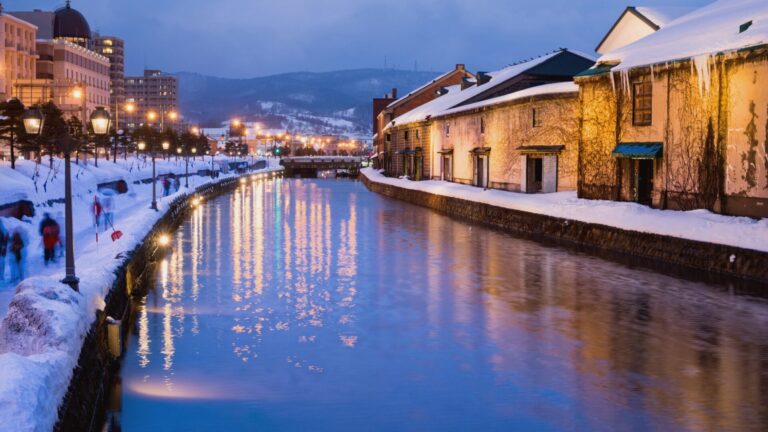

Most travelers who come to Hokkaido with sustainability in mind face the same problem: the word “eco-friendly” has been stretched so thin it tells you almost nothing. A hotel with recycling bins and a rooftop solar panel can call itself sustainable. So can a wilderness lodge run by a conservation biologist. They’re not the same thing.
This guide focuses on something more specific: small properties in Hokkaido where the connection to place is real and traceable — through the food served, the cultural practices supported, or the ecosystems actively protected. All five properties have fewer than 30 rooms. Factual claims — names, locations, certifications, stated practices — are drawn from each property’s official website. Where information couldn’t be verified from primary sources, we’ve said so explicitly. Interpretive framing is our own.
The five places covered here are quite different from one another. A plant-based auberge in the Furano region. A wilderness lodge at the edge of a UNESCO-recognized wetland. A guesthouse in an Ainu cultural village. An off-grid stay beneath one of Hokkaido’s most iconic mountains. A sauna retreat facing Japan’s largest marshland. What they share is a genuine sense of place — and a willingness to explain it.
Related article: Sustainable Hotels in Hokkaido, Japan (2026): 5 Certified and Eco-Conscious Places to Stay
How We Selected These Properties
Hokkaido is Japan’s northernmost main island, roughly the size of Austria, with a population density far lower than the rest of the country. That geography shapes what sustainable tourism looks like here: it tends to mean direct relationships with land, wildlife, and community rather than urban certification programs.
We evaluated properties against six criteria, scoring only what was verifiable on official websites. Not appearing in this guide doesn’t mean a property isn’t doing meaningful work — it may simply mean the information isn’t publicly documented.
- Local ownership and decision-making Is the property owner-operated by someone rooted in the region? Do local residents have a real role in how it runs?
- Local employment and development Are staff drawn from the surrounding community? Are there pathways for local people to grow within the organization?
- Local sourcing and supplier relationships Does the property source food, supplies, and experiences from local small producers?
- Contribution to community challenges Does the property engage with regional issues — conservation, cultural preservation, land use — in ways that go beyond hospitality?
- Respect for culture, nature, and everyday life Is the local culture or ecosystem treated as something to protect rather than consume?
- Concrete environmental practices Are there specific, documented efforts around energy, waste, water, or ecosystem stewardship?
Properties are limited to 30 rooms or fewer. Information reflects what was confirmed on official websites as of May 2026.
The Properties
1. Auberge erba stella
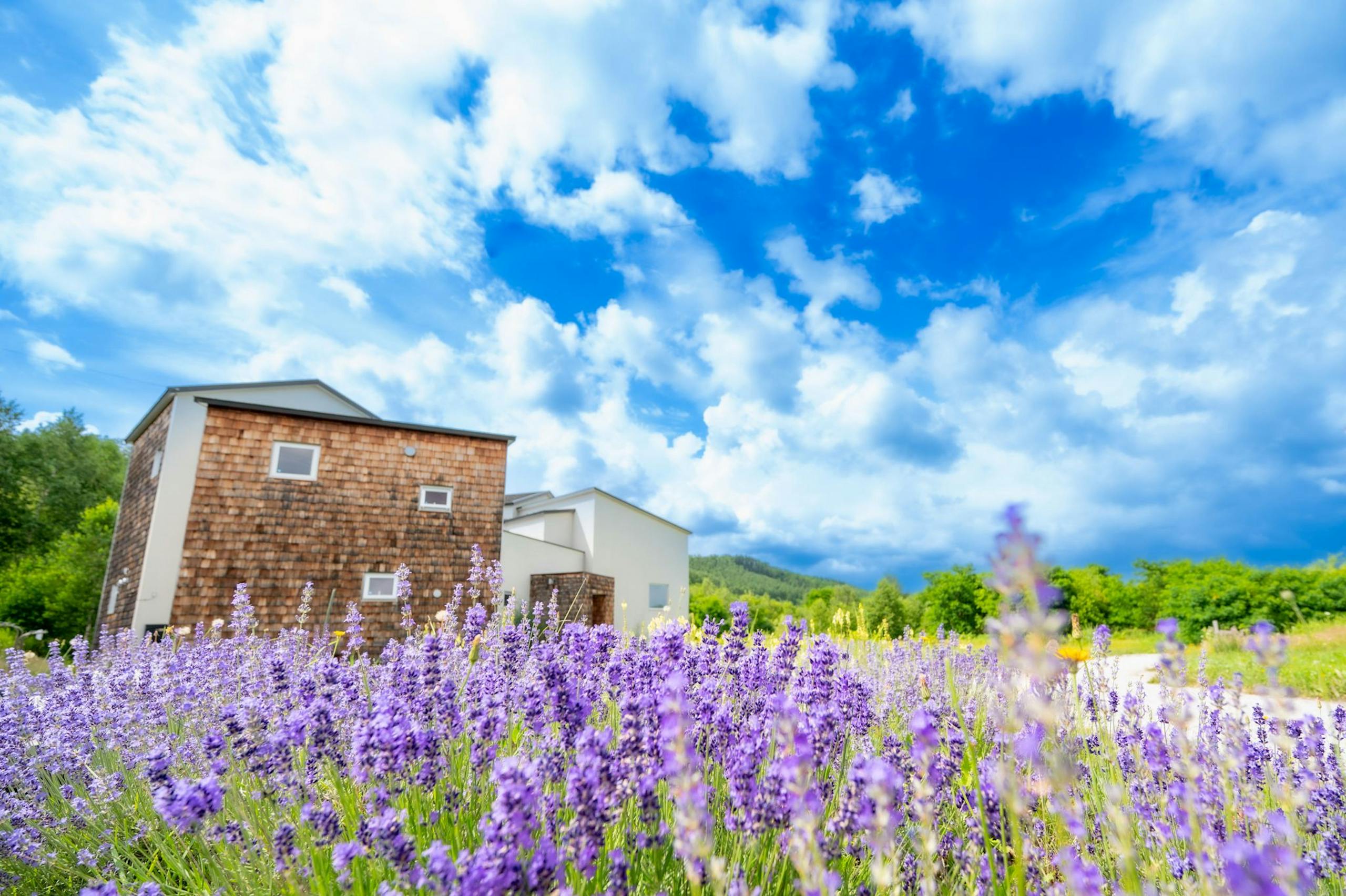

Location | Nakafurano, Sorachi Subprefecture, Hokkaido
Nakafurano sits in the heart of the Furano–Biei region, known across Japan for its lavender fields and rolling farmland. Erba stella is a three-room auberge run by a husband-and-wife team, both certified as Yasai Sommelier Pro (a Japanese professional qualification in vegetable expertise). They grow their own produce and cook it themselves.
Sustainability practices (verified from official website)
Of the five properties in this guide, erba stella provides the most detailed public documentation of its food philosophy. According to the official website, the kitchen garden grows more than 100 varieties of vegetables and herbs using methods consistent with natural cultivation — no pesticides, no synthetic fertilizers. Ingredients not grown on-site are sourced from organic producers or farmers in Hokkaido whose practices align with the property’s values.
The official website describes the food as using no animal products (vegan), with an approach the owners frame as reducing exploitation of living beings as much as possible and supporting agriculture that works with natural ecosystems. The site also notes that amenities are selected with attention to environmental impact during production and use — though the exact scope of this is not spelled out in detail.
Internationally, the property has been recognized by the We’re Smart Green Guide, receiving a four-radish rating — a distinction given to restaurants and food-focused properties with outstanding commitment to vegetable-forward, sustainable cuisine.


Who this property may suit
Travelers for whom food ethics and regenerative agriculture are genuine motivations rather than nice-to-haves. Visitors interested in plant-based Japanese cuisine made from ingredients grown on the premises. Anyone who wants to understand what sustainable food production actually looks like in a Hokkaido context.
What to know before booking
Three rooms means availability can be limited during peak seasons. The plant-based menu is a fundamental part of the experience, not an option — guests who prefer meat- or fish-centered meals may find it isn’t the right fit. Information about local employment and staffing is not published on the official website.
Book via
Ikkyu
 Yahoo!Travel
2. Wilderness Lodge Hickory Wind
Location | Tsurui Village, Akan District, Hokkaido
Tsurui Village sits inside the buffer zone of Kushiro Shitsugen National Park — Japan’s largest wetland and one of the most important habitats for the red-crowned crane (tancho), a bird that holds deep cultural significance in Japan and was once nearly extinct. Hickory Wind is a single lodge in the forest at the edge of the wetland, owned and operated by Makoto Ando, a nature guide based in Tsurui Village.
Sustainability practices (verified from official website)
The official website lists a Hokkaido Food Meister certification and membership in Slow Food Friends Hokkaido — both of which reflect an approach to food centered on regional ingredients and ecological context. These credentials are stated on the official site and should be confirmed against the current page before citation. The website describes Ando’s work as sharing the wonders of Hokkaido and Alaska’s nature and people under the theme of “everyday miracles,” with a focus on creating a space for learning and connection across generations.
On the conservation side, the official website lists Ando as an advisor to the Japan Bear Forest Society (Nihon Kumamori Kyokai), an organization focused on protecting mountain forest watersheds where large mammals like bears live. The website also references his involvement in reducing conflict between wildlife and human communities. As with the food credentials, this affiliation should be verified against the current official site before use.
Who this property may suit
Travelers with a serious interest in Hokkaido’s wildlife and wetland ecology. Visitors who want guided immersion in one of Japan’s most ecologically significant landscapes rather than a drive-by encounter. Those looking to base themselves near Kushiro Shitsugen for several days.
What to know before booking
Room count is not listed on the official website. Details about kitchen staff and direct involvement in red-crowned crane conservation programs are not confirmed on the official site. Check the official website for current availability and rates before planning around this property.
Book via
3. Guesthouse Nibutani Yant
Location | Nibutani, Biratori Town, Hidaka Subprefecture, Hokkaido
Nibutani is one of the most significant sites of Ainu culture in Japan. The Ainu are the indigenous people of Hokkaido (and parts of Sakhalin and the Kuril Islands), with a distinct language, spiritual tradition, and relationship to the land that is entirely separate from Japanese culture. Nibutani is home to two Ainu museums and a community that has worked for decades to preserve and revitalize Ainu language and practice. Yant is a guesthouse run by Kimihiro Kayano, whose family has a long connection to Ainu cultural preservation in the area.
Sustainability practices (verified from official website)
The official website states that Kayano is working to become one of those who carry forward the Ainu culture of the Saru River basin. The guesthouse is described as a place where guests can feel Ainu culture through staying in Nibutani itself — not through performances or displays, but through the texture of the place and the people in it.
The property also describes itself as a space that connects travelers with each other and with local residents, framing the guesthouse as a meeting point rather than a passive accommodation option.
A note on Ainu culture for international visitors
Ainu culture is not a historical artifact. There is an active, ongoing effort among Ainu people in Hokkaido to reclaim language, ceremony, and cultural identity following centuries of suppression under Japanese colonial policy. Visiting Nibutani means entering that context. The most respectful approach is to arrive with some background knowledge, to listen more than you assume, and to treat the community’s practices with the seriousness they deserve.
Who this property may suit
Travelers who want to engage with Ainu culture in the place where it is lived rather than in a museum context. Visitors interested in indigenous rights, land relationships, and cultural revitalization more broadly. Those who want to understand a dimension of Japan that most tourism itineraries don’t reach.
What to know before booking
Participation in specific Ainu ceremonies or events such as Chip Sanke (a traditional canoe-launching ceremony) is not mentioned on the official website. A formal partnership with the Nibutani Ainu Culture Museum is also not documented there. Room count is not listed. There is no mention of environmental practices on the official website. Contact the property directly for current details.
Book via
Expedia
4. Off-Grid Guesthouse GURUGULU
Location | Kutchan Town, Abuta District, Hokkaido (near Niseko)
Most international visitors to the Niseko area come for the ski slopes. GURUGULU offers a different entry point into the same landscape: a guesthouse in the forest at the foot of Mt. Yotei, the dormant stratovolcano that defines the region’s skyline, described on the official website as an “off-grid guest house in the forest of Mt. Yotei.”
Sustainability practices (verified from official website)
The property’s defining characteristic, as presented on the official website, is its off-grid orientation — operating outside standard utility infrastructure. The official site frames the experience as a “forest living experience” (mori no kurashi taiken-yado in Japanese). The specifics of how power, water, and waste are managed are not detailed on the official website, but the off-grid framing is central to how the property presents itself.
Who this property may suit
Travelers curious about what daily life looks like when it’s not plugged into conventional infrastructure. Visitors who want to spend time in the Niseko–Yotei area outside the ski resort context. Those interested in simple, intentional living as a travel experience.
What to know before booking
Specific systems — solar, rainwater collection, composting — are not documented on the official website. Details about the owner’s background, construction history, or any workshop and training programs are also not confirmed there. Room count and pricing require direct verification. Check the official website before making plans around this property.
Book via
5. THE GEEK
Location | Shibecha Town, Kawakami District, Hokkaido (adjacent to Kushiro Shitsugen National Park)
Kushiro Shitsugen is Japan’s largest wetland — roughly 183 square kilometers of marsh, bog, and riparian forest that sustains one of the world’s most fragile ecosystems. THE GEEK is a sauna and accommodation facility near the wetland, with the landscape itself functioning as the central experience.
Sustainability practices (verified from official website)
The official website describes the property as centered on the “vast and magnificent Kushiro Shitsugen” and on the sounds and silence of the natural environment. Local ingredients are referenced in connection with the food menu, though specific sourcing details and supplier names are not listed on the official website.
From an editorial standpoint, the property’s relationship to sustainability reads primarily through location and concept: being situated adjacent to one of Japan’s most protected natural environments, and building an experience around stillness and nature rather than entertainment infrastructure. This framing is our interpretation, not a stated claim of the property.
A note on Kushiro Shitsugen for international visitors
Kushiro Shitsugen became Japan’s first Ramsar Convention wetland site in 1980 and was designated a national park in 1987. It’s home to the red-crowned crane, Blakiston’s fish owl, and multiple species that exist nowhere else in Japan. The ecosystem is fragile and the region has worked hard to balance tourism access with conservation. Any visit to this area is worth approaching with that context in mind.
Who this property may suit
Travelers who want an immersive encounter with one of Hokkaido’s most ecologically significant landscapes. Visitors interested in the combination of sauna culture — a practice with deep roots in Hokkaido, influenced by the region’s proximity to Finland and Russia — and the natural environment. Those looking to explore eastern Hokkaido beyond the standard Akan–Shiretoko circuit.
What to know before booking
Owner name, room count, and precise address are not listed on the official website. Details about specific beverages served, partnerships with regional organizations, room features such as television policy, and formal environmental practices are also not confirmed on the official site. Contact the property directly for specifics before booking.
Book via
Expedia
A Note on How This Guide Was Researched
Factual claims in this guide — names, locations, certifications, and stated practices — are drawn from direct access to each property’s official website. Interpretive framing is editorial. The phrase “not confirmed on the official website” appears throughout — this reflects a deliberate choice to separate what is documented from what is inferred. Other sources, including travel aggregators and regional tourism boards, mention some claims we chose not to include. Eco Philosophy uses official, first-party information only.
This also means the guide likely underrepresents what these properties actually do. A small lodge run by a conservation biologist may not have the bandwidth to document every initiative on a website. Absence of documentation is not evidence of absence of practice. If you want to know more about a specific aspect of a property’s work, ask them directly — that conversation is itself part of responsible travel.
Rates, availability, room counts, and programs change. Confirm everything on the official website or by contacting the property before booking.
Final Thoughts: What Kind of Traveler Are You in This Place?
The five properties in this guide represent five different answers to the question of what it means to be rooted in Hokkaido.
Auberge erba stella grounds that rootedness in food — in the soil of a specific plot of farmland in Nakafurano and a philosophy about what it means to eat without taking more than necessary. Hickory Wind grounds it in the living ecology of the Kushiro wetland and in the decades-long work of a guide who has spent his career making that ecosystem legible to visitors. Nibutani Yant grounds it in cultural continuity — in the ongoing effort of an Ainu community to carry its identity forward on its own terms. GURUGULU grounds it in the question of infrastructure itself: what does a life look like when it’s built around a mountain rather than around the grid? THE GEEK grounds it in the experience of sitting still inside one of Japan’s most important wild places.
None of these is a conventional hotel stay. Each one asks something of you as a traveler — a willingness to slow down, pay attention, and let the place set the terms. That’s probably not for everyone. But if it sounds like what you’re looking for, Hokkaido has room for it.
All information is based on each property’s official website and reflects what was verifiable as of May 2026. Details are subject to change. Please confirm current information directly with each property before booking.