
Most visitors to Nara spend a day or two in the city — feed the deer, see Tōdai-ji, and move on. But Nara Prefecture extends far south and east into one of Japan’s most sparsely populated and culturally layered landscapes. This is where some of the country’s most quietly compelling places to stay have taken root.
What these accommodations share isn’t a design aesthetic or a marketing strategy. What they share is a tangible connection to the communities they sit in — through the buildings they rescued from abandonment, the food they source from neighbors’ fields, or the people they bring into conversation with each other. Some are operated by locals who returned to their hometowns. Others were built by community volunteers. A few have been quietly running for over five hundred years.
This guide covers 13 small-scale accommodations in Nara Prefecture selected based on information verifiable on each property’s official website. The goal isn’t to rank them — it’s to help you figure out which one fits what you’re actually looking for.
How We Selected These Properties
Each property was evaluated against six criteria. Only information confirmed through official sources is presented as fact. Properties not listed here may well be doing meaningful community work that simply isn’t publicly documented.
- Local ownership and management — whether owners and operators are based in or connected to the area
- Local employment — whether staff are drawn from the community with meaningful, lasting roles
- Local sourcing and partnerships — food, materials, and experiences sourced from nearby producers and businesses
- Engagement with community challenges — vacancy revitalization, resettlement support, or other local needs
- Cultural and historical stewardship — active maintenance of historic buildings, landscapes, and traditions
- Environmental responsibility — adaptive reuse of existing structures, waste reduction, care for the natural environment
All properties have 30 rooms or fewer. Information reflects what was available on official websites as of April 2026.
The Accommodations
1. ume, yamazoe: Yamazoe Village


Location | Approx. 1 hour by car from central Nara city · Yamabe area, easternmost edge
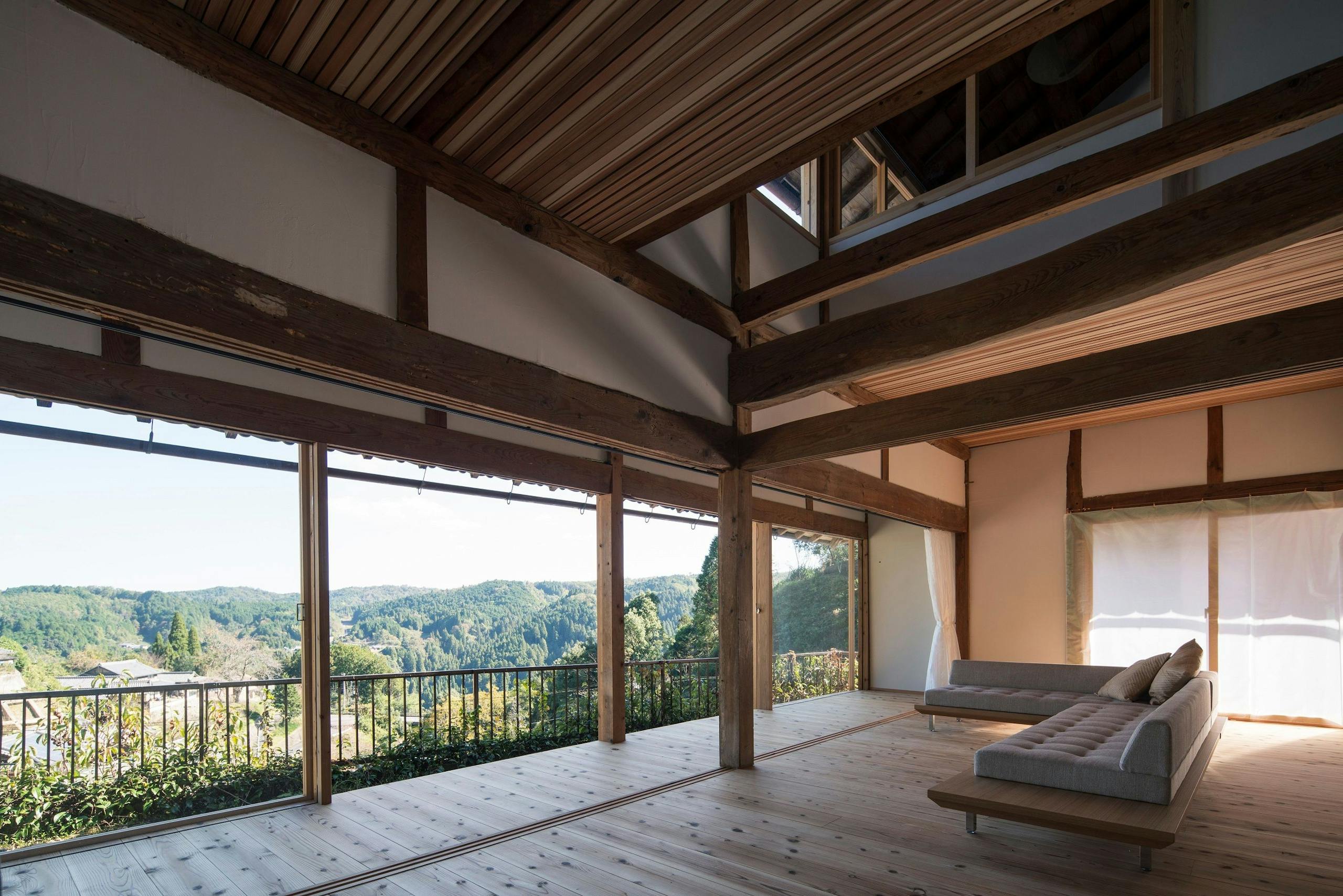
Yamazoe is a small village in the Yamato Highlands with one of the lowest population densities in Nara Prefecture. Umemori Co., Ltd. converted the former home of a village mayor into a three-room guesthouse, set at the top of a hillside hamlet with no cell service and no convenience store within reach.
Sustainable practices (verified from official sources)
The property serves meals made with seasonal local vegetables and Yamato tea — a regional green tea variety grown in the village. A subscription program sends members seasonal boxes of produce and new-harvest tea four times a year. Uniquely, the guesthouse holds monthly three-day visits open to people with disabilities or serious illness and their families, provided free of charge including meals and use of the outdoor sauna. The official website states that “running a hotel is not our purpose” — the property is designed so that village residents drop by and conversation happens naturally. The facility includes an outdoor Finnish-style sauna.

Good fit if you’re looking for
A genuine digital detox — not the branding, the thing itself. Rural mountain life as it actually is, not as a performance of it. A place where the surrounding community is part of the experience.
Worth knowing before you book
No cell service means no navigation after you arrive. A car is required; winter means snow tires. The property has an English-language page on its website, so booking inquiries in English are possible. For solo room rates, check the FAQ page on the official site.
Book

2. Uda Yakuyu no Yado Yatakiya: Uda City


Location | Approx. 20 min by car from Kintetsu Haibara Station · Yamato Highlands area
Uda City has been a medicinal herb center since Japan’s earliest recorded history. The Nihon Shoki (Chronicles of Japan, compiled in 720 CE) notes that the imperial court held the country’s first official herb-gathering ceremony here in 611 CE. Japan’s oldest surviving private medicinal garden — Morino Kyuyakuen — still exists in the city today.
Yatakiya is a four-room auberge (inn with restaurant) inside a 300-year-old thatched-roof kominka — a traditional Japanese farmhouse — that has been carefully renovated.
Sustainable practices (verified from official sources)
Each of the four rooms has a bath made from Hinoki cypress and Shigaraki-ware ceramics filled with the inn’s own herbal bath preparation, which includes Yamato Tōki (Angelica acutiloba), a medicinal plant historically cultivated in this region. Meals are creative Italian cuisine using organic vegetables grown in the inn’s own garden, Uda beef, and Yamato Tōki as an ingredient. The inn also sells a house-made craft cola called Kirakukara, made from Yamato Tōki leaves. Medicinal herb bath workshops and herb-foraging tours led by local specialists are available. The official concept page reads: “We hope time spent here becomes a chance to sense the kind of circular connections that were once taken for granted.”

Good fit if you’re looking for
An immersive connection between food, landscape, and traditional plant knowledge. Slow travel rooted in a place with genuine cultural depth. A full-board stay with a distinct culinary identity.
Worth knowing before you book
This is a full-board auberge, so the price point is on the higher end. A separate cottage, Manyo, accommodates guests with pets (one group per day, different booking conditions). English communication may be limited — confirm in advance. Details on the official site.
Book
3. Guesthouse Nanone: Uda City, Ōuda District
Location | Approx. 10 min by car from Kintetsu Murōguchi-Ōno Station · Uda-Matsuyama historic district
Nanone occupies a 120-year-old building that was once a soy sauce brewery, known as the former Masuoka Residence, in the Uda-Matsuyama Important Preservation District for Historic Buildings. The building was designated a National Registered Cultural Property (Tangible Cultural Property) in 2024. It has three guest rooms with a capacity of 11.
Sustainable practices (verified from official sources)
The guesthouse has co-hosted the Kominka Medicinal Herb Market (古民家薬草マルシェ) — a local market centered on Uda’s herb and fermentation culture — every year since its founding, reaching its 10th edition in 2024. Partner venues have included Kubo Honke Sake Brewery and Hōsengama pottery. Other programming has included wild yam foraging tours, herb-walk events, and traditional lantern-making workshops with local craftspeople. The building’s continued use preserves the historic streetscape of Uda-Matsuyama.
Good fit if you’re looking for
Being inside a living historic townscape rather than visiting one. Connecting with local producers through hands-on experiences. A base for exploring Uda’s sake breweries, medicinal gardens, and traditional architecture.
Worth knowing before you book
The operating organization is Nature Core Science Co., Ltd. Stays are primarily room-only; meals are generally tied to specific workshop programs. Information about local sourcing isn’t detailed on the official website. English support is limited — contact in advance.
Book
4. Guesthouse Sankirou: Yoshino Town, Kamiichi
Location | Walking distance from Kintetsu Yamato-Kamiichi Station · Along the Yoshino River
Yoshino is known internationally for its mountainside cherry blossoms, but most visitors never make it to Kamiichi, the old timber-trade district at the foot of the mountain. Sankirou occupies a former ryotei (a traditional high-end Japanese dining establishment) that was restored by a local volunteer group called the Kamiichi Machizukuri no Kai Returns (“Town-Building Association, Returns”). It has four rooms and can sleep up to 15.
Sustainable practices (verified from official sources)
The restoration involved students from Kinki University and a vocational training school, alongside local carpenters and craftspeople. The riverside deck was rebuilt using Yoshino timber — the region has supplied premium Japanese cedar and cypress for centuries. The shoji screens use handmade washi paper produced by artisans in the nearby Kuzu district, one of the oldest washi-making communities in Japan. According to the official website, the guesthouse also serves as a relocation consultation point for people considering a move to Yoshino — part of a broader effort to bring new residents into a declining area.
Good fit if you’re looking for
A base for Yoshino beyond the cherry blossom peak. Experiencing a historically significant timber-trade district that most visitors overlook. Connecting with the slow pace of a small river town.
Worth knowing before you book
Meals are self-catered, takeout, or at local restaurants. There is one shared bathroom. Reservation is by email form with responses within two days. English communication is limited — consider using a translation tool.
Book
5. Yui Honmachi Yashiki: Yoshino Town, Kamiichi

Location | Walking distance from Kintetsu Yamato-Kamiichi Station · Kamiichi central area
Also in the Kamiichi district, this simplified inn occupies a kominka built in the late Edo to early Meiji period (mid-to-late 1800s), originally a timber merchant’s family home. The building retains its mushikago-mado (latticed insect windows), steep staircase-drawer cabinet, heavy ceiling beams, and original fixtures, all preserved through a careful renovation.
Sustainable practices (verified from official sources)
The project revived a vacant building in Kamiichi’s historic commercial center while keeping its timber-industry heritage legible in the architecture. A share house is attached to the rear of the building, functioning as part of the town’s resettlement efforts. The official website states the aim as wanting “more people to know and experience the many sides of Yoshino beyond cherry blossoms.” The property also accepts bookings for events and small gatherings.

Good fit if you’re looking for
Living inside a piece of Yoshino’s timber-trade history. A group-friendly base with character. Somewhere to try on the idea of living in rural Nara before committing to anything.
Worth knowing before you book
No meals provided. Check nearby restaurant hours before arriving — dining options in Kamiichi are limited in the evenings. Room count, capacity, and pricing are on the official website. English support is uncertain — contact in advance.
Book
6. Kominka Stay Yasaka: Asuka Village, Kayamori
Location | Approx. 20 min by car from Kintetsu Kashiharajingū-mae Station · Oku-Asuka area
Asuka (飛鳥) is the ancient heartland of Japanese civilization — the site of the country’s first permanent capital in the 7th century, before Nara City was established. Most tourists visit the main historic sites, but fewer make it to the Kayamori district in the far south of Asuka Village, where this inn sits.
Yasaka is a fully private whole-house rental inside a kominka over 250 years old, completely renovated. It has three sleeping rooms and accommodates up to six guests across 140 square meters.
Sustainable practices (verified from official sources)
The interior uses Nara-grown timber throughout. The bathtub is made from kaya (Japanese nutmeg-yew) wood, known for its fragrance and durability. Keeping the building standing rather than demolishing it means the landscape of the Kayamori hamlet stays intact. Available activities include a private tent sauna, campfire, barbecue, and cycling. Photos on the official website are taken by a local photographer, Asukakkochan.
Good fit if you’re looking for
Privacy in a nature-surrounded ancient landscape. A whole house to share with a group or family. Unhurried time in the deepest part of Asuka, away from the tourist sites.
Worth knowing before you book
No meals are provided; self-catering or request-based meal delivery is available (food requests must be made two days ahead). A car is essential — Oku-Asuka has no convenient public transit. Nighttime dining options nearby are very limited. English support is available through the booking platform.
Book
7. Asuka Yuri no Sato Shinrajuku: Asuka Village, Ikazuchi
Location | Approx. 7 min by car from Kintetsu Kashiharajingū-mae Station · Northwest Asuka Village
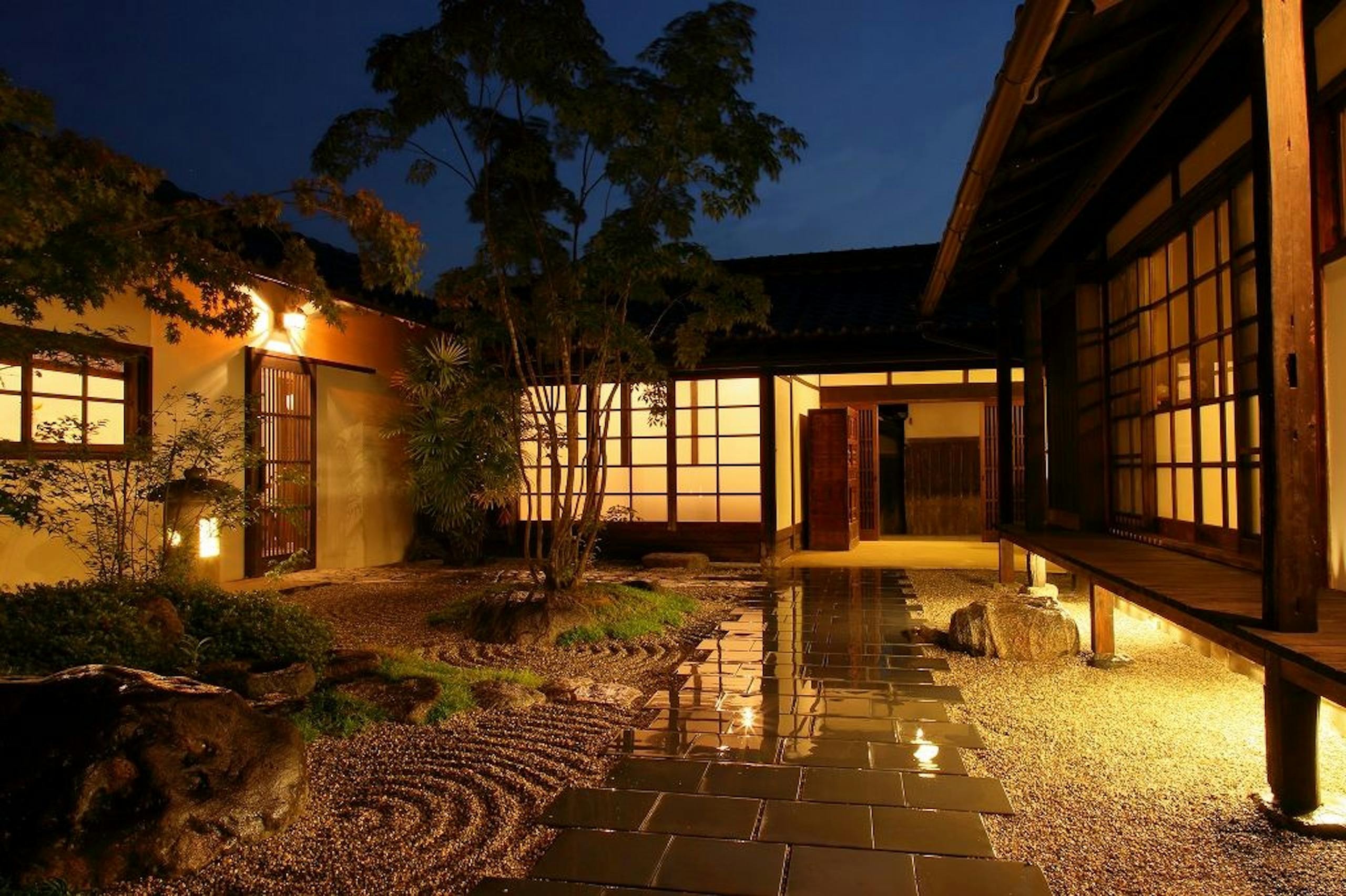
This one-group-per-day guesthouse sits beside Ikazuchi-no-Oka — Thunder Hill — which appears in Man’yōshū, Japan’s oldest anthology of poetry (compiled circa 759 CE). The guesthouse is a renovated traditional Japanese farmhouse.
Sustainable practices (verified from official sources)
There’s no television, no audio equipment. What you hear is wind and birdsong. The property is designed around the changing face of Asuka’s farmland through the seasons, experienced from the engawa (traditional wooden veranda) and the windows. The official website documents the village in careful seasonal detail — the scent of wintersweet in January, firefly season in the rice paddies, the communal rope-hanging ceremony each New Year in the Kayamori hamlet. The intention is not to stage rural Japan for visitors but to let them sit inside it as it actually is.

Good fit if you’re looking for
Asuka without the rush. A very long, unscheduled stay in an ancient landscape. Slower, quieter travel where the days are structured by light rather than itinerary.
Worth knowing before you book
Check-in is via a remote keyless system — minimal staff contact. The parking area is a five-minute walk from the guesthouse. Details on check-in/check-out times and pricing are on the official site and booking platforms. Some English booking support is available through partner platforms.
Book
8. Oku-Asuka Sarara / Nōka Minshuku Sarara: Asuka Village, Kayamori

Location | Approx. 25 min by car from Kintetsu Kashiharajingū-mae Station · Oku-Asuka area
Sarara was opened in 2009 by Hiroko Sakamoto in the Kayamori hamlet — the same remote corner of Asuka where Yasaka inn sits. It combines a farm restaurant with a small farmhouse guesthouse on the same lot. In 2024, it celebrated its 15th anniversary.
Sustainable practices (verified from official sources)
Sarara’s philosophy is “food where you can see who made it” — meals are prepared from vegetables and mountain vegetables grown in the owner’s own fields. Black rice, handmade konjac (a traditional Japanese root vegetable cake), and black rice noodles are available to purchase and take home. In 2025, Sakamoto published a book documenting over 20 years of village revitalization work in Kayamori, titled Mochitsumotaretsu Kayamori — Soredemo Yappari Koko ga Suki (“Leaning on Each Other in Kayamori — And Still Loving It Here”). One person, staying in one place, over decades: that’s the substance behind this guesthouse.

Good fit if you’re looking for
Food grown by the person who serves it. A stay connected to the everyday life of a working hamlet. The Oku-Asuka area itself, which most Asuka visitors never reach.
Worth knowing before you book
The farm restaurant is open Fridays, Saturdays, and Sundays (with seasonal closures). Meals, including dinner for overnight guests, require booking the day before. Operating schedules can shift — check the official site before planning your visit. Facilities are simple. Very limited English support.
Book

9. Seseragi no Yado Misenkan: Tenkawa Village, Kawai

Location | Approx. 1 hour by bus from Kintetsu Shimoinaguchi Station · Tenkawa Village entrance
Tenkawa Village sits deep in the Yoshino mountains, surrounded by terrain that has been sacred in Japanese religion for over 1,300 years. The mountain range here is part of the UNESCO World Heritage Site “Sacred Sites and Pilgrimage Routes in the Kii Mountain Range.” Misenkan is a four-room inn run by the owner — a Tenkawa native who left a career in local government to return home — and his wife, who came from Kyoto and has made the village her own. The owner holds a Forest Instructor certification and has built an informal community called the Tenkawa Research Institute, a gathering of people who care about the village’s history and nature.
Sustainable practices (verified from official sources)
Meals feature local game (gibier), river fish, and village-produced tofu and konjac. The inn’s four rooms use Yoshino cedar and other local timber throughout, including rooms with riverside deck terraces. Inside the inn’s main hall, chef Toshiharu Sunayama runs a separate restaurant called SÉN, offering ryūiki ryōri — a cuisine philosophy where the dish is the watershed, tracing how the same water travels from mountain spring to the Kumano Sea. The inn also refunds the full bus fare for guests who arrive by public transit — a practical response to the difficulty of reaching Tenkawa without a car.


Good fit if you’re looking for
Deeper access to Yoshino–Kumano sacred mountain country. A host who can actually explain the place you’re in. Distinctive cuisine rooted in a real geography.
Worth knowing before you book
From Osaka or Nara City, count on around two hours by car. Bus service is infrequent; check the schedule carefully. Snow tires or chains are required in winter. Some English communication possible — worth emailing ahead.
Book

10. Hanaya Tōbei: Tenkawa Village, Dorogawa


Location | Approx. 1 hr 20 min by bus from Kintetsu Shimoinaguchi Station · Dorogawa Onsen district
Dorogawa Onsen is unlike most Japanese hot spring towns. Its identity is inseparable from Shugendo — a centuries-old Japanese practice blending Buddhism, Shinto, and mountain asceticism, centered on the sacred peak of Mt. Ōmine. Every year, white-robed yamabushi (mountain practitioners) pass through Dorogawa on their way to rigorous training in the peaks above. Hanaya Tōbei has served as their lodging for 500 years. The current proprietor is the 17th generation of the same family.
The inn has eight rooms and limits stays to six groups per day. Walk-in bathing, school trips, and group training programs are not accepted.
Sustainable practices (verified from official sources)
The 500-year hosting tradition for yamabushi is itself a form of cultural stewardship — the inn maintains a connection to a living spiritual practice that most travelers would never encounter otherwise. Meals include local river fish, mountain vegetables, and wild boar (botan nabe) from local hunters. The property has three distinct baths including the Zekū-no-yu private reserved bath, all accessible 24 hours. The parking lot has EV charging.


Good fit if you’re looking for
A historically significant inn with an unbroken lineage. Experiencing a sacred mountain hot spring town at its most authentic. The specific atmosphere of Shugendo culture, which has no real equivalent elsewhere.
Worth knowing before you book
Getting to Dorogawa requires time — plan accordingly. Pricing is on the mid-to-upper end for a traditional inn. English support is limited. Details on the official website.
Book

11. Minshuku Suireikan: Tenkawa Village, Dorogawa
Location | Approx. 1 hr 20 min by bus from Kintetsu Shimoinaguchi Station · Dorogawa Onsen district
Suireikan is a small, family-run guesthouse in the same Dorogawa Onsen district. It doubles as the contact point for Inabuchi-ga-Take Mountain Hut (稲村ヶ岳山荘), making it a practical base for climbers heading into the Ōmine range.
Sustainable practices (verified from official sources)
The inn’s meals feature home-grown organic vegetables and water from Dorogawa’s famous natural spring “Gorogoro-sui” — a mineral water source considered one of Japan’s finest. The guesthouse has supported mountain visitors for years as a small, community-embedded operation.
Good fit if you’re looking for
A low-key, affordable base for mountain hiking in the Ōmine range. An unpretentious local guesthouse with a family feel. Access to some of Dorogawa’s most celebrated spring water.
Worth knowing before you book
Reservations are by phone or fax only — no online booking. The official website is minimal; call ahead for details. Very limited English support. Information on environmental practices is not published.
Book
12. Totsukawa Onsen Ebisuso: Totsukawa Village, Hiratani

Location | Directly beside Totsukawa Onsen bus stop (Yagibu-Shingū Express Bus) · Totsukawa Onsen district
Totsukawa Village is the largest village by area in Japan. Getting there is an adventure in itself: the Yagibu-Shingū line — Japan’s longest regular bus route, over 160 miles from end to end — runs through it. Ebisuso’s philosophy is stated plainly on its website: “Heal the outside of your body with hot springs; heal the inside with locally sourced food.”
Sustainable practices (verified from official sources)
The inn’s official website states that 90 to 100 percent of ingredients are sourced from Totsukawa Village. Vegetables are the centerpiece. The inn’s approach to the onsen (hot spring) emphasizes using the water in its natural state without additives; details are on the official site. Seasonal programming includes yuzu citrus cosmetic-making workshops. The inn has been part of Totsukawa Village’s furusato nōzei (hometown tax return) program since 2024.

Good fit if you’re looking for
A genuinely remote, off-the-beaten-path Japanese hot spring with a farm-to-table ethos. A stop on a Kumano pilgrimage route (the Kohechi trail passes through the area). Somewhere that takes both the food and the water seriously.
Worth knowing before you book
Totsukawa is 2–3 hours from Osaka and Nara City by car. Bus service is sparse — the long-distance bus is an option but requires careful scheduling. Very limited English support.
Book
13. Nara Yagyū-tei: Nara City, Yagyū
Location | Approx. 30 min by car from Kintetsu Nara Station · Yagyū district
The Yagyū family were swordsmen to the Tokugawa Shogunate — the ruling family of Japan from 1603 to 1868. Their ancestral home in the mountains east of Nara City is now a hiking destination scattered with temples, ancient stones, and historic sword-practice sites. Nara Yagyū-tei is a farmhouse guesthouse in this area, run in collaboration with Yūgen Co., Ltd. (オクダ). Three rooms on the second floor accommodate one group at a time.
Sustainable practices (verified from official sources)
Guests can try cooking over an okudosan — a traditional Japanese wood-fire stove that was the standard kitchen technology before gas — as well as BBQ. According to the official website, the guesthouse has welcomed guests from 17 countries and regions since opening. The stay involves sharing the host’s home, and the surrounding landscape of shrines, stone Buddhas, and forested trails is the experience. Yagyū Tourism Association actively promotes the area as a cosplay photography destination — a modern form of cultural storytelling using this historic setting — and the guesthouse serves as one of the changing facilities for participants.
Good fit if you’re looking for
Rural homestay with direct access to a little-visited but deeply interesting historical district. Hosting culture where conversation with your host is built into the stay. Nara’s eastern hills, well outside the tourist circuit.
Worth knowing before you book
A car is the practical way to get here. The shared-living format means limited privacy. Operational details and English support are best confirmed directly with the host via the official site.
Book
A Note Before You Book
A few things worth checking on each official website before finalizing plans:
- Items listed in this article as “not confirmed” or “not detailed on the official site” are genuinely not verified from primary sources. Conditions may have changed since publication.
- Local sourcing, local employment, and environmental practices are often not publicly documented even where they exist. A direct inquiry to the property can tell you more.
- Rates, room availability, seasonal closures, and operating conditions change. Always check the official site immediately before booking.
- English language support varies significantly across these properties. Several are in areas where English is rarely spoken. Contacting properties via email with translation assistance (Google Translate, DeepL) is generally more effective than calling.
Properties not listed here may be doing equally meaningful community-rooted work. This guide only covers what could be verified through official channels.
Frequently Asked Questions
What does “community-rooted accommodation” mean in this context? For this guide, it means small-scale properties where there is a verifiable, direct relationship between the stay and the surrounding community — through local ownership, locally sourced food, restoration of historically significant buildings, or active engagement with community challenges like depopulation and vacancy.
Are these properties suitable for travelers who don’t speak Japanese? It depends on the property. Ume, yamazoe has an English-language website. Yasaka (Yatakiya and Shinrajuku can be booked through platforms with English interfaces. Several properties — including Sankirou, Muranche, and Suireikan — have very limited English support and are best approached with a translation tool. If English communication matters to you, email each property before booking.
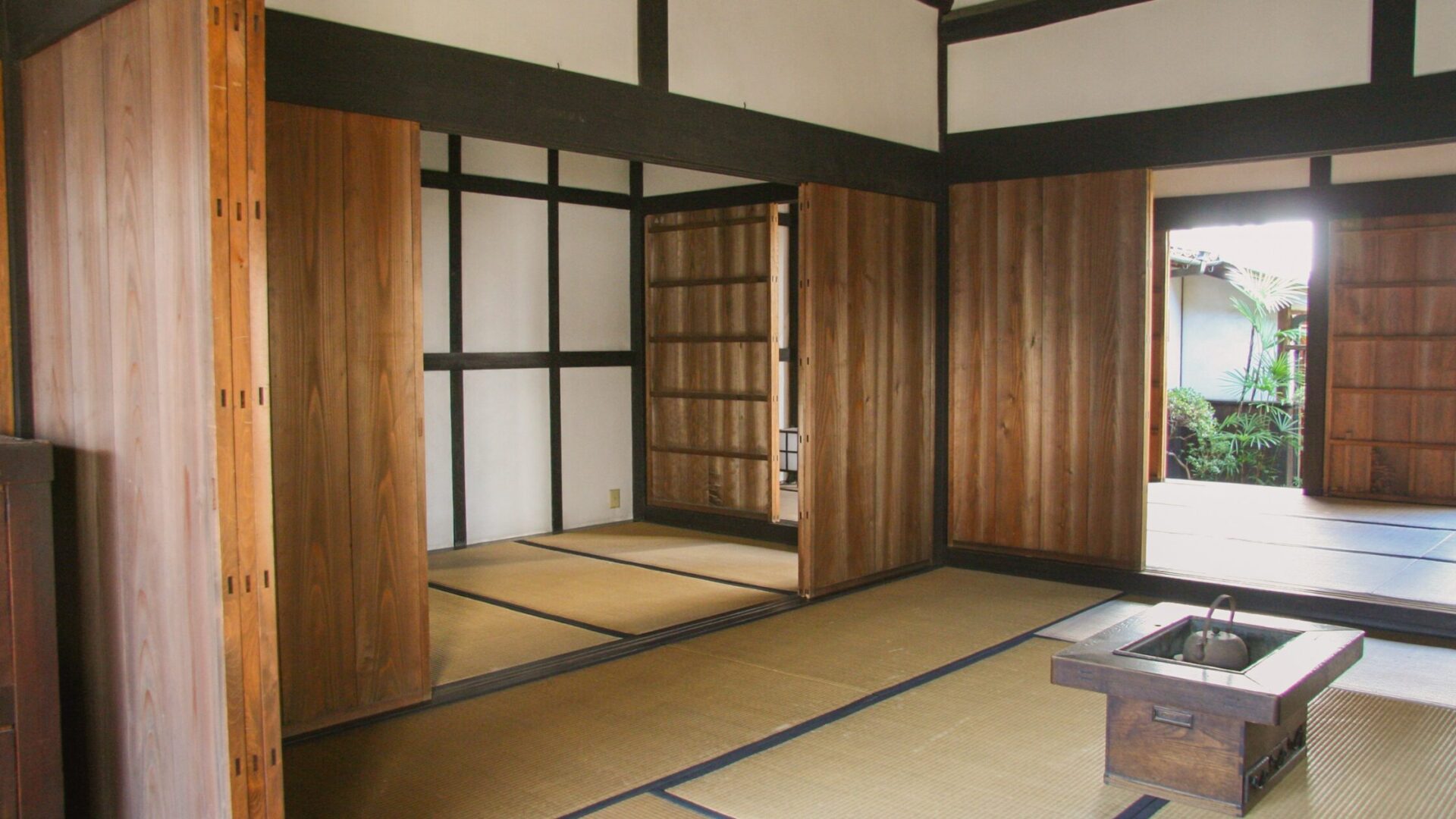
What is a kominka? A kominka (古民家) is a traditional Japanese farmhouse, typically made of wood with a thatched or tiled roof, heavy timber framing, and an open central hearth. Many are 100–300 years old. Across rural Japan, vacant kominka are being renovated into guesthouses, cafés, and shared workspaces as a way of preserving the buildings and reactivating depopulated communities.
What is Shugendo? Shugendo is a Japanese spiritual practice, originating in the 7th century, that combines elements of Buddhism, Shinto, and mountain asceticism. Practitioners, called yamabushi, undergo physical and spiritual training in sacred mountain ranges. The Ōmine range in Yoshino and Tenkawa is one of the most important Shugendo sites in Japan and is part of the UNESCO World Heritage “Sacred Sites and Pilgrimage Routes in the Kii Mountain Range.”
What is medicinal herb culture in Uda, and why is it significant? Uda City’s connection to medicinal herbs dates back to at least 611 CE, when the Nihon Shoki records the imperial court conducting Japan’s first official herb-gathering ceremony there. The city’s temperate highland climate proved ideal for growing Yamato Tōki (Japanese Angelica) and other traditional medicinal plants. Japan’s oldest surviving private medicinal garden, Morino Kyuyakuen, is still accessible in the city.
How do I get to these properties from Osaka or Tokyo? Most properties in the Yoshino–Tenkawa–Totsukawa corridor are 1.5–3 hours from Osaka by car. Trains reach Kintetsu stations in Yoshino, Kashihara, and Uda; onward access to remote areas requires a car or infrequent buses. From Tokyo, all are accessible by Shinkansen to Shin-Osaka or Nagoya, then onward by train and car. Totsukawa is one of the most remote — plan a full travel day.
Is Nara Prefecture safe for solo travelers? Yes. Japan has very low crime rates overall. The primary challenge in rural Nara is logistical — remote locations, limited public transit, minimal English signage. Solo travelers who are comfortable driving in Japan and can navigate with a Japanese-language GPS or mapping app will find these areas manageable.
What is the best season to visit? Spring (late March–April) brings cherry blossoms, particularly in Yoshino. Late May through early July is green-season hiking weather. Autumn foliage runs from mid-October through November and is spectacular in Tenkawa and Totsukawa. Winter is cold and snowy in the mountains — some areas require chains or snow tires — but also uniquely quiet.
Closing Thought
These fourteen stays don’t represent a unified trend or a marketing category. They represent fourteen different answers to the same underlying question: what does it mean to run a place to sleep that actually belongs to the place it’s in?
Some of the answers involve five centuries of unbroken tradition. Some involve a group of university students with power tools and local lumber. Some are a single person who came back to her village and opened a restaurant. What they have in common is that the money you pay stays close to where you slept — cycling through a local economy that, in many of these areas, needs it.
Nara’s deer and temples are genuinely worth seeing. But the southern and eastern parts of this prefecture — the ones most visitors never reach — hold a different kind of depth. These stays are one way in.
All information reflects what was available on each property’s official website as of April 2026. Rates, availability, and operating conditions change. Verify directly with each property before booking.