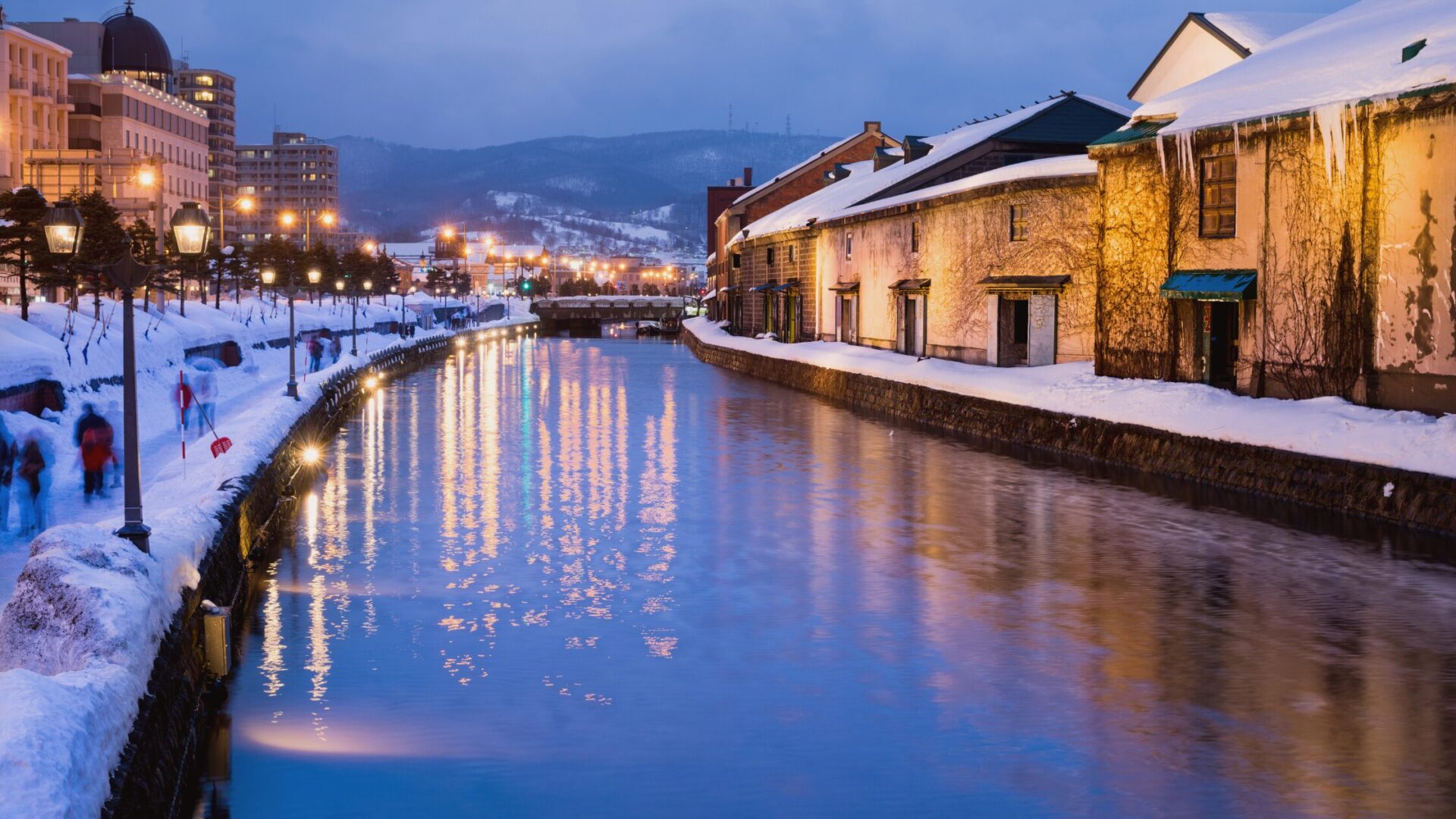

Hokkaido has a way of making you feel the scale of the natural world. The island — Japan’s northernmost and largest prefecture — sits far enough from the rest of the country that it developed its own rhythms: a short, intense summer, winters that bury entire towns in snow, and ecosystems that include brown bears, red-crowned cranes, and one of Japan’s few remaining UNESCO World Natural Heritage sites.
That same nature is also why the question of sustainable tourism here carries more weight than it does in a city. When you book a hotel in Hokkaido, you’re often making a choice about proximity to places that are ecologically fragile, culturally significant, or both.
This article doesn’t tell you which hotel is the most sustainable. What it does is lay out what we were able to verify from official sources — certifications, stated policies, specific initiatives — so you can decide what matters to you when you book. You don’t have to choose any of these properties. But if you’re thinking about sustainability as part of how you travel, this is where the publicly available information currently stands.
How We Selected These Properties
We evaluated properties across four dimensions. A property was included only if we found direct evidence on its official website or in official press releases — not from third-party review aggregators or inference on our part.
- Third-party certification — Has the property obtained a recognized sustainability certification, such as Sakura Quality An ESG Practice (a standard built on GSTC Criteria, the global baseline framework set by the Global Sustainable Tourism Council), Green Globe, or EarthCheck, and publicly disclosed it?
- Transparency of disclosure — When the property uses terms like “sustainable” or “eco-friendly,” can the basis for those claims — certification names, evaluation criteria, measurable targets — be verified on its official website?
- Resource management and environmental practices — Are specific initiatives documented, including energy efficiency, water conservation, waste reduction, or plastic reduction?
- Regional and community orientation — Does the property publicly describe sourcing from local suppliers, collaboration with local businesses, or contributions to the surrounding community?
All information is based on primary sources available as of May 2026. Properties that could not be verified against an official website were excluded.
A note on Sakura Quality An ESG Practice
Several properties in this article hold a certification called Sakura Quality An ESG Practice. Because this standard is less familiar outside Japan, a brief explanation is useful here. The certification is operated by a Japanese organization called Sakura Quality, and it is built on GSTC Criteria — the internationally recognized framework developed by the Global Sustainable Tourism Council that sets the global baseline standard for sustainable tourism certifications. Properties are evaluated across environmental, social, and governance dimensions and awarded a rating between one and five Gyoiko cherry blossoms. A rating of four or five Gyoiko is considered equivalent to meeting international sustainability standards for accommodation. When properties in this article hold this certification, their rating level is noted where it was confirmed.
The Properties
1. SAPPORO STREAM HOTEL


Location: Susukino, Sapporo — inside the COCONO SUSUKINO complex, walking distance from Susukino Station
Sapporo is Hokkaido’s capital and by far its largest city, with a population of roughly two million people. SAPPORO STREAM HOTEL opened in 2024 as part of the Tokyu Hotels lifestyle brand, occupying a 200-room space inside a new mixed-use development in the Susukino entertainment district. The hotel describes its role as a “hub” between guests and the local community — a claim that, in this case, is supported by a meaningful amount of publicly documented activity.
What we verified from official sources
SAPPORO STREAM HOTEL holds a Sakura Quality An ESG Practice certification at the four Gyoiko level. Its sustainability page is one of the more detailed we encountered among Hokkaido’s hotels, organized around three principles (“Gentle to the Earth / Gentle to the City / Gentle to People”) and six specific focus areas.
On the environmental side: the hotel participates in hydrogen-related energy initiatives within the COCONO SUSUKINO development, runs a carbon offset program using forestry credits sourced from Shimokawa — a small town in northern Hokkaido with a long-running forest conservation program — and has switched all in-room mineral water to label-free aluminum cans. Amenities use GreenPlanet, a 100% biomass-derived material developed by Kaneka Corporation. Tableware uses ARAS, a high-durability, recyclable ceramic system. Food waste is diverted to animal feed through a partnership with a local recycler.
Guests who opt not to have their room cleaned during a multi-night stay can choose an “Earth Friendly Stay” plan, forgoing housekeeping in exchange for a reduction in resource use.
On the community side: the hotel maintains relationships with Hokkaido Consadole Sapporo and Levanga Hokkaido, two of Sapporo’s major professional sports teams, and publishes a partner restaurant map in collaboration with neighboring dining establishments. The hotel also publicly reports its Green Coin program results — in fiscal year 2023, 42,973 coins were accumulated through guest opt-out housekeeping choices, with corresponding donations to environmental programs.


This property may be right for you if you want to stay somewhere with a documented, numerically reported sustainability track record. Or if you’re based in Sapporo and want urban access alongside genuinely specific environmental practices rather than marketing language.
Worth knowing before you book
Many of the hotel’s initiatives are grounded in Tokyu Hotels Group’s company-wide policies rather than site-specific decisions. If hyper-local, property-specific sustainability matters to you, the properties later in this article may be a better match.
Book via
Ikkyu
 Expedia
JTB
Yahoo!Travel
Rakuten Travel
Rurubu Travel
Jalan
Expedia
JTB
Yahoo!Travel
Rakuten Travel
Rurubu Travel
Jalan
2. Marukoma Onsen Ryokan


Location: Lake Shikotsu, Chitose — on the western shore of Lake Shikotsu, inside Shikotsu-Toya National Park
Ryokan are Japan’s traditional inns — a form of hospitality that’s been practiced for centuries, built around communal bathing (onsen), multi-course seasonal cuisine (kaiseki or honzen ryori), and a particular form of attentive service called omotenashi. Marukoma Onsen Ryokan has been operating since 1915 — a span of over 110 years — on the shore of Lake Shikotsu, one of Hokkaido’s clearest and coldest volcanic caldera lakes.
What makes Marukoma physically unusual is its hot spring pool, which sits at the lake’s edge and draws its water directly from the lake bottom, rising and falling with the water level. It’s the kind of feature that takes decades to develop a relationship with, not something you can replicate elsewhere.
What we verified from official sources
In January 2025, Marukoma obtained Sakura Quality An ESG Practice certification — the property’s own announcement describes this as the first such certification awarded to an onsen ryokan in Hokkaido, though we were unable to independently verify that claim through the Sakura Quality public registry. The property’s official announcement frames this as a deliberate choice made at the 110-year mark — a decision to formalize commitments that the inn had been building toward, rather than simply adding a badge.
The certification is evaluated by third-party assessors under criteria aligned with GSTC standards. The specific rating level was not confirmed in the official materials we reviewed; the property’s official pages describe obtaining the certification but do not specify the Gyoiko tier. We recommend confirming this directly with the property or through the Sakura Quality registry.
Among the environmental initiatives the property has made public: a shift away from single-use toiletries in guest rooms (a common practice in Japanese hotels), replaced with shared-use dispensers and a refill station, reducing disposable plastic packaging. The property’s situation inside a national park, where regulatory standards for environmental management are stricter than elsewhere, also shapes how it operates in ways that a city hotel would not experience.


This property may be right for you if you’re drawn to Japan’s onsen culture and want to experience it somewhere with a genuine long-term relationship to the land. Or if you’re interested in what it looks like when a traditional Japanese inn takes a structured approach to its environmental footprint — not just as a trend, but as a 110-year-old institution choosing to be evaluated by external criteria.
Worth knowing before you book
Lake Shikotsu is not easily accessible by public transportation alone. Plan for a rental car or an arranged shuttle from Chitose or Sapporo. Quantitative environmental reporting (energy, waste metrics) is not currently prominent on the official site; visitors looking for data-dense disclosure may want to reach out to the property directly.
Book via
Ikkyu Expedia
JTB
Yahoo!Travel
Rakuten Travel
Rurubu Travel
Jalan
Expedia
JTB
Yahoo!Travel
Rakuten Travel
Rurubu Travel
Jalan
3. Club Med Kiroro Peak

Location: Kiroro Resort area, Akaigawa Village, Yoichi District — about 80 kilometers west of Sapporo, in the mountains of the Shiribeshi region
Kiroro is one of Hokkaido’s major ski resorts, known among international skiers for consistent snowfall and terrain that rewards experienced riders. Club Med’s presence here — the Kiroro Peak property — brings the brand’s all-inclusive format to a landscape that’s primarily defined by its winters, though the surrounding area has a short but genuinely beautiful summer season as well.
This article covers Kiroro Peak specifically. Club Med also operates Kiroro Grand in the same resort complex, but we were unable to confirm Green Globe certification for that property through official sources, so it is not included here.
What we verified from official sources
Kiroro Peak has held Green Globe certification since 2023. Green Globe is an international sustainability certification for tourism businesses, evaluating properties against criteria that include water and waste management, energy efficiency, biodiversity protection, and supply chain practices. Unlike some sustainability labels, Green Globe requires annual reassessment, meaning the certification is not a one-time award.
On the environmental practices side, Club Med’s sustainability materials confirm the elimination of single-use plastic bottles across the property, a full transition away from plastic packaging in amenities, and a food waste management system. On supply chain and community: the company’s “Green Farmers” program, referenced on the sustainability page, supports local farmers and prioritizes regional sourcing.
Club Med also operates “Happy to Care,” a global program addressing human rights standards and child protection (in collaboration with ECPAT), with annual staff training across all properties including Kiroro Peak.


This property may be right for you if you’re planning a ski trip and want an internationally certified property with audited environmental practices. Or if the all-inclusive format is what makes Hokkaido accessible to you, and you’d like that convenience paired with a third-party-verified approach to sustainability.
Worth knowing before you book
The all-inclusive model means your spending stays largely within the resort rather than circulating to local restaurants and independent businesses in the surrounding area. The environmental practices here are grounded in Club Med’s global framework — they’re real, but they’re not specific to Hokkaido’s particular ecosystems or communities. For travelers who prioritize regional distinctiveness, the properties below may be a closer fit.
Book via
Ikkyu Yahoo!Travel
Rakuten Travel
Rurubu Travel
Yahoo!Travel
Rakuten Travel
Rurubu Travel
4. Park Hyatt Niseko HANAZONO
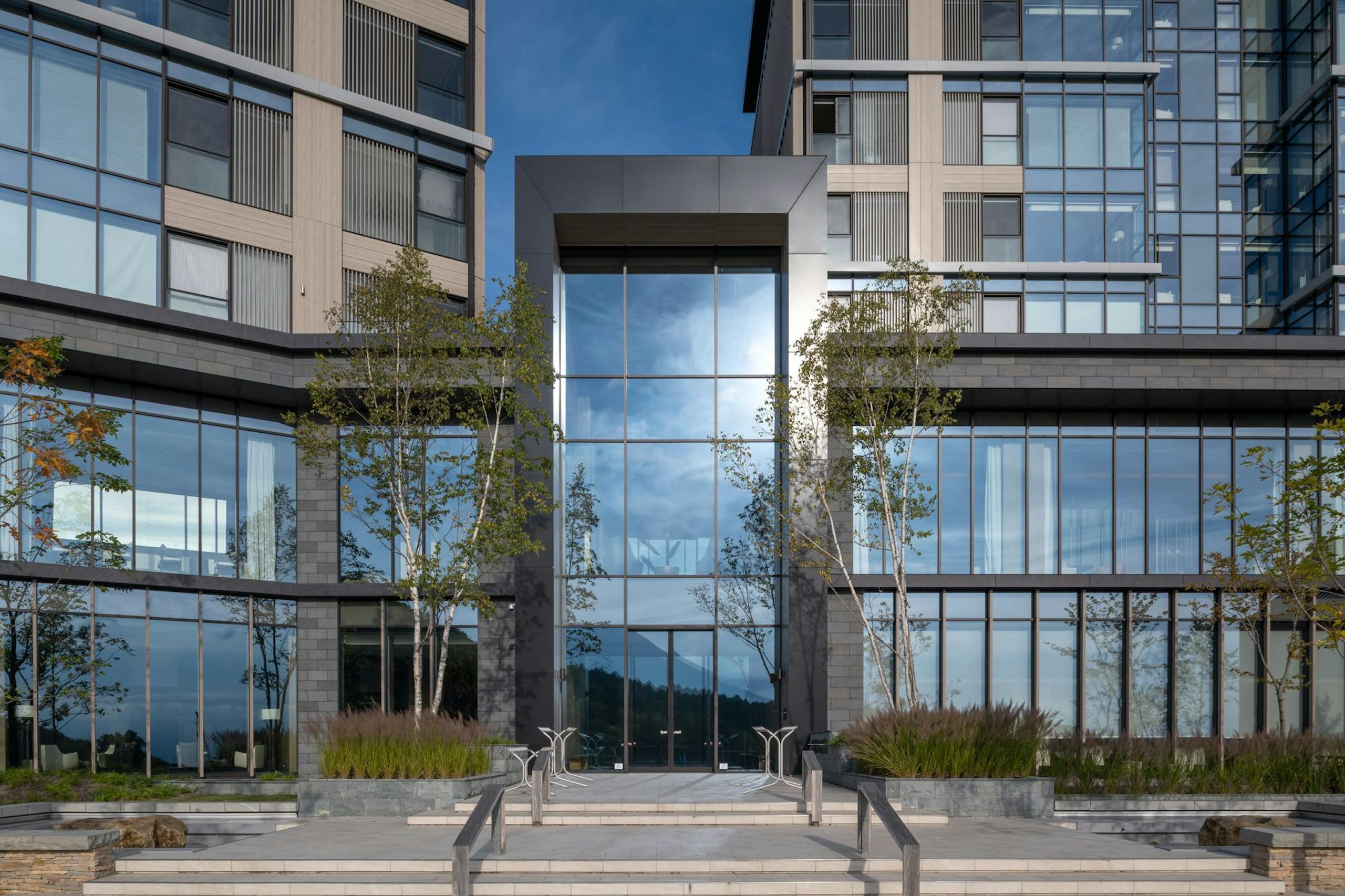
Location: Niseko, Kutchan Town, Abuta District — inside HANAZONO Resort, the Niseko ski area
Niseko has become one of the most internationally recognized ski destinations in Asia over the past two decades, driven largely by the quality of its powder snow and the infrastructure built around international visitors. Park Hyatt’s presence here — the brand’s flagship luxury tier — places it at the higher end of Niseko’s accommodation market, with rates and positioning that reflect that.
What we verified from official sources
Park Hyatt Niseko HANAZONO has published an EarthCheck Statement 2025 on its official policies page, indicating that the property is actively working toward EarthCheck certification. EarthCheck is a science-based environmental benchmarking system used by hotels and tourism operators worldwide, requiring documented measurement of energy, water, and waste metrics against industry benchmarks. The published statement represents a formal commitment to the certification process — not a completed certification. This distinction matters: the property is being transparent about where it is in that process, rather than claiming an award it doesn’t yet hold.
The hotel is also a member of Hyatt’s global “World of Care” framework, which sets standards across environmental impact, employee wellbeing, and community engagement. In 2024, it received one Key in the Michelin Guide’s hospitality evaluation — a new recognition system Michelin introduced for hotels alongside its restaurant ratings.

This property may be right for you if you want a high-end ski resort experience at Niseko and you’re interested in how a global luxury brand is approaching environmental accountability — including during an active certification process, not just after it’s complete.
Worth knowing before you book
EarthCheck certification is in progress, not finalized. We were not able to confirm specific environmental KPIs — such as energy consumption figures or waste reduction targets — from the official materials currently available. For travelers whose decision depends on detailed, quantitative environmental data, we recommend reaching out to the property directly or checking back as more information becomes available.
Book via
Ikkyu
Expedia
JTB
Yahoo!Travel
Rakuten Travel
Rurubu Travel
5. Kitakobushi Shiretoko


Location: Utoro, Shari Town, Shiretoko — on the western coast of the Shiretoko Peninsula, facing the Sea of Okhotsk
The Shiretoko Peninsula was designated a UNESCO World Natural Heritage site in 2005, recognized for a rare combination of marine and terrestrial ecosystems: pack ice that drifts down from the Sea of Okhotsk each winter, salmon runs that sustain a food chain reaching from the ocean floor to brown bears, and old-growth forests that have remained relatively undisturbed. It is, by most measures, one of the least-compromised natural environments accessible by public transportation in Japan.
That designation also creates an ongoing tension. Shiretoko’s recognition as a natural heritage site has increased visitor numbers substantially, and the infrastructure required to host those visitors — hotels, roads, tour operators — necessarily changes the place it’s meant to celebrate. Kitakobushi Shiretoko sits in the middle of that tension in a way that most hotels don’t have to reckon with directly.
What we verified from official sources
The property maintains a standalone SDGs page and a CSV (Creating Shared Value) page on its official site, where it documents specific commitments and activities. It also maintains a dedicated page for what it calls Kuma Katsu — literally “Bear Activities.”
Kuma Katsu is a program in which hotel staff conduct regular vegetation management (grass cutting and trail maintenance) in areas around the property to create buffer zones that reduce unexpected encounters between brown bears and guests. The logic is preventive rather than reactive: managing habitat edges so that bears maintain their distance naturally, without requiring interventions that would be more disruptive to the animals. The program is documented in detail on the official page, including the specific areas covered and the reasoning behind the approach. It represents a form of coexistence management that is rooted in this specific place and wouldn’t exist anywhere else.
The property also describes an ongoing reforestation initiative on the SDGs page, though the specific number of trees planted was not confirmed in the materials we reviewed. Food waste reduction and plastic reduction policies are also mentioned publicly.
Regarding third-party certifications: we did not find documentation of an international sustainability certification in the official materials currently available. We cannot confirm that none exists — only that we did not find it. If this is an important factor for you, we recommend checking the property’s official site directly.

This property may be right for you if you’re traveling to Shiretoko specifically because of the World Natural Heritage designation, and you want to stay somewhere that has thought carefully about what that designation means in practice — rather than just benefiting from it as a marketing point. Or if a hotel’s local ecological relationships are more meaningful to you than its certification tier.
Worth knowing before you book
Third-party environmental certification was not confirmed in our review. Quantitative reporting — energy consumption, waste metrics — is not prominent in the current public materials. Shiretoko is a remote destination; most visitors arrive by car or organized tour. The tourism season here is heavily concentrated, with summer (June–September) being the most accessible window for wildlife and natural activities.
Book via
Ikkyu Expedia
JTB
Yahoo!Travel
Rakuten Travel
Rurubu Travel
Jalan
Expedia
JTB
Yahoo!Travel
Rakuten Travel
Rurubu Travel
Jalan
A Note on What We Could and Couldn’t Verify
The five properties in this article were selected because we found verifiable information in official sources. That’s not a ranking. There are hotels in Hokkaido that may have thoughtful environmental practices but communicate them poorly online, and there are hotels with impressive sustainability pages whose actual practices we cannot independently confirm.
Certification status changes. Green Globe and EarthCheck require annual reassessment, and Sakura Quality certifications are periodically renewed. For the most current status of any certification mentioned in this article, check the property’s official website or the relevant certification body’s public registry.
Our research was weighted toward areas that receive significant international tourism: Sapporo, Niseko, and Shiretoko. Hokkaido is large — roughly the size of Ireland — and the areas of Dohoku (northern Hokkaido), Doto (eastern Hokkaido), and the southern Donan region include destinations with deep ecological and cultural significance that may have community-based or environmentally oriented accommodations not captured here.
Frequently Asked Questions
What certifications should I look for when booking a sustainable hotel in Hokkaido?
The most common third-party certifications currently visible among Hokkaido hotels are Sakura Quality An ESG Practice (built on GSTC Criteria, with ratings from one to five Gyoiko cherry blossoms), Green Globe (international, requires annual reassessment), and EarthCheck (science-based benchmarking system). ISO 21401 — the international standard for sustainability management systems in accommodation — is also occasionally referenced. Each of these requires external evaluation rather than self-declaration.
Is Niseko a good choice for sustainable travel?
Niseko is one of Japan’s most developed international ski resort areas, and some of that development has been criticized for prioritizing the demands of international tourism over the needs of local communities. At the same time, some properties in the area — including Park Hyatt Niseko HANAZONO — are actively engaging with international certification processes. Visiting Niseko responsibly involves being aware of that context. Lodging at a certified property is one part of it; how you spend money outside the hotel, and whether you engage with local businesses, is another.
What is an onsen ryokan, and why does it matter for sustainability?
An onsen ryokan is a traditional Japanese inn that centers its experience around hot spring bathing (onsen). Many onsen ryokan in Hokkaido draw their water from geothermal sources, which is a form of natural resource use — both an ecological asset and a responsibility. Managing water temperature, flow rates, and the chemicals used in water treatment are all part of responsible onsen operation. The traditional ryokan format also tends toward locally sourced seasonal ingredients, low-plastic amenity structures, and long-term relationships with local suppliers — practices that align with sustainability goals in ways that don’t always require formal certification.
Closing Thoughts
Hokkaido’s landscapes — the caldera lakes, the bear corridors, the wheat fields of Tokachi, the pack ice of the Okhotsk coast — are part of what makes the island remarkable as a travel destination. They’re also part of what makes the question of how you travel here worth thinking about.
The five properties in this article have each, in different ways, made that question visible. Some hold formal certifications with documented evaluation criteria. One is working toward certification and has been transparent about where it stands in that process. One has built its approach around the specific ecological tensions of its location, without a certification to show for it yet.
None of them is a complete answer. What kind of relationship to a place are you trying to have when you travel?
Summary
| Property | Area | Certification / Basis |
|---|---|---|
| SAPPORO STREAM HOTEL | Susukino, Sapporo | Sakura Quality An ESG Practice (4 Gyoiko) |
| Marukoma Onsen Ryokan | Lake Shikotsu, Chitose | Sakura Quality An ESG Practice (property reports first onsen ryokan in Hokkaido) |
| Club Med Kiroro Peak | Kiroro, Akaigawa Village | Green Globe (certified since 2023) |
| Park Hyatt Niseko HANAZONO | Niseko, Kutchan Town | EarthCheck certification in progress |
| Kitakobushi Shiretoko | Utoro, Shiretoko | Self-disclosed practices; third-party certification not confirmed in official sources |