
“Are there actually good vegan restaurants in Nara, or is it all just tourist traps?”
“I want to find plant-based food in Nara that’s connected to Japanese culture — not just Western-style salads.”
These are questions we hear often from travelers planning a trip to Nara.
The answer is yes — and the story behind it is worth knowing.
Nara has been a center of Buddhist culture for over 1,300 years. The great temples of Tōdai-ji and Kōfuku-ji gave rise to shojin ryori (精進料理), a tradition of monastic cooking that excludes all animal products entirely. No meat, no fish, no eggs, no dairy — and a centuries-deep practice of building satisfying, complex flavors from vegetables, fermented ingredients, and plant-based broths alone.
Today’s vegan scene in Nara doesn’t exist in spite of that history. It grows out of it.
That said, the word “vegan” means different things at different places. Some restaurants use the term to describe a few menu options. Others have built their entire operation around 100% plant-based ingredients, from the broth to the seasoning to the dessert. This guide focuses on restaurants where animal-free credentials can be verified through official sources — so you can spend less time wondering and more time eating.
A note on this guide: Restaurant hours, menus, and operations change. Where a restaurant does not have an independent website, we note the best available source for current information. For restaurants whose vegan credentials were confirmed through third-party platforms (HappyCow, Tripadvisor) rather than a direct official website, we note this as well. Always confirm details before visiting. Last verified: April 2026.
How We Selected These Restaurants
All nine restaurants in this guide meet at least one of the following criteria, confirmed through official websites, official social media, or highly reliable third-party sources:
- The menu explicitly excludes animal products — including broth, seasonings, and beverages
- The restaurant identifies as a fully vegan or 100% vegetarian establishment
- Allergen and ingredient information is disclosed publicly
- The restaurant is listed on HappyCow or a comparable platform with a verified vegan or vegetarian designation
Restaurants offering only a “vegan option” alongside standard menus, or where plant-based credentials could not be confirmed from any reliable source, are not included.
The Restaurants
1. onwa
Location: Nara City (Sanjō-ōmiya-chō) / 7-minute walk from JR Nara Station (west exit)
About the Restaurant
Tucked into a quiet residential neighborhood seven minutes from JR Nara Station, onwa occupies a renovated traditional machiya townhouse. The concept is straightforward and genuinely rare: every single item on the menu — food, drinks, and sweets — is 100% plant-based and gluten-free. The goal, as the owners describe it, is a table where people with different dietary needs, allergies, and lifestyles can all eat the same meal together.
The interior keeps much of the original wooden architecture of the old house. The kitchen uses organic produce from Nara’s agricultural tradition, including local Yamato yasai (大和野菜) — heritage vegetables native to the Nara region — as well as organic teas grown in the area.
Vegan Credentials
The absence of animal products, wheat flour, and gluten is stated explicitly on the official website. In February 2026, onwa received a Recommended designation from Restaurant Guru. The restaurant is also listed on HappyCow, confirmed through multiple independent sources.
Who This Restaurant Is For
Travelers who need both vegan and gluten-free options simultaneously. Anyone interested in Nara’s local agricultural heritage on the plate. A natural stop for a sit-down lunch during a JR Nara Station–based itinerary.
Things to Note
The official website lists Tuesday as the regular closing day, though some third-party platforms have shown Monday–Tuesday closures at certain periods. Check the official website or Instagram for current hours before visiting. Saturday hours extend to 8:00 PM.
Restaurant Info
 Tabelog
2. Kinatei (喜菜亭)
About the Restaurant
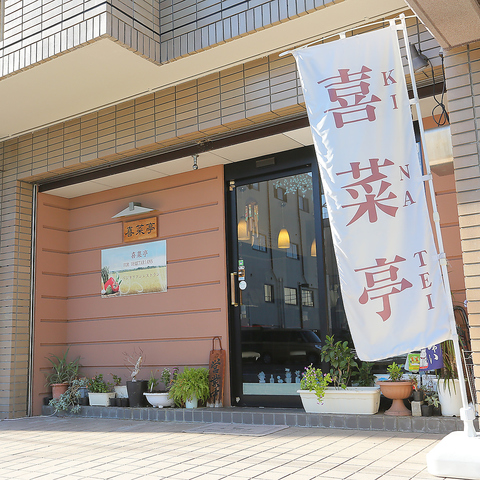
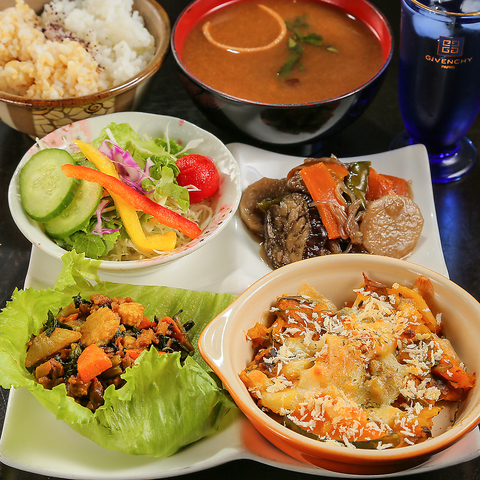
Kinatei has been operating since the 1970s — making it one of the oldest plant-based restaurants in Nara by a significant margin. The owner has practiced a vegetarian lifestyle for over 50 years, and the menu reflects that depth of commitment. The restaurant calls itself “100% vegetarian,” and every item on the menu is vegan-compatible.
What makes Kinatei particularly useful for international travelers is its multilingual accessibility. Menus are available in English, Chinese, Spanish, and French — an unusual feature for a restaurant of this size and style. The official website links directly to the HappyCow listing, which has accumulated reviews from vegan travelers worldwide over many years.
Vegan Credentials
The “100% vegetarian” designation is stated on the official website (kinatei.com), with the understanding that all menu items exclude animal products. The restaurant’s HappyCow presence has been maintained over a long period. Individual allergy accommodations are available on request.
Who This Restaurant Is For
Travelers visiting Nara for the day from Osaka or Kyoto who want a reliable, centrally located option near JR Nara Station. International visitors traveling with non-Japanese-speaking companions. Anyone who values long-established credibility over trendy positioning.
Things to Note
Lunch service ends at 2:30 PM. Dinner is available but requires advance reservation. If you’re arriving without a reservation, plan for the lunch window. The restaurant is closed on Mondays.
Note: While all menu items are vegan-compatible, the restaurant does not explicitly disclose details about refined sugar processing or minor ingredient sourcing beyond the core animal product exclusions. If you have specific concerns beyond standard vegan criteria, it’s worth asking directly.
Restaurant Info
Tabelog
Hotpepper
3. Vegan Cafe Ramuna (ヴィーガンカフェ 楽夢菜)
Location: Nara City (Takabatake-chō) / approx. 16-minute walk from Kintetsu Nara Station / near Nara Hotel
About the Restaurant
Ramuna sits at the end of a narrow lane across from the Nara Hotel, in the quiet Takabatake neighborhood — a part of the city where traditional townhouses sit close to Kasuga Grand Shrine and the Nara National Museum. The atmosphere is unhurried and homey, with tatami seating areas, a terrace, and what can best be described as a lived-in warmth. The menu covers a wide range: soy meat karaage (Japanese fried “chicken”), vegan burgers, dairy-free sweets, and seasonal specials.
This is the kind of place that rewards a slower pace — less suited to a quick stop between temples, more suited to an afternoon built around it.
Vegan Credentials
Multiple English-language travel sources and the restaurant’s official Facebook page confirm a 100% vegan menu. English-language menus are available. The restaurant appears on Tripadvisor with over 15 reviews, maintaining a high rating from international visitors.
Note: The restaurant does have a website (ramuna.jp), though the Facebook page and map services tend to carry more current operating information.
Who This Restaurant Is For
Travelers combining a visit to Kasuga Grand Shrine, Nara National Museum, or the Nara Hotel area with a longer sit-down meal. Anyone looking for casual, home-style vegan Japanese food rather than a formal restaurant experience.
Things to Note
Operating hours vary across platforms (Tabelog lists 12:00 PM – 8:00 PM; the owner’s own Tripadvisor response indicates 11:30 AM – 6:30 PM). Confirm current hours directly before visiting. The restaurant is closed Monday through Wednesday.
Restaurant Info
Tabelog
4. Vegan Soba Ramusa (ヴィーガン蕎麦 楽夢咲)
Location: Nara City (Nakain-chō) / Kintetsu Nara Station area / weekends only
About the Restaurant
Run by the same owner as Ramuna (above), Ramusa operates as a separate, weekend-only concept dedicated entirely to vegan soba. While the owner runs Ramuna on weekdays, weekends bring a different focus: hand-cut juwari soba (100% buckwheat noodles, no wheat flour added), served with an entirely plant-based broth. No katsuobushi (dried bonito flakes), no animal-derived dashi of any kind.
This is significant in the context of Japanese soba culture. Conventional soba broth relies heavily on katsuobushi for its umami depth. Ramusa builds that same depth entirely from plant sources — making it one of very few vegan soba experiences available to visitors in the Kansai region.
Vegan Credentials
Confirmed through Instagram (@vegan_soba_ramusa), HappyCow listing, and Tabelog comments referencing the shared ownership with Ramuna. The restaurant does not have an independent website; the Instagram account is the most current source for scheduling.
Who This Restaurant Is For
Travelers with a specific interest in traditional Japanese noodle culture who want a plant-based version without compromise. Anyone visiting Nara on a weekend and willing to plan around limited operating days.
Things to Note
Weekend operation only (Saturday and Sunday). Schedules can change — check Instagram before making a trip specifically for this restaurant. No independent website exists; all current information comes from social media.
Restaurant Info
Tabelog
5. Kururu
Location: Nara City (Higashimuki-minami-machi) / within walking distance of Kintetsu Nara Station / Higashimuki Shopping Arcade
About the Restaurant
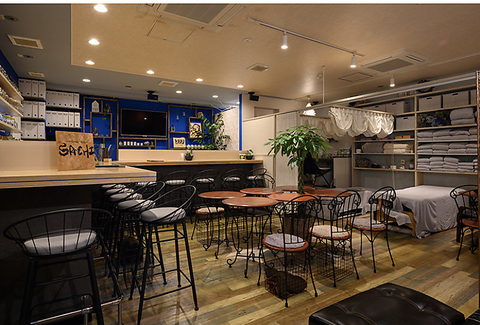
Kururu occupies the second floor of a building just steps from Kintetsu Nara Station — which makes it one of the most accessible vegan options in central Nara for travelers arriving by train from Osaka or Kyoto. The concept centers on what the owner calls “food therapy”: a menu designed to support physical and mental wellbeing through plant-based, organically sourced ingredients. The official website describes it as “an organic café where you can enjoy vegan cuisine in Nara.”
The most popular dish is the tofu hamburger steak set, served with germinated brown rice and a rotating selection of small sides. The restaurant also develops and ships its own brown rice noodles nationwide — a small indicator of how seriously the owner takes the product beyond the café itself.
Vegan Credentials
The official website (nl-kururu.com) explicitly identifies the restaurant as a vegan organic café. Vegan, vegetarian, allergy-accommodating, and food-therapy menus are all described as part of the core offering. A partnership with a natural farming collective provides direct access to local produce.
Who This Restaurant Is For
Travelers arriving via Kintetsu Nara Station who want a vegan meal within a short walk. Anyone interested in the intersection of Japanese food culture and wellness philosophy. A good fit for people traveling with dietary restrictions beyond vegan — the restaurant is accustomed to accommodating multiple needs at once.
Things to Note
Note that a previous address (Konishi-chō) and an incorrect URL (kururu-cafe.com) have appeared in AI-generated travel content. Neither is current. The correct address is Higashimuki-minami-machi 5-1, Inoue Building 2F-A. Always use the official website (nl-kururu.com) for current operating information.
Restaurant Info
Tabelog
Hotpepper
6. Flowerish
Location: Nara City (Tomimi-chō) / approx. 10-minute walk from Kintetsu Tomi Station / also accessible by car (parking available)
About the Restaurant
Flowerish occupies a distinctive two-story brick building along the Hannan Road in Nara’s western Tomi neighborhood — not in the tourist center, but easy to reach by train or car. The first floor houses a cooking classroom and organic product shop; the restaurant itself is on the second floor. The kitchen operates on macrobiotic principles, building meals around whole grains and seasonal vegetables without animal products, refined white sugar, artificial additives, colorings, or preservatives.
Lunch is served as a single-plate set: brown rice, seasonal vegetable dishes, soup, and dessert. The cooking classroom runs regular sessions that let visitors take recipes home — an option that pairs naturally with a meal visit.
Vegan Credentials
The official website (flowerish.co.jp) explicitly lists the exclusion of animal products, refined white sugar, flavorings, colorings, and preservatives. This is consistent with the macrobiotic framework the restaurant operates within. The restaurant also maintains an active Instagram presence (@macrobiotic.cafe.flowerish) that reinforces these standards.
Who This Restaurant Is For
Travelers who want a macrobiotic or whole-food approach to plant-based eating rather than a restaurant focused on vegan “alternatives.” Anyone visiting with a car — the 10-car parking lot makes this the most car-friendly option on this list. A good choice for people interested in taking a cooking class alongside their meal.
Things to Note
Flowerish uses wheat flour. If you require gluten-free in addition to vegan, confirm availability with the restaurant before visiting. The restaurant is closed on Sundays. Lunch last order is at 2:00 PM.
Restaurant Info
Tabelog
Hotpepper
7. Nyabinghi
Location: Ikoma City (Monzen-chō) / within a few minutes’ walk of Hōzanji Station on the Ikoma Cable Car
About the Restaurant
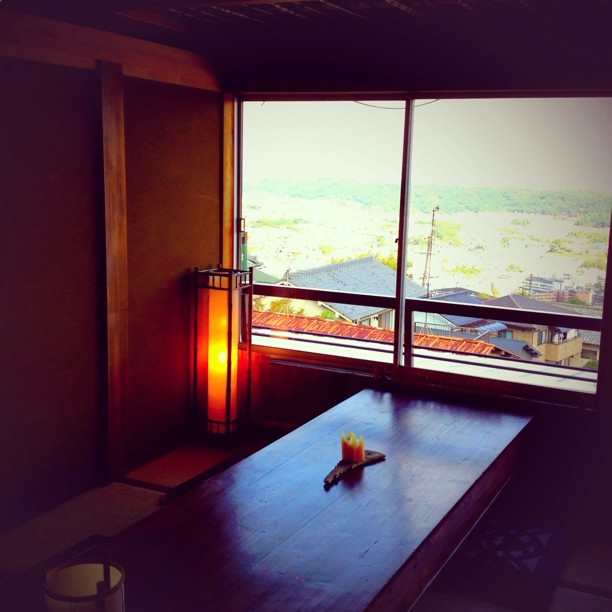
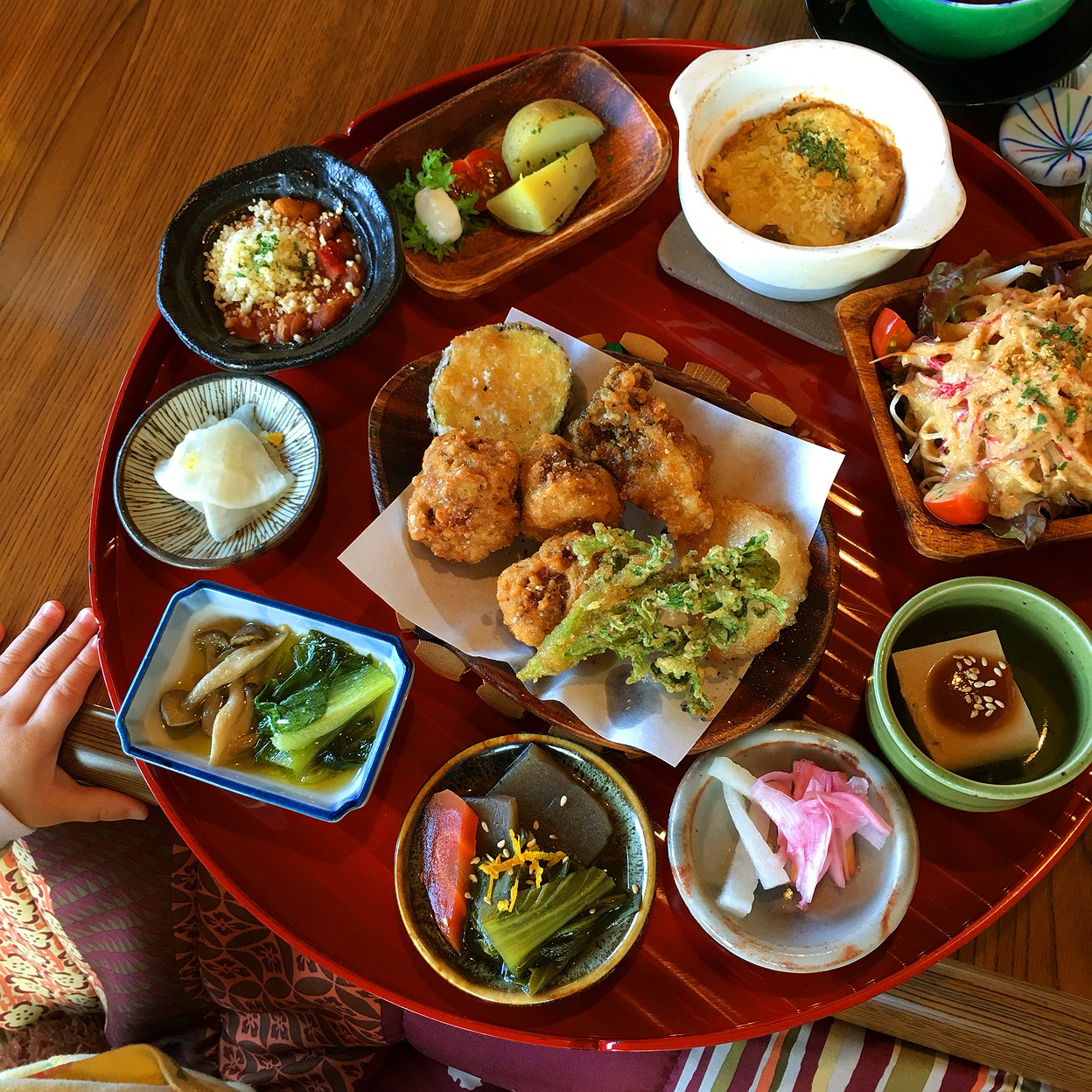
Nyabinghi is located on the stone-paved approach to Hōzanji Temple, partway up Mount Ikoma — a short cable car ride from Kintetsu Ikoma Station. The building is a former traditional inn (ryokan), and the dining format reflects that: each table occupies what was once a guest room, giving the experience an unusual degree of privacy and quiet. In winter, kotatsu heated tables and borrowed haori jackets turn a meal into something more like a retreat.
The menu is entirely plant-based, built around locally sourced, pesticide-free vegetables that change with the season. Lunch and dinner require advance reservation by phone; the café portion does not.
Multiple independent reviews and third-party food platforms confirm the use of no animal proteins. The restaurant’s Facebook and Instagram accounts carry current operating information.
Vegan Credentials
Confirmed through multiple traveler reviews and food platforms, with consistent language describing a fully animal-product-free menu. The restaurant does not have an independent website; the Facebook and Instagram accounts serve as the primary official sources.
Who This Restaurant Is For
Travelers who want a vegan meal that is also a distinct spatial and cultural experience — one that connects the act of eating to a specific place and landscape. Anyone combining a visit to Hōzanji Temple (a significant pilgrimage destination) with a meal. Visitors from Osaka looking for a half-day excursion that includes both a temple and a plant-based lunch.
Things to Note
Lunch and dinner are by phone reservation only (please reserve by the day before). Walk-in café use is available without a reservation. The restaurant has irregular closing days in addition to its regular Tuesday closure — check social media before visiting. No independent website exists.
Restaurant Info
Tabelog
Hotpepper
8. PEACE CAFE & STORE
Location: Ikoma City (Monzen-chō) / Hōzanji Station area / 1-minute walk from Nyabinghi (above)
About the Restaurant
Peace Café Vegan sits one minute from Nyabinghi on the same Hōzanji temple approach. The two restaurants share a neighborhood but offer different experiences: Peace Café operates as a more casual, daytime café format, with its menu built directly around organic vegetables harvested that morning from farms on Mount Ikoma.
The official website identifies the restaurant as an “organic vegan restaurant” and describes the sourcing as “organic vegetables harvested in the morning in Ikoma.” The stated concept — love for the earth and love for animals — makes the sustainability orientation explicit in a way that few restaurants do.
Vegan Credentials
The official website (peacecafevegan.com) uses the phrase “organic vegan restaurant” and describes morning-harvested organic produce as the foundation of the menu. HappyCow listing confirmed.
Who This Restaurant Is For
Travelers visiting Mount Ikoma and Hōzanji Temple who want to combine the visit with a casual vegan meal. Anyone interested in the connection between local organic agriculture and a restaurant menu. A natural pairing with Nyabinghi — you could visit both in the same afternoon.
Things to Note
The restaurant is primarily open Friday through Monday; Tuesday, Wednesday, and Thursday are typically closed. Operating schedules are updated on Instagram and Facebook more reliably than on the official website. The SSL certificate on the official website has shown errors — if the site appears insecure in your browser, check social media instead for current hours.
Restaurant Info
Tabelog
9. Genmai-an (玄米庵)
Location: Ikaruga Town, Ikoma District / 5-minute walk from Hōryū-ji Temple / approx. 20-minute walk from JR Hōryū-ji Station
About the Restaurant
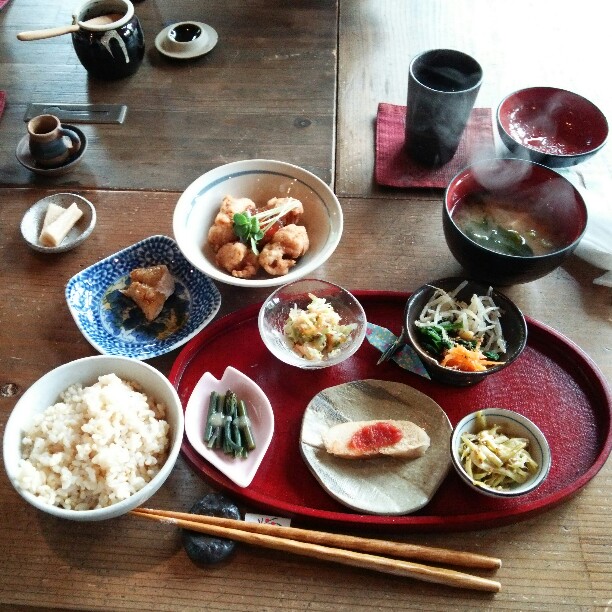
Genmai-an sits five minutes on foot from Hōryū-ji Temple — the oldest surviving wooden structure in the world, and a UNESCO World Heritage Site. The restaurant serves shojin ryori-style meals centered on kamado-cooked brown rice, with animal products excluded as a core part of the cooking philosophy. The interior uses wood from Kumano cedar, and a traditional garden frames the dining experience.
This is the most historically resonant option on this list. Eating a plant-based meal five minutes from a 1,400-year-old temple that was built in the era when shojin ryori first took root in Japan is not incidental. For travelers who care about the cultural and philosophical dimension of what they’re eating, Genmai-an offers that context directly.
Vegan Credentials
Multiple independent sources and map platforms confirm the exclusion of meat, fish, dairy, and other animal products. The restaurant operates within the shojin ryori (Buddhist vegetarian cuisine) tradition, in which animal product exclusion is inherent to the cooking style.
Note: Genmai-an does not describe itself as a “vegan specialty restaurant” in the Western sense. It is a shojin ryori-style restaurant where animal product exclusion is the default, not an accommodation. For questions about specific ingredients or preparation methods, we recommend confirming directly with the restaurant.
Who This Restaurant Is For
Travelers making the trip to Hōryū-ji Temple who want to extend the visit with a culturally resonant meal. Anyone specifically interested in shojin ryori as a living culinary tradition rather than a museum piece. A strong choice for visitors who want to understand plant-based eating in Japan on its own historical terms.
Things to Note
Dinner service requires a minimum of four guests and advance reservation. Lunch is more accessible for individual travelers and small groups, but last order is at 2:00 PM. The restaurant is closed on Wednesdays (and on Thursdays when Wednesday falls on a public holiday). Note that Hōryū-ji Station is about a 20-minute walk from the restaurant — plan accordingly, or use the temple bus.
Restaurant Info
Tabelog
Hotpepper
Frequently Asked Questions
Are there vegan restaurants in Nara? Yes. Nara has a small but genuine vegan dining scene, grounded in the city’s 1,300-year relationship with Buddhist temple cuisine (shojin ryori). Fully plant-based restaurants exist across several neighborhoods, including the central Nara City area, the Ikoma mountain district, and the Hōryū-ji temple area in Ikaruga.
What is shojin ryori, and is it vegan? Shojin ryori (精進料理) is a form of Buddhist monastic cooking that excludes all animal products — no meat, fish, eggs, or dairy. It is plant-based by principle, not accommodation. Restaurants like Genmai-an in Ikaruga serve food within this tradition. Note that some shojin ryori restaurants may use certain fermented sauces or broths that vary by establishment; always confirm if you have specific concerns.
What are the best vegan restaurants near Nara Station? For JR Nara Station, the closest fully plant-based options are onwa (7-minute walk, 100% vegan and gluten-free) and Kinatei (5-minute walk, 100% vegetarian with all vegan menu items). For Kintetsu Nara Station, Natural Life Kururu is within easy walking distance.
Is it difficult to eat vegan in Nara? More so than in Tokyo or Kyoto, but less so than in rural Japan. Dedicated vegan restaurants exist and are findable. The challenge is that many are small, operate limited hours, require reservations, or keep irregular schedules. Planning ahead matters more in Nara than in larger cities.
Do vegan restaurants in Nara serve traditional Japanese food? Several do. Kinatei serves home-style Japanese vegetarian cooking. Ramusa (楽夢咲) serves vegan soba with plant-based dashi. Genmai-an serves shojin ryori-style brown rice sets. Nyabinghi serves seasonal vegetable courses in a traditional inn setting. The range goes beyond Western-style vegan cafés.
Which vegan restaurant in Nara is best for first-time visitors? For convenience and accessibility, onwa (near JR Nara Station, no reservation needed for most visits) or Kinatei (near JR Nara Station, multilingual menus) are the most practical starting points. For a more culturally distinctive experience, Genmai-an near Hōryū-ji or Nyabinghi on Mount Ikoma offer something you won’t easily find elsewhere.
Are there vegan options near Hōryū-ji Temple? Yes. Genmai-an is a five-minute walk from Hōryū-ji Temple and serves shojin ryori-style plant-based meals in a setting that complements the temple visit.
What to Know Before You Go
The Difference Between “Fully Vegan” and “Vegan-Friendly”
This guide includes both 100% vegan restaurants and establishments where every menu item is plant-based by default (such as shojin ryori restaurants), as well as a macrobiotic café (Flowerish) that operates on equivalent principles. Where a restaurant explicitly identifies as fully vegan in its own communication, that is noted. Where the plant-based nature comes from a broader culinary tradition rather than explicit vegan labeling, that is also noted.
Hidden Animal Ingredients in Japanese Cooking
Japanese cuisine uses several animal-derived ingredients that are easy to miss: katsuobushi (dried bonito flakes) in dashi broth, fish sauce in some sauces, honey, gelatin, and in some cases bone char in refined sugar processing. All nine restaurants in this guide have been selected because their plant-based credentials extend beyond surface-level labeling. That said, for very specific dietary concerns (white sugar sourcing, cross-contamination protocols), we recommend confirming directly with each restaurant.
How to Confirm Current Information
Several restaurants in this guide operate on irregular or limited schedules and update their hours through Instagram or Facebook rather than formal websites. Checking social media 24–48 hours before visiting is the most reliable approach for Nyabinghi, Peace Café Vegan, and Ramusa in particular.
How This Guide Was Compiled
Information in this guide was drawn from official restaurant websites, official social media accounts, Tabelog, HappyCow, and verified travel publications. Where information came from third-party sources rather than official restaurant channels, this is noted. AI-generated restaurant data — including incorrect addresses and non-existent URLs that have appeared for several of these restaurants on other platforms — has been identified and excluded. Last verified: April 2026.
A Final Thought
Japan’s relationship with plant-based eating is older than the word “vegan.” The Buddhist precept of non-killing (ahimsa) shaped centuries of monastic cooking that excluded animal products entirely — not as a dietary trend, but as a philosophical practice. That history didn’t disappear. In Nara, it’s still visible: in a bowl of brown rice at Genmai-an, in the seasonal vegetable course at Nyabinghi, in the fermented foods at Ramuna.
Modern environmental concerns and ancient monastic principles don’t share identical origins. But in a city like Nara, they share a table.
What does eating plant-based mean to you when you’re in a place where that practice is 1,300 years old?
All restaurant information was last verified in April 2026. Hours, menus, and operations are subject to change. Please confirm details directly with each restaurant before visiting.