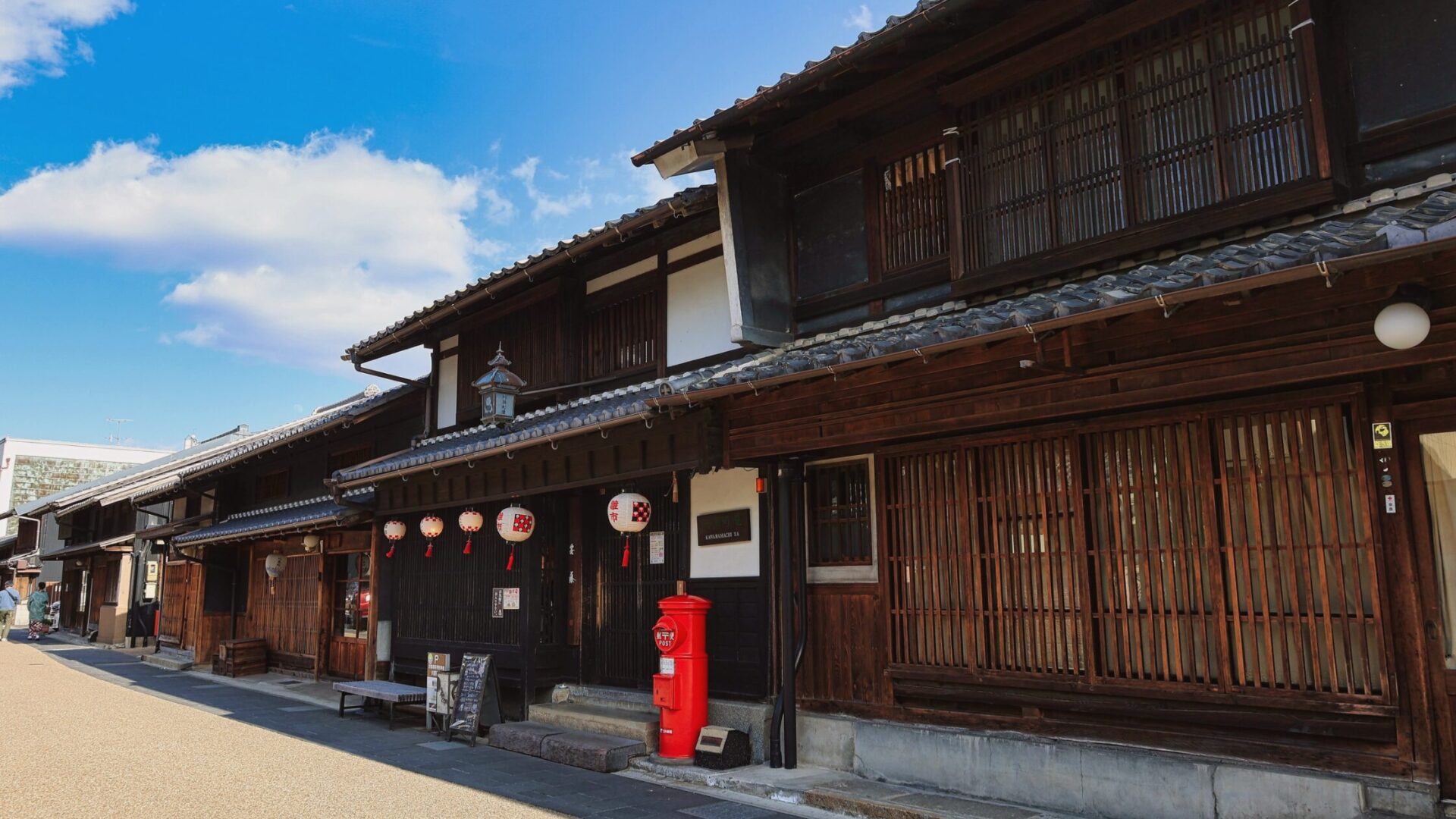

Gifu Prefecture doesn’t always make the top of Japan travel lists, but for travelers who care about where their tourism dollars go, it deserves a serious look. The region is home to the UNESCO World Heritage village of Shirakawa-go, the remarkably preserved Edo-period streets of Hida-Takayama, the ancient papermaking town of Mino, and the hot spring resort of Gero Onsen — each with its own distinct relationship to land, craft, and community.
That relationship matters when you’re choosing where to stay. “Sustainable hotel” is a term that gets applied loosely, and Japan is no exception. Some properties have obtained third-party environmental certifications and publish detailed reports on their practices. Others use the word to describe a philosophy without much verifiable backing. Knowing the difference takes time.
This guide cuts through the noise. Every property on this list was evaluated using publicly available information from official property websites and press releases. We looked at four criteria: third-party certification status, transparency of disclosure, environmental practices, and contribution to local communities and culture. If we couldn’t confirm something through official sources, we said so. Where quantitative data or third-party verification was not available, descriptions are based on operator disclosures and should be interpreted accordingly.
None of these properties paid to be included. And if none of them feels right for your trip, that’s a valid conclusion too.
How We Selected These Properties
Before diving in, here’s what we were looking for — and what we weren’t.
- Third-party certification — Properties holding recognized standards such as Sakura Quality An ESG Practice (a GSTC-Recognized Standard — meaning its criteria have been formally recognized by the Global Sustainable Tourism Council; this recognition applies to the standard itself, not to individual property certifications), ISO 14001 (an international environmental management system standard), or the Rakuten Travel Sustainable Badge were prioritized. Self-declarations without external review were not sufficient on their own.
- Transparency — When a property calls itself “sustainable,” can you find the evidence on their official website? Certification names, assessment results, and specific initiatives should be publicly stated.
- Environmental practices — Concrete measures around energy, water, waste, plastics, and procurement, with specifics where possible.
- Community and cultural impact — Use of local ingredients and suppliers, support for regional crafts and traditions, and contribution to the social fabric of the destination.
All information reflects what was verifiable as of June 2026. Details change — always check the property’s official site before booking.
The 8 Properties
1. Toyota Shirakawa-go Eco-Institute


Location: Shirakawa-go, Ono District — adjacent to the UNESCO World Heritage gassho-zukuri (thatched farmhouse) village
About the property
This is not a conventional hotel. The Toyota Shirakawa-go Eco-Institute operates as a residential nature school, offering overnight stays alongside structured environmental education programs led by certified interpreters. It draws school groups, corporate retreats, and individual travelers interested in learning alongside staying. The setting — inside one of Japan’s most iconic traditional villages — makes it unlike anywhere else on this list.
Sustainability practices (verified from official sources)
The property holds the Rakuten Travel Sustainable Badge, which is a platform-based assessment that incorporates self-reported data reviewed by Rakuten Travel, referencing GSTC criteria as a framework. It is not an accredited third-party certification. The property also holds the MLIT Barrier-Free Certification (観光施設における心のバリアフリー認定制度), covering wheelchair-accessible rooms, accessible restrooms, and bathing facilities with assistance options.
On the environmental side, the property describes initiatives including LED lighting conversion, guest room power management via key card and motion sensors, an EV charging station, water-saving fixtures, and the use of environmentally certified cleaning products. Detailed quantitative data on the extent of these measures (such as the percentage of LED adoption) is not publicly disclosed; figures should be confirmed directly with the property. Single-use bath amenities, disposable tableware, and cutlery are not provided, as stated on the official site. Amenities are offered in the minimum quantity needed.
Food sourcing prioritizes local producers, as stated on the official site. Guests with dietary restrictions, including vegetarian requirements, are asked to inquire in advance — specific accommodations vary and should be confirmed directly.
Community programs include hands-on traditional craft workshops, cultural events, local cleanup participation, and an SDGs education curriculum for students. The property also runs disaster preparedness programs tied to local community resilience.

Who this works well for
Travelers who want to understand sustainability as a practice rather than an aesthetic. Families or groups traveling with educational intent. Anyone visiting Shirakawa-go who wants to slow down and engage with the village rather than passing through.
Worth knowing
The facilities are designed for a nature school, not a luxury ryokan. If you’re looking for hot spring baths or premium amenities, this isn’t the right fit. The experience prioritizes depth of engagement over comfort level.
Book
Yahoo!Travel
Expedia
Rakuten Travel
Jalan
2. hotel around TAKAYAMA, an Ascend Collection Hotel


Location: Takayama City — walking distance from the historic Sanmachi Suji old town district
About the property
Part of Choice Hotels’ Ascend Collection, this design-forward boutique hotel weaves Hida regional materials, craft, and food throughout the guest experience. It sits at an interesting intersection: a global hotel brand operating with a notably local sensibility.
Sustainability practices (verified from official sources)
The property is listed under Sakura Quality An ESG Practice, a GSTC-Recognized Standard — meaning the standard’s criteria have been formally recognized by the GSTC, though this recognition applies to the framework, not to individual property assessments. The exact classification and rating should be confirmed via the official Sakura Quality registry. The property also holds the MLIT Barrier-Free Certification (観光施設における心のバリアフリー認定制度).
The circular economy thinking here is applied literally. Discarded wood from local sources is repurposed into furniture and art installations throughout the property. Guest amenities are manufactured using substandard rice and wheat byproducts — agricultural materials that would otherwise go to waste — as a way of reducing plastic consumption. Breakfast is served as a set menu (a four-layer bento called yujutamatebako) specifically to minimize food waste. The property states that sustainably sourced coffee is used; specific certification schemes are not publicly disclosed and should be confirmed directly with the property.
For getting around, the hotel offers electric-assist bicycle rentals, making car-free exploration of Takayama genuinely practical. Meals feature locally sourced ingredients: Oku-Mino Kodori chicken ham, Hida-grown Koshihikari rice, miso from Takayama Jozo, and regional comfort foods. Guest rooms incorporate furniture made by Hida woodworking craftspeople. A free card-format local guide, GOOD LOCAL 100, is available for guests to take with them — a small but thoughtful nudge toward supporting neighborhood businesses.


Who this works well for
Travelers who want a design-conscious base in Takayama with documented sustainability credentials. Anyone interested in how circular material use and regional craft can coexist within a chain hotel model.
Worth knowing
As part of a global chain, some sustainability policies reflect group-wide commitments rather than property-specific initiatives. Facility-level data on energy, water, and waste was not available through official sources at the time of research.
Book
Ikkyu JTB
Yahoo!Travel
Expedia
Rakuten Travel
Rurubu Travel
Jalan
JTB
Yahoo!Travel
Expedia
Rakuten Travel
Rurubu Travel
Jalan
3. Honjin Hiranoya Kofu-kan
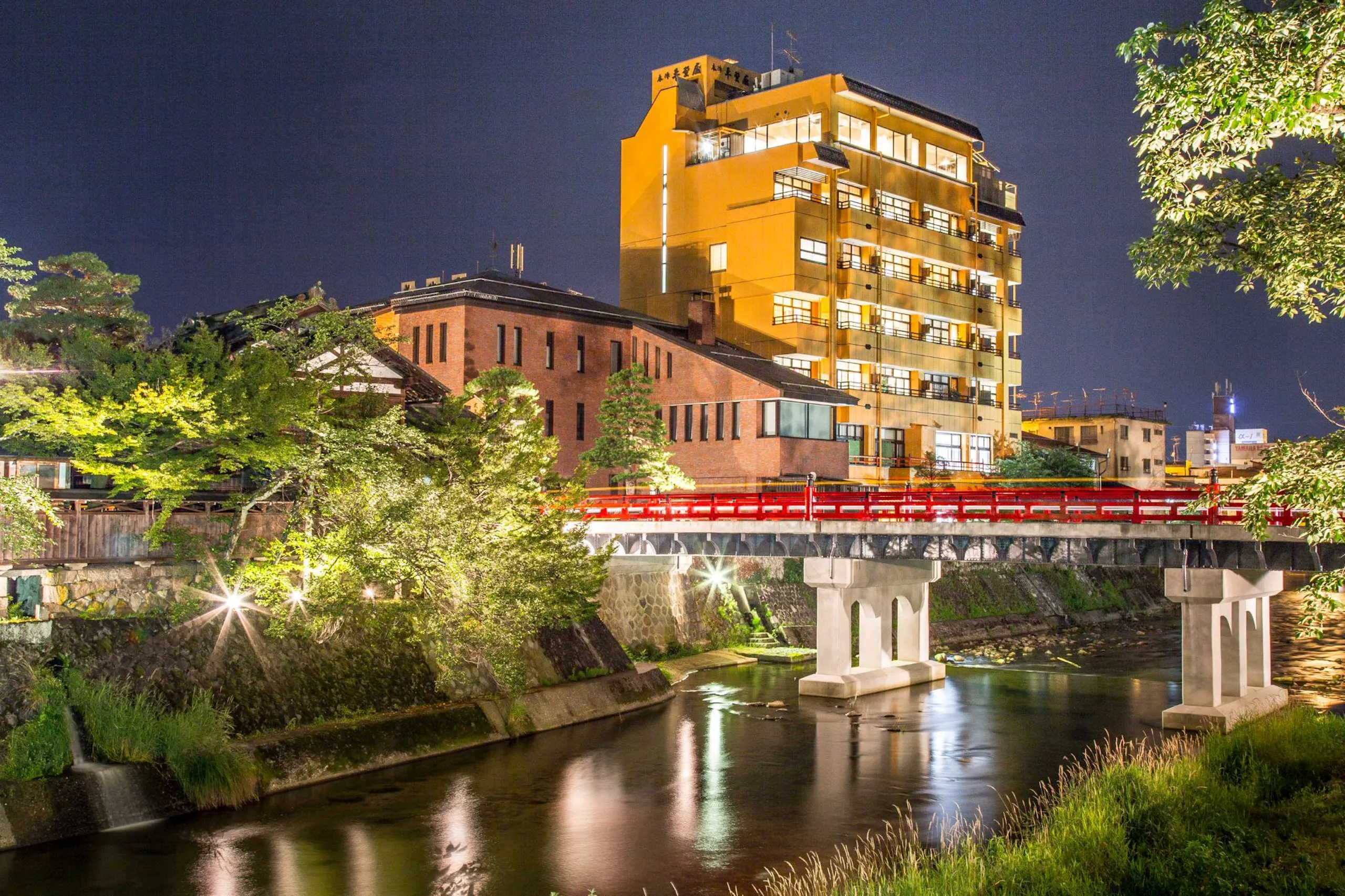
Location: Takayama City — within the historic old town district
About the property
One wing of the long-established Honjin Hiranoya ryokan group, which has been part of Takayama’s hospitality landscape for generations. A traditional Japanese inn (ryokan) experience, with formal kaiseki cuisine, yukata robes, and cultural programming built into the stay.
Sustainability practices (verified from official sources)
The property registered under Sakura Quality Green (3-cherry-blossom rating) in October 2024. ISO 14001 certification (an international standard for environmental management systems) is held by the operating entity; the exact scope — whether it covers this specific property, all Honjin Hiranoya properties, or a defined subset of operations — should be confirmed directly with the operator.
ISO 14001 is a management systems standard, not a performance benchmark. What it confirms is that a structured framework for environmental decision-making is in place — not a specific level of energy reduction or waste diversion. That said, having the system is a meaningful baseline that many comparable properties do not have.
Documented environmental activities include energy use and CO2 monitoring, and structured waste sorting and reduction management, as described on the official site.
The kaiseki cuisine changes monthly and centers on local ingredients — Hida beef at the A5 grade, seasonal vegetables from the region. Cultural programming includes a traditional taiko drum welcome, a display of over 100 hina ningyo (ceremonial dolls) timed to the Hina Matsuri season, and encouragement to explore the old town in the inn’s provided yukata.


Who this works well for
Travelers who want a traditional ryokan experience in Takayama with a verified environmental management framework in place. Those who prioritize both cultural immersion and documented sustainability systems.
Worth knowing
ISO 14001 addresses how environmental decisions are made, not necessarily how much has been reduced. Publicly reported KPIs were not confirmed through official sources during this research.
Book
Ikkyu JTB
Yahoo!Travel
Expedia
Rakuten Travel
Rurubu Travel
Jalan
JTB
Yahoo!Travel
Expedia
Rakuten Travel
Rurubu Travel
Jalan
4. Suimeikan, Gero Onsen
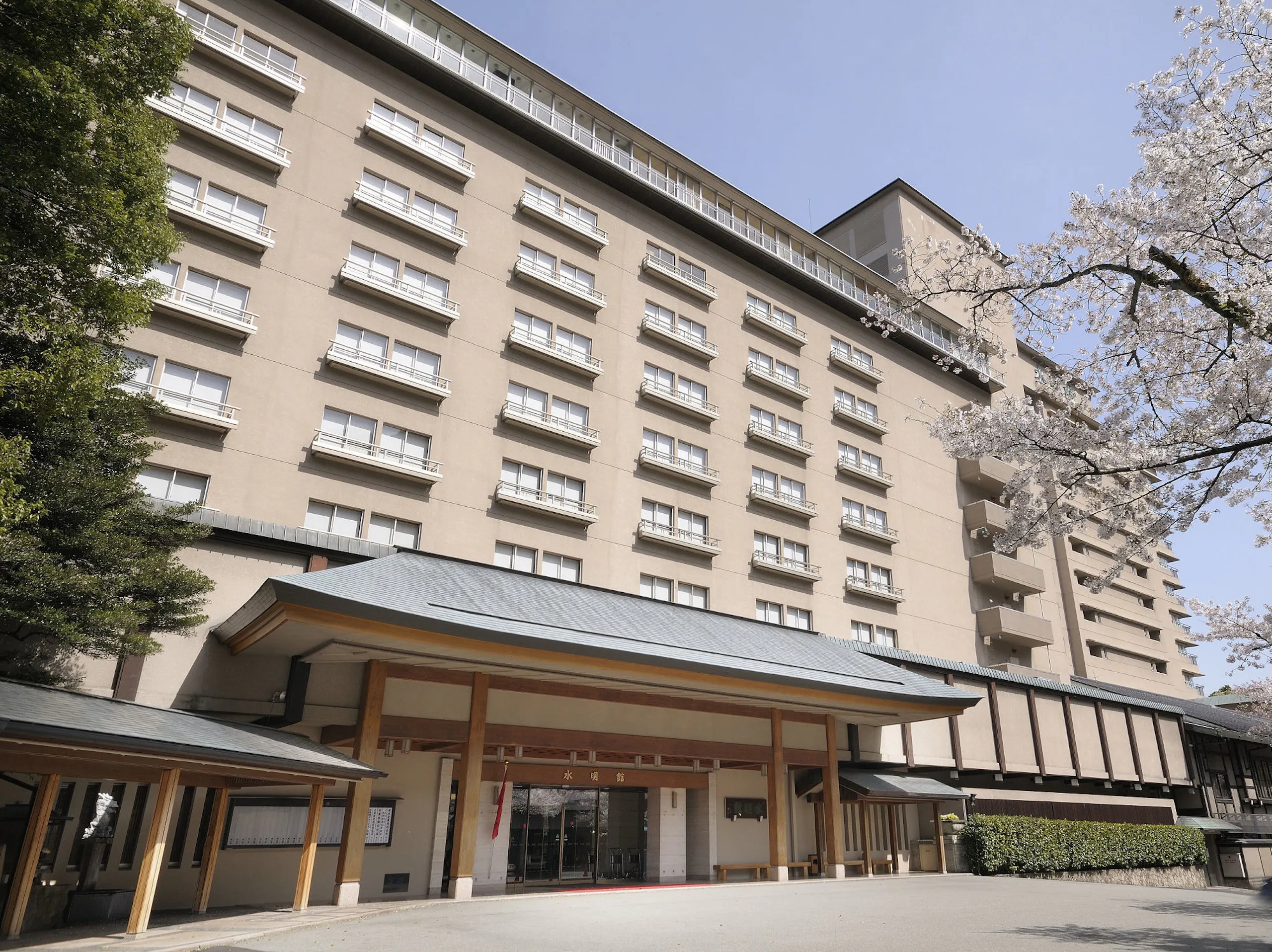

Location: Gero City, on the banks of the Hida River
About the property
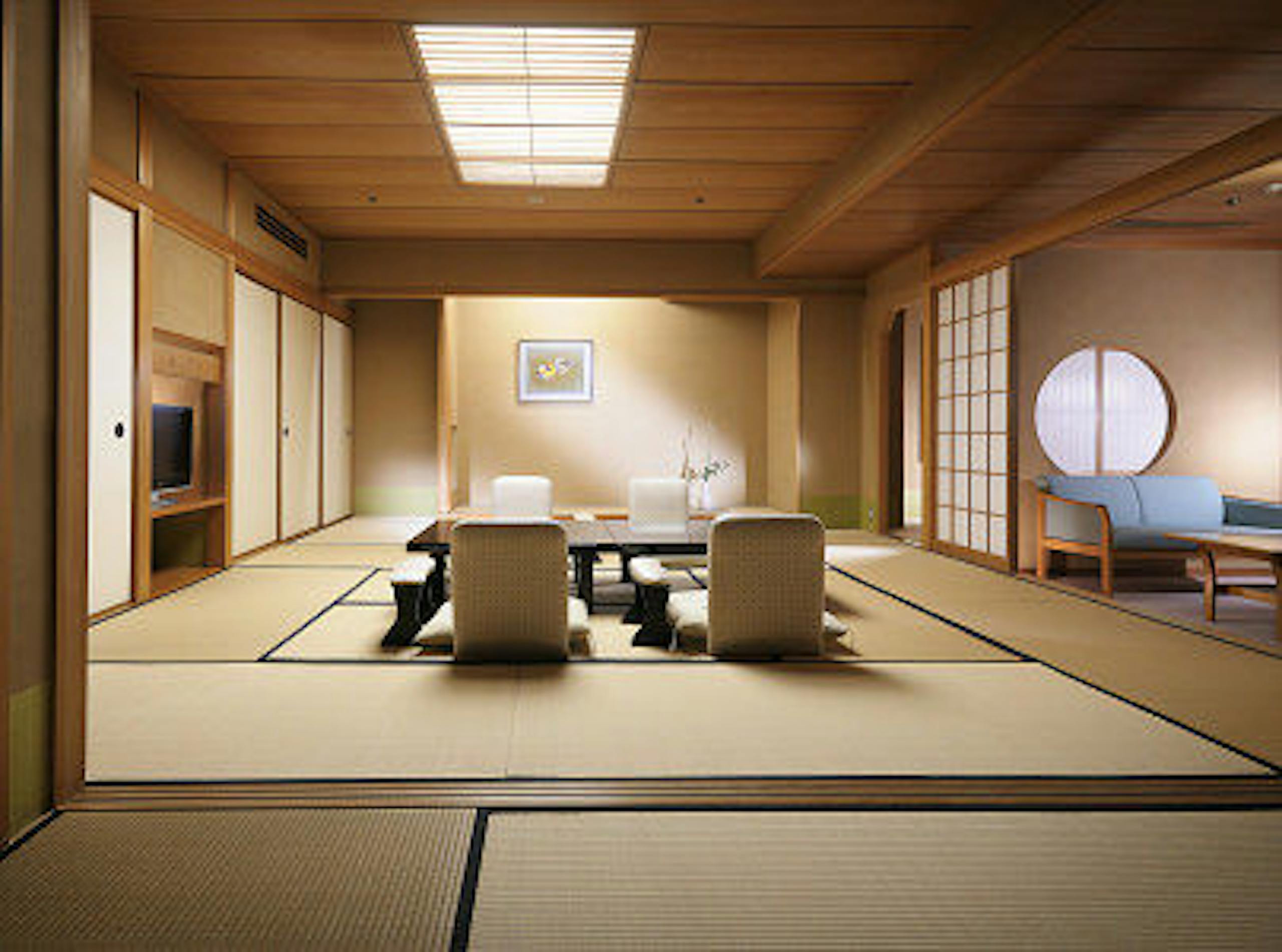
One of Japan’s three famous hot spring resorts, Gero Onsen has been drawing visitors for centuries. Suimeikan is the destination’s flagship large-format ryokan, with a Noh theater stage, a tea ceremony room, and a detached sukiya-style annex on site. It is a different scale of operation than most properties on this list — and that scale is part of what makes its approach to sustainability interesting.
Sustainability practices (verified from official sources)
The property is listed in the Sakura Quality system; the specific certification category should be verified via the official Sakura Quality registry.
What distinguishes Suimeikan is an internal efficiency program framed around the concept of kaizen — the Japanese manufacturing philosophy of continuous incremental improvement. Applied to hospitality operations, this means systematically eliminating unnecessary movement and time from every workflow. According to the company’s published materials, workflow redesign in food service has produced significant reductions in staff movement, delivery routes have been consolidated, guest room cleaning has been restructured into a “cell” model that reduces transit time, and purchasing and inventory management have been overhauled to reduce stock levels substantially. Quantitative figures cited in those materials should be confirmed directly with the property, as independent verification was not available at the time of research.
Crucially, the time saved through these efficiencies has not been used to cut staffing. Instead, it has been redirected toward the aspects of hospitality that benefit from more human attention: table presentation, guest interaction, personal service. This framing — that operational sustainability and service quality are not in tension — is unusually explicit for a Japanese ryokan and makes Suimeikan a genuinely interesting case study.
Cultural offerings include the on-site Noh stage, tea ceremony room, the Seiraso annex, and local cuisine emphasizing Gero’s regional produce.
Who this works well for
Travelers interested in what sustainability looks like at a large traditional inn. Those who want a full ryokan experience — multiple-course dinner, hot spring bathing, cultural programming — at a property with documented operational practices.
Worth knowing
The data confirmed through official sources relates primarily to operational efficiency through workflow redesign. Property-level data on energy consumption, water use, and waste diversion was not publicly available at the time of research.
Book
Ikkyu
JTB
Yahoo!Travel
Expedia
Rakuten Travel
Jalan
5. Tokyu Stay Hida Takayama Yui-no-Yu


Location: Takayama City — adjacent to JR Takayama Station
About the property
A hotel operated by the Tokyu Fudosan Holdings group, designed for extended stays. Every guest room includes a washer-dryer, microwave, and (in some rooms) a kitchenette. The building itself won the Takayama City Landscape Design Award for its integration with the historic streetscape.
Sustainability practices (verified from official sources)
The property holds the MLIT Barrier-Free Certification (観光施設における心のバリアフリー認定制度). The Takayama City Landscape Design Award is a public-record recognition, conferred for the building’s use of dark timber, traditional eaves, a considered approach to nighttime lighting, and window placement designed to harmonize with the surrounding Edo-period architecture. In a city where historic preservation is taken seriously, designing a new building to fit the context is not a small thing.
The “Kobo Project” (Workshop Project) runs throughout the property: traditional Hida crafts including Hida Shunkei lacquerware, wooden lattice work, and Hida furniture made by local artisans are used in guest rooms, corridors, and public areas. Floors 3 through 8 include gallery spaces dedicated to Hida craft traditions. The top-floor foot bath and large communal bath use water from Hida Takayama Onsen.
The extended-stay design is worth noting as a potential sustainability consideration. This design can support longer stays and potentially a more locally integrated style of travel — though the degree to which guests use those features varies. Tokyu Fudosan Holdings has published SDG commitments at the group level, with the Kobo Project cited as a contribution to SDG Goal 8 (decent work and economic growth) and Goal 11 (sustainable cities and communities).

Who this works well for
Travelers staying in Takayama for more than a few nights. Those who want to support local craft traditions through where they stay, not just what they buy. Anyone who prefers a more residential travel style over conventional hotel stays.
Worth knowing
SDG commitments are published at the group level. Facility-specific data on energy, water, and waste was not available through official sources at the time of research.
Book
Ikkyu JTB
Yahoo!Travel
Expedia
Rakuten Travel
Jalan
JTB
Yahoo!Travel
Expedia
Rakuten Travel
Jalan
6. SATOYAMA STAY
Location: Furukawa Town, Hida City — in the traditional townhouse (machiya) district of Hida-Furukawa
About the property
A machiya (traditional wooden townhouse) hotel constructed using local materials and traditional Hida carpentry techniques, as described by the operator, with the explicit aim of becoming a genuine antique in 100 years. Operated in connection with SATOYAMA EXPERIENCE, an eco-tourism and cultural tour company based in the same town.
Sustainability practices (verified from official sources)
A sustainable tourism policy is published on the official website, stating that sustainability is considered across all aspects of both the accommodation and the tours it connects to.
The building itself is where the philosophy starts. Rather than renovating an existing structure or constructing something in contemporary materials, the founders commissioned a new machiya using Gifu-prefecture hinoki cypress and Hida mountain washi paper, by local Hida carpenters using traditional joinery methods. The intention, as stated on the official site, is for the building to age into a genuinely historic structure — the opposite of the demolish-and-rebuild cycle that has erased much of Japan’s vernacular architecture.
Guest room interiors use furniture, art, and objects made by Hida artisans from local materials. Single-use plastics are minimized throughout. Old ceramic tableware recovered from local storehouses is used in the dining room, keeping these objects in circulation rather than disposal.
On the food side, breakfast is sourced from the inn’s own garden plot, neighboring farms, and local producers whose identity guests can know. Dinner is not served at the property — instead, guests are encouraged to eat at the cafes, izakayas, and restaurants of Hida-Furukawa’s town center. This “dispersed hotel” model is a deliberate economic choice: it keeps tourist spending flowing directly to neighborhood businesses rather than concentrating it within the property.
Who this works well for
Travelers who want to experience Hida beyond the crowds of Takayama. Those interested in traditional construction, material culture, and slow travel. Anyone who wants their accommodation spending to connect directly to the local economy.
Worth knowing
No international third-party environmental certification was confirmed through official sources. Dinner is not provided on-site, which may not suit travelers who prefer the full-board ryokan experience.
Book
7. NIPPONIA Mino Shoka-machi


Location: Mino City — within the “udatsu” merchant townscape district
About the property
A dispersed boutique hotel created by converting Meiji- and Taisho-era merchant townhouses (machiya) in Mino City into guest accommodations. Mino is the production center of Hon-Mino-shi, a form of hand-made washi paper recognized as a UNESCO Intangible Cultural Heritage. The hotel is developed and operated by Mino Machiya Co., Ltd. in partnership with Mino City, local businesses, and regional financial institutions.
Sustainability practices (verified from official sources)
The project received an award from the Cabinet Office’s SDG Public-Private Partnership Platform for Regional Revitalization — a documented public-sector recognition of the project’s approach to combining heritage preservation with economic regeneration. The exact official title of the award should be confirmed against the Cabinet Office SDGs platform listing for precise wording.
The environmental contribution here is primarily architectural: by converting vacant historic townhouses into functioning accommodations, the project avoids the demolition and new construction that typically accompanies real estate development. The buildings stay. The streetscape stays. And the economic activity generated by tourism flows into the preservation of that streetscape rather than replacing it.
Within the property, recycled washi paper is used for guest room amenities — made from 100% off-cut paper waste from the Marushige Paper Cooperative’s production process, and from a variant incorporating organic waste material from other manufacturers under the name “Reverse Paper.”
A dedicated washi paper shop, Washi-nary, operated directly by the Marushige cooperative, is attached to the property. Washi-making tours are offered to guests. The project has also contributed to converting vacant properties into long-term residences, generating new permanent population in a town that, like many Japanese rural towns, has been losing residents.
The stated mission: “to generate fans of Mino, and transform the community into one that sustainably supports the townscape.”

Who this works well for
Travelers interested in craft heritage, rural revitalization, and the intersection of tourism with community sustainability. Those who want to stay inside Japan’s architectural history rather than looking at it from the outside.
Worth knowing
Facility-specific data on energy, water, and waste was not available through official sources. No international third-party environmental certification was confirmed.
Book
Ikkyu Yahoo!Travel
Rakuten Travel
Jalan
Yahoo!Travel
Rakuten Travel
Jalan
8. Kurashi no Yado Cocoro
Location: Gujo City — in the satoyama (rural foothill) landscape of Oku-Mino
About the property
A farmstay guesthouse in a 70-year-old kominka (traditional Japanese farmhouse) renovated by the owner-couple with an emphasis on natural materials: unprocessed timber, additive-free lime plaster, mineral-based paint, and organic wax. The name Cocoro means “heart” or “feeling” in Japanese. The guiding philosophy, as stated on the official site: “small farmers can dream of changing the world.”
Sustainability practices (verified from official sources)
The official site confirms three things directly: vegetables and rice grown on-site without pesticides (“naturally farmed vegetables and rice that grow vigorously”), renovation completed using natural materials (“a comfortable old farmhouse renovated with natural materials”), and a farmstay experience plan called Nouhaku Mankitsu Plan (roughly: “the farmstay full-enjoyment plan”).
The renovation emphasizes natural materials and reduced use of synthetic chemicals, as described by the operator; specific material specifications and what was or was not used should be confirmed directly with the property. Cleaning products and personal care amenities use plant-derived ingredients, as stated on the official site; detailed formulations should be confirmed directly.
Community programming extends beyond the property: the owners run regular composting and soil-building workshops in the local area, sharing low-impact agricultural methods with the broader community.
No third-party certification was confirmed through official sources. What this property offers instead is directness — the people growing your food are the same people making your bed.
Who this works well for
Travelers for whom material composition of the built environment matters — whether for health reasons, values, or both. Those interested in natural farming and wanting hands-on connection to food production. Anyone seeking a genuinely quiet, off-the-beaten-path stay in Gifu’s interior.
Worth knowing
This is a small guesthouse, not a hotel. Facilities are modest by conventional standards. No third-party certifications, KPI reporting, or formal sustainability policy documentation was confirmed.
Book
A Note on Certifications
Several certifications appear throughout this guide. Here’s a quick reference.
Sakura Quality An ESG Practice is a Japanese hospitality standard whose criteria have been formally recognized by the Global Sustainable Tourism Council (GSTC) as a GSTC-Recognized Standard. This recognition applies to the standard framework itself, not to individual property certifications — GSTC did not conduct the property-level assessments. The standard uses a cherry blossom rating system. For current property listings and exact classification categories, check the official Sakura Quality registry at sakura-quality.com.
ISO 14001 is an international standard for environmental management systems, published by the International Organization for Standardization. It requires organizations to establish documented environmental policies, set measurable objectives, monitor performance, and continuously improve. Certification is awarded by accredited third-party auditors and applies to a defined legal entity or operational scope. It addresses how environmental decisions are made, not specific performance thresholds.
Rakuten Travel Sustainable Badge is a platform-based assessment that incorporates self-reported data reviewed by Rakuten Travel, using GSTC criteria as a reference framework. It is not issued by GSTC and is not an accredited third-party certification.
For the most current certification status of any property, check the relevant certification body’s official registry.
Things Worth Checking Before You Book
A few questions worth asking directly with any property on this list — or any sustainable-claiming accommodation anywhere.
Are energy, water, and waste figures published and updated regularly? This is a meaningful distinction between properties that have set up management systems and those that are actively tracking and disclosing results.
For chain properties, which commitments are group-level and which are specific to the property you’re staying at? Group-level SDG statements can be genuine, but they don’t tell you much about the specific building.
What does “local ingredients” mean in practice? Is it a majority of produce by volume? A featured item on the menu? The answer changes the picture considerably.
None of these questions have a single right answer. They’re tools for forming your own judgment.
Final Thoughts
Eight properties, eight different approaches. The Toyota Shirakawa-go Eco-Institute builds sustainability into its educational mission. Hotel around TAKAYAMA turns discarded materials into design. Honjin Hiranoya Kofu-kan brings ISO 14001-level environmental management to a traditional inn format. Suimeikan applies manufacturing-derived kaizen thinking to hospitality operations and labor conditions simultaneously. Tokyu Stay Hida Takayama Yui-no-Yu uses building design and craft partnerships to embed itself into Takayama’s cultural preservation. SATOYAMA STAY constructs a building meant to be a future antique, and routes dinner spending directly to neighborhood restaurants. NIPPONIA Mino Shoka-machi turns vacant merchant houses into a living argument for heritage-based economic regeneration. Kurashi no Yado Cocoro strips the stay down to pesticide-free food and natural-material walls.
The number of certifications a property holds and the depth of its commitment to the place it occupies don’t always move together. Deciding what matters to you before you start searching tends to produce a clearer answer than trying to rank properties against each other.
What draws you to a particular place to begin with? That’s probably the right starting point.
All information in this guide is based on official property websites and press releases, verified as of June 2026. Details are subject to change. Please confirm current information directly with each property before making reservations.