
Most people visiting Okinawa end up in a large beach resort. That’s a perfectly fine choice, but it’s not the only one. Across Okinawa’s main island and its outlying islands, a different kind of accommodation exists: small, independently run places where the owner lives nearby, the food comes from the surrounding area, and the building itself has a story. These aren’t boutique hotels designed to look local. They’re places where the connection to the community is part of how they operate.
This guide covers 10 small-scale properties, all with 30 rooms or fewer, selected based on six criteria: locally rooted ownership, local hiring practices, sourcing from local producers and businesses, support for community issues, respect for cultural heritage and local life, and environmental responsibility. Every property listed here was evaluated using information confirmed through official websites or regional tourism association sources. Where specific claims could not be verified, this guide says so directly.
This is not a ranking, and it’s not a list of “the best” hotels in Okinawa. It’s a resource for travelers who want to make an informed choice about where their money goes and what kind of experience they’re looking for. All details are current as of June 2026. Please verify availability and operating status directly with each property before booking.
How We Selected These Properties
Six criteria guided the selection process. Meeting even one of them was enough for a property to be considered. The more criteria a property met, the stronger the case for inclusion.
- Locally rooted ownership Is the owner or operator based in the community? Are local residents involved in decision-making?
- Local employment and development Are staff members drawn from the area? Are there pathways for local employees to grow?
- Local sourcing and business partnerships Does the property source food, supplies, or experiences from local producers and vendors?
- Support for community needs Does the property address local challenges such as rural depopulation, vacant property, or lack of infrastructure?
- Cultural and landscape preservation Does the property protect traditional architecture, local customs, or the visual character of the neighborhood?
- Environmental responsibility Does the property reduce waste, limit energy use, or make thoughtful choices about materials and construction?
Properties with 30 or more rooms, or those operated by national hotel chains, were excluded.
Related article: Sustainable Hotels in Okinawa: 9 Certified Properties: Green Key, GSTC & GREEN FINS Verified (2026)
The Properties
1. Yanbaru Hotel Nammei Shinshitsu with NIPPONIA (Kunigami Village)
Location | Kunigami Village, Kunigami District, Okinawa Prefecture (Yanbaru region)
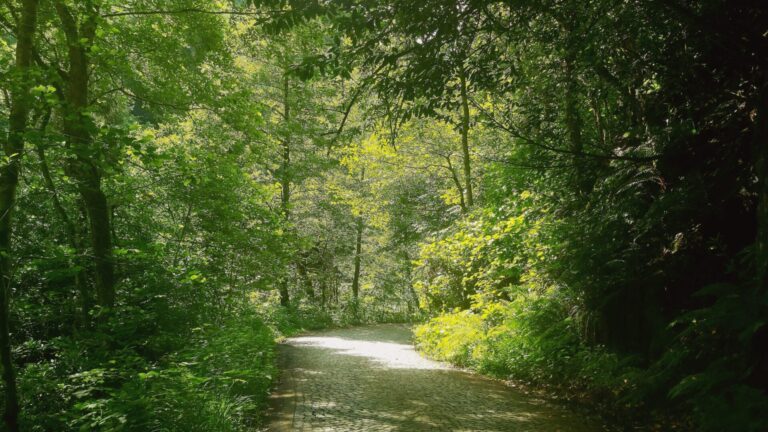
This property sits within the Yanbaru region, a dense subtropical forest in northern Okinawa that was designated a UNESCO World Natural Heritage Site in 2021. The concept, which the official website describes as “VILLAGE ADVENTURE RESIDENCE,” centers on staying inside a traditional hamlet rather than beside it. The property consists of six restored vacant old folk houses distributed across village settlements rather than a single hotel building. It opened in August 2024.
On the community side, the official website confirms that nature guide Hiromi Uekachi, a resident of Kunigami Village and a former active ranger with Japan’s Ministry of the Environment, leads guests through the area. The intention isn’t to deliver a packaged forest experience. It’s to move through the landscape alongside someone who knows it well.
One thing worth knowing upfront: this property operates in partnership with NIPPONIA, a nationally active brand that manages heritage property projects across Japan. The details of that operational arrangement are not spelled out on the official website. If having a purely locally independent operation matters to you, it’s worth contacting the property directly before booking.
Who this might suit
Travelers who want to slow down in Yanbaru’s old-growth forest and village landscape, particularly those interested in guided experiences with local naturalists.
Limitations to consider
The NIPPONIA partnership means this is not a straightforward independent local operation. Specific sourcing or environmental data is not published on the official website.
Book here
 JTB
Rurubu Travel
JTB
Rurubu Travel
2. YANBARU HOSTEL (Kunigami Village)
Location | Kunigami Village, Kunigami District
Also in Kunigami Village, YANBARU HOSTEL takes a different approach. The building is a renovated structure rather than a new build, which avoids the demolition waste that comes with tearing down an existing property. The official website states the hostel’s mission as “building a system for regional revitalization,” which is a broader goal than simply providing accommodation. Total room count is 20. The hostel is registered with the Kunigami Village Tourism Association’s hometown tax program.
The official website’s detailed pages were not accessible at the time of writing, so specific claims about staffing programs, agricultural exchange schemes, or community matching services could not be independently confirmed. What can be confirmed: the property exists, it operates in a repurposed building, and it frames its work in terms of the village’s long-term health rather than just occupancy rates.
Who this might suit
Travelers planning a longer stay in northernmost Okinawa, or anyone curious about how small-scale operators are trying to address rural depopulation through tourism.
Limitations to consider
The dormitory format accommodates a larger number of guests than the typical small inn, which may not suit travelers seeking a quiet, intimate atmosphere. Details about specific programs should be confirmed directly with the hostel.
Book here
Expedia
Rakuten Travel
3. SHINMINKA Villa (Nakijin Village)
Location | Nakijin Village, Kunigami District
SHINMINKA means “new folk house,” a term that refers to architecture drawing from traditional Okinawan timber construction methods adapted for contemporary living. The traditional technique in question is a wooden truss system developed in the Ryukyu Kingdom era to withstand Okinawa’s powerful typhoons and year-round heat. Rather than relying on heavy air conditioning, the design uses cross-ventilation through the structure. This is a one-villa property (one building, one booking at a time).
The amenity brand econawa, a local Okinawa company that produces bamboo and natural-material toiletries, has documented a collaboration with SHINMINKA Villa on its official website. Whether econawa products are currently stocked as a permanent feature or were part of a limited arrangement is not confirmed, so it’s worth checking before your stay if that matters to you. The property is also listed on the Nakijin Village Tourism Association website.
The official website states a commitment to “cherishing collaboration with nature, history, and the people of the community,” but the ownership structure and employment details are not publicly detailed.
Who this might suit
Travelers interested in Okinawan architectural heritage, or those who want a private, design-conscious retreat in the northern part of the main island.
Limitations to consider
Whether this is a locally owned independent property or involves outside capital is not confirmed by available public information. The econawa amenity arrangement should be verified before booking if it’s a deciding factor.
Book here
Expedia
Rakuten Travel
4. Furai-so (Nakijin Village)


Location | Nakijin Village, Kunigami District (one-minute walk to Nagahama Beach)
Furai-so is a three-room guesthouse a one-minute walk from Nagahama Beach, one of Nakijin’s quieter stretches of coastline. The property is best known for its housemade natural sourdough bread breakfast, which has earned recognition from major Japanese travel booking platforms. The name Furai-so loosely translates to “the lodge where the wind comes,” which fits the setting.
The owner is a long-term resident of Nakijin Village who settled there from elsewhere in Japan. This means the property doesn’t fit the “born-and-raised local” category, but the owner has maintained a real presence in the community over time. That’s a different kind of rootedness, and it’s worth naming accurately. Note that an older URL (plala.or.jp domain) still circulates online, but the current official website is fu-rai-sou.com. Reservations are also available through Jalan and Rakuten Travel.


Who this might suit
Travelers who want a slow, quiet morning near the beach, with home-baked bread and the low-key rhythm of a Nakijin village stay.
Limitations to consider
The owner is not a Nakijin native. Specific details about community support activities or local sourcing beyond the breakfast bread are not documented on the official website.
Book here
Ikkyu JTB
Expedia
Yahoo!Travel
Rakuten Travel
Rurubu Travel
Jalan
JTB
Expedia
Yahoo!Travel
Rakuten Travel
Rurubu Travel
Jalan
5. Akachichi Guesthouse (Onna Village)
Location | 348 Maeda, Onna Village, Kunigami District, Okinawa Prefecture
Akachichi Guesthouse is a family-run property with two cottages on the same grounds as the owner’s home. The name “akachichi” refers to the reddish soil common in Okinawa. The location is roughly a 400-meter walk from Maeda Cape and the famous Blue Cave, which makes it a practical base for diving and snorkeling in Onna Village. The cottages incorporate traditional Okinawan design elements. Children are not accepted, per the property’s FAQ.
Details about breakfast content and amenities should be confirmed directly through the official website or your booking platform, as specific claims made in some third-party research could not be independently verified through official sources.
Who this might suit
Adult travelers (no children accepted) who want a small, family-run base near Onna Village’s diving spots, without the scale and feel of a resort.
Limitations to consider
Not suitable for families with children. Breakfast and amenity details require direct confirmation with the property.
Book here
Rakuten Travel
Jalan
6. Yomitan Condo Hotel ND (Yomitan Village)

Location | Yomitan Village, Nakagami District
Yomitan Village sits in the central part of Okinawa’s main island and is well known as the home of Yachimun no Sato, a ceramics village where traditional Okinawan pottery (yachimun) is still produced and sold by working kilns. Yomitan Condo Hotel ND is located inside the Tokeshi settlement, close to the daily rhythms of the village. According to Rakuten Travel’s listing, the owner personally designed the property, and the entrance features an atrium decorated with flowers and plants.
The official website (hotel-nd.com) was not accessible during the research for this article, so all information here is drawn from third-party travel platforms. Room count and detailed programming should be confirmed directly through a booking platform or by contacting the property.

Who this might suit
Travelers interested in Okinawan crafts, particularly yachimun pottery, who want a village-based stay in central Okinawa rather than a beachfront resort.
Limitations to consider
The official website is currently not reliably accessible. All key details, including room count and operating policies, should be verified through a booking platform.
Book here
Expedia
Yahoo!Travel
Rakuten Travel
Jalan
7. Goyah-so Guesthouse (Okinawa City / Koza)

Location | Goya, Okinawa City
Goyah-so is a five-room guesthouse in Koza, a neighborhood of Okinawa City with a history unlike anywhere else in Japan. Koza developed during the US military administration of Okinawa (1945 to 1972) and retains a distinct character shaped by that era: live music venues, old shopping arcades, and a general sense that the twentieth century never quite left. The building is a roughly 60-year-old Okinawan folk house.
Father Hideo and son Yuki run the place together. Yuki grew up in Chiba Prefecture and came to Koza by way of Miyako Island before settling here. His blog documents the parts of Koza that tourists usually pass through without stopping: the Gintenkai shopping arcade and one of the last remaining communal bathhouses in Okinawa. The goal, as it reads on the website, is to make sure guests actually engage with the neighborhood rather than just sleeping in it. Sanshin (traditional three-stringed Ryukyuan instrument) music and yuntaku, the Okinawan tradition of unhurried conversation among friends and strangers, are part of the regular atmosphere.

Who this might suit
Travelers curious about Okinawa’s post-war history and American-influence culture, or anyone who wants live sanshin and honest conversation over a quiet resort pool.
Limitations to consider
The property is a preserved old folk house with minimal amenities. Travelers who prioritize comfort and quiet over atmosphere may find it mismatched.
Book here
Expedia
Yahoo!Travel
Rakuten Travel
Jalan
8. SPICE MOTEL OKINAWA (Kitanakagusuku Village)
Location | Kitanakagusuku Village, Nakagami District
SPICE MOTEL OKINAWA is a 1970-built motor inn that was renovated and reopened rather than demolished. The renovation was carried out by Arts & Crafts, a design and construction firm with offices in both Osaka and Okinawa. The building dates from the era of American administration and has the visual language of 1970s roadside hospitality: low-slung, wide-windowed, with a personality that’s entirely its own. Total room count is 17. The property celebrated its tenth anniversary in November 2025.
Beyond accommodation, the space hosts an art gallery, short-term tenant shops, and pop-up events, which gives it a neighborhood function beyond just lodging. The decision to restore rather than rebuild is meaningful from an environmental standpoint: no demolition waste, no new concrete footprint.
It’s worth being straightforward about one point: Arts & Crafts is not a local Okinawan independent operator. It’s a company with roots in Osaka. The property does not fit a “Okinawa-born family business” profile. What it does offer is a serious commitment to adaptive reuse of a historically specific building, and a space that functions as a meeting point for local creative culture.
Who this might suit
Travelers interested in architecture, adaptive reuse, or the cultural history of US-administered Okinawa. A good fit for those who want something that feels genuinely singular.
Limitations to consider
The operating company is Osaka-based, not a local Okinawan independent. Local hiring and sourcing details are not documented on the official website.
Book here
Expedia
Rakuten Travel
Jalan
9. Shiraho Villa Square Court (Ishigaki Island)

Location | Shiraho, Ishigaki City (Ishigaki Island, Yaeyama Islands)
Shiraho is a village on the eastern coast of Ishigaki Island, in the Yaeyama Islands roughly 450 kilometers southwest of Okinawa’s main island. The village sits alongside one of the world’s largest blue coral reefs and is within a designated Star Village area, meaning light pollution is actively limited to protect the night sky. Shiraho Villa Square Court is a private-use villa rented to one group at a time (entire villa rental, one booking per day).
The building uses a courtyard structure, with the rooms surrounding a central garden planted with native tropical species including Pandanus trees. The official website describes the design as bringing together traditional Okinawan culture and contemporary residential function. An outdoor shower and storage for diving equipment are included, reflecting the coastal setting.
The property’s ownership structure, specifically whether it is locally owned, is not confirmed by publicly available information. Some claims that appeared in third-party research, including specific amenity brands and lighting specifications, could not be verified through the official website and have not been included here.


Who this might suit
Travelers looking for a private, design-forward base on Ishigaki Island’s quieter eastern side, with easy access to coral reef diving and some of Japan’s darkest night skies.
Limitations to consider
Local ownership is unconfirmed. The property’s community contribution beyond its physical presence in Shiraho village is not well documented in available sources.
Book here
Ikkyu
Yahoo!Travel
Rakuten Travel
10. Shimayado Ganjuya (Taketomi Island)

Location | Taketomi Town, Yaeyama District (Taketomi Island)
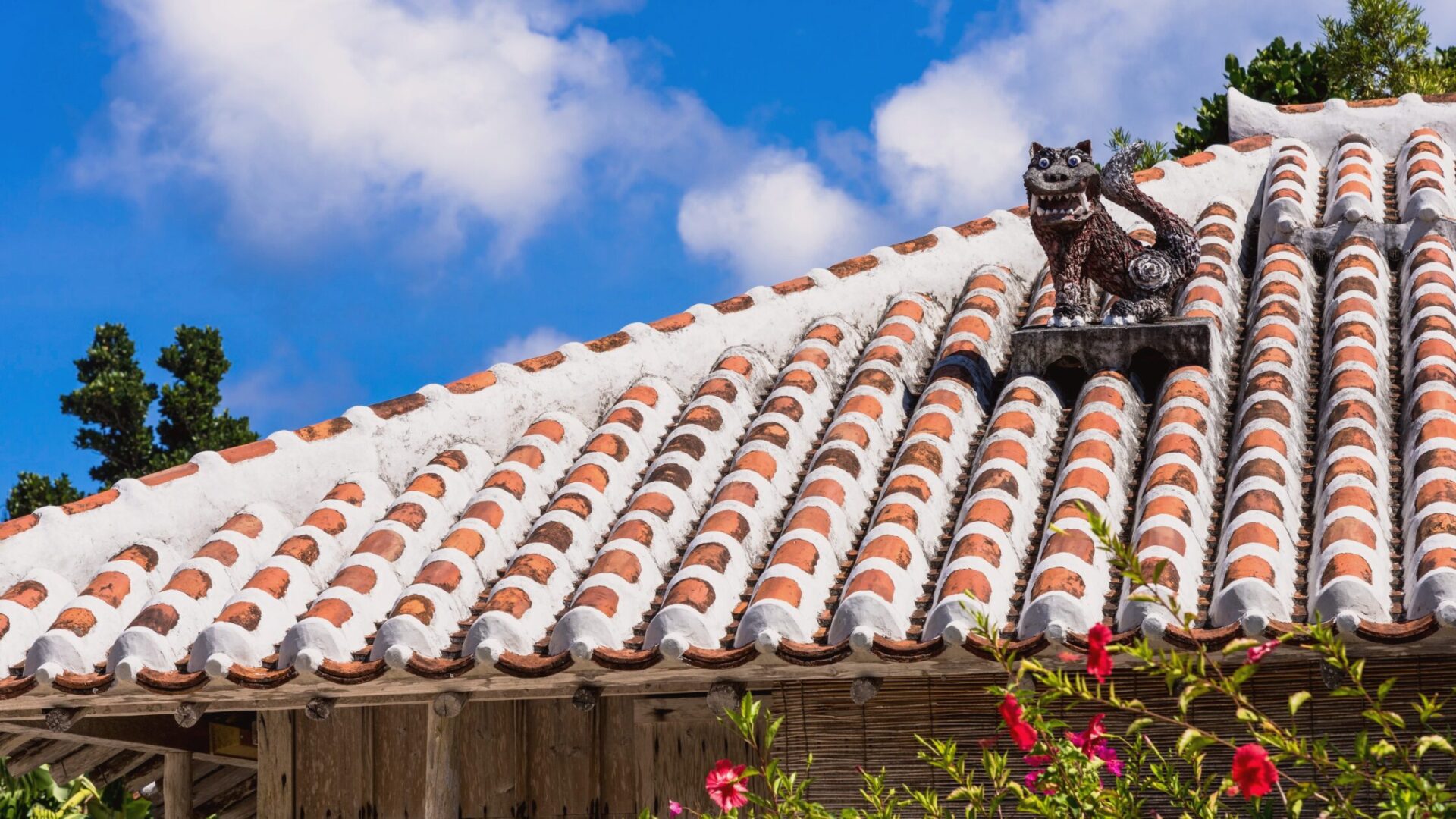
Taketomi Island is a ten-minute ferry ride from Ishigaki Port. The island’s village is designated as a Preservation District for Groups of Historic Buildings under Japan’s national cultural preservation framework, which means the white sand lanes, coral limestone walls, and traditional rooftop shisa lion figures are protected by law. There are no cars on the island. Getting around means renting a bicycle or walking.
Shimayado Ganjuya is a villa rental operation run by the Uchimori family, whose names and photos appear on the Taketomi Town Tourism Association’s website. The property includes rooms with an outdoor bath and is adjacent to a café called Parlor Ganjuya. The Uchimori family are local residents operating within the village’s strict heritage conservation environment. Details about the number of villas, how many groups are accommodated at one time, and shuttle availability from the port should be confirmed directly through the official website before booking.

Who this might suit
Travelers who want to experience daily life inside one of Japan’s most intact traditional village landscapes, and who are comfortable with the pace that comes with no cars and no crowds.
Limitations to consider
Taketomi requires a ferry connection from Ishigaki. There are no motorized vehicles on the island. Room count, group capacity, and port pickup details need to be confirmed through the official website.
Book here
JTB
Yahoo!Travel
Rakuten Travel
Rurubu Travel
Jalan
Before You Book: A Few Things to Keep in Mind
Three of the ten properties in this guide have limited publicly accessible official website information: YANBARU HOSTEL’s detailed pages were not reachable, Yomitan Condo Hotel ND’s website was not loading consistently, and Goyah-so’s information is largely confirmed through the owner’s own blog rather than a formal website. For all three, direct contact is the most reliable route to current availability and pricing.
More broadly, most small properties in Okinawa do not publish detailed breakdowns of local sourcing percentages, staff demographics, or community donation records. This is not evidence that they aren’t doing meaningful work. It’s a reflection of how small operations communicate, or don’t. If a property’s community practices matter to your decision, a direct message or phone call before booking will almost always get you a more honest picture than any website.
One larger structural note: the Okinawan tourism economy has long dealt with what researchers call tourism leakage, the tendency for money spent by visitors to flow out of the local economy toward mainland Japanese or foreign-owned hotel groups. Staying in a locally run small property is one of the more direct ways a traveler can push against that pattern. It doesn’t require any particular ideology. It just requires paying attention to where the money goes.
A Question Worth Sitting With
Spending a night in a Yanbaru village settlement, listening to sanshin in a 60-year-old folk house in Koza, and waking up to silence on Taketomi Island are all “Okinawa trips.” But they lead to very different places in terms of what the experience actually is, and who benefits from your being there. The question of where you stay is also a question about what kind of traveler you want to be. Where does your answer land?