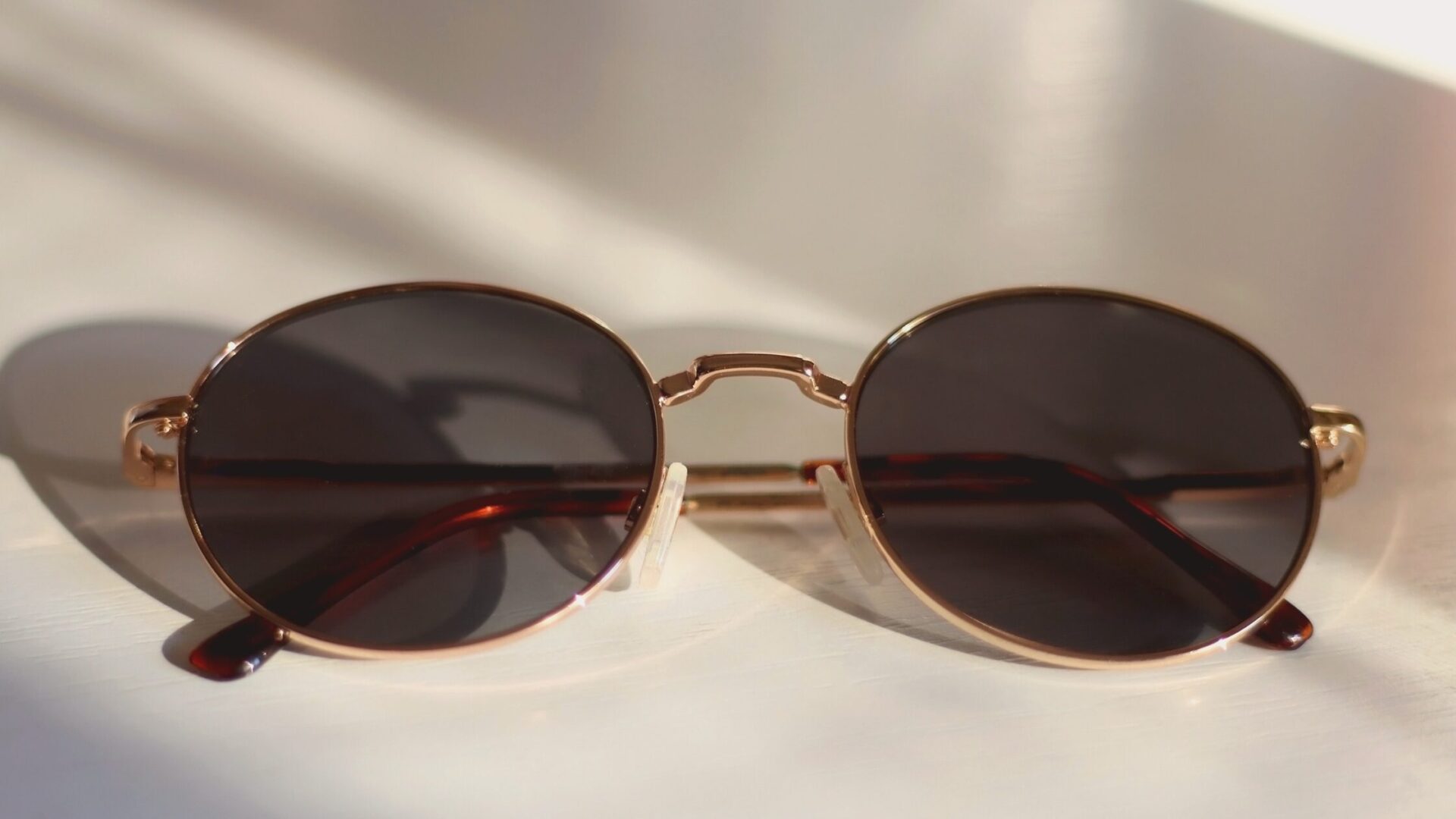

If you’ve spent any time in Japan, you already know that UV protection here isn’t optional. The sun in summer is relentless, and the glare off city pavement or mountain snow demands a decent pair of sunglasses. But if you’ve also spent time thinking about what your stuff is made of and where it ends up, the sunglasses aisle gets complicated fast.
“Sustainable” appears on more product labels every year. What it means in practice — where the frame material actually comes from, whether the brand has third-party verification, whether you can get it repaired when a hinge breaks — is rarely on the label. You have to look it up yourself.
This article does that looking-up for you. We researched seven sunglasses brands available in Japan, cross-checking each claim against the brand’s official website. If something couldn’t be verified, we say so directly. No filler, no greenwashing softened into a recommendation.
Quick Summary: Best Sustainable Sunglasses in Japan by Use Case
| What you’re looking for | Brand | Why |
|---|---|---|
| Full verification across all criteria | SUNSKI | Recycled material, Climate Neutral certification, lifetime warranty, lens replacement kit, FSC packaging — all confirmed on official site |
| Japan-made, supporting local craftsmanship | PLAGLA | Made in Sabae, Fukui. Frame from ~2 recycled PET bottles. VLT values listed per model |
| UV performance + repairability combined | SWANS | UV 99.9%+ cut, VLT data, in-house repair service, parts retained 3 years post-discontinuation |
| Paris-origin brand with material philosophy | WAITING FOR THE SUN | Bio-acetate, recycled metal, cassava-based packaging. Japanese-language site available |
| Sunglasses made from old sunglasses | SZADE | Recycled eyewear as raw material. GRS-certified factory. Japanese site explains the process |
| Sports use with bio-based frame material | SMITH | Evolve frame with 53% bio-based content (castor oil). ChromaPop lenses with per-model VLT data |
| Supporting PET bottle upcycling in Japan | DONT PANIC | Frames from waste PET bottles via BLUE PROJECT. Process explained on official Japanese site |
How We Evaluated These Brands
Six criteria shaped this comparison. The deciding factor in every case was whether the information could be confirmed on the brand’s official website. A brand not appearing in a category doesn’t mean they aren’t doing the work — it means we couldn’t verify it from their published materials.
Optical protection — Does the official site publish UV transmittance rates, visible light transmittance (VLT), and polarization data as numbers, not just claims?
Materials — Are recycled, bio-based, or plant-derived materials used? Is the source and percentage explained officially?
Manufacturing — Is there published information about chemical management, energy use, or supply chain transparency?
Certification credibility — Is the “sustainable” claim backed by a third-party organization, or is it self-reported?
Durability and repairability — Does the brand officially offer parts replacement, repair services, or a warranty?
Packaging — Does the official site describe FSC-certified paper, recycled materials, or plastic-free packaging?
All information reflects what was available on official brand websites as of April 2026.
7 Sustainable Sunglasses Available in Japan
1. SUNSKI
♻️ SuperLight: 100% recycled polymer from industrial waste 🔍 Climate Neutral certified 🌍 1% for the Planet member 🔧 Lifetime warranty + replacement lens kits sold separately 📦 FSC-certified recycled cardboard, plastic-free packaging
SUNSKI is a San Francisco-based brand distributed in Japan by Goldwin, one of Japan’s leading outdoor apparel companies. You can find them through Goldwin’s retail stores and online.
The frame material — proprietary “SuperLight” polymer — is made from industrial scrap that would otherwise go to landfill. It’s not off-the-shelf recycled PET; it’s a material SUNSKI developed specifically for this purpose, and every frame uses it without exception.
All models come with polarized lenses and UV400 protection as standard. Visible light transmittance (VLT) is listed per model on the product pages, which makes it easy to compare lenses for specific conditions — driving, hiking, on water.
The environmental credibility here is unusually solid. Climate Neutral — an independent nonprofit — measures and verifies SUNSKI’s total emissions annually, covering both reduction efforts and certified offsets. This is ongoing third-party certification, not a one-time claim. The brand is also a member of 1% for the Planet, donating 1% of annual revenue to environmental organizations.
On repairability: SUNSKI offers a lifetime warranty covering one frame replacement for manufacturing defects or normal-use damage. They also sell replacement lens kits directly, so a scratched lens doesn’t mean replacing the whole frame. Packaging is FSC-certified recycled cardboard with no plastic components.
Editor’s note: SUNSKI was the only brand in this comparison where all six criteria could be confirmed on the official site. The approach feels integrated rather than added-on — materials, certification, repairability, and packaging appear to have been designed together. If you want a benchmark for what verified sustainability looks like in eyewear, this is a useful reference point.
Trade-offs: Warranty claims in Japan are handled through Goldwin, not SUNSKI directly. The warranty covers one replacement per frame and excludes loss or intentional damage.


 ポチップ
ポチップ
2. WAITING FOR THE SUN
🌱 Bio-acetate (wood fiber-based) 🔩 Recycled metal and nickel-free beta steel options 📦 Cassava-derived film, recycled box, case, and lens cloth 🇫🇷 Founded in Paris in 2010. Japanese-language site available
Founded in Paris in 2010, WAITING FOR THE SUN has built its brand around sustainability as a core concept rather than an add-on feature. The brand has a Japanese-language site (waitingforthesun.shop) and is stocked at BEAMS, TOMORROWLAND, and other major select shops across Japan — making it genuinely accessible if you’re based here.
Frames come in three material directions: bio-acetate (made primarily from wood fiber, with biodegradable properties), recycled metal, and beta steel (nickel-free). The material choice meaningfully changes both the look and the feel of the frame — this isn’t a single-material brand with a sustainability story bolted on.
The packaging stands out. The transparent wrapping is made from cassava-derived bioplastic (the same starch crop used to make tapioca). The outer box, hard case, and lens cloth are all recycled materials. These details are explained in Japanese on the official site, which is more than many brands manage.
Editor’s note: The consistency between material choices and packaging philosophy is clear, and it’s documented in Japanese. Choosing a frame here is also choosing a position on what eyewear materials should be — that kind of coherence is harder to find than it sounds.
Trade-offs: UV transmittance figures are not published on the Japanese site. There’s no Japan-based repair service; aftercare depends on the retailer. No third-party certification (B Corp, GRS, etc.) has been confirmed at time of writing.
 ポチップ
ポチップ
3. SZADE
♻️ Frames made from discarded sunglasses 🔍 GRS-certified manufacturing facility 🇦🇺 Melbourne-based. Japan site launched 2023
SZADE is a Melbourne-based brand that launched its Japanese-language site (szade.jp) in 2023. The defining feature is the raw material: frames are made from collected, discarded eyewear — not virgin recycled plastic, not waste from other industries, but sunglasses that have already served their purpose as sunglasses. In our assessment, that’s about as close to a closed loop as eyewear manufacturing gets.
The credibility question is answered by the manufacturing facility’s GRS (Global Recycled Standard) certification. GRS independently verifies the chain of custody from raw material collection through to finished product. The certification details are written in Japanese on szade.jp/pages/process — you can check it yourself without navigating a foreign-language site.
One deliberate exception to the recycled approach: lenses are polycarbonate, not recycled material. The brand states this is intentional, prioritizing impact resistance and optical clarity where compromising would affect the product’s core function.
Editor’s note: A concept clear enough to explain in one sentence, backed by a third-party-verified manufacturing process. That combination is rarer than it should be. The Japanese site being genuinely informative (not just a translation of marketing copy) is a detail worth noting for anyone who does their research.
Trade-offs: Packaging details and Japan-based repair options aren’t currently confirmed on the official site. UV transmittance figures should be verified on individual product pages before purchasing.
 ポチップ
ポチップ
4. PLAGLA
♻️ ~2 waste PET bottles per frame 🏭 Made in Sabae, Fukui Prefecture 👁️ Polarized lenses, UV 99.9%+ cut, VLT listed per model 🌱 PLAGLA:R line uses bio-based plastic (80%+ cotton linter fiber)
If you’ve looked into Japanese eyewear at all, you’ve probably encountered the name Sabae. The city in Fukui Prefecture produces around 90% of Japan’s domestically manufactured eyewear and has a reputation for technical precision that extends well beyond Japan’s borders. PLAGLA is made there.
The frame material comes from waste PET bottles — approximately two standard 500ml bottles per frame, a figure the brand publishes directly on their site. That specificity matters: it’s the difference between a material claim and a verifiable number. A newer line, PLAGLA:R, takes a different approach, using bioplastic derived from cotton linter fiber (the fine fibers attached to cottonseed) at over 80% composition.
Optical specs are available per model on the product pages. Many models in the lineup feature polarized lenses, UV cut of 99.9% or above, and listed VLT values — PG-03, for instance, is listed at 18%. Check individual product pages to confirm specs for the specific model you’re considering. A portion of sales goes to the Umi no Hane Fund (海の羽根募金), a Japanese marine environment foundation, as noted on the brand page.
Editor’s note: For anyone who wants to buy Japanese-made and have the numbers in front of them, PLAGLA is one of the more straightforward options in this comparison. The Sabae manufacturing context is also worth something — it’s not a marketing detail, it’s a region with a documented tradition of precision craftsmanship.
Trade-offs: No third-party certification (GRS, OEKO-TEX, etc.) at time of writing — materials and manufacturing claims are self-reported. Repair and warranty information isn’t currently published on the official site.
 ポチップ
ポチップ
5. SMITH
🌱 Evolve frame: 53% bio-based content (castor oil-derived) ♻️ CORE frame: recycled PET from waste bottles 👁️ ChromaPop lenses, UV400, per-model VLT data published
SMITH has been making performance eyewear for snowsport and fishing long enough that the lens technology is genuinely well-developed. The optical performance here is a known quantity — ChromaPop polarized lenses with UV400 protection and per-model VLT figures (37%, 42%, and others depending on the lens) are published and easy to compare.
The frame material story has two threads. The Evolve line uses a bio-based polymer derived from castor oil, with 53% bio-based content. The CORE line uses recycled PET sourced from waste bottles. Both reduce dependence on virgin petroleum-based plastic, though through different approaches.
SMITH Japan handles domestic purchases and customer inquiries.
Editor’s note: A note on sourcing: the Evolve material data (53% bio-based) comes from the US parent site (smithoptics.com), not the Japanese site. The Japan site doesn’t currently publish this level of detail in its sustainability section. If you’re researching before buying, smithoptics.com is where to look for the material specifics.
Trade-offs: Manufacturing process and packaging sustainability information isn’t available on the Japan official site. Third-party certifications (Climate Neutral, GRS, etc.) haven’t been confirmed at time of writing.
 ポチップ
ポチップ
6. SWANS(スワンズ)
👁️ Brand states UV 99.9%+ cut across its lineup 📊 VLT and polarization rate published per product 🔧 In-house repair service, parts retained ~3 years after discontinuation 🛠️ Replacement parts sold individually for select models
SWANS is made by Yamaoto Kogaku, a Japanese optical company founded in 1911. It’s the oldest brand in this comparison and the one most clearly focused on optical performance and longevity rather than material origin.
SWANS states UV 99.9%+ cut (UV transmittance below 0.1%) across its lineup, with VLT percentages and polarization rates listed per product on the official site. For anyone comparing lens specs across multiple brands, SWANS has the most structured data of the seven here.
The repair infrastructure is the other notable feature. Repairs are handled at SWANS’s own factory. For discontinued models, the brand retains replacement parts for approximately three years after discontinuation. Some models have individual parts available for purchase separately (detailed at swans.co.jp/userguide/). In a country where the concept of mottainai — the regret of waste — runs deep, a brand that actually supports fixing things rather than replacing them carries a certain resonance.
Editor’s note: No recycled or bio-based materials, no environmental certifications. But the case for longevity as sustainability is real, and here it’s backed by an actual repair system, not just a claim. If optical performance and the ability to maintain a pair of sunglasses for years matter more to you than frame material origin, SWANS is a serious option.
Trade-offs: No recycled or bio-based materials confirmed. No manufacturing or packaging sustainability information published. For material-focused criteria, other brands in this list are better options.
 ポチップ
ポチップ
7. DONT PANIC “BLUE PROJECT”
♻️ Frames made from upcycled waste PET bottles 🌀 BLUE PROJECT initiative described on official Japanese site
DONT PANIC runs the BLUE PROJECT as the environmental core of its eyewear line — frames are made from upcycled waste PET bottles, and the process behind that material choice is explained on the official site. The concept is clear and the commitment is described directly.
Available through yts-store.com and select online retailers in Japan.
Editor’s note: The material sourcing is transparent and the direction is coherent. The gap in this case is optical data — UV transmittance and VLT figures were not found on the pages reviewed at time of research. If you want to confirm lens specs before buying, reaching out to the retailer directly is the practical step.
Trade-offs: No confirmed information on repair service, warranty, or packaging at time of writing. No third-party certifications. Distribution is limited, so confirming current stock before purchasing is advised.
 ポチップ
ポチップ
Before You Buy a New Pair: Getting More Life Out of What You Have
The most sustainable sunglasses are often the ones you already own.
Scratched lenses. Check whether your brand sells replacement lenses. SUNSKI sells lens replacement kits directly. Many optical shops (眼鏡屋) in Japan also offer lens replacement services for frames you bring in.
Bent frame or loose screws. If you have a brand like SWANS with an in-house repair service, use it. Most optical shops in Japan offer frame adjustment (フレーム調整) at no charge or for a small fee — a service that’s genuinely common here and worth taking advantage of.
Worn nose pads. Nose pads are consumables. They’re usually sold as replacement parts and can be swapped at home or at any optical shop in a few minutes.
Japan has a strong repair culture. Optical shops here — including chains like Zoff and Megane Super — are generally willing to adjust, repair, or replace components on frames you didn’t buy from them. It’s worth asking.
Frequently Asked Questions
Where can I buy sustainable sunglasses in Japan? SUNSKI is available through Goldwin stores and their online store. PLAGLA ships from shop.plagla.jp. SWANS is available at major sports retailers (Alpen, Victoria, etc.) and swans.co.jp. WAITING FOR THE SUN is stocked at BEAMS and TOMORROWLAND. SZADE ships from szade.jp. SMITH is available at smithjapan.co.jp and outdoor/ski shops. DONT PANIC BLUE PROJECT is available via yts-store.com.
What does GRS certification mean for sunglasses? GRS (Global Recycled Standard) is a third-party certification that verifies recycled content and the chain of custody from collection through to finished product. Among the brands in this article, SZADE’s manufacturing facility is GRS-certified.
Are any of these sunglasses made in Japan? Yes. PLAGLA is manufactured in Sabae, Fukui Prefecture, Japan’s primary domestic eyewear production region. SWANS is produced by Yamaoto Kogaku, also a Japanese manufacturer.
What is bio-acetate in sunglasses frames? Bio-acetate replaces conventional plasticizers with plant-derived alternatives, making the material more biodegradable than standard acetate. WAITING FOR THE SUN uses wood fiber-based bio-acetate. SMITH’s Evolve material uses a castor oil-derived bio-based polymer (53% bio-based content).
Can I get sunglasses repaired in Japan? SWANS operates an in-house repair service and retains parts for discontinued models for approximately three years. Most optical shops in Japan also offer basic repairs and adjustments regardless of brand.
A Final Thought
Running through seven brands in one sitting makes something visible that’s easy to miss when you’re looking at one product at a time: “sustainable” is doing a lot of different work depending on who’s using it. For some brands it means the material. For others, it means the certification. For others still, it means you can fix the thing when it breaks.
What counts as the right answer depends on what you’re actually trying to do — reduce material impact, support local manufacturing, own something built to last, or some combination. None of those are wrong priorities. They’re just different ones.
What does a pair of sunglasses you’d actually keep for ten years look like to you?
Information in this article is based on official brand websites and verified as of April 2026. Stock availability, specifications, and warranty terms are subject to change. Please confirm details on each brand’s official site before purchasing.