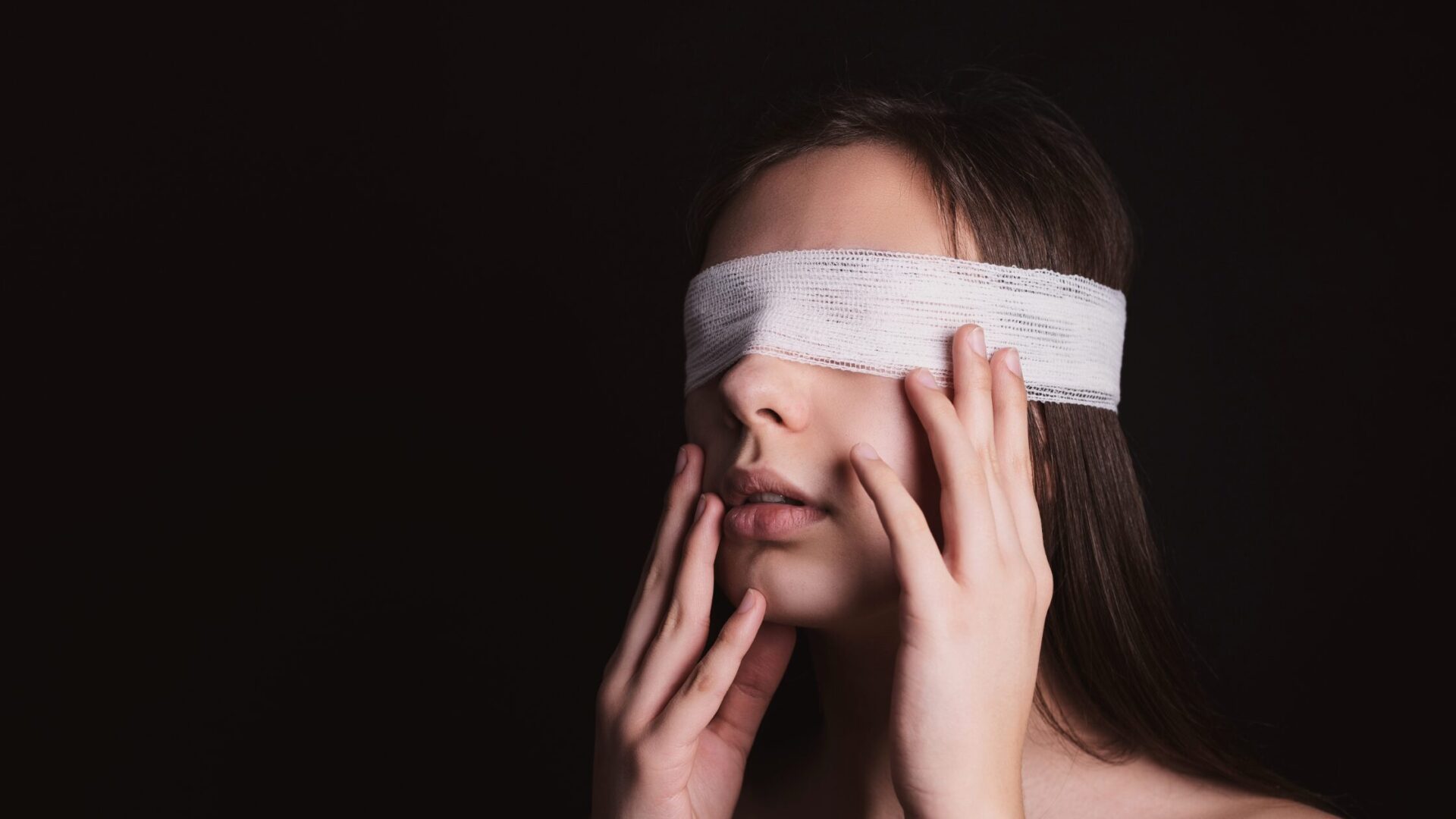

There is a particular kind of tiredness that has nothing to do with how much you have worked.
It comes from noticing things. From being unable to stop noticing them.
You start to see patterns everywhere. Who gets talked over in meetings, and who gets credit for the same idea an hour later. Whose time is paid for, and whose is simply expected. Whose body is treated as their own, and whose exists for someone else’s comfort or pleasure. Once you start seeing it, the pattern shows up everywhere — at work, at home, in the news, in small daily moments you used to let pass without a second thought.
Most people, when they reach this point, go one of two ways. Either they feel an urgent need to do something — to act, to speak up, to fix it — or they feel so overwhelmed by the size of the problem that they pull back entirely. Both reactions make complete sense. But neither one, on its own, is quite enough.
This article is an attempt to approach the problem from a different angle. Not “how should I feel about oppression?” but “what is actually wrong with it, and what does understanding that ask of us?” These sound like the same question, but they are not. The first leads to emotion. The second, if you follow it carefully, might lead to something that lasts a little longer.
What Oppression Actually Is — and Why It Stays Hidden
When most people hear the word “oppression,” they think of something dramatic. Obvious violence. Blatant discrimination. History-book injustice.
But the kind of oppression worth talking about is far more ordinary than that.
Oppression is what happens when a group of people ends up consistently disadvantaged — not because of one person’s cruelty, but because of how systems are set up. It lives inside institutions, habits, language, and everyday routines. And because it operates that way, it does not need a villain. It just needs structures that keep producing the same results, quietly, without anyone having to make a deliberate decision to discriminate.
The gender pay gap is a good example. In many countries, women earn less than men for the same work. This does not happen because employers sit down each morning and decide to underpay women. It happens because the systems used to determine value were built on assumptions that were never questioned and never changed.
The same pattern runs through many other areas too. Race, class, sexual orientation — in each case, a group gets labeled as “different,” that difference gets reframed as “lesser,” and that “lesserness” becomes the justification for treating them unequally. The logic is the same each time, even if the details look different.
And it does not stop with people.
We have built our relationship to the natural world on the same foundation: the idea that nature exists for human use. That if we need something — or simply want it — it is acceptable to cut down the forest, kill the animals, deplete the ecosystem. We sometimes draw a line between what is necessary and what is excessive. But we rarely stop to ask whether the underlying assumption is right in the first place. That is the question I want to start with this month.
Three Ideas This Series Will Explore
So why is oppression wrong?
“Because it hurts people” and “because it’s unfair” are both true answers. But on their own, they are not quite enough. Someone can always respond: “Some unfairness is inevitable” or “That’s just how society works.” And then you are stuck.
This series wants to go one level deeper. The argument is this: oppression is not just unpleasant — it is built on faulty foundations. The premises it depends on do not actually hold up. And once you see that, the whole thing looks different.
Three ideas will carry this argument forward.
The first is what philosophers call the logic of domination. This is the reasoning that turns “different” into “inferior,” and “inferior” into “deserving of control.” It sounds like a natural description of reality. But when you break it down, it turns out to be an argument — and one that does not actually work.
The second is objectification: the process by which a person, an animal, or a piece of nature gets treated as a thing rather than a being with its own needs and experience. Objectification is not just disrespectful. It is a mistake about what is real. And as we will see, it is also the thread that connects the oppression of people to the destruction of the natural world.
The third is interdependence — and specifically, the harm caused by pretending it does not exist. Many systems depend on the story that certain people or groups are entirely self-sufficient: that they owe nothing to the labor, care, and natural resources that actually make their lives possible. This story is not just morally problematic. It is factually wrong. And the instability it produces is not a side effect — it is baked in.
Knowing Is Not Enough — But It Is Still Something
Understanding these three ideas will not, by itself, change the world. The title of this article is partly a reminder to myself.
And yet, understanding is not nothing.
One of the reasons oppression persists is that it has been around so long it stops looking like a system and starts looking like reality. “That’s just how things are.” When something feels inevitable, it is very hard to push back against it — even when you sense that something is wrong.
But when you can name a structure — when you can say “this is not inevitable, it is the product of a specific logic that has specific flaws” — something shifts. The grip loosens a little. You move from a vague feeling of wrongness to a clearer sense of what is actually happening and why. That clarity makes it possible to talk about it, to question it, and eventually to refuse it.
This is not a case for stopping at awareness. Oppression is structural, and changing it requires structural responses too. But noticing is where everything else begins. You cannot push back against something you have not yet seen.
What This Series Is About
This month, I will be exploring those three ideas — the logic of domination, objectification, and interdependence — one at a time.
The first article will look at how “different” becomes “inferior” in the first place, and what it actually takes to reject that move. The second will look at how people and nature get turned into background — into resources — and what it would mean to genuinely see them as something more. The third will look at the fiction of self-sufficiency: why it is so appealing, why it is false, and what a more honest way of organizing things might look like.
None of these are easy topics. But none of them are impossible either. The more carefully you look at the logic behind oppression, the more clearly you can see where it breaks down. And once you see where it breaks down, it becomes a little harder to keep accepting it as the way things have to be.
This series will not offer a neat solution or a step-by-step guide. Honestly, I do not think anyone has one yet. But I believe that understanding a problem clearly — at the level of its assumptions, not just its symptoms — is how you begin to find your way through it.
Change rarely starts with a grand moment. It starts with a small question: wait, does this actually make sense? I hope this series gives you a few of those questions to carry with you.
Where do you find yourself bumping into this kind of logic most often — at work, at home, in your own thinking? I would love to hear from you in the comments by subscribing to our newsletter. This series will be published in the newsletter.