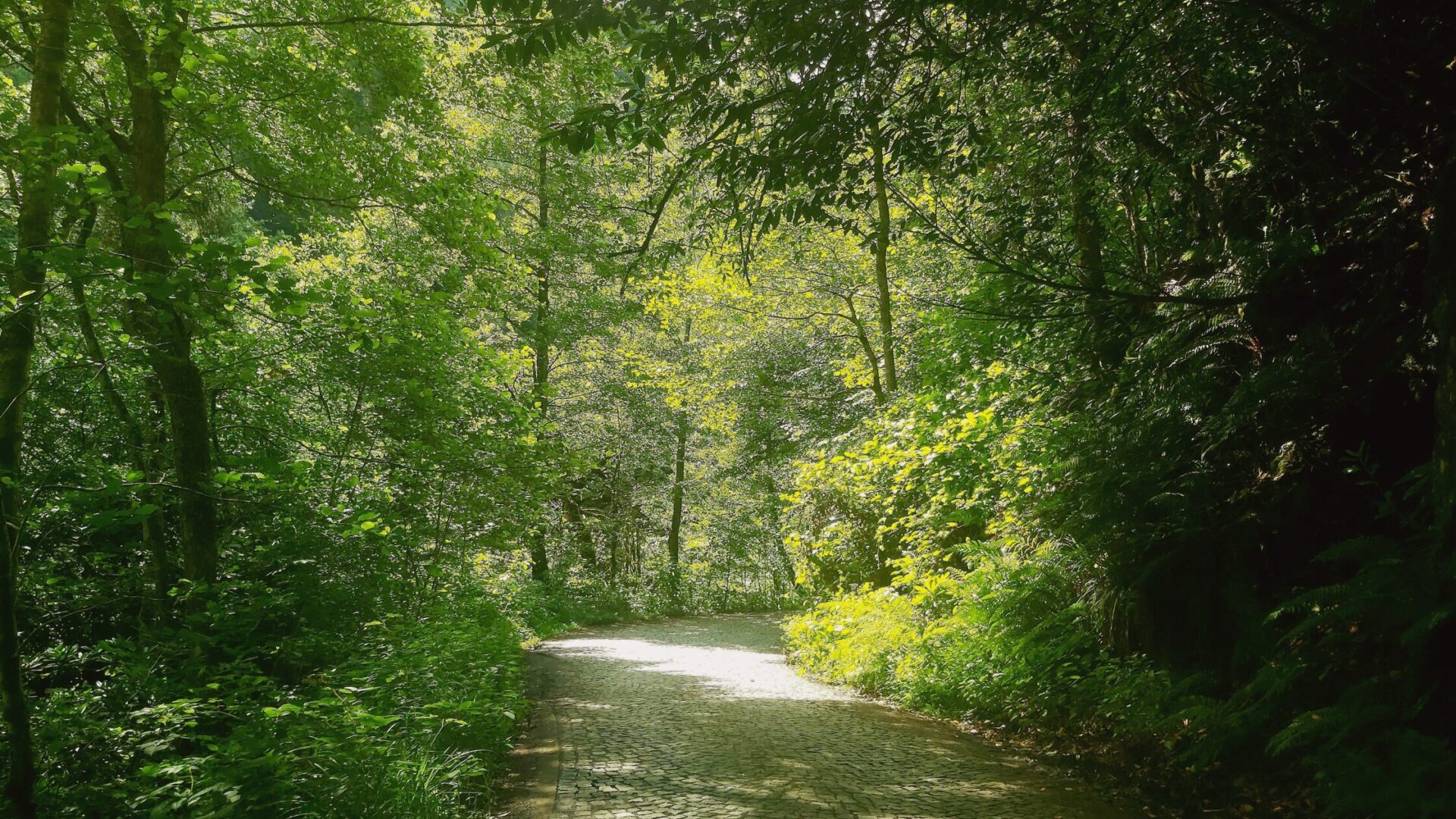

Shinrin-yoku, literally forest bathing, is the practice of spending slow, unhurried time among trees. Japan’s Forestry Agency began promoting it in the early 1980s, and it’s since been studied for its measurable effects on stress and the autonomic nervous system. If you’re traveling in Japan with an interest in Japanese culture or sustainability, you’ve probably already come across the term on travel sites and in guidebooks. Near Kyoto and Osaka specifically, a growing number of programs invite visitors into nearby forests under this idea, from city-edge parks reachable by train to certified therapy trails deeper in the mountains.
The difficulty is that almost any walk through trees can be marketed as forest bathing. There’s a real difference between a Forest Therapy Base, certified by Japan’s Forest Therapy Society after physiological testing of stress hormones, blood pressure, and related markers, and a casual nature walk with no such backing behind it. Whether a guide holds genuine training, how a program connects to local government or forestry organizations, and what’s actually included can be hard to tell from a glance at a website, especially when you’re reading it in translation.
This guide only includes what we could confirm directly from each organization’s official site, or from official municipal and government sources where relevant. We’re not ranking these by quality. Think of it as material for figuring out what matches the kind of time you want to spend in a forest, and it’s entirely fine to come away deciding that none of them are quite right for you.
Related article: What Is Shinrin-Yoku? The Meaning, Science, and Philosophyof Forest Bathing
How We Chose These
A program not being listed here doesn’t mean it isn’t worth your time. We’re working from one consistent standard throughout: whether we could confirm it through official sources.
- Certified as a Forest Therapy Base or Road Officially certified by the Forest Therapy Society, a Japanese nonprofit, as a Forest Therapy Base or Forest Therapy Road
- Led by a trained or certified guide Guided by someone with relevant training or certification, such as a Forest Therapy Guide or Therapy Assistant
- Tied to local government or forestry bodies Run with formal involvement from a municipality, the Forestry Agency, a forestry cooperative, or a local organization
- Paired with another experience Officially combines the forest walk with something else, such as tea ceremony, shojin ryori (Buddhist vegetarian cuisine), a hot spring, meditation, or acupuncture
- A day trip from Kyoto or Osaka Reachable by car or train in roughly two hours or less
- Backed by stated scientific rationale Effects on the autonomic nervous system or stress markers are explicitly referenced in official materials
What’s here reflects what we could confirm as of June 2026, through each organization’s official website and, where relevant, related municipal or government sources.
The Experiences
1. Koyasan Forest Therapy
Where: Koyasan, Koya, Ito District, Wakayama Prefecture. About 90 minutes from Osaka’s Namba Station via the Nankai Railway’s limited express “Koya” and the Koyasan cable car.
What it is: Koyasan, the UNESCO World Heritage mountain settlement founded in 805 by the monk Kūkai as the center of Shingon Buddhism, was certified as a Forest Therapy Base in 2007, under the name “Koyasan’s Thousand-Year Forest.” The program is run mainly by the local forestry cooperative, Koyasan Jiryo Forest Cooperative, in cooperation with the temple lodging association and other local groups. Walks through the forest near Okunoin’s approach are combined with Shingon meditation, shojin ryori, and rest breaks in hammocks, running mostly on weekends from April through November.
The program, according to official sources: The standard format pairs a guide leading visitors through the forest near the Okunoin approach with a shojin-ryori-based boxed lunch at a mountain hut along the way. There’s also a program built around ajikan, a Shingon meditation practice, and another centered on “forest breathing,” a slower, breath-focused walk through the trees. Groups gather at the Ichinohashi information center and typically finish near the Nakanohashi bus stop, with room for roughly 20 participants on a first-come basis.
Good for: Anyone who wants forest therapy with serious historical depth behind it, travelers who’d like to pair the walk with meditation or a Buddhist vegetarian meal, and day-trippers coming from Osaka’s Namba area.
Worth knowing: Schedules shift by season and by which specific plan is running, so it’s worth checking the official site close to your travel dates.
More info
2. Miyama Forest Acupuncture Retreat
Where: Miyama, Nantan City, Kyoto Prefecture. About 90 minutes from Kyoto Station by rapid train and local bus.
What it is: Built around yōjō, the traditional Japanese idea of self-care through daily habit, this is a day-trip or overnight wellness program centered on a clinic called Mori no Shinkyuin, the “Forest Acupuncture Clinic,” a traditional post-and-beam building. Licensed acupuncturists provide treatment, paired with forest walks and yoga in the hills behind the clinic. It’s run by Miyama Satoyamasha.
The program, according to official sources: The core offering pairs custom acupuncture and moxibustion treatment with a forest walk and a forest yoga session. Miyama itself sits in a rural, mountainous part of Nantan City, well outside central Kyoto.
Good for: Visitors who’d rather combine forest time with East Asian medicine, like acupuncture, than join a standard guided nature walk. Suited to those after something slower and more treatment-focused than a typical forest therapy session.
Worth knowing: Treatment options and overnight packages change, so it’s best confirmed directly through the official site or by contacting the clinic.
More info
3. Shiso Forest Therapy Base
Where: Shiso City, Hyogo Prefecture (Haga and Yamasaki areas). Within day-trip range by car from both Osaka and Kyoto.
What it is: Shiso was the first place in Hyogo Prefecture to be certified as a Forest Therapy Base, and it now has three certified routes: Higashiyama, Akanishi, and Kunimi-no-Mori. The Akanishi and Kunimi-no-Mori routes were certified in 2015, with Higashiyama added in 2019. All three are led by certified guides through the Shiso Healing Forest Guide Association.
The program, according to official sources:
- Higashiyama Therapy Road: A ridge walk of about 1.5 km within Forest Station Haga, at roughly 740 meters elevation, locally known as the “Ohachi Mawari” course. The area also has a hot spring, a hotel, and a campground, and visitors can order a boxed lunch made with local ingredients.
- Akanishi Therapy Road: A roughly 1.6 km route along Akanishi Valley, sometimes called “the Oirase of the West” for its scenery, with a guided program lasting about 4 hours. It passes 600-year-old cedars and the remains of a former forest railway.
- Kunimi-no-Mori Therapy Road: A 2.3 km, roughly 4-hour, universal-access route that reaches the ridge by a mini monorail said to be the steepest of its kind in Japan. On a clear day, the view stretches to Akashi Kaikyo Bridge and Awaji Island.
Good for: Travelers who like having a choice of certified routes depending on mood. Higashiyama suits anyone who wants a hot spring and campground nearby, Akanishi suits people drawn to valley scenery and history, and Kunimi-no-Mori works well if steep hiking is difficult but you still want the view from the top.
Worth knowing: The Higashiyama route needs booking at least two weeks ahead. The Akanishi route involves a van transfer from the meeting point before the walk itself starts. The Kunimi-no-Mori monorail’s schedule can change with the season or maintenance needs. Check the official site for current meeting points and timing.
More info
4. Lake Biwa Headwaters Forest, Takashima
Where: Takashima City, Shiga Prefecture (Makino, Imazu, and Kutsuki-Aso areas).
What it is: Part of the forest that feeds into Lake Biwa’s headwaters, “Biwako Suigen no Mori Takashima” is certified as a Forest Therapy Base, with three designated locations: Makino Highland, Villa Dest Imazu, and Kutsuki Forest. All three are led by Takashima Forest Therapy Guides.
The program, according to official sources:
- Makino Highland, Chōshi Falls Course: A roughly 1.3 km, 90-minute one-way route to the 13-meter Chōshi Falls. There’s a hot spring and a campground nearby, and the area doubles as a ski resort in winter.
- Villa Dest Imazu, Lake Biwa View Course: A roughly 2.8 km, 90-minute one-way route at 550 meters elevation with views over Lake Biwa, run alongside the Villa Dest Imazu family vacation village and its cottages (open April 1 through the end of November).
- Kutsuki Forest: The lowest-elevation and most village-like of the three, a roughly 3.8 km loop taking about 120 minutes through the Aso River valley, passing through an area with ties to kijishi, traditional woodturning craftsmen.
Good for: Anyone interested in walking through forest that directly feeds Lake Biwa. Makino Highland and Villa Dest Imazu suit those chasing scenery, while Kutsuki Forest suits people drawn to local history.
Worth knowing: Schedules at each location run irregularly, roughly a few times a month. Villa Dest Imazu only operates April through late November. Kutsuki Forest sometimes closes sections of its trail after typhoons or heavy rain. Check the official site’s event listings for current dates.
More info
5. Mino-o Forest Therapy
Where: Katsuoji Park or Minoh Park, within Meiji no Mori Minoh Quasi-National Park, Osaka Prefecture. About 30 minutes from Osaka-Umeda Station to Minoh Station on the Hankyu Railway.
What it is: Minoh’s forest was named one of the Forestry Agency’s “100 Forests for Forest Bathing,” and this program operates within it. Guides hold a credential created specifically for the program, the “Mino-o Forest Assistant” certification, issued by the NPO Mino-o Sanroku Hozen Iinkai. Sessions held at Katsuoji Park run as part of a Forestry Agency outreach initiative.
The program, according to official sources: At Katsuoji Park, sessions run regularly as part of the Forestry Agency’s outreach program, and some include a free shuttle bus from Hankyu Minoh Station. A separate program pairs the forest walk with a visit to Katsuoji Temple.
Good for: Anyone wanting the most convenient forest therapy option from central Osaka, or travelers who’d rather support a program with direct government-agency involvement.
Worth knowing: Program names and formats shift through the year (monthly sessions, the Katsuoji Park plan, the temple-visit combination, and so on), so check the official site for what’s running on your travel dates.
More info
6. Hapiro Forest, Kyoto
Where: Amawaka-ko area, Hiyoshi, Nantan City, Kyoto Prefecture. About 60 to 90 minutes by car from the Kansai region’s major cities.
What it is: A 128-hectare forest park, officially the Kyoto Prefectural Forest Park “Hiyoshi,” along Lake Amawaka, built for camping and walking with forest bathing woven into both. Its standout activity is a coffee-roasting experience, where an instructor leads visitors through gathering natural kindling, like cedar leaves and pine cones, before they roast their own coffee over a self-made fire.
The program, according to official sources: The park’s trail network runs to about 7,260 meters total. The coffee-roasting program is instructor-led and starts with foraging for natural fire-starting material in the forest. The park also has a woodworking center, a dog run, and stargazing.
Good for: Travelers who want an active forest experience layered with camping or a hands-on activity like coffee roasting, and anyone after a sizable forest park within day-trip range.
Worth knowing: We weren’t able to confirm specifics on cabin or campsite arrangements, or on the nearby hot spring facility, so check the official site directly.
More info
7. KYOTO ZIPLINE ADVENTURE

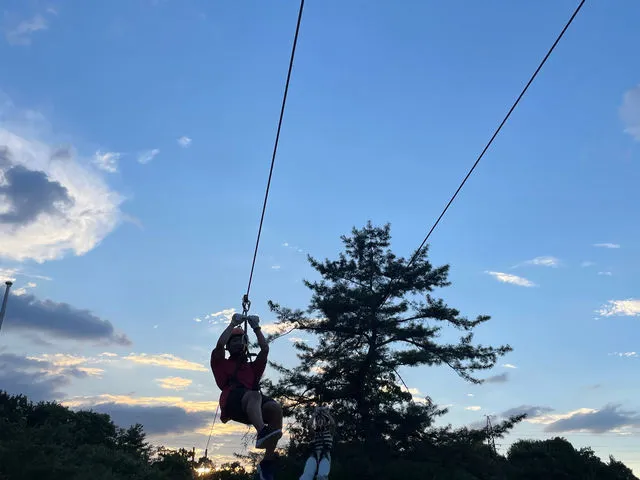
Where: Taiyogaoka, Yamashiro Regional Sports Park, Uji City, Kyoto Prefecture. About an hour from central Kyoto or Osaka by train or car.
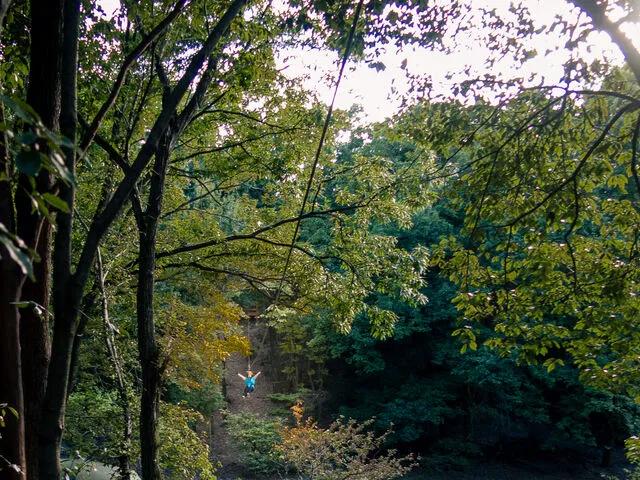
What it is: A zipline course built into the forest at Taiyogaoka, part of Kyoto Prefecture’s Yamashiro Regional Sports Park, pairing the thrill of ziplining with a guided walk through the forest between lines.
The program, according to official sources: Five lines, ranging from about 60 to 130 meters, run as a guided tour for groups of 10 to 15. The full experience takes about 90 minutes.
Good for: Travelers who want forest time alongside a bit of adrenaline, especially families or groups.
Worth knowing: This isn’t a medically certified forest therapy program; it’s an adventure activity that happens to include forest walking. If forest bathing itself is your main goal, the real value here is in the walking sections between ziplines.
More info
Jalan
ACTIVITY JAPAN
8. Chihaya Park Guided Walk
Where: Chihaya-akasaka Village, Minamikawachi District, Osaka Prefecture, near the summit of Mount Kongo (elevation about 1,050 meters).
What it is: A guided nature walk through Chihaya Park, Osaka Prefecture’s highest-elevation natural park, led by a guide deeply familiar with Mount Kongo. The park is also home to the Chihaya Museum of Stars and Nature, which runs its own stargazing and bird-watching programs.
The program, according to official sources: Walks run on the first and third Sunday of each month, in principle. The Mount Kongo ropeway has been permanently discontinued, so reaching Chihaya Park now requires a roughly 70-minute hike up a mountain trail, whether you arrive by public transit or by car.
Good for: Travelers after a more substantial outdoor experience that includes some climbing, and anyone who’d like to pair forest time with stargazing or birdwatching.
Worth knowing: There’s no way around the roughly 70-minute uphill walk to reach the park since the ropeway closed for good, so plan according to your fitness level.
More info
A Few Things Worth Knowing
Programs certified by the Forest Therapy Society go through actual physiological testing, measuring things like stress hormones and blood pressure, before being designated a Forest Therapy Base or Therapy Road. Koyasan, all three Shiso routes, and all three Takashima locations carry this certification. Mino-o Forest Therapy, Miyama Forest Acupuncture Retreat, Hapiro Forest, Kyoto Zipline Adventure, and the Chihaya Park walk operate outside that specific certification system. Neither category is inherently better; they’re simply backed by different kinds of evidence.
Kyoto Zipline Adventure and the Chihaya Park walk aren’t built around forest therapy as their main purpose; they’re guided outdoor activities that happen to include real time in the forest. Whether that distinction matters depends on whether you’re after forest bathing specifically or an active day outdoors that includes it.
A practical note if you’re visiting from outside Japan: most of these programs operate primarily in Japanese, and we weren’t able to confirm English-language support for each one individually. If you don’t speak Japanese, it’s worth checking directly with the organization before booking, or asking your accommodation or a local guide service to help arrange things.
Anything not included here was left out simply because we couldn’t confirm enough through official sources, not as any judgment on quality.
Final Thoughts
These eight programs point to genuinely different ways of spending time in a forest.
Koyasan, Shiso, and the Takashima sites carry the weight of formal Forest Therapy Base certification, led by guides trained specifically for the role. Mino-o Forest Therapy stands out for being the easiest to reach from central Osaka, with direct ties to a national forestry program. Miyama Forest Acupuncture Retreat pairs the forest with East Asian medicine in a way none of the others do. Kyoto Zipline Adventure and the Chihaya Park walk come at the forest from a different angle entirely, through activity and climbing rather than therapy.
What are you actually looking for in the forest? Scientific grounding, convenience, or something else to pair it with? That’s probably a question only you can answer.