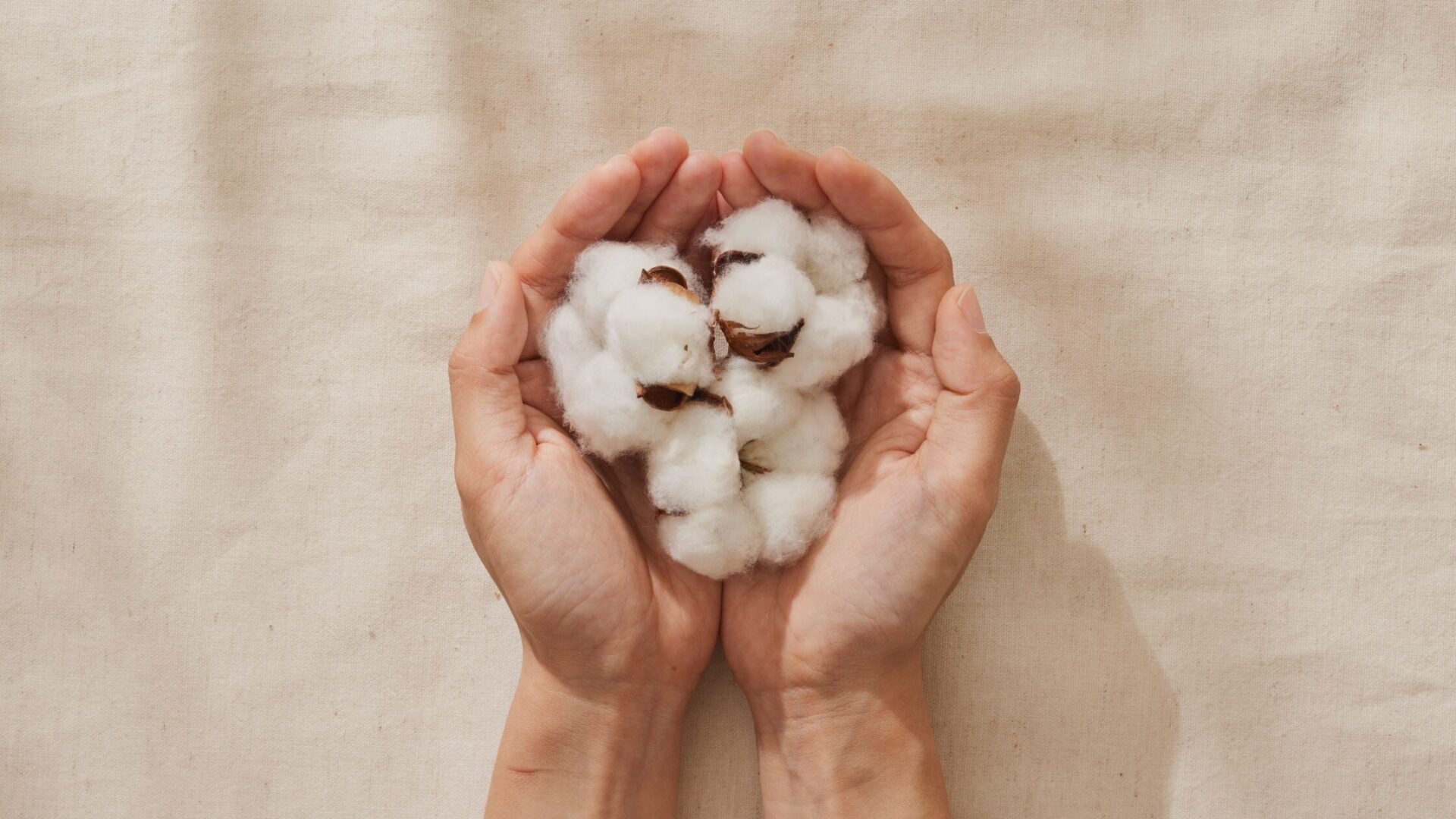

“100% organic cotton” shows up on a lot of dress and one-piece listings in Japan, even if you’re reading the English-language description or running the page through a translator. What that label is actually backed by is a different question. Is it a GOTS-style third-party certification, or just the brand’s own claim? Is the dyeing and finishing process documented anywhere, or is “organic cotton” doing all the rhetorical work on its own?
If you’re shopping for a dress in Japan and want to know what’s actually verifiable, this guide might help. We looked at brands sold in Japan and checked each one’s official website — nothing else — against six criteria: raw material integrity, certification, processing transparency, social responsibility, wearability, and how specific the labeling actually is. Where a brand didn’t disclose something, we’ve written “not disclosed” rather than guessing.
Quick Summary: Best Pick by Priority
| If you care most about… | Go with | Why |
|---|---|---|
| GOTS certification plus a Fair Trade track record | People Tree | GOTS certification stated directly on the product page; brand-wide WFTO membership |
| Undyed fabric and a documented process | PRISTINE | Undyed organic cotton; parent company holds the top score in both categories of CARE certification |
| An affordable, sheer layering piece | MUJI (Tightly-Twisted Sheer Wrap Dress) | Organic cotton in a tightly-twisted weave; doubles as a vest-style layering piece |
What We Checked: Our Six Criteria
We used the following six criteria to evaluate each brand. “Not confirmed” means we couldn’t find it on the official site — not that the brand necessarily fails to meet it.
- Raw material integrity — Is organically grown cotton used, and is the percentage of organic content stated?
- Certification credibility — Is a third-party standard like GOTS or OCS, covering raw material, processing, or distribution, confirmed on the product page or the brand’s own pages?
- Processing transparency — Does the official site describe dyeing, finishing, sewing, or distribution in any specific detail?
- Social responsibility — Is there an official statement about fair trade, labor conditions, or third-party labor audits?
- Wearability — Are fabric weight, stretch, opacity, or silhouette specified on the official product page?
- Labeling specificity — Does the page name the certifying body, a certification number, or country of manufacture?
A few of the certifications and membership details below come from a brand’s general “about” page or its parent company’s corporate site, rather than the individual product page — we’ve flagged those cases as we go. All information here was checked against each brand’s official Japanese-language website as of June 2026, since none of these products currently have a dedicated English-language listing.
Related article: 8 Sustainable Japanese Fashion Brands (2026) — Materials, Certifications & Circularity, Verified
4 Organic Cotton Dresses Worth a Look
1. People Tree Organic Cotton Wide Silhouette Dress
🌱 100% organic cotton 🔍 GOTS certified 🤝 WFTO member brand (brand-wide) 🇮🇳 Made by Assisi Garments (India) 👍 A-line silhouette, wearable across 3 seasons
This one-piece comes from People Tree’s “Organic Essentials” line. People Tree is a Fair Trade-focused brand, and the product page states directly that this dress holds GOTS (Global Organic Textile Standard) certification — covering not just the raw cotton, but production, processing, storage, and distribution as well.
It’s made by Assisi Garments in India, from 100% organic cotton, with pockets on both sides. The cut is a relaxed A-line designed to work across three seasons of the year, and it’s a renewed version of a long-running style — the neckline binding has been narrowed for a slightly more polished look, and the body and sleeve length have both been extended.
As a brand, People Tree has been a member of the World Fair Trade Organization (WFTO) since 1996, certified under its 10 Principles of Fair Trade. Starting with its Fall/Winter 2023 collection, more than 80% of the brand’s products have also carried PETA’s vegan certification. Both of those are brand-wide claims, confirmed on People Tree’s general brand pages rather than on this dress’s own product page.
Editor’s take: Very few brands we checked stated GOTS certification this directly on the product page itself. That said, there’s no license number or transaction certificate number listed, so there’s nothing for a shopper to independently verify. The “GOTS certified” claim itself is credible — it’s just worth knowing you can’t check it down to the certificate level from this page alone.
Trade-off: No GOTS license number on the product page. The WFTO and PETA certifications are brand-wide commitments, not specific to this dress.


 ポチップ
ポチップ
2. People Tree Organic Cotton Slub Flare-Sleeve Dress
🌱 100% organic cotton (slub yarn) 🔍 GOTS certified 🤝 WFTO member brand (brand-wide) 🇮🇳 Made by Assisi Garments (India) 👍 Flare sleeves and waist tucks
Also from People Tree. This one uses a slub-yarn organic cotton for a more textured, natural feel, and comes in two colors — a yellow-green and a gray. Like the dress above, GOTS certification is stated directly on the product page, under the same scope.
The fabric has a soft drape that creates a vertical line when worn, with flare sleeves that fall near the elbow and tucks built into the waist seam. It also has pockets on both sides, and is made by the same manufacturer, Assisi Garments in India.
Editor’s take: The certification picture here is identical to dress #1 — what changes is the silhouette. It comes down to whether you want the basic A-line or the more decorative flare sleeve. Either way, the GOTS certification and Fair Trade production are the same foundation.
Trade-off: Same as #1 — no GOTS license number on the page, and the WFTO/PETA certifications are brand-level, not dress-specific.
 ポチップ
ポチップ
3. PRISTINE Jersey Slip Dress
🌱 Organic cotton, undyed 🏅 CARE certification "Platinum Blossom" (human rights & environment, parent company) 🇯🇵 JOCA member (parent company Avanti) 👍 Stretchy, skin-friendly jersey knit
PRISTINE has been making organic cotton clothing since 1996, and this slip dress is built around one specific choice: no chemical dyeing. According to the product page, leaving the cotton undyed lets its natural waxy compounds stay intact, which is described as giving the fabric a softer, more moisturized feel. The jersey knit has good stretch and doesn’t cling against other fabric layers, and the dress falls in an A-line with a light, easy drape. It runs ¥9,900 (tax included).
PRISTINE’s parent company, Avanti, holds the top score — “Platinum Blossom” — in both the human rights and environmental categories of something called CARE certification, which the brand says is a first for any company in both categories at once. CARE certification is run by a Japanese organization called the General Incorporated Association for Quantitative Sustainability Studies, combining an AI-based scoring system (“aiESG”) with review from a third-party panel. It’s a newer certification, and it hasn’t reached anything close to GOTS’s international track record — worth keeping in mind as a difference in kind, not just degree. Avanti is also a full member of the Japan Organic Cotton Association (JOCA). All of this is brand- and parent-company-level information, sourced from pristine.jp and avantijapan.co.jp rather than the dress’s own page, which doesn’t list an organic cotton percentage or a certification number.
Editor’s take: Skipping dye entirely is an unusual move, and it actually does double duty — it touches both processing transparency and wearability at once. Less dye means less wastewater and fewer chemicals, and it happens to leave more of the cotton’s natural texture intact. It’s also one of the only brands here backing its claims with a scored third-party certification, rather than just a statement about its values.
Trade-off: No organic cotton percentage or certification number on the product page itself. CARE certification and JOCA membership are both confirmed only at the brand level.
Official site
4. MUJI Tightly-Twisted Sheer Wrap Dress
🌱 Cotton is organic cotton (tightly-twisted yarn) 👍 Waist tie adjusts the silhouette; doubles as a vest 📋 Listed specs: sheer / no stretch / relaxed fit
MUJI’s product page states plainly that the cotton in this wrap dress is organic. It’s woven from a tightly-twisted yarn, which gives it a notably soft hand-feel and a light, sheer quality suited to wearing from early spring through summer.
It’s cut as a wrap-style dress that also works as a vest layer over other pieces, with a waist tie that lets you adjust the silhouette. Swap the layer underneath and you get a fairly different look each time. MUJI lists its specs the same way across most of its clothing: here, that’s “sheer: yes / stretch: none / fit: relaxed.”
Editor’s take: MUJI’s product pages don’t mention certification or processing at all. What they do consistently is list opacity, stretch, and fit in the same plain format every time, which turns out to be quietly useful for judging wearability even without any certification language. Framing it as a vest-or-dress piece, rather than a single-use garment, is also a practical way to extend how much wear you get out of it.
Trade-off: No GOTS, OCS, or other third-party certification, organic cotton percentage, processing detail, or labor information appears on the product page.
 ポチップ
ポチップ
Getting More Wear Out of an Organic Cotton Dress
Before buying something new, it’s worth a second look at any organic cotton dress already in your closet.
If the fabric feels stiff. Some organic cotton garments skip chemical softening treatments during finishing, which is often why they feel different wash to wash. Skipping bleach and fabric softener, and washing in a mesh bag on a gentle cycle, tends to let the fabric soften into its own texture over time rather than fighting it.
If you notice small brown flecks in undyed, natural-colored fabric. On fabric that hasn’t been bleached or dyed, these are usually leftover bits of cotton leaf or stem from harvesting — several organic cotton brands mention this on their own sites as a normal characteristic of the fiber. The texture and visibility of these flecks tend to shift with repeated washing, though not always in a single direction.
If sheerness is the issue. A lot of these pieces are designed to be worn with a slip or under-layer in the first place. Before deciding a dress doesn’t work, it’s worth trying a different layer underneath — sometimes that’s the only thing that needed to change.
Quick FAQ
Does GOTS certification mean the whole dress is certified, or just the raw cotton? It depends on how the brand phrases it. People Tree’s pages for both dresses above state that the product itself holds GOTS certification, covering everything from raw material to distribution — not just the fiber. Read each brand’s own wording rather than assuming one standard phrasing applies everywhere.
Is CARE certification the same kind of thing as GOTS? No. CARE certification is a newer, Japan-based human rights and environmental scoring system used by PRISTINE’s parent company, Avanti. GOTS has been the international reference point for organic textiles for much longer and is recognized far more widely. They’re both legitimate, but not equivalent in track record or global recognition.
Can I actually buy these without reading Japanese? Mostly not directly through these specific listings — all four product pages referenced here are Japanese-language only. A browser translation tool handles sizing and care instructions reasonably well, but double-check measurements before ordering, since unit conversions in machine translation aren’t always reliable.
Are all four dresses 100% organic cotton? The two People Tree dresses state 100% organic cotton on their product pages. PRISTINE and MUJI confirm that organic cotton is used, but neither product page we checked specifies an exact percentage.
Closing Thoughts
Looking at these four brands side by side, what stands out is how much range sits behind the same two words: “organic cotton.” One brand puts its weight behind a GOTS certification stated right on the product page. Another has built its entire approach around skipping dye and backing it with a scored, third-party assessment. A third doesn’t mention certification at all, but is unusually consistent about listing the wearability specs that actually affect how a dress feels on. Same label, different reasoning underneath it each time.
Which of those things matters most is genuinely a personal call. Some people want to see a certificate number before they buy anything. Others care more about how a fabric feels by the third wash.
Next time you’re looking at a dress, what would you actually need to see to feel good about it?
All information here is based on each brand’s official website as of June 2026. Stock, specifications, and prices are subject to change — please confirm directly with the official site before purchasing.