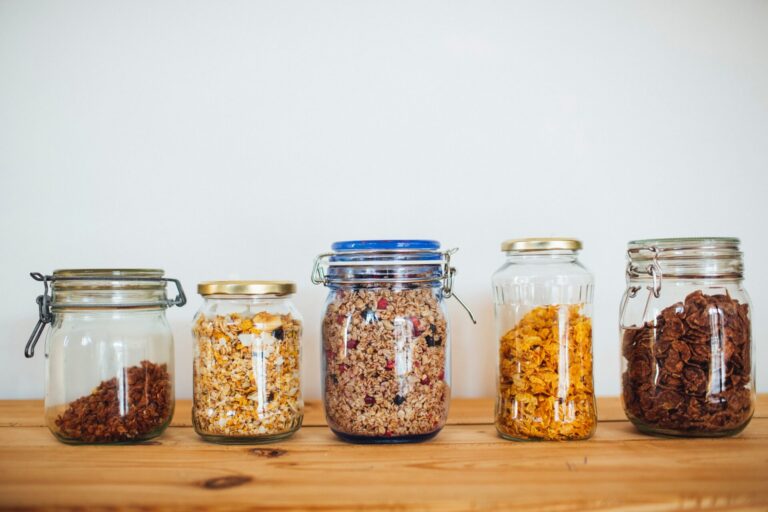

Japan has a phrase for this time of year: shokuyoku no aki, the autumn of appetite. Chestnuts, persimmons, sweet potatoes, and newly harvested rice all come into season. Yet walk into a grocery store and the produce section looks much the same as it does any other month.
Have you ever stood in front of those shelves trying to figure out what’s actually in season? Some of what ends up in your basket isn’t autumn food at all.
It’s hard to tell because grocery stores aren’t set up to show when, where, and by whom something was grown. The same chestnut comes with different information depending on where you buy it.
This guide starts with a list of Japan’s autumn foods, then looks at what changes when you buy them in different places. It ends with four listings from farm-direct marketplaces, chosen using our selection criteria. Since these marketplaces deliver within Japan, it’s written for readers living in Japan. We’ve noted what we could confirm and what we couldn’t.
Quick Summary: where to buy, depending on what matters to you
When you buy fruits and vegetables, what matters most to you? Knowing who grew them, buying only what you’ll eat, or cutting down on waste? The table below matches each priority with a place to shop.
| What matters to you | Where to buy | Why |
|---|---|---|
| Knowing the grower’s name and where the farm is | Farm-direct online marketplaces(Tabechoku, Pocket Marché)Farm stands (直売所, chokubaijo) | On the marketplaces, the listing page often shows the grower’s name and the city or town where the farm is. If something goes wrong, you know who to ask |
| Buying imperfect produce (odd sizes and shapes) | Farm-direct online marketplaces | Some listings sell smaller or blemished produce as wakeari (訳あり, “with a reason”) and explain why. You can buy what rarely makes it onto a store shelf |
| Buying only what you’ll eat | Grocery storesFarm stands | You can pick up a single item or bag, just what you need that day. On the marketplaces, whether you can choose the quantity depends on the listing |
| Getting whatever the farm has harvested | Subscription boxes | With a farmer’s-choice box, you can’t choose what arrives. A large household that cooks a lot can use it all up. Someone living alone is more likely to have leftovers |
| Getting seasonal food shipped straight from the farm | Farm-direct online marketplaces | Growers pack the box themselves and ship it from the farm. No store stands between the harvest and your door |
| Cutting down on waste | A neighborhood produce store (八百屋, yaoya) that uses little packaging | Delivery means a cardboard box with every order, and for some items an ice pack. Grocery stores create waste too: trays, plastic wrap, and bags |
Farm-direct marketplaces show up under three of these priorities. But if you want to buy only what you’ll eat or cut down on waste, a grocery store, farm stand, or neighborhood produce store is a better fit. No single place does it all, so it makes sense to choose where to shop based on what matters most to you.
What are Japan’s autumn foods? Seasonal vegetables, fruit, and fish
These are the foods that come up most often in Japanese articles about autumn food, grouped by type. The right-hand column shows how you’ll usually see them written on store labels.
| Type | Food | In Japanese |
|---|---|---|
| Vegetables | Sweet potato, kabocha squash, taro | さつまいも・かぼちゃ・里いも |
| Mushrooms | Shiitake, maitake, shimeji, nameko | しいたけ・まいたけ・しめじ・なめこ |
| Fruit and nuts | Chestnut, persimmon, Japanese pear, grapes, apple, fig | 栗・柿・梨・ぶどう・りんご・いちじく |
| Fish | Pacific saury, autumn salmon, mackerel | さんま・秋鮭・さば |
| Rice | Newly harvested rice | 新米 |
But what does “in season” actually mean?
It can mean more than one thing. The Japanese word shun (旬) can refer to when a crop is harvested in the largest amounts, or when it tastes best. In this guide, we go by the period when the amount reaching the market goes up. Even that timing shifts depending on the region and how the crop is grown.
Japan’s Ministry of Agriculture, Forestry and Fisheries (MAFF) compiles and publishes the volume of vegetables, fruit, and mushrooms arriving at the country’s main wholesale markets. The figures are broken down by month, and even into the early, middle, and late part of each month. They also show the main growing regions for each item.
The point when that volume peaks is a reasonable marker of the season. These figures don’t cover fish or rice, though.
In the store, that peak is hard to see. Greenhouse-grown, stored, and imported produce fills the gaps before and after it, so the shelves stay full even when volumes are low.
Shiitake are a good example. Some are grown on logs left outdoors, in wooded areas and similar settings. Others are grown indoors in climate-controlled facilities on kinshō (菌床), blocks made from sawdust and other materials.
Shiitake grown indoors on blocks are far less tied to the season. The same goes for the other mushrooms on the list when they’re grown this way.
Same chestnut, different store: what actually changes?
Buy the same food at a grocery store, a farm stand, a farm-direct marketplace, or through a subscription box, and you’ll get different information about it. Where you buy also changes who ends up taking on imperfect produce and food that goes uneaten.
By farm-direct online marketplaces, we mean services like Tabechoku and Pocket Marché. Growers list their produce online, take orders, and ship straight from the farm. Here’s how the four ways of buying compare.
| Who grew it | Imperfect produce | Choosing how much | |
|---|---|---|---|
| Grocery store | Usually just the region | Mostly produce that meets grading standards | From one item or bag |
| Farm stand | Some show the grower’s name | Depends on the stand | From one bag |
| Farm-direct marketplace | Name and location on the listing page | May be sold with the reason explained | Depends on the listing |
| Subscription box | Depends on the service | Sometimes included in the box | Mostly farmer’s choice |
This isn’t an argument against grocery stores. They just tell you different things.
Can you find out who grew it?
At a grocery store, the label usually tells you the region and nothing more. In every marketplace listing we looked at, we could find the grower’s name and the city or town where the farm is.
Under Japan’s food labeling rules, fresh produce must show the name of the food and where it comes from. For domestic fruits and vegetables, the prefecture or a similar place name is enough. That’s why you’ll see labels like 長野県産 (“from Nagano Prefecture”). There’s no requirement to name the grower.
On a farm-direct marketplace, the listing page belongs to the grower. The company that runs Tabechoku says growers set their own prices and pack the boxes themselves.
Pocket Marché is funded by a sales commission that growers pay to list their produce. The published rate is 23% for orders placed from April 2024 onward.
Knowing a name doesn’t guarantee quality. What changes is that you have someone to contact if something goes wrong, and you can read how the food was grown in the grower’s own words.
Can you buy imperfect produce?
Grocery store shelves mostly carry produce of consistent size and shape. On the marketplaces, growers can sell irregular produce as wakeari, with the reason spelled out.
Research on food waste has pointed out that some vegetables are never shipped because they don’t meet grading standards. We weren’t able to confirm the original figures on how much.
Some of the listings we looked at explained, in the growers’ own words, why their produce was irregular:
- The pears came out small in a year with little rain
- Extra chestnuts go in the box in case some have insect damage
- The grape bunches haven’t been trimmed into shape
- The kabocha have some sunburn or small scratches
When the reason is stated up front, you know what you’re getting before you order. And imperfect produce has somewhere to go.
Can you choose how much you buy?
With a farmer’s-choice subscription box, you can’t choose what arrives. You may get vegetables you hadn’t planned to cook.
Much of Japan’s food waste happens at home. According to estimates by MAFF and the Ministry of the Environment, Japan’s food waste in fiscal year 2024 came to 4.61 million metric tons. Almost half of it, 2.24 million metric tons, came from households.
We couldn’t find any research on how much subscription boxes add to household food waste. Still, because you can’t choose what’s in the box, we think some vegetables are more likely to go unused.
Whether a subscription box suits you depends on how much you cook at home. A large household that cooks most days should be able to use up what arrives. If you live alone, choosing only what you need is the easier way to avoid throwing food away.
If you’d like to compare subscription services, our guide to organic vegetable delivery in Japan breaks down the differences between them.
How much packaging waste is there?
When you order for delivery, everything arrives in a cardboard box, and some items come with an ice pack. How to dispose of ice packs depends on where you live. Kobe, for example, classifies them as burnable waste, so check your local garbage sorting guide.
That doesn’t mean shopping in person creates no waste. Grocery store vegetables often sit on a tray under plastic wrap, or come individually bagged.
If you want to cut down on waste, why not look for a neighborhood produce store that uses little packaging?
We couldn’t find a Japanese study that compares the environmental footprint of home delivery and in-store shopping, including transportation. What we’re comparing here is only the waste you’re left to deal with.
Our Selection Criteria
We picked the autumn produce in this guide from farm-direct listings, based on the four points below. What we checked is whether each point could be confirmed on the listing page. If a listing doesn’t mention something, that doesn’t necessarily mean the grower isn’t doing it.
- Reducing food waste: Can you buy an amount you’ll actually use (small quantities or portions)? Is imperfect produce sold as wakeari or off-grade, with the reason given, instead of being thrown away?
- The grower: Can you confirm the grower’s name and location, down to the city or town? Is the information about the person who grows the food, not just the seller?
- Place and season: Does the grower ship directly from the farm? Does the listing say how the food was grown (in open fields, on logs) and when it was harvested?
- Honest information: Does the listing say what was used to grow it (pesticides, chemical fertilizer), when, and how much? Or what wasn’t used?
All information is based on the listing pages themselves, as checked on September 24, 2026.
The wording on listing pages doesn’t always match Japan’s official labeling rules.
MAFF guidelines set out when produce can be labeled 特別栽培農産物 (tokubetsu saibai nōsanbutsu, “specially cultivated agricultural products”). The baseline is conventional farming as typically practiced in that region. Compared with that baseline, both the number of targeted pesticide applications and the amount of nitrogen from chemical fertilizers must be cut by at least half.
Under these guidelines, the labels 無農薬 (“no pesticides”) and 減農薬 (“reduced pesticides”) aren’t allowed. Instead, labels say 農薬:栽培期間中不使用 (“pesticides: not used during the growing period”) or 節減対象農薬:栽培期間中不使用 (“targeted pesticides: not used during the growing period”).
Some listings only say 自然栽培 (“natural farming”), while others give the type and number of pesticide applications. We cover what these labels do and don’t guarantee in our article on JAS organic certification.
Farm-direct listings change with the seasons and with availability. If a listing here is sold out, try the search links under each food and look for the same four points.
Tabechoku and Pocket Marché deliver within Japan. We couldn’t confirm international shipping for any of the listings below, so this guide assumes you’re buying from inside Japan. The listing pages are in Japanese.
Vegetables and mushrooms
Shiitake
Shiitake are in stores all year round. The ones that follow the seasons are grown on logs outdoors. Log-grown shiitake appear mostly in autumn, as temperatures drop, and again in spring.
Shiitake also have a labeling rule of their own. The place of origin on the label isn’t where the mushrooms were picked. It’s where the spawn (the fungal equivalent of seed) was introduced into the log or growing block.
The rule changed in 2022. More and more shiitake were being picked in Japan from blocks that had been inoculated abroad and then imported, and they could no longer be told apart from domestic shiitake.
Find shiitake listings: Pocket Marché Find shiitake listings: Tabechoku
Kyotake “Kyo Pon Pon” log-grown fresh shiitake
🍄 Log-grown outdoors 📍 Keihoku, Ukyo Ward, Kyoto ⚖️ 250g, 500g, 1000g
Log-grown shiitake from Kyotake, a grower in Keihoku, in Kyoto’s Ukyo Ward. The logs are kept outdoors, so the harvest follows the seasons.
You can choose from 250g, 500g, or 1000g. The listing says 栽培期間中農薬不使用 (“no pesticides used during the growing period”). Mushrooms, however, aren’t covered by the national guidelines for specially cultivated produce, so there’s no official standard behind that wording.
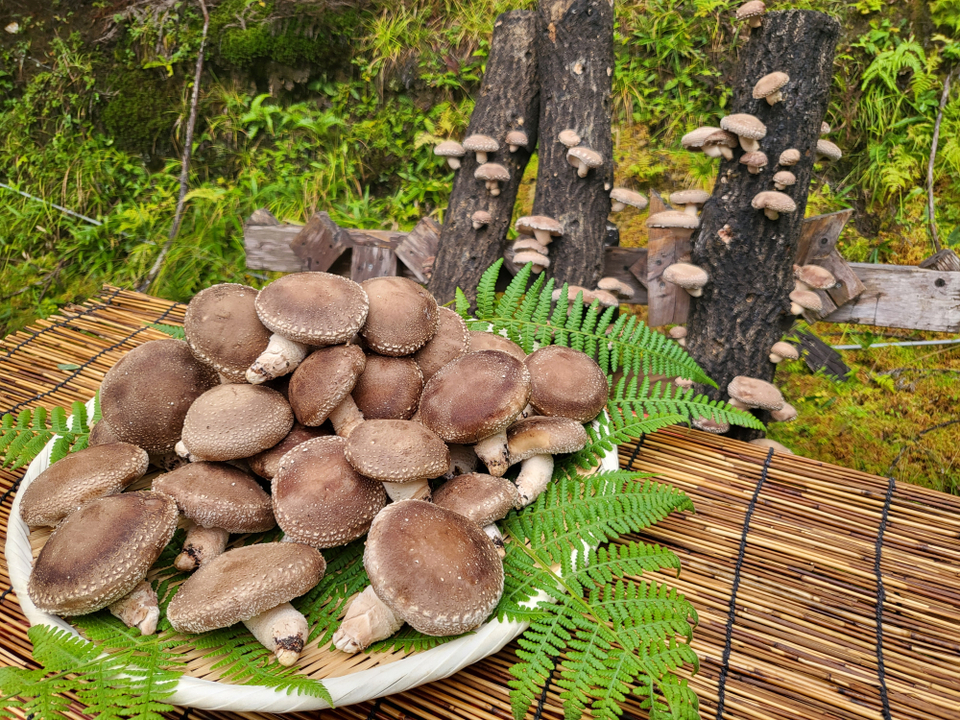
Editor’s note: This listing is a clear example of shiitake grown the seasonal way, on logs outdoors rather than on blocks indoors. You can also choose an amount you’ll actually use, which is another reason we picked it.
Trade-offs: The listing doesn’t mention chemical fertilizer or how irregular mushrooms are handled. It’s sold by pre-order, with a set delivery window.
Kyo Pon Pon Trial 250g
Kyo Pon Pon 500g
Kyo Pon Pon 1000g
Sweet potato
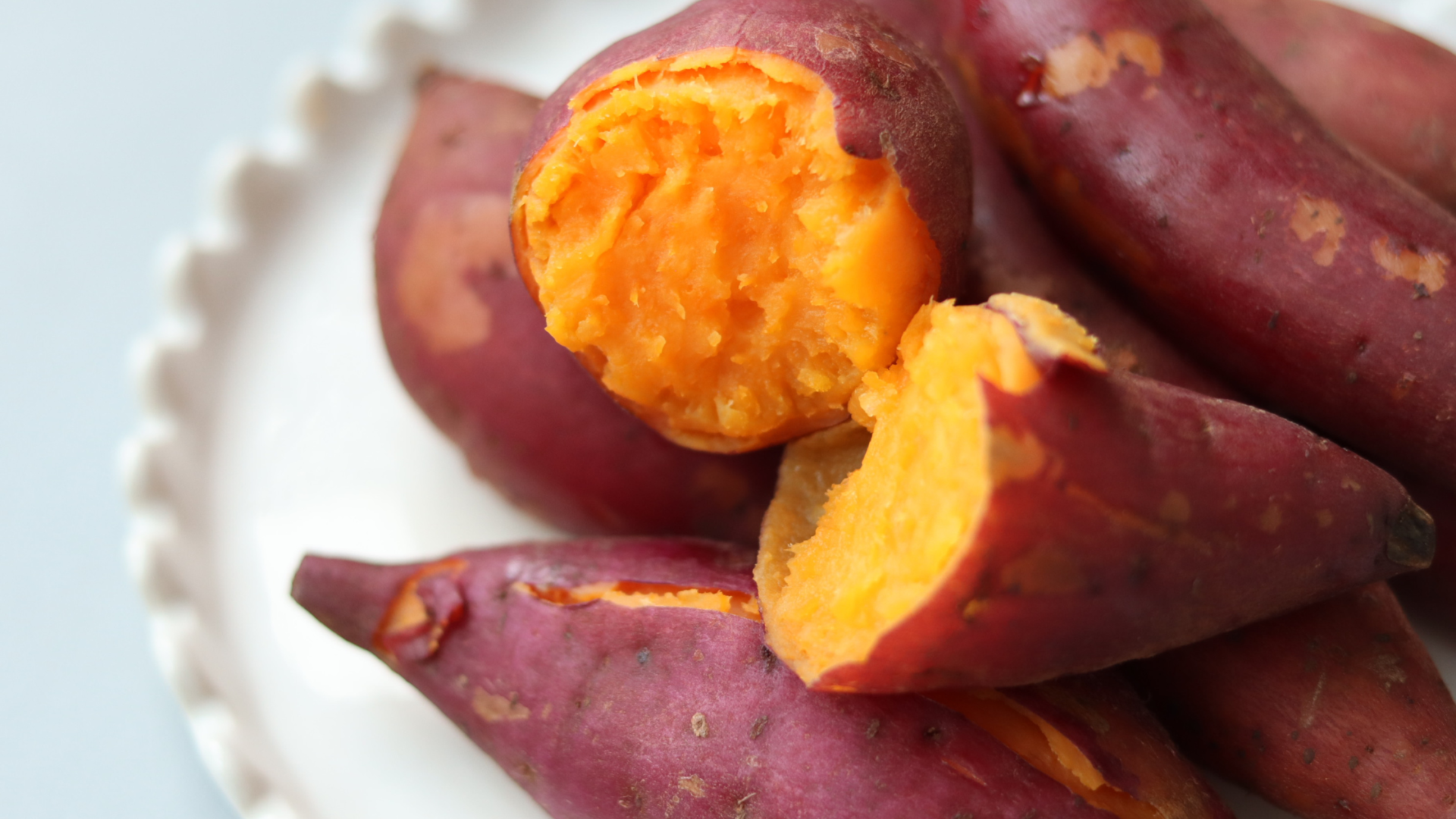
Sweet potatoes (satsumaimo) are dug up in autumn. Freshly dug ones, called shin-imo (新芋), aren’t very sweet yet. After they’ve been stored for a while, their starch turns to sugar and they get sweeter.
If you want the sweetness of a roasted sweet potato (yaki-imo), go for ones that have been stored. The same variety tastes different depending on when you eat it.
Find sweet potato listings: Pocket Marché Find sweet potato listings: Tabechoku
kururu farm Ayamurasaki sweet potatoes, naturally farmed in Yokohama
🍠 Purple Ayamurasaki, freshly dug 📍 Maioka, Yokohama, Kanagawa ⚖️ 2kg, 5kg, 10kg, 20kg
Sweet potatoes grown by Kazuhiro Sano of kururu farm, in a field in Maioka, Yokohama. Ayamurasaki is a variety that’s purple all the way through. These are sold as shin-imo, freshly dug this season.
You can choose anything from 2kg to 20kg. The listing says the sizes are mixed and each potato is a little different.
Editor’s note: The person who grew these ships them directly from a field right inside a big city like Yokohama. You can try Ayamurasaki, purple to the core, while it’s still fresh from the ground. The sizes aren’t sorted, which suits anyone happy to take produce as it comes.
Trade-offs: The listing says 自然栽培 (“natural farming”) but doesn’t explain the methods. If that matters to you, ask the grower before ordering. The smallest option is 2kg, which works well for a large household or for splitting with friends.
Ayamurasaki sweet potatoes
Kabocha
Kabocha harvest times vary by region. It’s said to get sweeter if it’s left to sit for a while after harvest rather than eaten right away.
In Japan, it’s a custom to eat kabocha on the winter solstice (tōji). If you want to know where the kabocha in stores in winter came from, check the origin label.
Find kabocha listings: Pocket Marché
Find kabocha listings: Tabechoku
Taro
Satoimo, a small variety of taro, is harvested from autumn into winter. The mid-autumn full moon (jūgoya) is also called imo meigetsu, the “taro moon,” a name said to come from the custom of offering satoimo to the moon.
In simmered dishes and soups, its slippery texture thickens the broth.
Find taro listings: Pocket Marché Find taro listings: Tabechoku
Chestnuts and fruit
Chestnuts
Chestnuts (kuri) are usually harvested in autumn by gathering the ripe nuts after they fall. If you buy them raw, you may find an insect inside.
The tricky part at home is peeling the inner skin (shibukawa). Some varieties, like Porotan, have an inner skin that comes off easily.
Find chestnut listings: Pocket Marché
Find chestnut listings: Tabechoku
Vegearts Porotan fresh chestnuts from Nagano, 1kg
🌰 Porotan, an easy-peel variety 📍 Miyota, Kitasaku District, Nagano ⚖️ 1kg
Fresh chestnuts from Hiroyuki Yamamoto of Vegearts, in Miyota, Nagano Prefecture. Porotan is known for its easy-peel inner skin.
The listing says the chestnuts aren’t fumigated with pesticides after harvest. Fumigation is a treatment that uses a chemical gas to kill insects.
Without fumigation, some chestnuts may have insects inside. The listing explains that the grower adds around 5% extra to each order to make up for that.
Editor’s note: The listing is upfront about both points: the chestnuts aren’t fumigated, and extra are added in case of insect damage. So if you find insects in a few, it won’t come as a surprise, and the extras are already in the box.
Trade-offs: The listing doesn’t mention pesticide use while the trees are growing. It’s only available in a 1kg size.
Porotan fresh chestnuts
Japanese pears
Japanese pears (nashi) are harvested at different times depending on the variety. The season starts in late summer with Kōsui and Hōsui, then moves on to Akizuki, Nansui, and Niitaka as autumn goes on.
The same “nashi” label can mean a different variety depending on when you buy it.
Find Japanese pear listings: Pocket Marché Find Japanese pear listings: Tabechoku
Sakazume Farm Nansui pears, wakeari for home use
🍐 Nansui, wakeari for home use 📍 Toyono, Nagano City, Nagano ⚖️ 2.8kg
Wakeari Nansui pears from Sakazume Farm in Toyono, Nagano City. The listing gives the reason: 2026 was a dry year with little rain, so the pears came out on the small side.
They’re grown with 30% less targeted pesticide and chemical fertilizer than Nagano Prefecture’s standard for conventional farming. The listing also says the farm received 長野県の環境にやさしい農産物の認証 (Nagano Prefecture’s certification for environmentally friendly produce) again for fiscal year 2026.
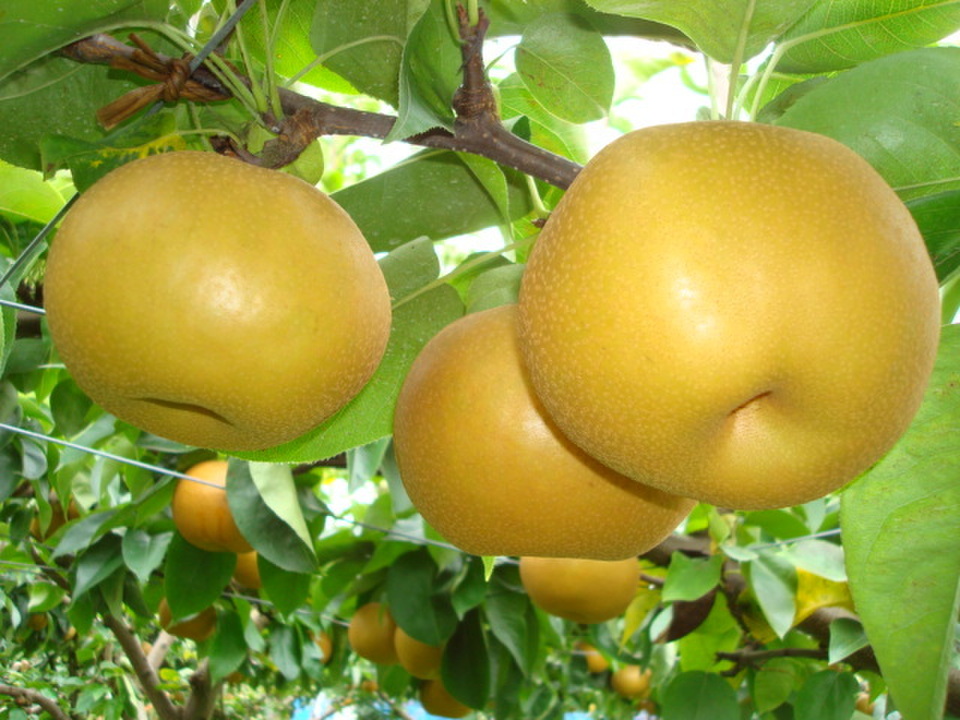
Editor’s note: The listing puts a clear number on how much pesticide and chemical fertilizer were cut: 30%. That’s less than the 50% cut needed for the 特別栽培 label under the national guidelines, but because the number is right there, you can judge for yourself. The listing also explains that the weather is why the pears are small, so you know what to expect.
Trade-offs: It’s only sold in a 2.8kg box, which works well for a family or for sharing.
Nansui pears
Persimmons
Persimmons (kaki) come in two kinds: sweet ones you can eat right off the tree, and astringent ones that have to be treated first. Fuyu is a sweet variety. Astringent persimmons, like Niigata’s Hacchin persimmon (八珍柿), are treated to remove the astringency before they’re shipped.
In stores, both are labeled simply 柿, so the variety name is how you tell them apart.
Find persimmon listings: Pocket Marché Find persimmon listings: Tabechoku
Grapes
Greenhouse-grown grapes appear early in the season. Grapes grown outdoors are mostly harvested from late summer into autumn. That’s also when Kyoho, Pione, and Shine Muscat are most plentiful.
Getting a bunch into a neat shape takes work: the grapes are thinned out by hand. The tidy bunches you see in stores look that way because someone did that work.
Find grape listings: Pocket Marché
Find grape listings: Tabechoku
Final thoughts
Knowing what’s in season and choosing where to buy it are two separate decisions.
A list of autumn foods can tell you what’s plentiful and when, but that’s all. Beyond that, what helps you choose is who grew it, whether it’s uniform, and whether you can buy just the amount you’ll use. Things that are hard to see on a grocery store shelf are sometimes spelled out on a farm-direct listing page.
Next time you pick up chestnuts or sweet potatoes at the grocery store, take a look at the origin label. What it says, and what it leaves out: that gap is where the places to shop differ.
If you’re thinking about a vegetable subscription, our guide to organic vegetable delivery in Japan compares the services.
After the origin label, what would you look at next?