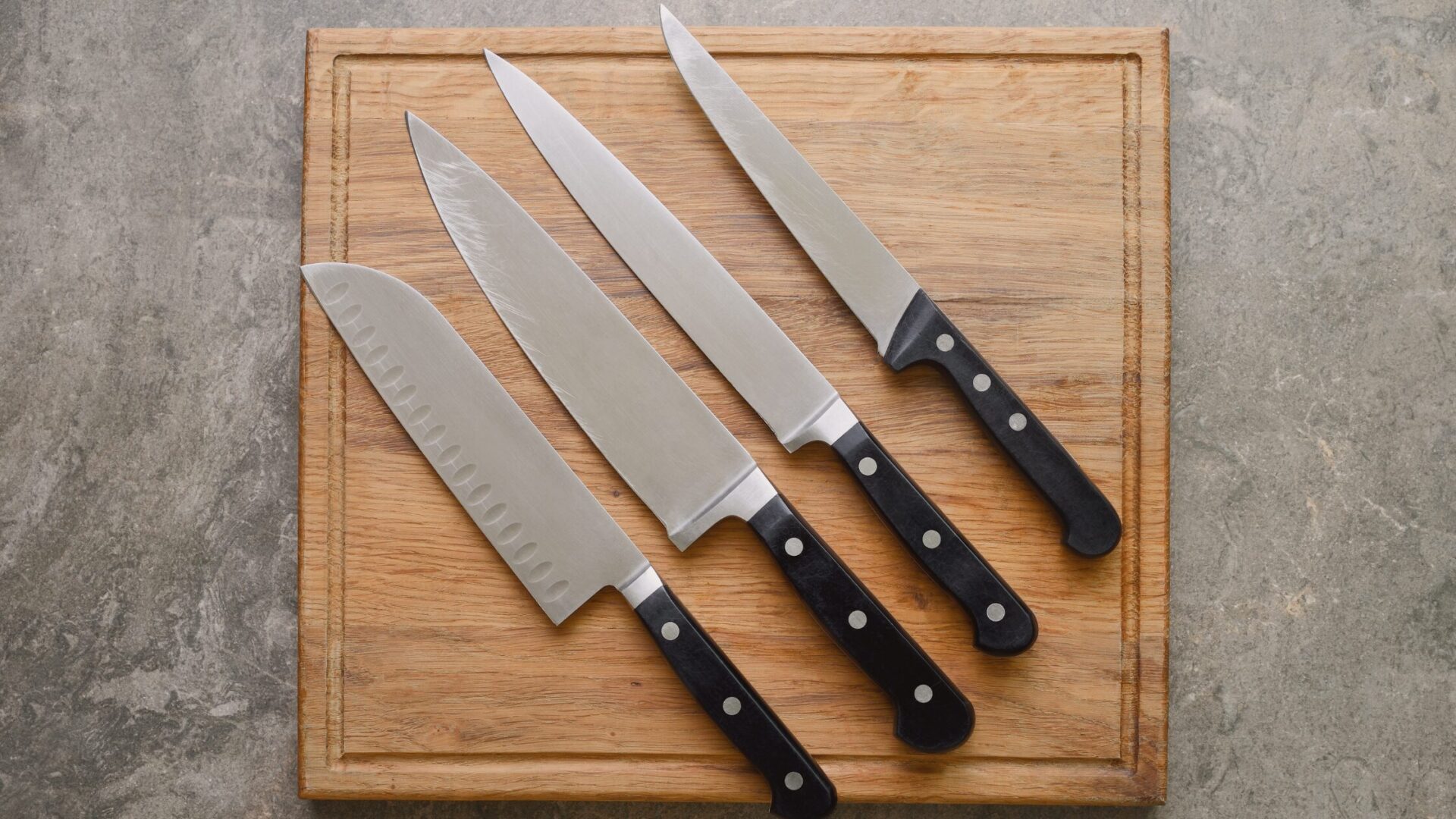

If you’ve started cooking more seriously since moving to Japan, a proper Japanese kitchen knife has probably crossed your mind. They’re sharper than what most people grow up with, and a few minutes in the knife aisle of a depachika basement food hall — or a cutlery shop in Kappabashi, Tokyo’s wholesale kitchenware district — makes the case for itself without much help.
What’s harder to find out is what happens before and after that purchase: what the blade and handle are actually made of, whether the maker will sharpen or repair it years from now, and what’s supposed to happen to it once it’s finally worn out. None of that is printed on the box.
We researched five knife brands sold in Japan and checked every factual claim against the brand’s own official site. Where we draw our own conclusion rather than repeating something the brand states outright, we say so. Where a brand hasn’t published something, we say that too, instead of filling the gap with a guess.
Quick Summary: Best Sustainable Kitchen Knives in Japan by Use Case
| What you’re looking for | Brand | Why |
|---|---|---|
| The widest range of criteria confirmable from official disclosures (with some limitations noted for packaging scope) | Tojiro BASIC (F-316) | VG10 composite steel, FSC-certified paper referenced in a product announcement, a knife collection program that also accepts other brands, and official repair |
| A single-material build with less sorting at disposal | TOJIRO PRO (F-895) | One-piece, all-stainless construction; official sharpening and recycling programs |
| Manufacturing transparency you can verify yourself | GLOBAL G-46 | Made in Tsubame, Niigata; steel grade published; official sharpening service with logo re-stamping |
| Repair and end-of-life recycling from the same brand | Sekimagoroku Damascus (AE2843) | In-house “Knife Meister” mail-in sharpening, plus a Kai-brand knife collection program |
| A familiar Swiss name with a responsibly sourced handle | Victorinox Wood Series | Sustainably sourced wood referenced on some models, a manufacturer warranty, and an authorized service center in Japan |
How We Evaluated These Brands
Six criteria shaped this comparison. As with everything we publish, what mattered was whether the information could be confirmed on the brand’s own official website — not whether the brand is doing good work behind the scenes that simply isn’t published. A brand not appearing under a given criterion doesn’t mean the company is failing at it. It means we couldn’t verify it from what they’ve made public. Where we draw a conclusion that the brand itself doesn’t state outright — for example, that a single-material design simplifies sorting at disposal — we label it as our own reading of the facts, not as a claim the brand is making.
Material circularity — Is the blade made from a steel that’s straightforward to recover and recycle? Is there official information on how the handle material can be sorted or reused at end of life?
Long-term durability — Is the knife designed to be re-sharpened rather than replaced? Does the brand officially support blade repair, chip removal, or handle replacement?
Repair and maintenance access — Does the manufacturer or an authorized retailer actually offer sharpening, handle replacement, or repair as a real, bookable service — not just as a general claim?
Food contact safety — Is there official information about food-safety testing or third-party certification covering the blade, handle, coating, or adhesives? Knives sold in Japan are subject to Japan’s Food Sanitation Act, though manufacturers do not typically publish detailed compliance data — and that requirement applies to domestic sale rather than to where a knife is manufactured, which matters for an imported brand like Victorinox. We looked for public test data or certification separately from this regulatory baseline.
Supply chain transparency — Does the brand disclose steel grade, wood sourcing, or country of manufacture? Is there FSC or PEFC certification anywhere it would apply?
End-of-life recycling — Does the manufacturer or retailer run a take-back or recycling program for a worn-out knife? Is the packaging FSC-certified or made from recycled paper?
All information reflects what was available on official brand websites as of June 2026.
5 Sustainable Kitchen Knives Available in Japan
1. Tojiro BASIC Santoku 170mm (F-316)
♻️ VG10 composite steel core 🌳 FSC-certified paper referenced in a product announcement 🔄 Knife collection program that also accepts other brands 🔧 Official sharpening, chip repair, and handle replacement 🏭 Made in Tsubame-Sanjo, Niigata
Tsubame-Sanjo, in Niigata Prefecture, is to Japanese cutlery roughly what Sabae is to Japanese eyewear: a metalworking region with centuries of accumulated craft, producing a large share of the knives, flatware, and blades made in Japan today. Tojiro is based there, and BASIC is the brand’s core household line. You can buy it through Tojiro’s official online store or at its directly run shops (the Tsubame headquarters, plus locations in Tokyo, Osaka, and Tsukiji).
The blade is a composite of VG10 steel at the core and 13-chrome stainless steel on the sides — a construction chosen for the combination of edge retention and corrosion resistance. The handle is compressed, laminated wood (a black-laminate finish as standard; a brown-laminate version is sold only at Tojiro’s own stores).
Packaging is one of the more specific claims in this comparison, though it comes with a scope caveat. A Tojiro product announcement states that the box uses 100%-recycled cardboard, and that the instruction sheet and labels use FSC-certified paper. We could not confirm whether this applies across all production runs or product lines, or whether it reflects a standing company-wide policy rather than a feature of this particular release. With that caveat noted, it’s still the most concrete packaging disclosure we found among the five knives here.
For aftercare, Tojiro officially offers paid sharpening, chip repair, and handle replacement, either by mail or by bringing the knife to one of its Knife Galleries. The request form and shipping instructions are in Japanese, so if your Japanese reading isn’t there yet, it’s worth asking a Japanese-speaking friend to help, or running the page through a translation tool before you start.
At end of life, Tojiro runs a knife collection program that accepts kitchen knives and scissors, including products from other brands, subject to the program’s conditions. Submitted knives are disassembled and sorted by a specialist recycler. You can mail them in or drop them off at a participating store.
Editor’s note: Of the five knives in this comparison, this is the only one where material disclosure, a repair service, and an end-of-life recycling program were all confirmable on the official site at once, with the packaging claim confirmed but narrower in scope than the others. If you’re trying to estimate how many years a knife might realistically last, the after-sales infrastructure here is the clearest of the bunch.
Trade-offs: Knives sold in Japan are subject to the Food Sanitation Act, but we found no published test data or third-party certification on food-contact safety specifically for this knife. Because the blade and handle are different materials, separating them is necessary at disposal — though Tojiro’s own collection program handles that separation for you.


 ポチップ
ポチップ
2. TOJIRO PRO Santoku 170mm (F-895)
🔩 One-piece all-stainless construction (cobalt alloy steel) ♻️ Single material may simplify sorting at disposal 🔄 Eligible for the knife collection program 🔧 Official sharpening and chip repair 🏭 Made in Tsubame-Sanjo, Niigata
This is Tojiro’s professional-grade line, built around an all-stainless, seamless construction from blade to handle, using a cobalt alloy steel. It’s sold through Tojiro’s official store and its directly run shops.
From a material standpoint, this may simplify sorting at disposal — this is our own read of the construction, not a claim made by Tojiro itself. There’s no separate handle material to pull apart. Stainless steel is generally considered an easy material to recover and recycle, though whether a given knife actually gets recycled depends on local collection systems and how it’s disposed of — that part isn’t something the manufacturer can fully guarantee.
Sharpening, chip repair, and the collection program work through the same system as the BASIC line above (sharpening and repair / collection program).
Editor’s note: Skipping a separate wood or resin handle is, in our reading, a design choice that simplifies the material-circularity story compared to a composite blade — though that’s an inference on our part rather than a claim Tojiro makes directly. It’s a genuinely different design philosophy from the BASIC line — whether you’d rather have a composite blade or a single-material one comes down to what you’re optimizing for.
Trade-offs: All-stainless construction feels and weighs differently in the hand than a wood- or resin-handled knife, which is worth testing in person if you can. As with BASIC, we found no published food-contact safety test data, and the FSC-certified paper noted for BASIC’s packaging isn’t mentioned for this model specifically.
 ポチップ
ポチップ
3. GLOBAL G-46 Santoku 18cm
🔩 All-stainless construction (blade and handle welded together) 🔧 Official sharpening service (includes logo re-stamping and buffing) 🏭 Made in Tsubame, Niigata
If you owned a kitchen knife before moving to Japan, there’s a decent chance it was a GLOBAL. The brand, made by Yoshikin in Tsubame, Niigata, has been sold internationally since 1983 and is instantly recognizable by its dimpled, all-steel handle — it shows up in Western kitchen stores almost as often as it does here.
The construction is genuinely all-stainless: the blade and handle are welded into a single steel unit, with no separate handle material to wear loose or crack over time. You can buy it through GLOBAL’s official online store, its Roppongi flagship (YOSHIKIN SHOP), the Niigata showroom, or department stores nationwide.
The blade steel is a molybdenum-vanadium stainless alloy, and the handle is 18-8 stainless — both confirmed on the official site, along with the Tsubame manufacturing location. The finish is described on the official site as a proprietary surface treatment rather than a painted coating; the detailed composition of that treatment isn’t disclosed beyond that description.
The official sharpening service is handled by hand, by trained craftspeople, and explicitly includes re-stamping the worn “GLOBAL” logo and buffing the blade back to a clean finish — a level of detail in the service description that’s unusual among the brands we checked.
Editor’s note: Being able to read the manufacturing location and steel grade in plain language, and finding the sharpening service described in actual detail rather than a vague mention, makes this an easier brand to evaluate before buying. The all-stainless build also strikes us as one less thing to sort out when it’s eventually time to dispose of it, though that’s our own reading of the construction rather than a claim GLOBAL makes.
Trade-offs: No knife take-back or recycling program is published, and there’s no mention of FSC-certified packaging. As with the Tojiro lines, we found no published food-contact safety test data or third-party certification — if this matters to you, contacting the brand directly is the practical next step.
 ポチップ
ポチップ
4. Sekimagoroku Damascus Santoku 165mm (AE2843)
🔧 "Knife Meister" mail-in sharpening service 🔄 Kai-brand knife collection and recycling program 🏭 Made in Seki City, Gifu Prefecture
Seki City, in Gifu Prefecture, has been a center of Japanese blade-making since the era of samurai swordsmiths and shifted its expertise into cutlery generations ago. Sekimagoroku is one of the lines made there by Kai Corporation — the same company behind Kai-brand scissors that are sold in plenty of countries outside Japan, so the name may already be on your kitchen counter in another form. You can buy this knife through Kai’s official online store, department stores, and major retailers.
For maintenance, Kai has its own in-house qualification — “Knife Meister” — for the craftspeople who handle sharpening requests. The service covers chip repair, rust removal, wet sharpening, and a final strop finish, and is designed around mailing the knife in rather than requiring an in-person visit. As with Tojiro’s repair form, the process is run in Japanese, so non-Japanese speakers may want a translation tool or a Japanese-speaking friend on hand when filling it out.
At end of life, Kai runs a mail-in collection and recycling program for its own knives. Some campaign materials reference an incentive (such as a discount code) for people who use the program, but this isn’t described as a standard, ongoing program benefit on Kai’s main official pages — worth checking the current terms before counting on it.
Editor’s note: The “Knife Meister” credential gives the sharpening service a sense of structure beyond a generic repair desk, and pairing that with a take-back program covers both ends of the knife’s life. Among the five brands here, this is the other one — alongside Tojiro — where both repair and recycling are confirmed in one place.
Trade-offs: The collection program only accepts Kai-brand knives, so it won’t take a knife from a different manufacturer. We found no published food-contact safety data or FSC-certified packaging information. The exact steel grade is worth checking on the individual product page, since it isn’t spelled out in the general line description.
 ポチップ
ポチップ
5. Victorinox Wood Series Santoku 17cm
🌳 Responsibly sourced wood handle (walnut, etc.) 🛡️ Manufacturer warranty (terms vary by product and region) 🔧 Repair and re-sharpening through an authorized service center in Japan 🇨🇭 Made in Switzerland, in-house manufacturing
If you already own a Victorinox Swiss Army knife from before moving to Japan, the kitchen line will feel like familiar territory. Founded in 1884, the brand sells this line through its Japanese official site and through authorized retailers and directly run shops in Japan.
The handle is described on the official site as wood sourced according to Victorinox’s sustainability standards. FSC certification is referenced for some models specifically, but not stated as applying across the entire Wood series — it’s worth checking the spec sheet for the exact model you’re looking at rather than assuming it carries over from one product to the next.
On warranty, the official site confirms that a manufacturer’s warranty program exists, but the length and exact terms vary by product and by the country of purchase — so the specifics are worth confirming directly with the official Japan site or a retailer rather than assuming a single blanket policy. In Japan, an authorized service center handles paid repair and re-sharpening.
The blade is a high-quality stainless steel, and manufacturing is entirely in-house at the brand’s Swiss factory.
Editor’s note: Being able to confirm both a sourcing claim on the wood and the existence of a warranty program — straight from the brand — gives you something concrete to point to if “built to last” matters to you. Just don’t take the certification scope or the warranty length for granted; both are worth a quick check against the specific model before you buy.
Trade-offs: We found no Japan-based knife recycling or take-back program. As with the other brands here, there’s no published food-contact safety test data. It’s also worth confirming with an authorized retailer or the official site that the specific Wood-series model you want is currently in stock in Japan, since lineups shift over time.
 ポチップ
ポチップ
Before You Buy a New One: Getting More Life Out of the Knife You Already Have
The most sustainable knife is often the one already in your kitchen drawer.
If the edge has gone dull. Unless the blade is badly chipped, sharpening alone can usually bring the edge back. Tojiro and Sekimagoroku (Kai) both accept mail-in sharpening requests, and GLOBAL runs its own official sharpening service. Local knife shops and independent sharpeners (研ぎ屋, togiya) — including a concentration of them around Kappabashi in Tokyo — also take walk-in or drop-off work, and some don’t require any Japanese beyond handing over the knife.
If the handle is loose or visibly worn. Tojiro officially offers handle replacement. Victorinox routes this kind of repair through its authorized service center in Japan. Start with the support page of whichever brand you bought from.
If there’s a small chip in the blade. Both Tojiro and Kai (Sekimagoroku) accept chip-repair requests. Minor chips are often fixable rather than a reason to replace the whole knife.
Before anything goes in the trash, it’s worth checking whether a repair option exists. In a lot of cases, it does.
Frequently Asked Questions
Where can I buy a sustainable Japanese kitchen knife? Tojiro (BASIC and PRO lines) is available through its official online store and directly run Knife Galleries in Tsubame, Tokyo, Osaka, and Tsukiji. GLOBAL is sold through its official store, its Roppongi flagship, and department stores nationwide. Sekimagoroku is available through Kai’s official store and major retailers. Victorinox Wood-series knives are sold through the brand’s Japan site and authorized dealers.
What does “VG10” mean on a knife box? VG10 is a high-carbon stainless steel commonly used in Japanese kitchen knives, valued for holding a sharp edge while resisting rust. It’s often used as a core material in a composite blade, clad with a more flexible stainless steel on either side — that’s the construction used in Tojiro’s BASIC line.
Can I get a knife sharpened in Japan if I don’t read Japanese? Mail-in sharpening requests from brands like Tojiro and Kai are processed through Japanese-language forms, so you may need a translation tool or a Japanese-speaking friend to fill one out. In-person options are often easier: many local knife shops, including several around Kappabashi in Tokyo, will sharpen a knife on the spot without requiring much language at all.
What’s the difference between knives made in Tsubame-Sanjo and Seki City? Both are historic Japanese cutlery regions, but with different roots. Tsubame-Sanjo, in Niigata, grew out of metalworking and tool-making traditions; Tojiro is based there. Seki City, in Gifu, traces its blade-making lineage back to samurai sword production; Sekimagoroku (Kai) is made there. GLOBAL is also manufactured in the same Niigata region, in the city of Tsubame specifically.
Are any of these knives certified for food-contact safety? We didn’t find published third-party food-contact safety testing or certification for any of the five knives covered here. Knives sold in Japan — including imported ones like Victorinox — are subject to the country’s Food Sanitation Act, which sets a regulatory baseline for products sold here, but manufacturers don’t typically publish detailed compliance data, and that’s distinct from a public test report or certification you can look up yourself.
Does the warranty or repair service still work if I move out of Japan? That depends entirely on the brand, and we’d recommend confirming directly before relying on it. Victorinox is an international brand with service centers in multiple countries, so a warranty claim may be possible elsewhere, though terms vary by region. The Japanese knife brands in this article (Tojiro, GLOBAL, Kai) run their repair and recycling programs domestically, and we found no indication that they operate outside Japan.
A Final Thought
Looking at five knives side by side makes something visible that’s easy to miss when you’re comparing one product at a time: every brand here is solving for a slightly different piece of “sustainable.” Tojiro is building an entire after-sales loop — repair plus recycling plus packaging — around a composite blade. GLOBAL is betting on a single material that, in our reading, leaves less to sort out at disposal. Kai pairs a repair credential with a take-back program limited to its own knives. Victorinox leans on sourcing claims and an international warranty.
None of these approaches is the “correct” one. What matters more is which trade-off fits how you actually cook and how long you expect to keep the knife.
What would it take for a kitchen knife to be the last one you ever need to buy?
Information in this article is based on official brand websites and verified as of June 2026. Stock availability, specifications, and warranty terms are subject to change. Please confirm details on each brand’s official site before purchasing.