
If you’ve been searching for eco-friendly places to stay in Japan, you’ve probably noticed that almost every hotel calls itself “sustainable” these days. Tochigi Prefecture — home to the hot spring towns of Nasu and Kinugawa, and just a couple of hours from Tokyo by train — is no exception. But scratch the surface, and you’ll find a real gap between hotels with independently audited certifications and hotels simply using the word as a marketing label.
This guide only includes properties where we could verify sustainability claims directly through official hotel websites or official press releases — not through travel blogs, OTA listings, or secondhand summaries. We also make a point of distinguishing between practices unique to a specific property and practices that come from belonging to a larger hotel chain, since that distinction matters if you’re trying to figure out what you’re actually supporting when you book.
This isn’t a ranking of “best” hotels, and it’s not meant to tell you what to choose. Think of it as a starting point for figuring out what matters to you in a stay — whether that’s a third-party audited certification, a hotel’s own renewable energy setup, or a connection to local craft traditions. It’s also fine to read this and decide none of these six are the right fit for your trip.
How We Selected These Hotels
We looked for hotels in Tochigi meeting at least one of these four criteria, based only on what could be confirmed through official sources:
- Third-party certification — holding a recognized sustainability certification for accommodations, such as Green Globe, Sakura Quality An ESG Practice (a Japan-based ESG standard approved under the Global Sustainable Tourism Council framework), or a public eco-label
- Transparency of disclosure — when a hotel calls itself “sustainable” or “eco-friendly,” the certification name or the specifics of what it’s doing are actually confirmable on the official site
- Environmental practices — concrete measures such as renewable energy use, energy-efficient equipment, plastic reduction, or waste reduction
- Community and sourcing ties — local sourcing, partnerships with regional craftspeople or workshops, and other social or cultural contributions that are publicly documented
All information below reflects what was verifiable through official hotel websites and press releases as of the time of research. For chain hotels, we’ve tried to separate what’s specific to the individual property from what’s a groupwide policy.
The Hotels
1. Grand Mercure Nasu Highlands Resort & Spa


Location | Nasu Town, Nasu District — a highland resort area with sweeping views of the Nasu mountain range
About the property
Part of the Accor group, this resort sits on high ground with views over the Nasu mountains and the surrounding highlands.
Verified sustainability practices
The hotel’s official site states it received Green Globe certification on November 27, 2025, with an 83% compliance score. Green Globe is an international certification that evaluates properties across four areas: sustainable management, socio-economic impact on local communities, cultural heritage, and environmental performance (energy, water, waste, and biodiversity). Per Green Globe’s own published standard, certification requires more than paperwork — it has to be renewed every year, with an independent audit that alternates between on-site and desktop review.


Who this might suit
Travelers who specifically want a certification backed by independent, on-site audits, and anyone planning to base themselves in the Nasu highlands.
Worth knowing before you book
What’s verifiable here is the Green Globe certification itself and the 83% score. The hotel’s official site doesn’t publish specific numbers for energy use, waste volume, or similar metrics.
Getting there & booking

2. Hotel Laforet Nasu

Location | Yumoto, Nasu Town, Nasu District — near the Nasu Imperial Villa
About the property
A quiet hotel-and-cottage property from Laforet Hotels & Resorts, located near the Nasu Imperial Villa.
Verified sustainability practices
According to the hotel’s own press release, it earned “4 Gyoiko Sakura” — a near-top rating — under Sakura Quality An ESG Practice, a GSTC-recognized ESG standard for accommodations. The release describes this as the first such recognition for a hotel in Tochigi Prefecture, though that specific “first” claim comes from the hotel’s own announcement rather than an independent registry, so treat it as the hotel’s characterization rather than a verified ranking. If you want the certification’s actual scoring criteria, the Sakura Quality Management official site is the place to check.
On the environmental side, the hotel’s official feature page mentions using local ingredients to cut down on food-transport emissions, switching some ingredients and seasonings to fair trade sources, and providing FSC-certified paper notepads. The press release also references things like a public hot spring bath open to local residents and collaborations with regional workshops, though we’d recommend checking the official site directly for the specifics, since the press release doesn’t spell out every detail.


Who this might suit
Travelers who want both a verified certification and evidence of real ties to the local community — and anyone hoping to connect with local artisans or nature guides while in Nasu.
Worth knowing before you book
The certification and the community-related initiatives noted above are what we could confirm. We didn’t find published figures for energy or water usage.
Getting there & booking

3. TOWA Pure Cottages


Location | Takaku-otsu, Nasu Town, Nasu District — next to Nasu Highland Park
About the property
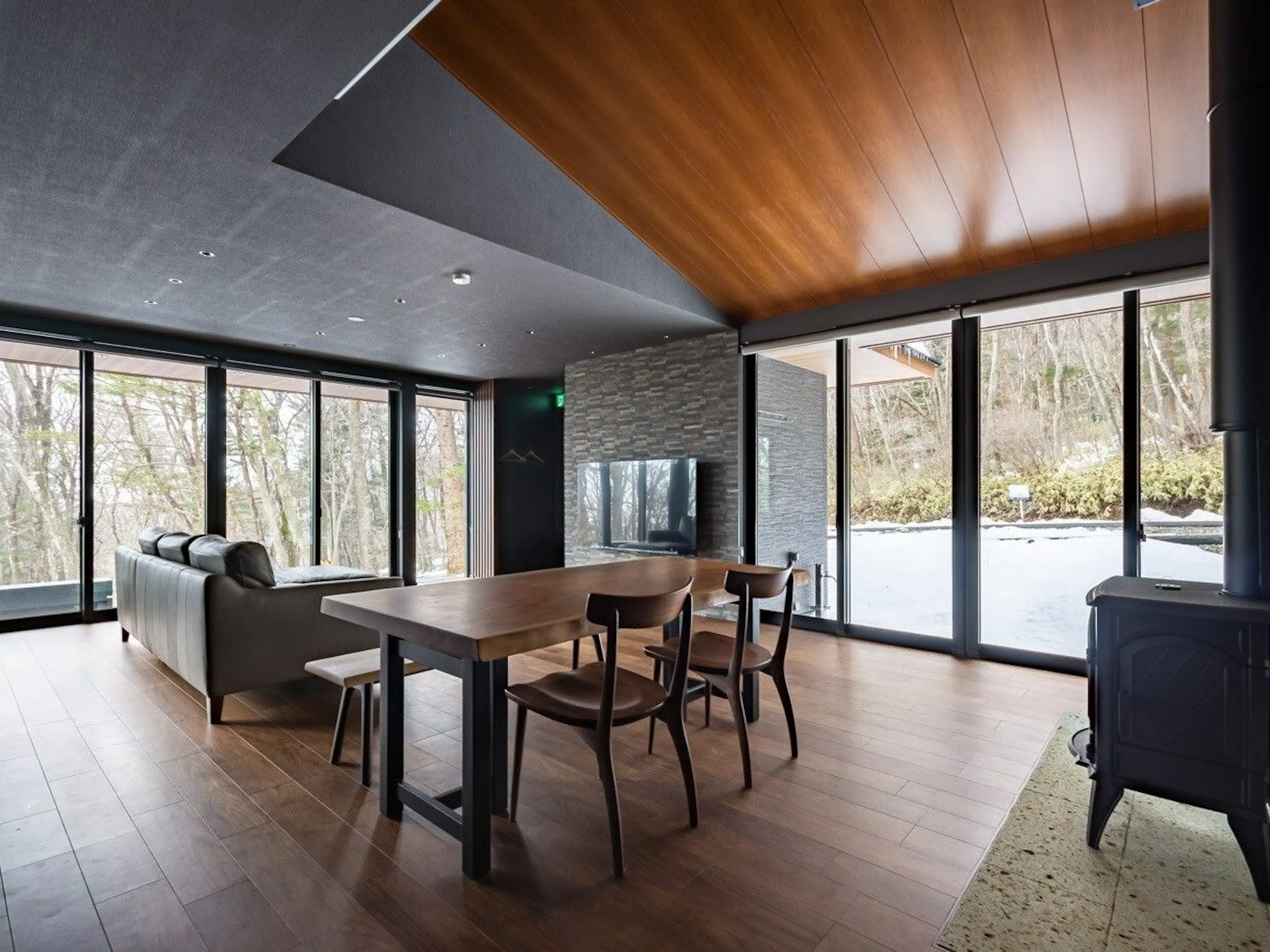
The official hotel of Nasu Highland Park, this property focuses on cottage stays and glamping.
Verified sustainability practices
The hotel’s official sustainability page describes converting wood scraps from forest-thinning work in the surrounding Nasu highlands into electricity through its own biomass power generation. That power reportedly supplies some guest rooms, the front building, and the restaurant. The hotel frames this as part of a locally rooted, circular model — reinvesting proceeds from operations back into forest maintenance — and states a broader commitment toward a carbon-neutral future.

Who this might suit
Anyone curious about how a hotel actually generates and uses renewable energy on-site, and travelers planning to combine a stay here with a visit to Nasu Highland Park.
Worth knowing before you book
The biomass generation and renewable energy use are confirmed, but they cover only some rooms, the front building, and the restaurant — not the entire property. Community initiatives like a children’s cafeteria or stray-dog support that show up in press coverage weren’t specifically documented on the sustainability page itself.
Getting there & booking

4. Hoshino Resorts KAI Kinugawa

Location | Kinugawa Onsen, Nikko City — along the Kinugawa River gorge
About the property
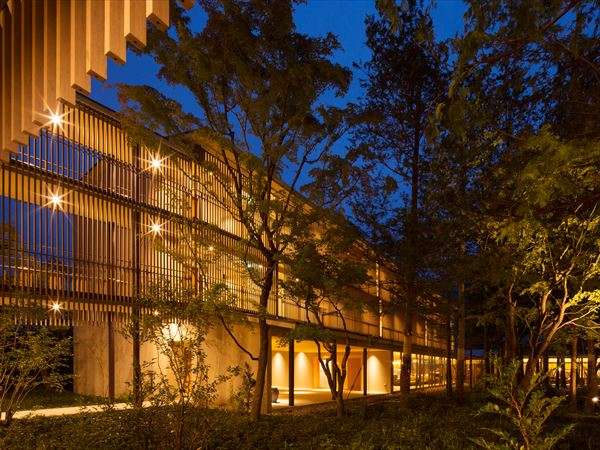
A hot spring ryokan perched on a hillside above the Kinugawa gorge, part of Hoshino Resorts’ KAI brand.
Verified cultural and community initiatives
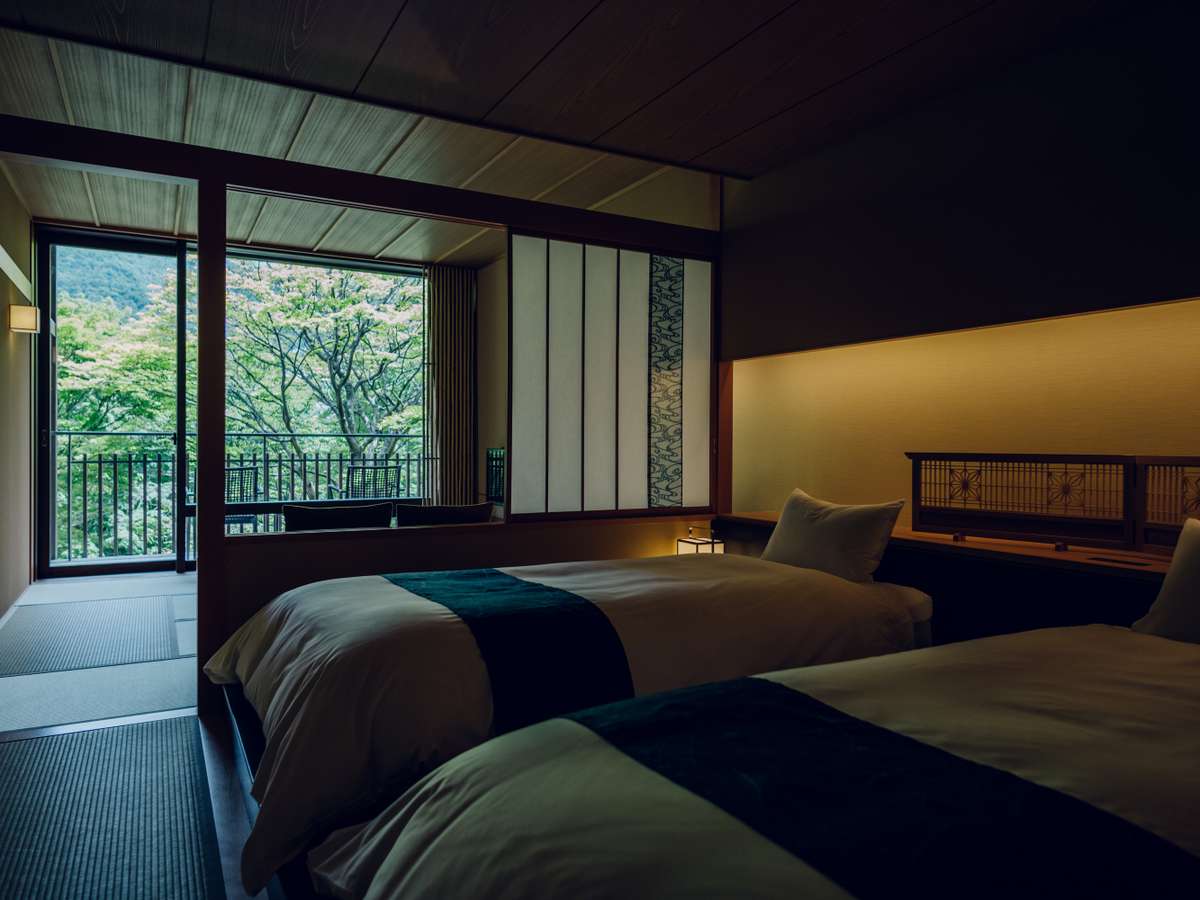
The official site states that all 48 guest rooms are designed as “Tochigi Mingei Rooms,” incorporating regional crafts like Mashiko ware pottery, Kurobane indigo dyeing, and Oya stone. The hotel also runs ongoing programs, including a workshop tour with indigo-dyeing artisan Yudai Onuma and a “Mashiko Ware Night” event hosted by a Mashiko pottery expert.
One thing worth flagging: Hoshino Resorts’ groupwide “horizontal paper towel recycling” program, launched in June 2025, applies to four specific properties (Hoshinoya Karuizawa, Karuizawa Hotel Bleston Court, Karuizawa Hoshino Area Sonmin Shokudo, and Risonare Yatsugatake) — KAI Kinugawa is not one of them.
Who this might suit
Travelers whose interest in sustainability centers on cultural preservation — supporting traditional craftspeople and regional artistic heritage — over environmental metrics.
Worth knowing before you book
What’s documented here is cultural preservation through regional crafts. We didn’t find property-specific figures or third-party certifications related to energy, water, or waste.
Getting there & booking
5. Daiwa Roynet Hotel Utsunomiya

Location | Higashi-shukugo, Utsunomiya City — about a 3-minute walk from JR Utsunomiya Station’s east exit
About the property
A hotel geared toward both business and leisure travelers, right by JR Utsunomiya Station’s east exit.
Verified sustainability practices
The official Eco Mark certification database lists Daiwa Roynet Hotels under certification number 23 503 005, issued by the Japan Environment Association. It’s worth noting this isn’t a certification this specific property earned on its own — Eco Mark’s own announcement describes it as a single certification covering 34 Daiwa Roynet hotels nationwide. Groupwide initiatives, publicly stated, include joining RE100 (a commitment toward 100% renewable electricity use), LED and timer-controlled outdoor lighting, and biomass-based amenity products in guest rooms.


Who this might suit
Travelers who want a recognized public eco-label as a data point, and anyone prioritizing convenient access from Utsunomiya Station for business or sightseeing.
Worth knowing before you book
Everything confirmed here is a chainwide policy — we didn’t find sustainability initiatives specific to the Utsunomiya property itself, nor property-level energy or water usage figures.
Getting there & booking
6. Hotel Route-Inn Utsunomiya Yuinomori


Location | Yuinomori, Utsunomiya City
About the property
A Route-Inn Hotels property in the Yuinomori area on the outskirts of Utsunomiya.
Verified sustainability practices
The chain’s official SDGs page describes “Eco DE Route-Inn,” a program that simplifies housekeeping for multi-night stays to cut down on water and energy use. Other groupwide initiatives listed there include biomass-based toothbrushes, razors, and hairbrushes, unpackaged amenity bars to reduce waste, and digitized paperwork to reduce paper use.

Who this might suit
Travelers happy to opt into reduced housekeeping during longer stays, and anyone looking to stay on the outskirts of Utsunomiya.
Worth knowing before you book
Everything documented here is a Route-Inn Hotels groupwide policy. We didn’t find anything specific to the Yuinomori property regarding local hiring or community involvement.
Getting there & booking

Before You Book: A Few More Things Worth Checking
If you want to dig deeper into any of these hotels, here’s where to look next:
- For details on how a certification’s scoring actually works, check the certifying body’s own website rather than the hotel’s — Green Globe (greenglobe.com) and Sakura Quality (Sakura Quality Management’s official site) both publish their criteria
- For chain hotels, it helps to separate brand-level policy from property-specific action. Of the six hotels here, three (Daiwa Roynet Hotel Utsunomiya, Hotel Route-Inn Utsunomiya Yuinomori, and Hoshino Resorts KAI Kinugawa’s paper towel program) reflect group policy rather than something unique to that property
- Beyond individual hotels, Nikko City’s Yumoto and Chuzenji areas were selected by Japan’s Ministry of the Environment as a “decarbonization leading area.” The city’s own project plan describes area-wide initiatives that reportedly include hot-spring-heated water and snowmelt systems, solar power, and buses running on biofuel made from used cooking oil — though for the specific technology details, the city’s project documentation is the more authoritative source than the national selection announcement itself. If you’re interested in the bigger picture of sustainable tourism in this part of Japan, that regional initiative is worth a look alongside individual hotel choices
For anything not covered here, or for updates after this article was published, check the hotel’s official website directly.
In the End, What Are You Actually Looking For?
All six hotels above have some form of verifiable sustainability practice behind them. But how much they disclose, and whether it’s genuinely their own initiative or something they’ve inherited from being part of a larger chain, varies quite a bit.
Two hotels — Grand Mercure Nasu Highlands Resort & Spa (Green Globe) and Hotel Laforet Nasu (Sakura Quality) — hold international certifications that involve independent, on-site audits. TOWA Pure Cottages stands out for having its own biomass power infrastructure. Hoshino Resorts KAI Kinugawa centers its approach on preserving regional crafts like Mashiko ware and Kurobane indigo dyeing. Daiwa Roynet Hotel Utsunomiya and Hotel Route-Inn Utsunomiya Yuinomori, meanwhile, benefit from environmental policies set at the chain level rather than the property level.
Is what a hotel is doing something it built for itself, or something it gets simply by being part of a bigger chain? Asking that question is really a way of asking yourself what you’re hoping to support with a booking in the first place. If this guide helped you think that through, it’s done its job.
This information is based on official hotel websites and press releases as of the time of research. Details may change without notice, so please check each hotel’s official website for the most current information.