
This spring, a park in Japan canceled its cherry blossom festival.
Not because of budget cuts. Not because of the weather.
Because the people who live there couldn’t take it anymore.
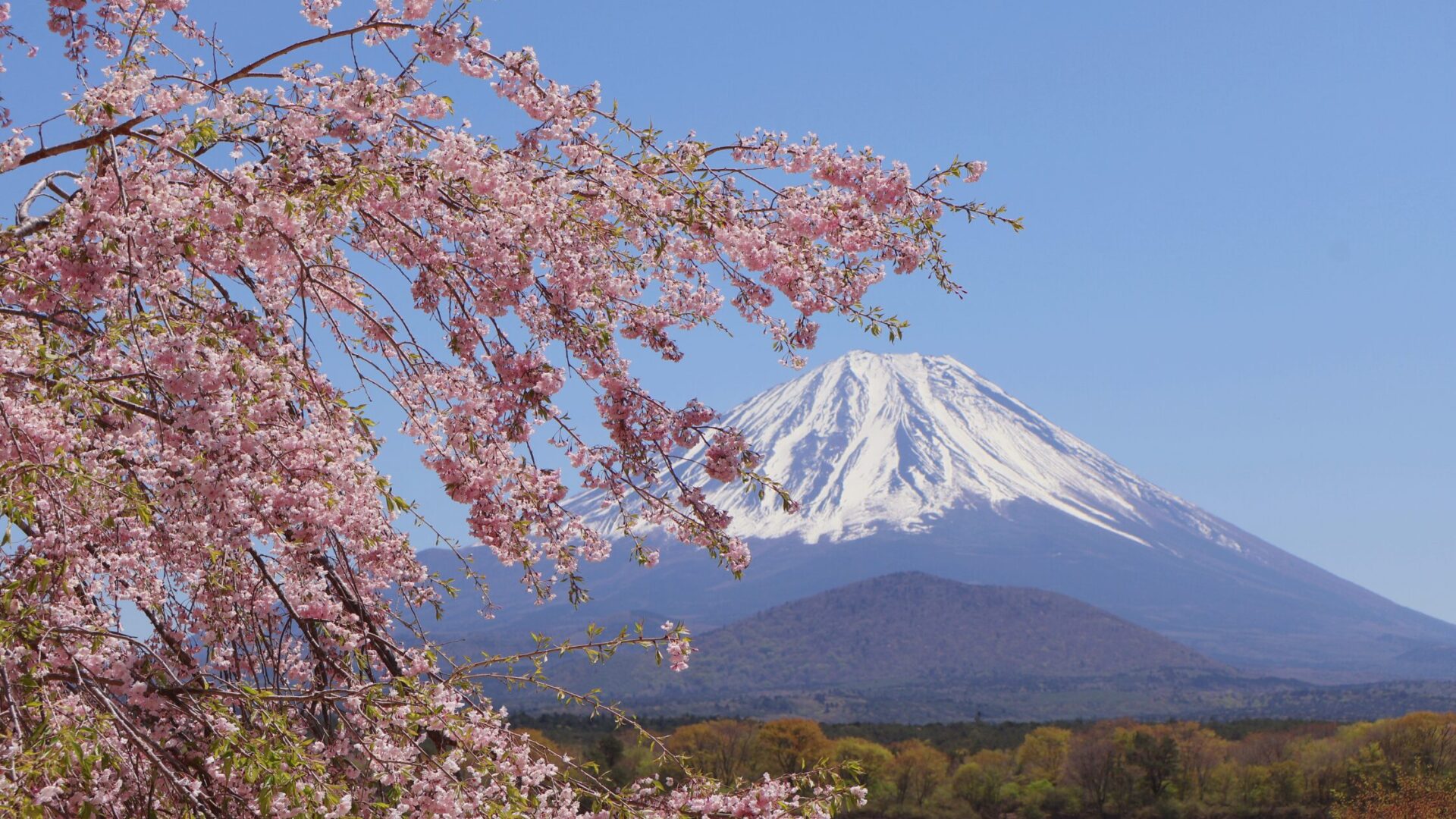
Niikurayama Sengen Park, in Fujiyoshida, Yamanashi Prefecture, has one of the most
recognizable views in Japan: Mt. Fuji rising behind a five-storied pagoda, cherry blossoms
filling the foreground. More than 200,000 people come each spring. The wait for the
observation deck can stretch to three hours. This year, the city’s mayor announced the
cancellation of the annual sakura festival — a decision he called agonizing, made to
protect the safety and daily life of residents.
The details that came out afterward are harder to sit with than any statistic. Tourists
stepping into private gardens without asking, repositioning themselves for a cleaner shot.
Litter — skewers, coffee cups, wrappers — left on front doorsteps after strangers ate
their convenience store meals there. One household eventually removed the handle from
their garden tap, because visitors kept using it. A resident summed it up plainly: “Even if the festival is canceled, the blossoms will bloom. There’s no point saying anything anymore. We’ve mostly given up.”
And then — after the cancellation was public, before the blossoms had even opened —
the crowds kept coming.
There is an obvious question here about management. How do you regulate the flow of
visitors? How do you spread tourists across more destinations, more seasons? These are
real questions, and planners are working on them.
But there is a quieter question underneath, and I think it gets closer to the root of things.
What kind of relationship do travelers imagine they have with the places they visit?
An assumption so common it goes unnamed
Most of the tourists who kept arriving after the cancellation were not acting out of
malice. Most people who step into a stranger’s garden to take a photograph don’t think
they’re doing anything wrong. They’re operating from a belief so ordinary it rarely gets
examined: that places of beauty exist to be visited.
Philosophers sometimes call this human determinism — the idea that natural spaces
and cultural places exist for human use, and that visiting them carries no real obligation
to account for the cost. That if your intentions are good, your presence is essentially
neutral.
It is not a cruel worldview. It is a very common one. Most of us hold some version of it.
What it fails to account for is consequence. A garden doesn’t register your intentions.
Soil compacts whether or not the hiker meant any harm. A resident stops asking whether
or not the tourist realized there was a problem. Good intentions and real impact are
simply separate things. A framework that treats places as available backdrops has no
way to reckon with the people and living systems absorbing the cost of all that arrival.
Starting from relationship, not transaction
There is a tradition in moral philosophy called care ethics. Its starting point sounds
almost too simple: we are not isolated individuals making independent choices. We are
born into relationships, and those relationships carry real obligations.
Not the grand, abstract kind — obligations to humanity in general, to the planet at large.
The close-in kind. Who is near? Who is affected by what I do? What do they actually need?
Care ethics was developed primarily by feminist philosophers, most notably Carol Gilligan
and Nel Noddings, as a challenge to moral frameworks built on rules and calculations.
Those frameworks — think of the classic trolley problem, where you weigh outcomes
against each other — tend to treat ethics as a puzzle to be solved correctly. Care ethics
pushes back: ethics isn’t just about getting the calculation right. It’s about paying genuine
attention to the specific people and living things around you, and responding to what you
find.
When researchers apply this to travel and tourism, they make a pointed observation.
Cost-benefit analysis — the dominant tool for managing overtourism — asks: what is the optimal outcome? Care ethics asks something different: what does this specific place, with these specific people, actually call for? The difference between those two questions
is not subtle. One treats people and places as variables in an equation. The other starts
from a desire, in the words of care ethics scholars, to genuinely be good to one another.
Gilligan and Noddings also write about what they call enchantment — a quality of
attention that pulls you back into direct, sensory experience of what is actually in front
of you. Not the world as a list of destinations, but the world as something to be genuinely
encountered. The blossoms as blossoms. The resident as a person with a front door and a
life behind it. The path as something that can be worn down.
This matters because so much of modern travel actively works against that kind of
attention. The itinerary, the photography checklist, the rush between viewpoints — all of
it produces a kind of managed distance from the place you are supposedly in. You move
through a sequence of images rather than being somewhere.
Researchers extend care ethics further, beyond human relationships, to what they call
“care of place” — the idea that a place and everything in it (including its non-human
inhabitants) isn’t a resource to be used, but something deserving of genuine moral
consideration. A mountain path worn down by too many boots. A tree whose roots are
slowly being compacted. A community whose festival has been canceled.
None of this offers a rulebook. It offers a different question to start from.
Part of it, not passing through
Here is where the argument goes a step further — and, I think, gets more honest.
Human determinism assumes a separation: the traveler arrives, experiences the place,
leaves. The place is there; you visit it. Care ethics challenges how you treat the people
you encounter. But some philosophers question the separation itself.
Think about what it actually means to stand in Niikurayama Sengen Park on an April
morning. You are breathing the same air that moves through the blossoms. Your footsteps,
added to hundreds of thousands of others, contribute to the slow compaction of the soil
beneath the trees. The minutes you spend at the observation deck are minutes a resident
spends unable to move through their own street. You are not watching the system from
outside. You are inside it, and your presence is part of what it becomes that day.
This is what some environmental philosophers mean by humility — and they don’t mean
it as a polite suggestion. They mean it as a factual description of your situation. You are
part of the ecosystem you enter. Not above it, not separate from it, not a neutral presence
who leaves no trace if their heart is in the right place.
The appropriate response to this is not guilt. It is accuracy. Seeing the situation for
what it is.
With that clarity, the question changes. Not how do I minimize my footprint? but what does this place, with these people, actually ask of me?
The community in Fujiyoshida offered an answer, in the form of a cancellation. The
people who came anyway had access to that answer. Whether they were listening for it is
another matter.
The gap between knowing and doing
A Swiss tourist, interviewed at the park after the announcement, said something that has
stayed with me. “We should respect the country, its people, its traditions.”
She knew. Most travelers know.
The gap is not between knowing and not knowing. It is between knowing a value in the
abstract and knowing what it actually requires in a specific place. Respect is easy to
endorse. But what does it look like in Fujiyoshida, in April 2026, for the household that
had to remove the tap handle from their garden?
Abstract respect says: I should be considerate.
Responsive respect asks: What does being considerate actually mean here, for these people, today?
Those questions sound similar. They aren’t. The first one can be answered before you
arrive. The second one requires you to pay attention after you do — to a notice, a sign, a
face, a canceled festival. It requires, in the language of care ethics, genuine enchantment:
the willingness to be present to what is actually in front of you, rather than what you
came to photograph.
One contradiction I can’t resolve
Something honest: writing about a quiet or fragile place makes it, in some small way,
less quiet. This essay might send someone to Fujiyoshida who wouldn’t have gone
otherwise. Naming the contradiction doesn’t dissolve it.
Care ethics doesn’t resolve this. Neither does humility as a philosophical stance. What
these frameworks offer isn’t a formula — it’s a different place to begin. Not how do I optimize this trip? but who and what am I in relation to, and what does that ask of me?
Whether that question changes enough behavior to matter at scale, I genuinely don’t
know. I think it might change how it feels to be somewhere. And, sometimes, how it feels
to leave.
A door left open
The festival was canceled. The sakura blossoms will still bloom. The crowds will still come.
If you are one of them — what relationship are you arriving into, and what does that ask
of you before you get there?
Sources
Fang, W.-T., Hassan, A., & Horng, M. (2023). Ecotourism: Environment, health, and education. Springer Nature Singapore.
Fennell, D. A. (Ed.). (2022). Routledge handbook of ecotourism. Routledge.
Zainol, N. R., & Rahman, M. K. (2023). Social entrepreneurship and social innovation in eco-tourism. Springer Nature Singapore.