
Tokyo has no shortage of hotels. Whether you’re visiting for tourism, business, or simply a change of scenery, the options can feel overwhelming. In recent years, a growing number of properties have begun positioning themselves around ideas like “community connection” or “local engagement.” But what do those phrases actually mean in practice — and do they hold up to scrutiny?
Behind polished concepts and well-crafted websites, the specifics are often harder to find. Which commitments are verifiable? Where does the information run out?
This article looks at eight Tokyo hotels that explicitly frame their identity around local community ties. Drawing exclusively from each property’s official website, it outlines what each one offers and where its disclosures fall short. This is not a ranked list of recommendations. It’s a set of reference points to help you evaluate these properties on your own terms — whether that leads you toward them or away from them is equally valid.
Note: All information is based on official hotel websites as of February 2025. For the latest details or specific figures, contact each property directly.
How These Hotels Were Selected
The hotels in this article were identified using the following criteria. These are not measures of quality — they are filters for the specific question of community engagement.
Each property had to explicitly reference “local community,” “neighborhood connection,” or similar language on its official website. Beyond physical location, each had to show evidence of intentional design around local culture, residents, or resources. And the stated concept had to go beyond convenient proximity — it needed to articulate a relationship with the surrounding neighborhood.
That said, what appears on a website and what happens in daily operations are not always the same thing. Consider what follows a structured report on what was findable — not a verdict on what each hotel does or doesn’t do.
The Hotels
1. TRUNK(HOTEL) CAT STREET — Shibuya
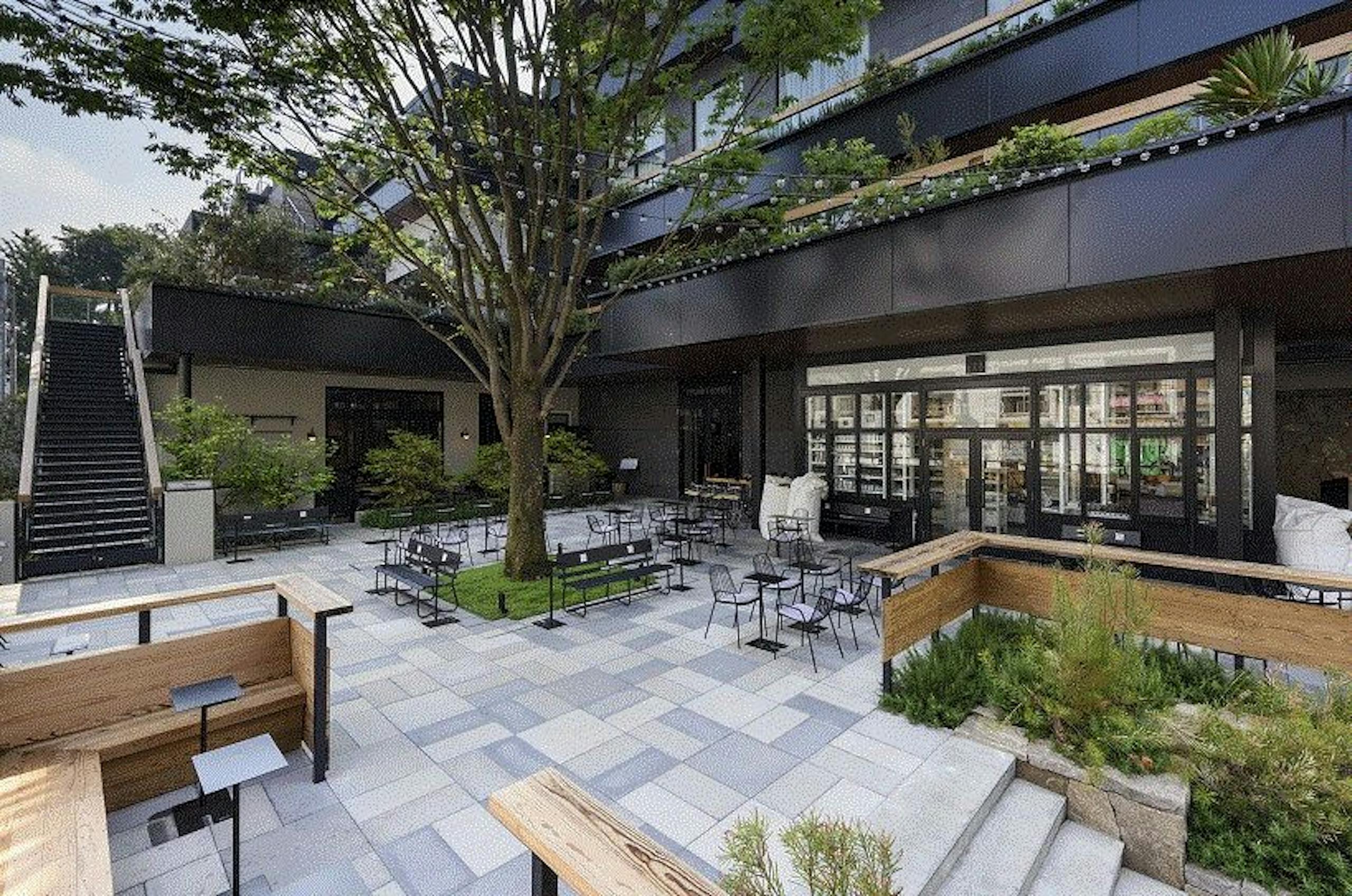

What it is: TRUNK(HOTEL) CAT STREET is a 15-room boutique hotel in the heart of Shibuya, situated between Harajuku and Omotesando — two of Tokyo’s most culturally active neighborhoods. Its stated concept is “socializing,” meaning the hotel is designed as a social space as much as a place to sleep. Alongside guest rooms, the property includes a lounge, restaurant, yakitori bar, concept shop, and event space — all oriented toward bringing people together.
Sustainability and community claims: The official website lists several initiatives. Guest room slippers are made from rubber industry off-cuts and are designed to be taken home. A used clothing collection box is available on-site. Early in the hotel’s history, rental bicycles were sourced from reclaimed abandoned bikes. The restaurant and shop incorporate some Tokyo-produced ingredients, organic products, and goods from local businesses. The hotel also runs community events and sells products tied to charitable donations.
What’s harder to find: the specific organizations receiving donations, the amounts involved, and the percentage of locally sourced ingredients are not clearly disclosed on the main website pages.


Who this suits: Travelers looking for something other than a conventional hotel stay. People drawn to design-forward spaces with a social or ethical dimension. Those who want dining, shopping, and cultural experience integrated into where they sleep — in a neighborhood that genuinely generates that kind of energy.
Worth knowing: The hotel is entirely non-smoking, with a designated smoking area on-site. Some amenities are available on request or for purchase rather than provided automatically. Specific data on local procurement ratios, revenue-sharing with the community, or local hiring practices are not published on the website.
Book here
Ikkyu
 Expedia
Yahoo!Travel
Expedia
Yahoo!Travel
2. hanare — Nippori
What it is: hanare takes the idea of community-connected lodging further than most. Its concept — “the whole neighborhood is the hotel” — is structural, not just rhetorical. Guests check in at HAGISO, a nearby café and arts space, then walk a few minutes to their actual room in a renovated 50-year-old wooden apartment building. Breakfast is served at HAGISO. Bathing is done at a local public bathhouse. At check-in, guests receive a hand-drawn neighborhood map pointing them toward local restaurants, shops, and places of interest.
Sustainability and community claims: The property repurposes an existing vacant building rather than constructing new. By directing guests to local bathhouses, restaurants, and shops, the model is designed to distribute spending across the neighborhood rather than consolidate it within the hotel. The format is also intended to keep the area from becoming overly touristy — guests move through ordinary daily life rather than a curated tourist zone.
What’s harder to find: the actual economic impact on local businesses, and any formal input from or agreements with neighborhood residents, are not documented on the official site.
Who this suits: Travelers who want to feel like they’re living in a neighborhood rather than visiting it. People who appreciate older architecture and the quieter character of Tokyo’s traditional downtown districts. Those who don’t mind — or actively enjoy — using a shared public bathhouse and shared bathroom facilities.
Worth knowing: Most rooms do not have private bathrooms or baths. Shared toilets and washbasins are standard; a bathhouse ticket is provided. The wooden building carries sound easily — foot traffic and voices between rooms are noticeable. The reception building and the guest rooms are a few minutes’ walk apart.
Book here
Expedia
3. NOHGA HOTEL UENO TOKYO — Ueno
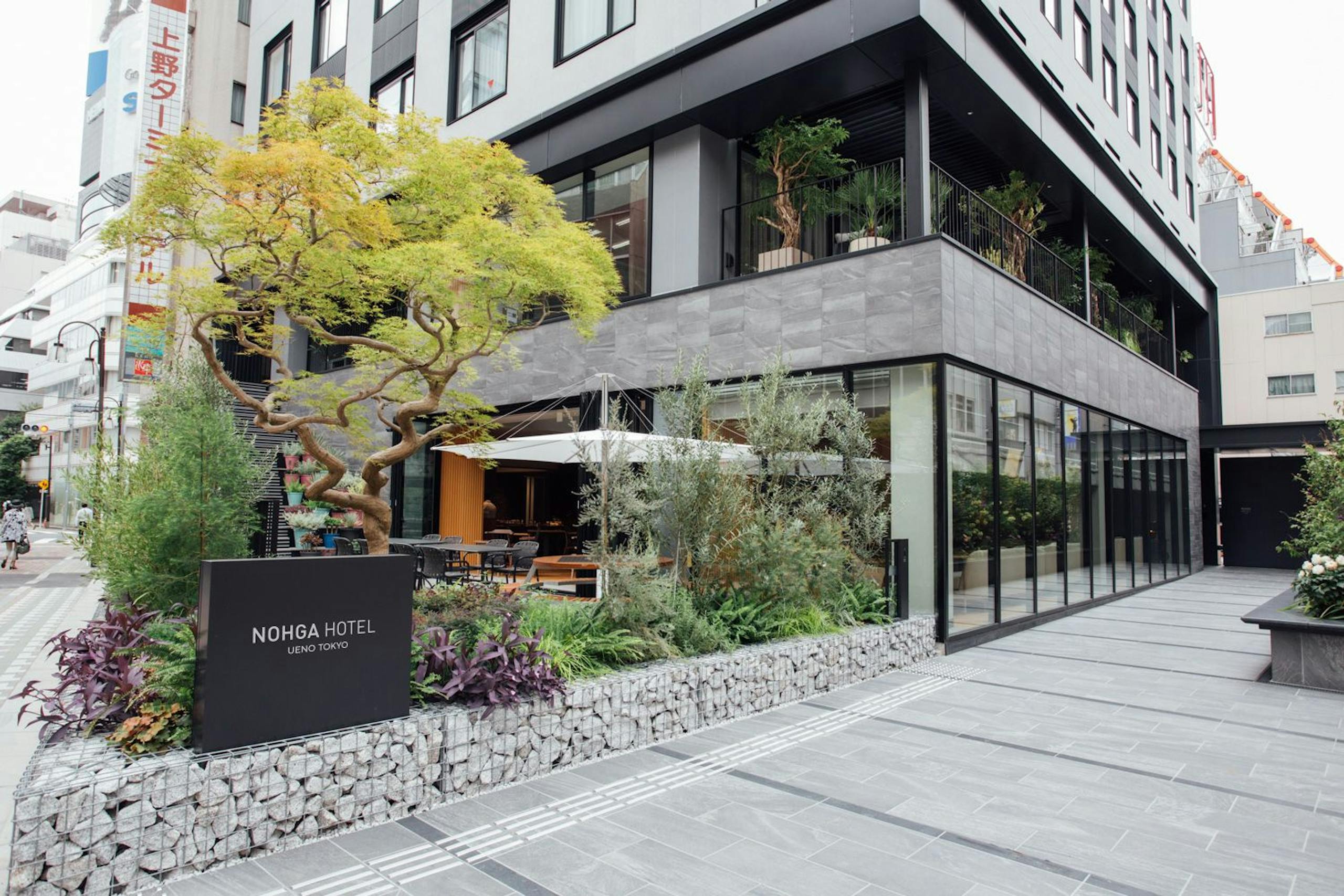

What it is: NOHGA HOTEL UENO TOKYO is a 130-room lifestyle hotel about a three-minute walk from Ueno Station. Its stated concept is “connecting deeply with the local area and the experiences that come from it.” The lobby includes a bistro, a gallery, fitness facilities, and rental bicycles. Furniture, tableware, and amenities were developed in collaboration with artisans and designers from the surrounding Taito Ward area — which encompasses Ueno, Asakusa, and Kuramae, neighborhoods known for traditional craftsmanship. Guests also receive an original neighborhood guidebook.
Sustainability and community claims: The hotel worked with local family crest designers, glassblowers, and woodworkers from the Taito Ward area to create in-house objects and artwork. It hosts workshops and events featuring local artisans. The hotel describes its work as supporting the continuation of traditional craft traditions in the area.
What’s harder to find: the share of goods procured locally, the terms of artisan partnerships, and whether these collaborations are ongoing or one-time are not specified on the website.

Who this suits: Travelers with an interest in design, craft, and material culture. People who want their stay to connect with the cultural character of a place, not just its sights. Those planning to explore the Ueno, Asakusa, or Yanaka areas on foot.
Worth knowing: Details on local sourcing ratios, artisan contract terms, local hiring, and community revenue-sharing are not published. There is also no information on formal consultation with or participation by local residents.
Book here
Ikkyu
Expedia
JTB
Yahoo!Travel
Rakuten Travel
Jalan
4. OMO5 Tokyo Otsuka by Hoshino Resorts — Otsuka
What it is: OMO5 Tokyo Otsuka is part of Hoshino Resorts’ urban hotel brand, designed around the idea that a city stay should feel like an active exploration rather than just a place to rest. The hotel is a one-minute walk from Otsuka Station on the JR Yamanote Line. Rooms are designed with a Japanese inn aesthetic, and the property includes a café and bar. A distinctive feature is the “OMO Rangers” — staff members who lead guests on neighborhood tours of Otsuka’s shopping streets and local spots.
Sustainability and community claims: The OMO Rangers program is the primary community-engagement mechanism, actively connecting guests with local shops and businesses. Hoshino Resorts group-wide policies include eliminating single-use plastic water bottles in favor of water jugs, dispensing amenities in pump bottles rather than single-use packaging, and operating a toothbrush recycling program.
What’s harder to find: the specific scope of these environmental programs at this property, their measurable outcomes, local procurement ratios, local hiring practices, and community revenue-sharing are not detailed on the website.
Who this suits: Solo travelers and small groups who want to go beyond tourist-facing areas. People whose primary interest is street-level neighborhood exploration. Those who appreciate a casual, playful hotel atmosphere.
Worth knowing: The format of some amenities — such as toothbrush availability — may have been updated since the information was published; the current arrangement is worth confirming directly. The loft-style “Yagura Room” requires climbing a staircase and may not suit all guests.
Book here
Expedia
JTB
Jalan
5. K5 — Nihonbashi


What it is: K5 is a micro mixed-use hotel occupying a building originally constructed in 1923 as a branch office of the First National Bank of Japan. The historic structure has been renovated and now houses 20 guest rooms alongside a restaurant, beer hall, library bar, and coffee shop. The design was developed by a Swedish design team and combines Japanese and Scandinavian influences. K5 is located in Kabutocho, Tokyo’s former financial district, which has been undergoing a broader revitalization in recent years.
Sustainability and community claims: The most concrete sustainability act here is the preservation and adaptive reuse of a century-old building. The hotel incorporates extensive indoor planting as part of its “coexistence with urban nature” concept. As a flagship project in the Kabutocho revitalization effort, K5 is positioned as a gathering place intended to bring new life to an area that had become economically dormant.
What’s harder to find: the nature of the neighborhood revitalization, local residents’ views on it, local procurement, hiring practices, and community revenue-sharing are not discussed on the official site.


Who this suits: Travelers drawn to architecture, interior design, and adaptive reuse. People seeking an environment that’s unusual and atmospheric rather than standard. Those who want to stay in a genuinely historic building.
Worth knowing: Room layouts are unconventional — beds are positioned as the central design element, with curtains used for division rather than walls. This works well for some guests and poorly for those prioritizing functional workspace or standard room configurations.
Book here
Ikkyu Expedia
Yahoo!Travel
Rakuten Travel
Expedia
Yahoo!Travel
Rakuten Travel
6. HAMACHO HOTEL TOKYO — Hamacho

What it is: HAMACHO HOTEL TOKYO is a hotel in Hamacho, a quieter neighborhood in central Tokyo with a history rooted in traditional craftsmanship. The hotel’s concept — “a stay where you develop genuine affection for the neighborhood” — draws on that heritage. In addition to guest rooms, the property includes a dining bar, a chocolate shop, and a jazz club produced by Blue Note Japan. A rotating series of special rooms called “TOKYO CRAFT ROOM” are designed through collaboration between designers and craftspeople, with the rooms updated periodically.
Sustainability and community claims: The hotel positions itself as a continuation of Hamacho’s craft tradition, channeling contemporary craftsmanship into the guest experience. Its lounge and retail spaces are open to local residents as well as guests, with the goal of functioning as a neighborhood gathering point. The building exterior and terraces incorporate significant greenery as part of an intentional urban environment design.
What’s harder to find: whether local residents actually use the shared spaces in significant numbers is not documented. The terms of artisan collaborations, local hiring, and revenue-sharing with the community are not published.

Who this suits: Travelers who want refined design without losing a sense of neighborhood character. Those with an interest in jazz, chocolate, or craft culture. People who want to experience a more traditional side of central Tokyo without staying in a heavily touristed area.
Worth knowing: The hotel is entirely non-smoking, with a designated smoking area available.
Book here
Ikkyu Expedia
Yahoo!Travel
Rakuten Travel
Jalan
Expedia
Yahoo!Travel
Rakuten Travel
Jalan
7. Hotel Intergate Tokyo Kyobashi — Kyobashi


What it is: Hotel Intergate Tokyo Kyobashi is a 201-room hotel one minute from Kyobashi Station, positioned between Ginza and Tokyo Station — a highly convenient location for both business and tourism. Its concept centers on delivering “the best morning,” reflected in a guest-only lounge that cycles through coffee service, afternoon refreshments, happy hour, and a late-night ochazuke bar (a simple Japanese rice dish with tea or broth). The hotel also offers a vegetable-forward breakfast buffet.
Sustainability and community claims: The hotel runs periodic workshops drawing on Kyobashi’s traditional culture, including Edo Kiriko — a style of hand-cut glass with origins in the Tokyo area dating back to the early 19th century. Guests who decline housekeeping during extended stays can have a portion of the resulting cost savings donated to environmental organizations through the hotel’s “Green Coin” program. The hotel has also implemented food waste reduction practices, LED lighting, and paperless operations.
What’s harder to find: cumulative donation figures and current program details for Green Coin require direct confirmation. Local procurement ratios, local hiring, and community revenue-sharing are not published.


Who this suits: Travelers who value a strong lounge program and attentive service relative to price. Business travelers or tourists who need easy access to central Tokyo. Those who appreciate structured sustainability incentives built into the stay itself.
Book here
Ikkyu Expedia
JTB
Yahoo!Travel
Rakuten Travel
Jalan
Expedia
JTB
Yahoo!Travel
Rakuten Travel
Jalan
8. Hotel Cadenza Tokyo — Hikarigaoka

What it is: Hotel Cadenza Tokyo takes a different approach to “local” than the other properties in this list. Located within the J.CITY complex near Hikarigaoka Park in northwestern Tokyo, the hotel describes itself as an “urban resort.” All guest rooms are on the 23rd floor or above, offering wide views over the city and surrounding greenery. The property includes Japanese, Chinese, and buffet restaurants, banquet facilities, and a fitness club with a membership pool. It’s well connected by car to major expressways.
Sustainability and community claims: The hotel has documented SDG-aligned commitments including partial replacement of plastic amenities with biomass-derived materials, food waste reduction through an on-site organic waste processor, barrier-free accessibility, and LED lighting throughout. It uses some locally grown produce — including vegetables from Nerima, a ward in northwestern Tokyo with a history of urban farming — and cooperates with local events. The hotel has also signed agreements to accept displaced residents in the event of a natural disaster.
What’s harder to find: the proportion of Nerima-grown produce used, local hiring figures, community revenue-sharing, and formal neighborhood consultation are not published. The hotel notes that local vegetable sourcing varies seasonally, which accounts for the absence of a fixed annual figure.


Who this suits: Travelers who want a quieter, greener setting away from central Tokyo’s density. Families or those arriving by car. Guests who prefer a full-service resort format with multiple dining options and green surroundings.
Worth knowing: The hotel is a shuttle-bus ride from the nearest train station and takes longer to reach from central Tokyo than the other properties in this list. The fitness club and pool are operated as a membership facility; surcharges and age restrictions (typically 20 and over) apply for hotel guests.
Book here
Ikkyu
Expedia
JTB
Yahoo!Travel
Rakuten Travel
Jalan
A Few Things Worth Keeping in Mind
“Community connection” means different things at different hotels
All eight properties use language around local engagement, but the actual content varies significantly. Collaborating with a local artisan, hiring from the neighborhood, sourcing ingredients from local producers, leading guests on walking tours, and hosting community events are all legitimately forms of local connection — but they differ in depth, continuity, and the extent to which local people actually benefit or have a say.
Disclosure gaps are consistent across the board
Across all eight hotels, the following types of information were consistently absent from booking-adjacent pages on their official websites:
The proportion of goods and ingredients sourced from local producers, with specific figures. Local hiring data — including number of employees, employment conditions, and decent work standards. How tourism revenue is returned to community projects, including fixed percentages, recipients, and amounts. Formal mechanisms for neighborhood consultation, feedback, or complaint resolution. Assessments of environmental impact on the local area’s ecosystem and landscape. Third-party certifications such as those from the Global Sustainable Tourism Council (GSTC).
This doesn’t necessarily mean these programs don’t exist. Some information may be available in corporate CSR reports or on parent company websites. But for someone trying to evaluate a hotel before booking, these gaps are real.
Environmental initiatives are more visible than social ones
Most of these hotels have clearly documented environmental measures — reducing plastic waste, improving energy efficiency, sourcing some organic or local food products. What’s less visible is the social dimension of sustainability: whether the surrounding community meaningfully benefits, whether local people have a voice in how the hotel operates, and whether the economic gains from tourism stay in the neighborhood in any structured way.
Related reading: 9 Sustainable Hotels in Tokyo: Choosing Accommodations Based on Third-Party Certifications and Concrete Initiatives
Final Thoughts
Choosing a hotel in Tokyo that claims to connect with its community is, in one sense, a practical decision. In another, it’s a small act of values alignment — a question of what kind of travel you want to support and what kind of accountability you expect from businesses you spend money with.
The eight hotels covered here each engage with the idea of “local” in a different way. Some reuse historic buildings. Some work with neighborhood craftspeople. Some direct guests toward local shops and bathhouses. Some provide structured programs that incentivize sustainable guest behavior. Each of these represents a genuine form of engagement.
At the same time, the information available on official websites isn’t enough to answer the deeper question: does the surrounding community actually benefit, and do local people have meaningful input into how these hotels operate? That’s not a criticism unique to these eight properties — it reflects a broader gap in how the hospitality industry communicates its community relationships.
What you do with that gap is up to you. There’s no requirement to reach a firm conclusion, and taking time to decide is completely reasonable. If this article gives you a clearer sense of what to look for — or what questions to ask directly — it’s done its job.