
If you’ve lived in Japan for any length of time, you know the drill. The forecast says 30% chance of rain, you leave your umbrella at home, and by noon you’re standing in a convenience store buying a ¥500 vinyl umbrella you’ll probably leave on a train within the week.
Japan goes through over 100 million umbrellas a year. Roughly half of those are cheap, single-use-in-practice vinyl umbrellas — the see-through kind you can grab outside any convenience store. They break in strong wind, they accumulate in lost-and-found bins, and they’re notoriously hard to recycle because the metal, plastic, and fabric components are fused together and difficult to separate.
But Japan also has something the rest of the world mostly doesn’t: umbrella brands that take repair seriously. Craftspeople who have been making umbrellas in the same neighborhoods for decades. Brands that stock replacement parts, run in-house repair services, and publish clear pricing for what it costs to fix a broken spoke.
This article covers 10 umbrella brands available in Japan, evaluated across six criteria: durability, materials, repairability, reuse potential, end-of-life handling, and use-case fit. Every claim has been cross-checked against official brand websites. If we couldn’t verify something, we say so rather than fill the gap with assumptions.
A note for English-speaking readers: most of these brands operate primarily in Japanese. Where language barriers are relevant — for ordering, repairs, or navigating the website — we’ll flag that directly.
Quick Summary: Best Sustainable Umbrellas in Japan by Use Case
| What you’re looking for | Brand | Why |
|---|---|---|
| Best overall — most criteria confirmed on official site | Caetla / +TIC J-Handle | 5 of 6 criteria confirmed. Self-replaceable canopy fabric. Metal-free design aids sorting at disposal. |
| Recycled materials + confirmed wind resistance | SiNCA by Wpc. | Recycled PET canopy + bamboo fiber handle. Wind-tested to 15 m/s; Grade 5 water repellency confirmed. |
| Commuter umbrella with official repair support | AMVEL | Repair page on official site; check current pricing directly. Shape-memory pleats for fast folding. |
| Lifetime repair with published pricing | Maehara Koeishouten | Founded 1948, Asakusa. Repair lab (Kasa Lab) accepts mail-in and walk-in with itemized pricing. |
| Traditional Japanese textile + repair | Makita Shoten or Komiya Shoten | Gunai or Kofu weaving. Full in-house repair because both brands manufacture their own fabric. |
| Outdoor, hiking, or travel use | Mont-bell | Lightweight carbon frame. Repairs accepted at nationwide Mont-bell stores; pricing on official support page. |
| Long-lasting transparent umbrella | White Rose | Patented wind-vent structure prevents spoke reversal. Repair service listed on official site. |
| Digital-first repair process for outdoors/travel | Snow Peak | Repair requests handled via official app or web account. Prepaid shipping or drop-off at stores. |
| Ultracompact, always-in-bag option | estää / Miracle Tech | Ultracompact folding design (check official page for specs). 100% UV blocking. Compact enough to replace impulse vinyl umbrella purchases. |
How We Evaluated These Brands
We looked at each brand against six criteria. The standard was simple: could the information be confirmed on the brand’s official website? Brands that do good work but don’t publish it won’t appear higher in this list just because we assume it.
- Durability Wind resistance structure, frame material, stitching, and hardware quality — specifically whether the brand explains, on their own site, why the umbrella is built to last.
- Material impact Use of recycled, bio-based, or natural materials, with origin and specifications confirmed by the brand. Must also hold up under real-world use conditions.
- Repairability Whether replacement parts can be purchased, and whether the brand offers a repair service — with enough detail (what’s covered, how to submit, pricing) to act on it.
- Reuse and sharing potential Compatibility with umbrella-sharing services, or design features suited to long-term communal or household use.
- End-of-life handling Material separability at disposal, compatibility with local sorting rules, or a brand-run collection/recycling program.
- Use-case fit Whether the design, weight, and features genuinely match a specific kind of use — commuting, travel, outdoor, everyday carry — without unnecessary overspec.
All information reflects official brand websites as of June 2026.
Related article: From Disposable to Durable: The Complete Guide to Sustainable Parasols in Japan
Japan’s Umbrella Problem: Some Context for Newcomers
Before getting into the brands, it helps to understand why umbrella consumption in Japan is such a particular issue.
The convenience store umbrella — a transparent vinyl umbrella sold for ¥500–¥800 — is one of Japan’s more visible sustainability blind spots. Japan’s unpredictable rain makes umbrella-on-demand purchases common, and many of those umbrellas are left behind, thrown away, or abandoned in apartment common areas. Municipal collection bins exist in some cities, but the mixed-material construction makes actual recycling difficult.
The good news: Japan also has a genuine culture of quality umbrella-making, centered in Yamanashi Prefecture (where traditional Kofu weaving produces canopy fabric) and Asakusa in Tokyo (where craftspeople still hand-stitch umbrella components). Brands that draw on these traditions tend to build umbrellas designed to last years, not seasons — and several actively maintain repair infrastructure to back that up.
If you’re a foreigner living in Japan and trying to reduce your umbrella footprint, the most effective move is probably: one good umbrella, repaired when it breaks, and an umbrella-sharing app (like i-kasa) for the days you leave it at home.
10 Sustainable Umbrella Brands Available in Japan
1. Caetla / +TIC J-Handle
💪 Durability: Reinforced plastic frame, rust-free, flexible ♻️ Materials: Fully metal-free construction 🔧 Repairability: Replacement canopy fabric sold separately — self-service 🔩 End-of-life: No mixed metals; easier to sort at disposal 🎯 Use case: Rain/sun, commuting, daily use
Every component of the +TIC J-Handle — the frame, handle, and canopy fittings — is made without metal. The ribs use fiberglass and polycarbonate-based reinforced plastics, which means no rust, no bending, and less of the snapping that takes out most umbrellas in a strong gust.
What makes this brand stand out is where they put the repair option: in your hands. When the canopy wears out or tears, replacement canopy fabric is sold through the official store (around ¥990). You swap it yourself at home, no shipping required. For a brand to design a consumer product around DIY repair rather than replacement is still unusual in this category.
The metal-free construction also matters at the other end of the product’s life. Most umbrellas are difficult to sort for disposal because metal and resin are fused together. With +TIC, the absence of metal means the components separate more cleanly.
Sun-and-rain models (including +TIC COOLSHADE) are available, making it a functional daily carry for Japan’s humid summers as well as rainy seasons.
Editor’s note: Of the 10 brands we researched, Caetla is the only one where 5 of our 6 criteria could be confirmed directly through the official site. The self-service canopy replacement is particularly rare — most brands treat repair as a service you send the product away for, not something built into the product design from the start.
Trade-off: The frame uses new reinforced plastic, not recycled material. If the origin of the raw material matters to you, SiNCA by Wpc. offers a recycled-content alternative. There’s also no sharing service compatibility listed.


 ポチップ
ポチップ
2. SiNCA by Wpc. (World Party)
♻️ Materials: Recycled PET canopy (from used plastic bottles) 🌿 Materials: Bamboo fiber handle (reduces petroleum plastic) 💪 Durability: Wind-tested to 15 m/s; water repellency Grade 5 (highest) 🎯 Use case: Rain/sun, portable, 100% light blocking, UPF50+
SiNCA by Wpc. uses canopy fabric made from post-consumer recycled polyester — the yarn is spun from collected plastic bottles. The handle incorporates bamboo fiber, which reduces the proportion of petroleum-derived plastic used in that component. Both material choices are explained with specifications on the brand’s official page.
Performance specs are published alongside the materials information. The umbrella passes 15 m/s wind resistance testing, and water repellency is rated at Grade 5, the highest available. Light-blocking rate is 100%, with UV cut rate of 99.9% (UPF50+), making it functional as a sun umbrella in Japan’s intense summers.
The umbrella folds flat in five stages to a small form factor, comes with a carabiner-equipped sleeve, and fits easily into most bags.
Editor’s note: Finding a brand where both the sustainability of the materials and the durability performance are documented on the same official page is less common than you’d expect. The bamboo fiber handle is a modest change in component terms, but it represents a deliberate reduction in petroleum plastic use — not just a materials swap for marketing purposes.
Trade-off: No repair service or parts supply is listed on the official site. If longevity matters to you beyond the initial purchase, check with the retailer before buying. No take-back or recycling program is confirmed either.
 ポチップ
ポチップ
3. AMVEL
💪 Durability: Wind-resistant folding frame (rated to 15 m/s) 🔧 Repairability: Repair page on official site; check current pricing directly 🎯 Use case: Commuting, fully light-blocking, shape-memory pleats for fast folding
AMVEL has a standalone repair and after-service page on their official site. Service requires free newsletter registration. Check the official repair page for covered components and current pricing before submitting.
The TOUGHNESS 秒速プリーツ (Speed Pleat) is built with a wind-resistant folding frame that stays intact at 15 m/s winds. The shape-memory pleat treatment lets the canopy fold back into shape quickly — a practical feature for the in-and-out umbrella use that characterizes a Tokyo commute.
Full light-blocking and heat-blocking functions are included, so the same umbrella works in Japan’s rainy season and its brutally sunny summers.
Editor’s note: Having a dedicated repair page at all separates AMVEL from most brands, where repair information — if it exists — is buried in FAQ pages or requires contacting customer service. Check the official page to confirm what’s currently covered and what it costs before purchasing.
Trade-off: No information about recycled or bio-based materials is listed on the official site. If materials provenance matters to you alongside repairability, compare with SiNCA by Wpc. The brand’s environmental footprint outside of durability isn’t documented publicly.
 ポチップ
ポチップ
 ポチップ
ポチップ
4. Maehara Koeishouten (前原光榮商店)
💪 Durability: Steel frame, hand-stitched, designed for 20–30 years of use 🔧 Repairability: Kasa Lab — mail-in and walk-in repair; itemized pricing on official site 🎯 Use case: Commuting, formal occasions, long-term daily use
Founded in 1948 in Asakusa, Shitamachi (old Tokyo). Craftspeople hand-stitch each umbrella using the traditional Kantō method. The steel frame and meticulous construction lead the brand to state on their official website that the umbrella can last 20 to 30 years with maintenance — a claim that implies a repair infrastructure to back it up.
That infrastructure is called Kasa Lab (カサラボ). It accepts umbrellas by walk-in at the Asakusa store or by mail. Itemized repair pricing is published on the official site, covering frame repairs, shaft replacement, handle repair, and full canopy replacement.
For foreign residents: the Asakusa location makes this accessible in person, but communication at the repair lab is likely to be in Japanese. Mail-in repairs will also require Japanese-language coordination.
Editor’s note: “Lifetime product” claims are easy to make. What Maehara shows — repair pricing broken down by what needs fixing — is the infrastructure to actually follow through on it. Knowing what it will cost to repair a broken spoke before you make the purchase changes how you think about what you’re buying.
Trade-off: Repair costs here are higher than at other brands. Materials sustainability information (recycled content, certifications) is not confirmed on the official site. This brand suits someone who buys the umbrella with repair explicitly in the plan, not as a fallback.
 ポチップ
ポチップ
 ポチップ
ポチップ
5. Makita Shoten (槙田商店)
💪 Durability: Specialized stitching that creates fabric elasticity when opened; 12-rib lightweight carbon frame 🔧 Repairability: Full in-house repair — all components, because all components are made in-house 🌿 Materials: Gunai textile (郡内織物), a traditional woven fabric from Yamanashi Prefecture 🎯 Use case: Rain/sun, daily use
Makita Shoten was founded in 1866 as a textile manufacturer in Yamanashi Prefecture. Their umbrella brand uses Gunai textile (郡内織物) — a traditional weaving technique from the same region that has produced silk fabric for centuries. The canopy is stitched using a specialized method where only the top thread is used, which creates elasticity in the fabric when the umbrella opens. This allows the canopy to flex slightly rather than resist wind rigidly.
The 12-rib carbon frame keeps the umbrella lightweight despite the large canopy. Rain and UV protection are included.
Their repair scope is unusually broad because their manufacturing scope is broad: Makita Shoten makes the fabric in-house and assembles the umbrella in-house. When a spoke breaks, the canopy tears, or a bicycle wheel catches and deforms the frame, they can take it back for paid repair.
Editor’s note: “We can repair it because we made all of it” is a more honest basis for a repair claim than most brands offer. The longer you use the umbrella, the more this manufacturing integration matters.
Trade-off: Repair pricing is not clearly published on the official site — worth contacting before purchase to understand the cost. No environmental certification for the Gunai textile is confirmed. The website is Japanese-only, and repair communication will require Japanese.
 ポチップ
ポチップ
 ポチップ
ポチップ
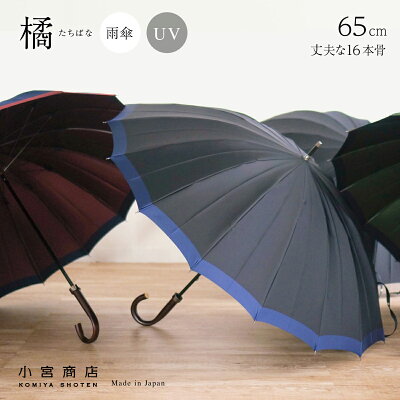
6. Komiya Shoten (小宮商店)
💪 Durability: Kofu weave (甲州織) — high-density fabric with selvage edges that don't fray; Kantō-style hand-stitching 🔧 Repairability: Craftsperson repair while parts are in stock; handle and tassel sold separately 🎯 Use case: Rain/sun, four-season use, long-term daily carry
Komiya Shoten uses Kofu weave (甲州織) for the canopy — a traditional textile from Yamanashi Prefecture woven on shuttle looms. The weave creates “ears” (selvage edges) that eliminate fraying at the cut edges, making it denser and more durable than standard umbrella fabric. Construction uses the Kantō hand-stitching method.
Their official site states: “We accept repair and maintenance by specialist craftspeople as long as parts remain in stock.” The components covered include all major structural parts: spoke tips, joint pins, springs, crown, shaft, ribs, stretchers, and ferrule. Handle and tassel are available for separate purchase, so you can replace individual elements as they wear while keeping the rest of the umbrella.
The Kasane series uses rain-and-sun construction with traditional Japanese color layering.
Editor’s note: The repair coverage list being published — component by component — on the official page makes it easy to check, before purchasing, exactly what can and can’t be fixed. Most brands leave that vague. Komiya doesn’t.
Trade-off: Repair depends on parts availability, which means support may become limited years after a model is discontinued. No third-party environmental certification for the Kofu weave material is confirmed. The site is Japanese; repair communication will be in Japanese.
 ポチップ
ポチップ
 ポチップ
ポチップ
7. Mont-bell
💪 Durability: Lightweight carbon ribs; designed for outdoor and mountain use 🔧 Repairability: Repair accepted at nationwide Mont-bell stores or by mail; pricing on official support page 🎯 Use case: Hiking, travel, outdoor activities, backpack side-pocket carry
Mont-bell’s trekking umbrella uses lightweight carbon ribs built for sudden wind and downpours on mountain trails. It folds compact enough to fit in a backpack’s side pocket — a practical feature for day hikers and travelers who need weather protection that doesn’t add meaningful weight or bulk.
Repairs are accepted at any Mont-bell store across Japan, or by mail through the customer support center. Frame repair and parts replacement pricing is listed on the official support page. For foreign residents, Mont-bell’s nationwide store network is genuinely convenient — there are over 200 locations across Japan, and staff in tourist-area stores often speak some English.
Editor’s note: The repair infrastructure is the main argument here. When you don’t know where to bring a broken umbrella, the answer is “any Mont-bell store” — which is a low-friction answer. The brand’s outdoor repair culture extends to umbrellas in the same way it extends to jackets and tents.
Trade-off: No recycled or bio-based material information is confirmed on the official site. The umbrella is optimized for outdoor use; some people may find it slightly overbuilt for everyday urban carry. Materials sustainability is unaddressed publicly.
 ポチップ
ポチップ
8. White Rose (ホワイトローズ)
💪 Durability: Patented wind-vent (逆止弁) structure prevents spoke reversal; fiberglass and steel frame 🔧 Repairability: Repair corner on official site; brand states "lifetime use" as a design principle 🎯 Use case: Folding transparent umbrella, poor weather visibility, vehicle storage
White Rose’s signature feature is a patented wind-vent structure built into the canopy. When a strong gust hits, air pressure escapes through a valve-like mechanism in the fabric, preventing the spokes from inverting. The fiberglass and steel frame reinforces this. The transparent material keeps your line of sight clear while walking in heavy rain.
The brand states on their official site: “It is our philosophy to help customers cherish and use their favorite umbrella for life.” They back this with a repair corner and usage guidance page.
Transparent folding umbrellas are a specific category — most clear umbrellas are cheaply made and non-repairable. White Rose offers a different premise: a transparent umbrella built to be repaired and kept.
Editor’s note: The interesting thing about White Rose is the category they’re playing in. A repairable transparent umbrella isn’t something most people know exists. If you’ve been buying cheap vinyl umbrellas for visibility reasons — and throwing them away — this is a different option worth knowing about.
Trade-off: Vinyl (polyethylene) is difficult to recycle, so end-of-life sorting remains a challenge despite the repair infrastructure. No materials sustainability information is confirmed. The site is in Japanese.
 ポチップ
ポチップ
Official website: whiterose.jp
9. Snow Peak
💪 Durability: Ultralight, robust frame construction (outdoor spec) 🔧 Repairability: Repair requests via official app or web account; prepaid shipping or store drop-off
Snow Peak’s Umbrella UL is a compact, lightweight folding umbrella designed for camping and outdoor conditions. The frame balances low weight with the structural rigidity needed for variable weather in the field. Waterproofing and water repellency are included.
What makes Snow Peak distinctive in this list is the repair process: fully digital. You submit a repair request through the official app’s “Repair & Care” menu or through the web account’s “My Page,” attach photos of the damage, and choose how to send it in — prepaid mail, store drop-off, or scheduled pickup. The process is documented step-by-step on the official support page.
For foreign residents who find phone-based or in-person Japanese communication challenging, a fully online repair workflow is meaningfully lower friction.
Editor’s note: “I didn’t repair it because the process was too complicated” is a real reason things get thrown away. A repair workflow that lives in an app you already have reduces that particular friction. Whether or not you use the umbrella for camping, the repair infrastructure works the same way.
Trade-off: Materials sustainability and end-of-life handling are not confirmed on the official site. The design is optimized for outdoor use; it’s a reasonable daily carry but built for more than most commuters need. Price point is on the higher end. App and support communication is in Japanese.
 ポチップ
ポチップ
10. estää (by Moonbat)
💪 Durability: Ultralight carbon ribs 🎯 Use case: Ultracompact (verify current dimensions on official product page); 100% UV blocking; constant bag carry
The Miracle Tech series from estää (manufactured by Moonbat Co., Ltd.) is designed to fold down small enough to stay in a bag full-time — shorter than a 500 ml plastic bottle and light enough to forget it’s there. Check the official product page at estaa.jp for current dimensions and weight, as these vary by model.
100% light blocking and 100% UV cut rate make it functional as a sun umbrella, not just rain protection — relevant context in Japan, where summer UV exposure is a genuine health consideration and many people carry sun umbrellas from May through September.
Editor’s note: Of the 10 brands here, estää covers the fewest criteria — two of six. But the logic for including it is this: an ultracompact umbrella that stays in your bag full-time directly reduces the occasions when you’d otherwise buy a vinyl umbrella from a convenience store. The sustainability argument isn’t about the umbrella itself — it’s about the purchase it prevents.
Trade-off: Repair service, materials sustainability, and end-of-life handling are not confirmed on the official site. If those criteria matter to your decision, look at other options first. This is the brand for people whose main problem is forgetting to bring an umbrella.
 ポチップ
ポチップ
Before You Buy a New One: Getting More Out of What You Have
If you already own an umbrella that’s partly broken, it may be worth checking whether it can be repaired before buying a replacement.
A broken spoke. Single spoke repairs are available at several of the brands listed here — check the official support pages. Independent umbrella repair shops (傘修理) exist in most major Japanese cities and can often repair any brand for a few hundred yen. Some dry-cleaning shops also offer the service.
A worn or broken handle. Maehara Koeishouten and Komiya Shoten both offer handle repairs or part replacements. If you have one of their umbrellas, contact the brand directly.
A torn or worn-out canopy. Caetla’s +TIC series sells replacement canopy fabric on the official store — self-service swap, no shipping required. Maehara’s Kasa Lab accepts full canopy replacements.
One practical note for navigating umbrella repair in Japan: the phrase you want is 傘の修理 (kasa no shūri, “umbrella repair”). Most repair shops have this posted visibly. Showing them the broken part is usually more effective than describing it.
Frequently Asked Questions
What is the most durable umbrella brand in Japan? Based on publicly confirmed information, Maehara Koeishouten and Makita Shoten stand out for durability backed by repair infrastructure. Both brands use traditional Japanese construction methods — steel frame or carbon ribs, hand-stitching — and have operated repair services for decades. Mont-bell’s carbon-rib trekking umbrella is also built to outdoor performance standards with nationwide repair access.
Which Japanese umbrella brands offer repair services in English? Most Japanese umbrella brands operate repairs in Japanese only. Mont-bell and Snow Peak both have some English content on their official sites and are more international-facing brands, though their repair services are conducted in Japanese. Snow Peak’s app-based repair submission process is the most navigable for non-Japanese speakers, as it’s conducted online with image uploads rather than phone or in-person communication.
Are there umbrella brands in Japan that use recycled or sustainable materials? Yes. SiNCA by Wpc. (World Party) uses recycled PET canopy fabric and a bamboo fiber handle, with material specifications confirmed on the official site. Caetla’s +TIC series is fully metal-free, which aids recycling at end of life. Waterfront’s CiRiC/RENU line uses recycled apparel fabric — confirm current availability on their official site before purchasing.
What is a vinyl umbrella (ビニール傘) and why is it considered an environmental problem in Japan? A vinyl umbrella (ビニール傘, biiniru kasa) is a transparent or semi-transparent umbrella made from polyethylene, sold for ¥500–¥800 at convenience stores, supermarkets, and train station kiosks. Japan’s total annual umbrella consumption exceeds 100 million units, and a significant portion of those are vinyl umbrellas — the exact figure varies by source, but the scale is substantial. They’re durable enough for occasional use but tend to break quickly in strong wind. Mixed-material construction — plastic canopy, metal frame, plastic fittings — makes them difficult to recycle in most Japanese municipal systems, so most end up in burnable or non-burnable waste. Umbrella-sharing services like i-kasa are designed specifically to reduce dependence on them.
Is an umbrella-sharing service (like i-kasa) a better choice than buying one? It depends on how often you use an umbrella. If you carry an umbrella most days, owning a well-made, repairable one is likely the lower-impact option over time. If you frequently get caught without an umbrella and would otherwise buy a vinyl one, a sharing service like i-kasa reduces that behavior and is worth using. The services are typically free or low-cost for registered users and are available at many train stations and convenience stores in major cities.
Where can I buy these umbrellas in Japan? Most of the brands listed here sell directly through their official Japanese websites. Physical retail availability varies: Mont-bell and Snow Peak have their own stores in major cities. Traditional craft brands like Maehara Koeishouten and Makita Shoten have physical shops (in Asakusa and Yamanashi respectively). For international shipping or English purchasing support, check each brand’s official site directly, as options vary.
A Final Thought
Spending time with ten Japanese umbrella brands in detail, one thing stands out: the brands with the strongest durability argument are almost always the same ones with the strongest repair argument. They’re not separate features — they’re the same commitment expressed at two different points in an umbrella’s life.
What “sustainable” actually means in this category — new recycled materials, or a 30-year-old craftsperson in Asakusa who can replace your broke spoke for a reasonable price — is a question worth sitting with before you buy.
What kind of umbrella do you actually want to be carrying in ten years?
All information is based on official brand websites as of June 2026. Stock availability, specifications, repair terms, and pricing are subject to change. Please verify on each brand’s official site before purchasing. Prices are in Japanese yen (JPY).