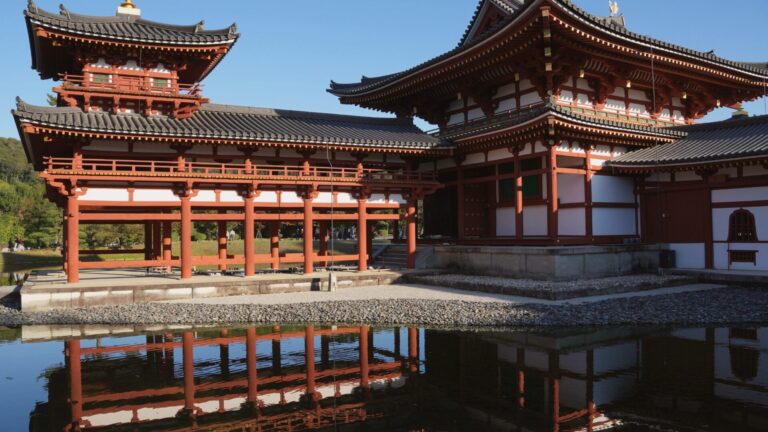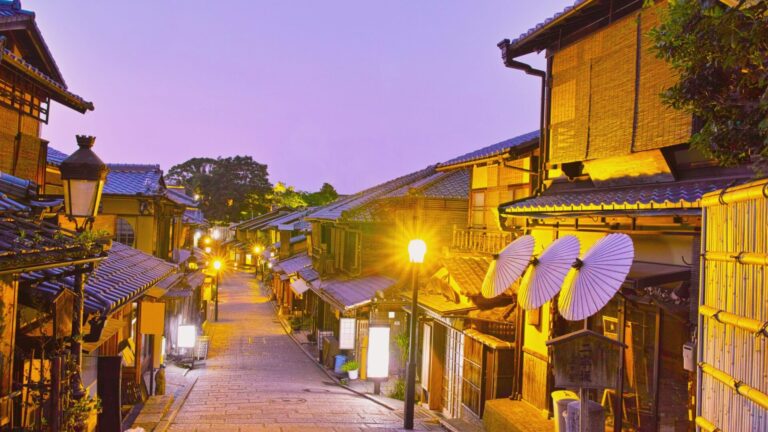

Japan has a way of making you slow down. A moss-covered path through a cedar forest. A ryokan breakfast where every dish comes from the valley below. A village where people have tended the same rice paddies for generations. For travelers who care about where their money goes and what kind of footprint they leave, Japan offers something rare: a culture that has practiced many principles of sustainable living long before the word existed.
But “sustainable travel” is also one of the most overused phrases in tourism marketing. Hotels slap it on websites. Tour operators build campaigns around it. Not all of it means the same thing. This guide cuts through the noise, using internationally recognized frameworks and certifications to help you make genuinely informed choices — about where to go, where to stay, and what to do.
What Does Sustainable Travel Actually Mean?
Before choosing anything, it helps to know what the term is grounded in. The clearest international reference point is the GSTC (Global Sustainable Tourism Council) Destination Criteria, which defines sustainability across four pillars:
Sustainable management. Does the destination have governance structures, long-term strategies, and meaningful local stakeholder involvement?
Socioeconomic benefits. Does tourism revenue stay in the local economy? Are employment opportunities fair? Are local producers and artisans supported?
Cultural sustainability. Are tangible and intangible cultural heritage protected? Does tourism strengthen local identity, or erode it?
Environmental sustainability. Are energy, water, and waste managed responsibly? Is biodiversity protected? Is there a plan for climate adaptation?
The fourth pillar gets the most attention, but the second and third are just as significant — especially in Japan, where over-tourism has already strained neighborhoods like Kyoto’s Gion district and Mount Fuji’s trailheads. UN Tourism (formerly UNWTO) reinforces this: sustainable tourism must account for the needs of visitors, the industry, the environment, and host communities — all at once.
One practical indicator worth looking for is visitor management. Destinations that actively limit or redistribute visitor numbers — through timed entry systems, capacity caps, or off-the-beaten-path routing — are taking sustainability seriously at a structural level.
Are There Reliable Lists of Sustainable Destinations?
Yes, though they come with caveats. Two of the most credible are:
The GDS-Index (Global Destination Sustainability Index) benchmarks cities and regions across four axes: social sustainability, environmental sustainability, supplier sustainability, and destination management. Helsinki has held the top spot for two consecutive years in the 2025 rankings — a reflection of infrastructure: according to the 2024 GDS-Index report, 99% of hotels with 50 or more rooms, all convention centers, and 80% of major attractions in the city hold third-party sustainability certification.
Green Destinations Top 100 has recognized destinations since 2014, evaluating applicants against 30 core criteria and a Good Practice Story submission. Crucially, selection does not mean a destination is fully sustainable — it means documented progress and effort. Several Japanese destinations have appeared in regional sustainability recognition programs, reflecting growing institutional momentum.
Keep in mind: neither list is a government safety advisory. They are industry benchmarks. A high ranking signals a commitment to improvement, not a guarantee of perfection.
How to Choose Where to Stay in Japan
Japan’s accommodation landscape is extraordinarily varied — from international hotel chains to centuries-old ryokan, from machiya townhouse guesthouses to mountain temple lodgings (shukubo). Across all of them, the same principle applies: “eco-friendly” is a label anyone can use. What matters is third-party certification with published criteria and regular audits.
Here are the three most credible international certifications to look for.
Green Key
Operational in over 60 countries, Green Key evaluates water management, energy use, waste, chemical products, and staff environmental training. Its structure separates mandatory requirements (Imperative criteria) from improvement-oriented guidelines — so certified properties must meet a baseline, then continue to raise it. On-site audits are conducted regularly. Specific requirements include shower flow rates capped at 9 liters per minute and dual-flush toilets. Certification is not a one-time achievement; continued compliance is built into the system.
Related article: Green Key Certified Hotels: A Traveler’s Guide to Sustainable Stays in Japan
EarthCheck
A science-based benchmarking and certification program that covers ten performance areas: greenhouse gas emissions, energy, freshwater, ecosystems, social and cultural management, land use, air quality, wastewater, solid waste, and hazardous substances. EarthCheck conducts annual audits and quantitative tracking — it is not a checkbox exercise, but a performance measurement system. It is recognized (GSTC-approved) by the Global Sustainable Tourism Council.
B Corp
B Corp certification evaluates the entire business, not just the facility. Awarded by B Lab, it assesses governance, workers, community, environment, and customers — requiring a minimum score of 80 out of 200. Certified companies are legally accountable to all stakeholders, not just shareholders. Standards are tightening: since 2025, B Corp has introduced stricter topic-specific requirements, including science-based emissions targets for larger organizations.
How to Verify a Certification Claim
A property saying “we are certified” tells you nothing on its own. You can verify directly:
- Search the GSTC-approved directory for certified accommodations globally
- Search properties on the Green Key and EarthCheck official websites
- Google Travel displays an “eco-certified” label for accommodations that meet the Travalyst coalition’s criteria for rigorous third-party certification, including on-site audits covering energy, water, and waste
In Japan, the Japan Tourism Agency has been expanding its own sustainability-oriented evaluation frameworks for accommodations, including ryokan, with GSTC-aligned standards currently in a pilot phase as of 2025. Full certification equivalency has not yet been established, but the direction is clear. Asking a ryokan directly whether they participate in any certified sustainability program — and which one — is a reasonable and increasingly expected question.
What to Do: Activities and Experiences That Hold Up
Japan offers some of the world’s most naturally aligned opportunities for low-impact travel — if you know how to find the real ones.
Shinrin-yoku (forest bathing) is a legitimate practice with documented physiological benefits, rooted in Japan’s relationship with its forested landscapes. Programs certified through official Japanese Forest Therapy Society guides operate with defined protocols and contribute directly to forest conservation through fees. This is ecotourism in the most principled sense: educational, conservation-funded, and community-supporting.
Satoyama experiences — the working landscapes between mountains and agricultural flatlands — represent Japan’s version of what international frameworks call community-based tourism. Visiting a satoyama region through a local-run program, learning traditional farming or craft practices, eating food that comes from the land you’re standing on — the economic benefit stays local, the cultural knowledge is transmitted, and the visit leaves something rather than taking it.
The International Ecotourism Society (TIES) defines ecotourism through principles that map closely onto Japan’s best rural travel experiences: minimizing physical and psychological impact, generating direct conservation funding, providing economic benefits to local communities and industry, and offering interpretive experiences that build genuine understanding. When choosing a tour operator in Japan, these are useful questions to ask: Who are the guides? Where does the fee go? What relationship does this business have with the local community?
Regenerative tourism — a concept gaining traction in international sustainability discourse — goes one step further: the goal is to leave a place better than you found it. In Japan, this might look like participating in a community reforestation project, joining a local beach or mountain cleanup organized by a certified operator, or choosing a farm stay where your presence actively supports a working agricultural heritage site rather than merely consuming its aesthetics.
For wildlife-related activities, WWF guidelines recommend a maximum of three boats observing marine wildlife at any one time, with strict protocols around distance, noise, and speed. IUCN guidelines for protected area tourism recommend visitor capacity limits and zoning — the Japanese national park system (administered by the Ministry of the Environment) applies similar management approaches, though implementation varies by site.
Spotting Greenwashing
A 2021 European Commission survey found that 42% of green marketing claims examined required correction or further investigation. The travel industry is not immune. Japan’s tourism boom has brought a surge of “sustainable” and “eco” branding — much of it meaningful, some of it not.
Three patterns are worth watching for:
Vague language without criteria. Words like “eco-friendly,” “nature-connected,” or “responsible” mean nothing without a definition or a certifying body behind them. If a hotel website is full of these words but contains no certification name, that is worth noting.
Self-made badges. A green logo or leaf icon designed in-house carries no independent weight. Look for the name of the certifying organization — Green Key, EarthCheck, B Corp — not a proprietary symbol.
Aspirational language presented as current fact. “Protecting the future” is a goal, not an achievement. A major airline was banned from using the slogan “Fly. Fight. Protect.” by the UK Advertising Standards Authority for presenting future ambitions as present reality. The same pattern appears in hotel and tour marketing.
Four questions worth asking before booking:
- What certification does this property or operator hold, and who issued it?
- What percentage of energy comes from renewable sources?
- What proportion of staff are local hires, including at management level?
- Is audited sustainability data publicly available?
The EU’s Green Claims Directive, adopted in 2024, is moving toward a 2026 implementation in member states — making unsubstantiated environmental claims potentially illegal. This is a European regulatory development, but its market effects are global: international hotel chains and tour operators are increasingly aligning their practices to meet the highest-bar markets they operate in.
The Question Underneath the Question
Japan has a concept worth holding onto here: mottainai — a sense of regret at waste, a recognition that things have value beyond their immediate use. It shapes how many Japanese communities have historically related to resources, land, and craft. In some ways, it describes what sustainable travel is trying to recover.
The certifications and frameworks in this guide are tools. They help distinguish signal from noise when a booking page is telling you what you want to hear. But they are not a substitute for curiosity — asking the person behind the ryokan counter where the food comes from, finding out whether the forest trail fee actually funds trail maintenance, choosing the local bus over the chartered van.
What kind of traveler do you want to be in Japan? That question doesn’t have a single right answer. But it’s worth sitting with.
Sources: GSTC Destination Criteria v2.0 / UN Tourism Sustainable Tourism / GDS-Index 2025 / Green Destinations Top 100 / Green Key Global / EarthCheck / B Lab / TIES Ecotourism Principles / WWF Wildlife Travel / IUCN Protected Area Management Guidelines / EU Green Claims Directive