
The phrase “sustainable travel” has become increasingly common in travel media and booking platforms. In Kyoto, local government and businesses have been working to balance tourism with the preservation of the city’s historical culture and natural environment. Part of that effort includes hotels that publicly communicate their environmental and community practices.
That said, searching for “sustainable hotels in Kyoto” returns a wide range of results. Even within the hotels reviewed for this article, what qualifies as “sustainable” varies considerably — from third-party certifications to self-reported internal initiatives. It can be difficult to know where to start.
This guide is not a ranking. It organizes publicly available information from each hotel’s official website so that you can make your own informed judgment. Whether any of these hotels suits your travel values is something only you can decide — and choosing none of them is a perfectly reasonable outcome.
How We Selected These Hotels
The hotels in this article were identified based on the following criteria. These are not measures of quality or ranking — they reflect what could be verified through official public information as of February 2026.
Third-party certification — Whether the hotel holds a recognized hospitality certification, such as Sakura Quality An ESG Practice (based on a GSTC-approved standard) or the Eco Mark for Hotels and Ryokan (administered by the Japan Environment Association), and has disclosed this publicly.
Transparency of disclosure — When a hotel uses terms like “sustainable” or “eco-friendly,” whether it supports those claims with specific certification names, evaluation criteria, or measurable targets.
Amenity and resource management — Whether the hotel has publicly stated policies on reducing single-use plastics, eliminating disposable amenities, or improving waste and water management.
Community and local sourcing — Whether the hotel has documented relationships with local producers, artisans, or community organizations, and whether this is part of publicly stated operations.
All information was drawn from official hotel websites and press releases available at the time of writing. Hotels not included in this article are not necessarily without sustainability practices — they simply fell outside the scope of what could be confirmed through public sources.
Related article: Green Key Certified Hotels: A Traveler’s Guide to Sustainable Stays in Japan
The Hotels
1. GOOD NATURE HOTEL KYOTO
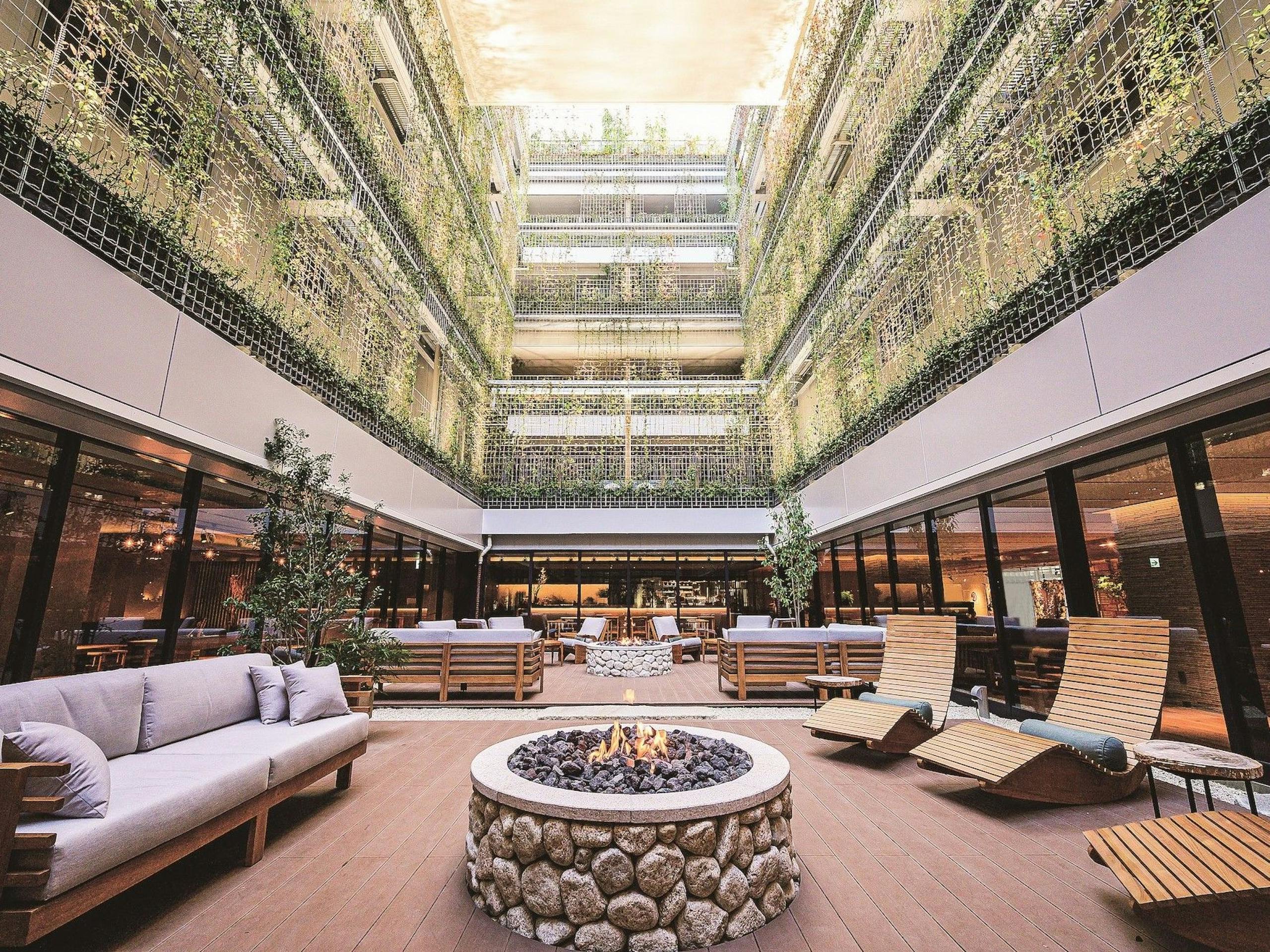

Location: Shijo-Kawaramachi area, Shimogyo Ward, Kyoto
About the Hotel
Located in central Kyoto, this hotel operates within a larger complex called GOOD NATURE STATION, which is organized around a natural and organic lifestyle concept. The hotel’s guest experience is designed to connect with the broader themes of that complex.
Sustainability Practices (Based on Official Information)
The hotel’s official website includes a dedicated Sustainability page outlining several specific measures. Guest rooms do not stock toothbrushes, hairbrushes, or razors; guests are encouraged to bring their own, and bamboo toothbrushes and wooden hairbrushes are available at the front desk upon request. Water dispensers are installed on each guest floor, and all rooms are equipped with an original tumbler to eliminate the need for plastic bottles. Additional plastic reduction measures include butterfly cups, reusable cutlery, bio-based plastic chopsticks, and stirrers made from reclaimed wood.
On the certification side, the hotel reports holding the highest rating — five stars (5 Gyoko Shima Sakura) — under the Sakura Quality An ESG Practice hospitality certification. The hotel’s own announcement describes this as a world first for this certification. The hotel also holds a LEED Gold certification under the v4 Interior Design + Construction (ID+C) category — a distinction the U.S. Green Building Council (USGBC) has confirmed as the first of its kind for hotel use within that specific category and version.
It is worth noting that Sakura Quality An ESG Practice is based on a GSTC-approved standard, but operates as a separate scheme from direct GSTC hotel certification. The “world first” claims for both LEED and Sakura Quality apply to specific certification categories and should be understood in that context. For full details on audit content and evaluation results, consult the certifying bodies directly.


Who This Hotel May Suit
Travelers who prioritize plastic reduction and the elimination of single-use disposables; those who use certification status as a deciding factor; those who want a natural/organic environment in a central Kyoto location.
Limitations to Be Aware Of
The “world first” framing for both LEED and Sakura Quality applies to specific categories and conditions. Verification of audit results and full evaluation criteria requires consulting official certification body documentation.
Book here
Ikkyu
 JTB
Expedia
Yahoo!Travel
Rakuten Travel
Rurubu Travel
Jalan
JTB
Expedia
Yahoo!Travel
Rakuten Travel
Rurubu Travel
Jalan
2. CROSS HOTEL KYOTO


Location: Kawaramachi-Sanjo area, Nakagyo Ward, Kyoto
About the Hotel
Situated near the commercial district of Kawaramachi-Sanjo, this hotel is part of the ORIX Hotels & Resorts chain.
Sustainability Practices (Based on Official Information)
The hotel’s official website states that it holds a rating of “4 Goryoko Sakura” — the second-highest level in a five-tier system — under the Sakura Quality An ESG Practice certification. The website also describes this as the first hotel in Kyoto Prefecture to receive this particular rating. This claim comes from the hotel’s own website; this article has not independently verified it against the certifying body’s public registry.


Who This Hotel May Suit
Travelers who use third-party certification as a reference point; those prioritizing access to the Kawaramachi-Sanjo area; those looking for a chain hotel with documented certification.
Limitations to Be Aware Of
The sustainability information confirmed through this research is limited to the certification itself. Specifics on energy, water, waste management, or community engagement were not publicly available within the scope of this review. Detailed audit content for the Sakura Quality certification was not accessible via the hotel’s website.
Book here
Ikkyu JTB
Expedia
Yahoo!Travel
Rakuten Travel
Rurubu Travel
Jalan
JTB
Expedia
Yahoo!Travel
Rakuten Travel
Rurubu Travel
Jalan
3. THE THOUSAND KYOTO


Location: Shimogyo Ward, Kyoto (near Kyoto Station)
About the Hotel
Located close to Kyoto Station, this hotel is operated by Keihan Hotels & Resorts.
Sustainability Practices (Based on Official Information)
The hotel’s official website notes that it holds a “4 Gyoko Shima Sakura” rating under Sakura Quality An ESG Practice. In response to Japan’s Act for Promotion of Resource Circulation for Plastics, the hotel has removed single-use plastic amenities (including toothbrushes, razors, and hairbrushes) from guest rooms. These items are now available at an in-room amenity bar, and guests are encouraged to bring their own. The hotel also states that energy and water efficiency data and related activities are published in a group-wide Sustainability Report under the Keihan Group’s sustainability framework.

Who This Hotel May Suit
Travelers who prioritize proximity to Kyoto Station; those who want to reference a group-level sustainability report when choosing accommodation; those looking for clear disposable amenity reduction policies.
Limitations to Be Aware Of
The Sustainability Report’s specific figures and audit status were not reviewed as primary sources for this article. Direct access to the report is needed for detailed verification. Full audit details for the Sakura Quality certification were not available on the hotel’s website.
Book here
Ikkyu JTB
Expedia
Yahoo!Travel
Rakuten Travel
Rurubu Travel
Jalan
JTB
Expedia
Yahoo!Travel
Rakuten Travel
Rurubu Travel
Jalan
4. HOTEL GRANVIA KYOTO
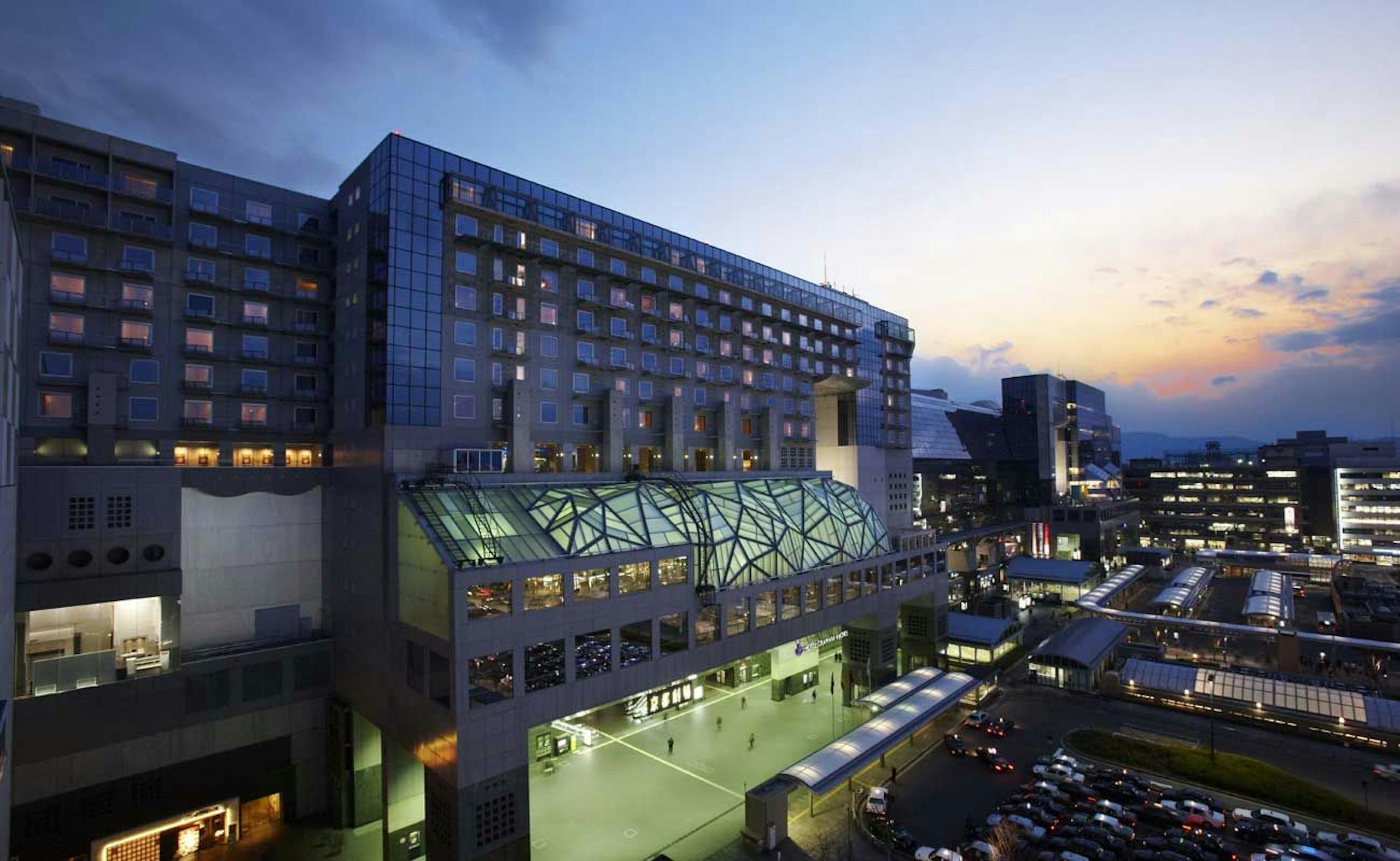
Location: Shimogyo Ward, Kyoto (directly connected to Kyoto Station)
About the Hotel
This large hotel is directly connected to JR Kyoto Station and is operated by JR West Hotels.
Sustainability Practices (Based on Official Information)
The hotel’s official website reports holding a “4 Gyoko Shima Sakura” rating under Sakura Quality An ESG Practice. Single-use disposable amenities have been removed from guest rooms; guests instead select only what they need from an amenity bar located near the front desk.

Who This Hotel May Suit
Travelers who want to combine the convenience of Kyoto Station access with a hotel that holds a recognized sustainability certification; those looking for a large hotel with documented certification.
Limitations to Be Aware Of
Within the scope of this review, confirmed sustainability information is limited to the certification and amenity policy. Details on energy use, waste management, or community engagement were not publicly available. Information disclosure is limited in scope.
Book here
Ikkyu JTB
Expedia
Yahoo!Travel
Rakuten Travel
Rurubu Travel
Jalan
JTB
Expedia
Yahoo!Travel
Rakuten Travel
Rurubu Travel
Jalan
5. SUPER HOTEL KYOTO – SHIJO KAWARAMACHI

Location: Nakagyo Ward, Kyoto
About the Hotel
Super Hotel is a business hotel chain operating multiple locations within Kyoto and across Japan. The chain’s environmental policy is outlined on its official website.
Sustainability Practices (Based on Official Information)
According to the “Eco Initiatives” section of the official website, all Super Hotel locations in Japan hold the Eco Mark certification for Hotels and Ryokan (Version 2.3), issued by the Japan Environment Association. This is a third-party certification requiring facilities to meet defined mandatory and optional criteria across categories including energy use, water consumption, waste management, and environmental communication.
Amenity-related initiatives include a program that rewards guests who return unused toothbrushes with a small complimentary item, and an amenity bar system where guests select only the items they need.

Who This Hotel May Suit
Travelers who use publicly recognized third-party eco-certifications as a decision factor; those seeking business hotel practicality alongside environmental certification; those who want flexibility across multiple Kyoto locations.
Limitations to Be Aware Of
The claim of chain-wide certification is drawn from the hotel’s official website. The current certification status of all locations — including any recently opened properties — should be verified directly with the Japan Environment Association’s Eco Mark registry. As a chain, individual locations may vary in facilities and implementation. Detailed per-location certification scores were not reviewed in this article.
Book here
JTB
Expedia
Yahoo!Travel
Rakuten Travel
Rurubu Travel
Jalan
6. SIX SENSES KYOTO
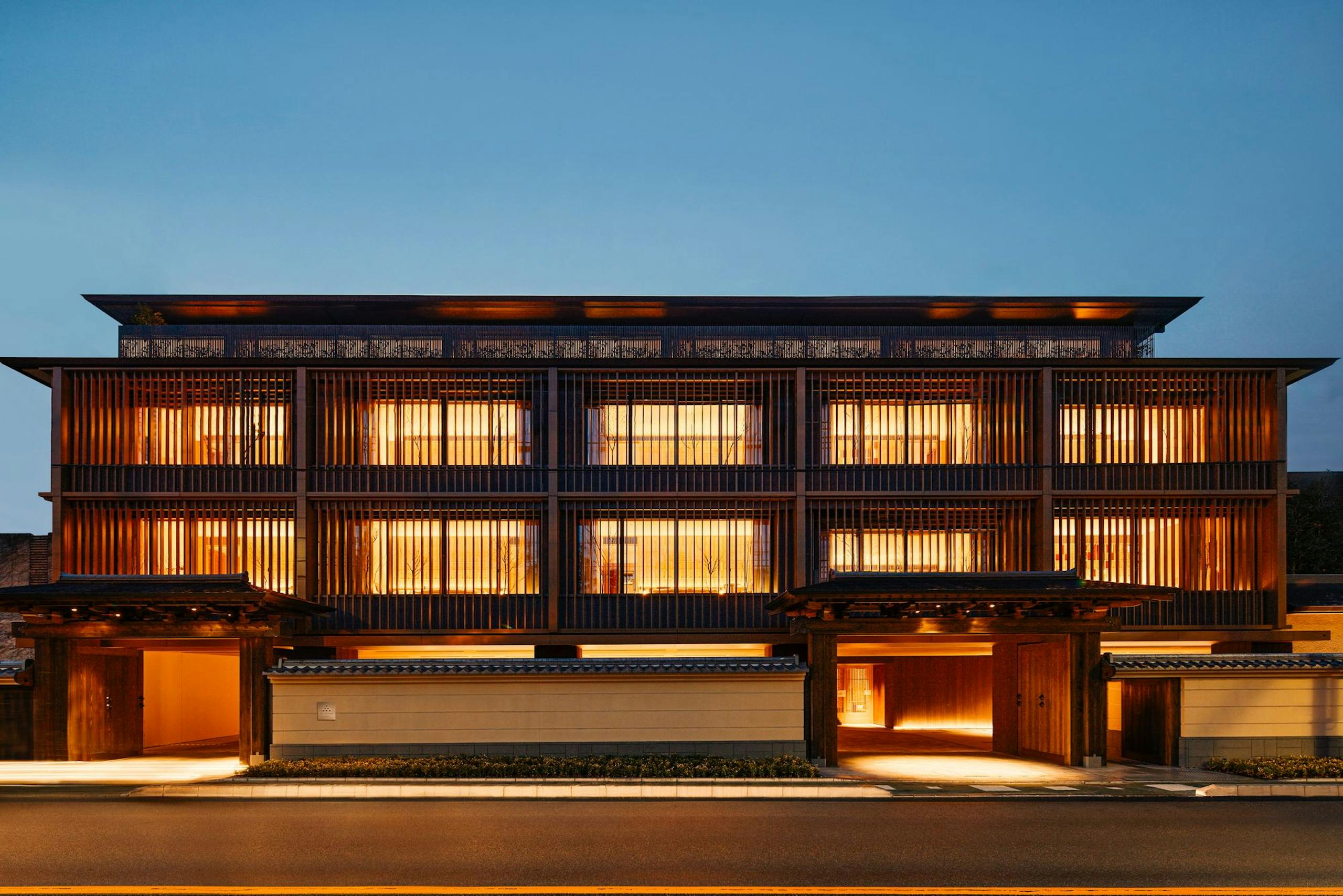

Location: Higashiyama Ward, Kyoto
About the Hotel
Located in the Higashiyama district, this property is part of the internationally operating Six Senses brand, which operates under the IHG Hotels & Resorts group.
Sustainability Practices (Based on Official Information)
The hotel’s official Sustainability page states that Six Senses as a brand operates under its own strict internal guidelines aligned with the four domains of the GSTC Industry Criteria: sustainability management, community economic benefits, cultural heritage preservation, and environmental impact reduction. The Kyoto property follows these brand-level policies.
On plastic reduction, the hotel describes providing in-house bottled water as part of its effort to minimize single-use plastic consumption. The official website also explains that a portion of revenue from stays and other services is directed to a “Sustainability Fund” that supports local environmental protection and community initiatives.
At the time of this writing, no third-party certification specific to the Kyoto property has been publicly disclosed on the hotel’s website. The brand’s alignment with GSTC criteria represents an internal standard, not a formal GSTC certification of the individual property.

Who This Hotel May Suit
Travelers who want accommodation with documented reference to GSTC criteria; those who value a built-in community contribution mechanism such as a sustainability fund; those prioritizing access to the Higashiyama area.
Limitations to Be Aware Of
The brand’s internal guidelines and GSTC criteria alignment is stated, but individual property certification has not been confirmed through this research. Details on the Sustainability Fund — including specific amounts and recipient organizations — were not available through publicly accessible sources reviewed here.
Book here
Ikkyu JTB
Expedia
Yahoo!Travel
Rakuten Travel
Rurubu Travel
JTB
Expedia
Yahoo!Travel
Rakuten Travel
Rurubu Travel
7. Umekoji Potel KYOTO

Location: Shimogyo Ward, Kyoto (Umekoji area)
About the Hotel
This hotel is located in the Umekoji neighborhood, near Umekoji Park and the Kyoto Aquarium. Its official website highlights a shared community space called awai as a central feature of the property, positioning the hotel as a place with meaningful ties to local culture and community.
Sustainability Practices (Based on Official Information)
The hotel’s official website describes a range of community-oriented practices: a themed program connecting guests to Kyoto’s traditional public bathhouse culture, collaborations with local craftspeople, the operation of the awai communal space, and the use of ingredients sourced from local producers. Guest rooms do not include pre-stocked disposable amenities; guests select what they need independently.
Specific supplier names, sourcing percentages, and other detailed metrics were not available within the scope of this review.


Who This Hotel May Suit
Travelers who prioritize a hotel experience rooted in local culture, craftsmanship, and community; those more interested in tangible community connections than certification status; those planning a stay in the Umekoji area.
Limitations to Be Aware Of
Community and sourcing information is described on the official website, but detailed breakdowns were not verified through primary sources in this review. No third-party sustainability certification was identified for this property within the scope of this research.
Book here
Ikkyu JTB
Expedia
Yahoo!Travel
Rakuten Travel
Rurubu Travel
Jalan
JTB
Expedia
Yahoo!Travel
Rakuten Travel
Rurubu Travel
Jalan
A Few Things Worth Knowing Before You Decide
Certification names and certification content are not the same thing.
This article has organized the certification names that each hotel references on its official website. However, holding a certification and publicly disclosing the full details of that certification’s audit criteria, evaluation scope, and results are two different things. If a specific hotel interests you, it is worth consulting the certifying body’s own website — such as the GSTC or the Japan Environment Association’s Eco Mark office — to review their registry and published standards directly.
“Aligned with” and “certified by” mean different things.
When a hotel says it operates in accordance with a particular standard, that is meaningfully different from stating it has received third-party certification under that standard. Certification involves an external audit process. Internal brand guidelines, even when modeled on recognized frameworks, are a separate concept. This article has tried to distinguish between the two throughout, but it is worth keeping that distinction in mind as you read further.
What this article could not cover in depth.
Quantitative data on energy consumption, water use, and waste output; labor and supply chain transparency; and specific sourcing percentages were largely not available at the level of individual hotel public disclosures reviewed here. This article reflects the state of information disclosure — not an evaluation of actual sustainability performance.
Closing Thoughts: What Matters to You?
All seven hotels featured here have published some form of sustainability-related information on their official websites. But what they disclose — and how specifically — differs considerably across categories: whether they hold certifications, how they handle disposable amenities, what numerical data they share, and how concretely they describe community relationships.
This article does not answer the question of which hotel is “most sustainable.” That framing may not even be the most useful one.
What you value in a hotel stay — certification status, transparent data, local community engagement, or simply a convenient location — is something you are better positioned to weigh than any guide. The priorities will differ from one traveler to the next. Choosing none of these hotels, or deciding you need more information before choosing, is a rational outcome too.
If this article has given you a clearer sense of what to look for and what questions to ask, it has done its job.