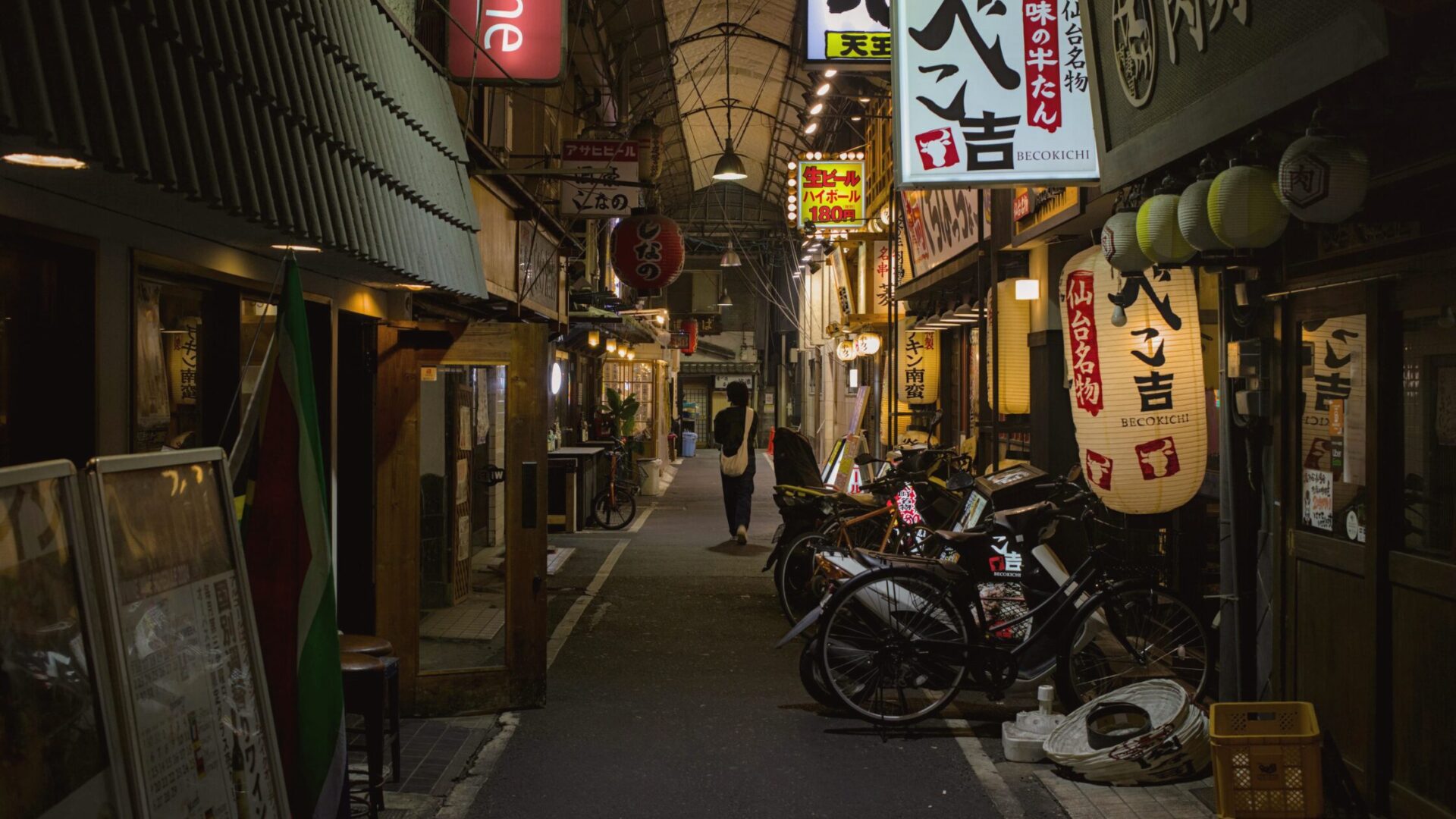

Most hotels in Osaka do what hotels are supposed to do: give you a place to sleep, a shower, and a location pin for your itinerary. But a small number of properties in the city are doing something a little different — keeping money in the neighborhood, preserving buildings that would otherwise be demolished, or using hospitality as a tool for community connection.
This article is for travelers who are curious about that difference. It’s not a ranking, and it’s not a paid roundup. Every claim here is based on information we could verify directly through each property’s official website or official press materials. Where we couldn’t confirm something, we say so.
You might book one of these places. You might not. Either way, we hope this helps you figure out what kind of stay actually matters to you.
What “Community-Rooted” Means in This Article
The word “sustainable” gets applied to almost everything in travel right now — sometimes meaningfully, sometimes not. For this guide, we evaluated properties against six specific criteria, all drawn from publicly available official sources:
- Local ownership and management — Is the property run by people with roots in the community? Do local residents have a say in how it operates?
- Local employment and development — Does the property hire locally? Are there pathways for local staff to grow into leadership roles?
- Local sourcing and supplier relationships — Do they buy food, goods, and services from businesses in the area?
- Engagement with community challenges — Are they tackling real local issues: vacant properties, aging neighborhoods, cultural preservation?
- Cultural and architectural heritage — Are they using and protecting historic buildings? Do they support the identity of the place they’re in?
- Environmental practices — Energy reduction, waste management, sustainable materials — and are they transparent about it?
We limited our search to small properties (roughly 50 rooms or fewer) in Osaka Prefecture. Information is current as of April 2026.
Related article: 6 Sustainable Hotels in Osaka, Japan | Certifications, Local Sourcing & What’s Actually Verified
The 7 Properties
1. SEKAI HOTEL Fuse — East Osaka


Location: Higashiosaka City, Fuse area · Kintetsu Fuse Station, walkable
What it is: A “machigoto hotel” — a Japanese concept that roughly translates to “the whole town is the hotel.” SEKAI HOTEL Fuse doesn’t look like a hotel from the outside because it isn’t one building. The front desk and guest rooms are scattered across vacant storefronts in the Fuse shopping arcade (shotengai), a covered pedestrian shopping street that has been a part of this working-class neighborhood in East Osaka for decades.
What makes it worth noting: The meal plan offered on the official website sends guests out to eat at a selection of local restaurants hand-picked by the manager — teppanyaki counters, izakayas, wagashi sweet shops — rather than feeding them in a hotel restaurant. That means the money guests spend on meals goes directly to small neighborhood businesses rather than staying inside the hotel’s own revenue stream. It’s a structural choice, not just a marketing angle.
On the building side, the storefronts were renovated without tearing down the existing facades. Old signage and architectural traces were kept intact, which means the arcade still looks like itself.
Room count is not specified on the official website — check directly before booking.

Who this works well for: Travelers who want to move through a neighborhood rather than stay adjacent to it. People who are tired of hotel restaurants and want to actually eat where locals eat. Anyone curious about what a mid-size Japanese shopping arcade feels like when you’re sleeping inside it.
What to know before you book: Your room is not in a central building. There’s no lobby to retreat to. This is a genuinely different experience from a standard hotel stay — more immersive, but also less contained. Environmental metrics (energy use, waste figures) are not published on the official site.
Book here
JTB
Yahoo!Travel
Rakuten Travel
Jalan
2. Waqoo Shitaderamachi (和空 下寺町) — Tennoji Area, Central Osaka


Location: Tennoji Ward · Shitennoji-mae Yuhigaoka Station (Osaka Metro Tanimachi Line), about 6-minute walk
What it is: A modern shukubo — a temple lodging. The Shitaderamachi neighborhood in Osaka’s Tennoji Ward has more than 100 temples packed into a few city blocks, which makes it unlike almost anywhere else in an otherwise dense urban environment. Waqoo operates within this area as a contemporary interpretation of the traditional Japanese practice of staying at a temple while traveling.
A note on the term shukubo: Temple lodging (shukubo, 宿坊) has existed in Japan for centuries. Pilgrims and travelers would sleep at Buddhist or Shinto institutions, sometimes taking part in religious practice as part of their stay. Waqoo brings this format into a hotel context, with monks from neighboring temples leading meditation (zazen), sutra-copying (shakyo), and dharma talks (howa) as bookable experiences.
What makes it worth noting: The temple experience here is led by actual monks from the surrounding temples — not a hospitality approximation of it. That direct connection to the living religious community in the neighborhood is the most substantive part of the community-contribution case for this property. The building design also fits the visual character of the Shitaderamachi streetscape rather than standing apart from it. Guest room count is 26, confirmed through official sources.


Who this works well for: Travelers who want a slower, quieter counterpoint to the energy of central Osaka. People interested in Japanese Buddhist practice who want direct access to it, not a simulated version.
What to know before you book: Details on food sourcing are not confirmed on the official website. The property’s corporate background is available on their official company page if that matters to your decision. Waqoo Shitaderamachi is not a temple itself — it is a hospitality property that partners with temples in the area.
Book here
Ikkyu JTB
Expedia
Yahoo!Travel
Rakuten Travel
Rurubu Travel
Jalan
JTB
Expedia
Yahoo!Travel
Rakuten Travel
Rurubu Travel
Jalan
3. HOTEL MORNING BOX Osaka Shinsaibashi — Shinsaibashi, Central Osaka

Location: Chuo Ward, Higashi-Shinsaibashi · Shinsaibashi Station (Osaka Metro), walkable
What it is: A boutique hotel in the Shinsaibashi shopping district with the stated concept of being “kind to the earth and to people.” The property is slightly above this guide’s 50-room threshold (55 rooms total), but we’ve included it because of the specificity of its sustainability approach.
What makes it worth noting: The “Earth Friendly Room” room type is the defining feature here. According to the official website, these rooms are designed to minimize plastic use while prioritizing natural, organic, and recycled materials throughout. The property also uses furniture crafted by Osaka-based artisans, which is confirmed on the official site. This is one of the more material-specific sustainability commitments we found in Osaka — it’s built into the physical design of the space rather than just the hotel’s communications.

Who this works well for: Travelers for whom the physical environment of their room — what it’s made of, how it was designed — is part of how they think about responsible travel. People staying in Shinsaibashi who want something other than a chain hotel.
What to know before you book: Detailed information on food sourcing and energy/water consumption is not published on the official website. The total room count of 55 exceeds our general selection criterion; the Earth Friendly Rooms are a subset of the total. Check the official site for the specific room count and availability.
Book here
Yahoo!Travel
Rakuten Travel
Rurubu Travel
Jalan
4. Hotel Noum OSAKA — Tenma, Kita Ward

Location: Kita Ward, Tenma · Tenmabashi Station (Osaka Metro), walkable · Along the Okawa River
What it is: A riverfront hotel in the Tenma neighborhood, north of central Osaka, with a concept centered on connecting guests to something more elemental — nou (野), meaning “the wild” or “the natural.” The property sits along the Okawa River, one of Osaka’s main waterways, and the design tries to bring that natural context inside.
What makes it worth noting: Some room types at this property are designed with fewer in-room amenities than a standard hotel — shared refrigerator units are available rather than individual in-room fridges in certain configurations. Whether that matters to you depends on how you travel, but it does reflect a deliberate reduction in per-room resource consumption. Plastic amenities have also been reduced, per the official site. The ground-floor café and lounge is designed to be accessible to neighborhood residents, not just hotel guests — which gives the property a modest connection to the surrounding Tenma community. A partnership with a local coffee roaster is mentioned on the official site, though the specific roaster is not named.

Who this works well for: Travelers who want a quieter, residential-feeling neighborhood in Osaka rather than the city center. People who appreciate the Okawa River area — cherry blossoms in spring, evening walks along the water.
What to know before you book: Room amenities vary by room type. Check whether your preferred room type has an in-room refrigerator and TV before booking. Environmental performance data is not published. Room count is unconfirmed on the official website — check directly.
Book here
Expedia
Yahoo!Travel
Rakuten Travel
Jalan
5. Guesthouse Cocoroom (ゲストハウス ココルーム) — Kamagasaki, Nishinari Ward
Location: Nishinari Ward, Kamagasaki area · Dobutsuen-mae Station (Osaka Metro), walkable
What it is: A guesthouse run by Cocoroom, a nonprofit organization (tokutei hieiri katsudo hojin) formally named “The Room for Voices, Words, and Hearts.” It is located in Kamagasaki — a neighborhood in Nishinari Ward with a distinct history as a day-laborer district (yoseba) and one of Japan’s most concentrated pockets of urban poverty. Cocoroom has been active in the community since 2003 and opened this guesthouse in 2016.
A note on Kamagasaki for international visitors: Kamagasaki is not a neighborhood that appears on most tourist itineraries, and that’s partly the point. It has historically been home to a large population of day laborers, many elderly men living in small rooming houses (doya). The area carries social stigma in Japan but also has a genuine culture of mutual aid, community radio, and artistic expression that has developed in response to those conditions. Cocoroom works at that intersection.
What makes it worth noting: The “Kamagasaki University of the Arts” (Kamagasaki Geijutsu Daigaku) — which Cocoroom founded and runs — uses artistic expression as a medium for social inclusion. Guests at the guesthouse are essentially staying inside a community hub where local residents and visitors encounter each other through workshops, performances, and conversation. This is the most unusual property in this guide, and the most direct example of a lodging facility that is structurally embedded in community work.
Who this works well for: Travelers who are interested in urban social dynamics in Japan and want to engage with a neighborhood rather than observe it. People with backgrounds in community arts, social work, or urban studies. Those who are comfortable with less predictability in what their stay will look like.
What to know before you book: Room count is not listed on the official website. This property does not offer the level of standardized comfort or amenity transparency that most hotels provide. Contact the guesthouse directly before booking to confirm availability and current conditions. Environmental metrics are not published.
Book here
Expedia
Yahoo!Travel
6. Osaka Guesthouse U-En (大阪ゲストハウス由苑) — Fukushima
Location: Fukushima Ward · JR Fukushima Station, walkable
What it is: A guesthouse in a renovated former ryotei — a traditional high-end Japanese restaurant — in Fukushima, a neighborhood just west of Umeda with a quieter, residential feel compared to the city center. According to the official website, the building dates to Meiji Year 43 (1910), making it over 110 years old. It has 8 guest rooms.
A note on ryotei buildings: A ryotei (料亭) is a formal traditional Japanese restaurant — the kind used historically for private business dinners and political meetings, distinguished by individual rooms, seasonal kaiseki cuisine, and a highly refined aesthetic. Ryotei buildings were typically constructed in traditional Japanese timber-frame (mokuzukuri) style with carefully maintained gardens. Most have not survived Osaka’s cycles of redevelopment. The fact that this one is still standing and functional is itself significant.
What makes it worth noting: The choice to keep a 110-year-old timber building in active use rather than demolish it has two practical effects: it avoids generating construction waste, and it keeps a piece of Osaka’s architectural memory intact. This isn’t framed as a grand sustainability gesture on the official site — it’s simply what they chose to do. That matters.
Who this works well for: Travelers who want to stay somewhere genuinely old rather than somewhere designed to look old. People who prefer the Fukushima or Nakatsu area over the more tourist-dense parts of central Osaka. Anyone looking for a small, calm property with real character.
What to know before you book: Details on local sourcing, staffing practices, and environmental metrics are not published on the official website. This is a property with a relatively small public-facing information footprint — confirm details directly before booking.
Book here
Expedia
Rakuten Travel
Jalan
7. Tsunagu Kominka (つなぐ古民家) — Kaizuka, Senshu Area
Location: Kaizuka City, Senshu region · South of central Osaka (allow approximately 45–60 minutes from Namba by train)
What it is: A whole-house rental (ikkaashi) in the Teranishi (formerly Yoshimura) family residence — a kominka (古民家), meaning an old Japanese traditional house — in Kaizuka City in the Senshu coastal region south of Osaka. The property accommodates up to 6 guests in Japanese-style rooms (washitsu) and has been adapted for overnight stays while retaining its historic structure.
A note on kominka stays: Kominka (古民家, lit. “old folk dwelling”) refers to traditional Japanese residential architecture, typically characterized by thick earthen walls, heavy timber framing, fusuma sliding doors, and tatami flooring. Many thousands of these buildings across Japan are vacant or at risk of demolition as rural and suburban populations age and decline. Converting them to rental accommodations is one of the more effective ways to keep them maintained and inhabited.
What makes it worth noting: The Teranishi family residence is understood to date from the Edo period (17th–19th century), confirmed via the official website under its historic name. The property’s stated philosophy — “connecting the region, and connecting people to each other” (chiiki wo tsunagi, hito to hito wo naka yoku tsunagu) — frames heritage preservation as a form of community practice. Staying here is a more direct engagement with rural Osaka than most itineraries allow.
Who this works well for: Groups or families who want to use an entire traditional house rather than a hotel room. Travelers interested in the Senshu coastal region, the historic danjiri festival culture of the area, or Japanese domestic architecture. People who want a slower pace outside the city.
What to know before you book: Kaizuka is not walkable from central Osaka — plan for transit time. Environmental practice details and local sourcing information are not publicly available. Confirm exact address, access, and pricing directly through the official website.
Official website (Japanese)
A Note on What This Guide Doesn’t Cover
These seven properties represent what we could confirm through official sources as of April 2026. There are almost certainly other small properties in Osaka with meaningful community ties that don’t make it into guides like this because they don’t publish the information externally — or because they operate quietly.
A few things to check yourself before booking any of these properties:
- Room rates, availability, and plan details change. Always confirm on the official website.
- “Local sourcing” and “local hiring” are easier to confirm by calling or emailing the property directly than by reading a website.
- For properties where we noted information as unconfirmed, that reflects the state of publicly available information — not a judgment about whether the practice exists.
Frequently Asked Questions
What is a “machigoto hotel” in Japan? Machigoto hotel (まちごとホテル) is a Japanese hospitality concept in which a neighborhood itself functions as the hotel — guest rooms, dining, and experiences are distributed across multiple locations in a local area rather than concentrated in a single building. SEKAI HOTEL Fuse in Higashiosaka is one of the best-known examples in Japan.
What is a shukubo (temple lodging) in Japan? Shukubo (宿坊) refers to lodging facilities associated with Buddhist temples or Shinto shrines. Historically used by pilgrims, they now range from simple dormitory-style accommodation to renovated ryokan-style properties. Most offer optional participation in religious practices such as morning prayer, meditation, or temple cleaning. Waqoo Shitaderamachi in Osaka’s Tennoji Ward offers a contemporary version of this format.
What is a kominka and why is it significant? Kominka (古民家) are traditional Japanese residential structures, typically over 50 years old, built using pre-modern construction techniques including heavy timber frames, wattle-and-daub walls, and thatched or tile roofs. Japan has hundreds of thousands of vacant kominka due to rural depopulation, and many are demolished each year. Properties that convert them to guesthouses or rental accommodations help preserve both the buildings and the cultural knowledge embedded in them.
What is Kamagasaki, and is it safe to visit? Kamagasaki is a neighborhood in Nishinari Ward, Osaka, historically associated with day labor, urban poverty, and social marginalization. It is generally safe to visit as a traveler — violent crime rates are not notably higher than other parts of Osaka — but it is a neighborhood with visible poverty and a social texture that is different from tourist-oriented areas of the city. Visitors should approach with the same awareness and respect they would bring to any community navigating ongoing economic challenges.
Are there English-speaking staff at these properties? English fluency varies significantly. SEKAI HOTEL Fuse, Waqoo Shitaderamachi, HOTEL MORNING BOX, and Hotel Noum OSAKA are more likely to have English-capable staff given their international visitor base. Cocoroom’s guesthouse, U-En, and Tsunagu Kominka are smaller properties where English may be limited — using a translation app or reaching out in advance by email is advisable.
How do I get to the Senshu area (Kaizuka) from central Osaka? From Namba, take the Nankai Main Line toward Wakayama. Kaizuka Station is approximately 35–45 minutes by express train. From Tennoji or Osaka Station, you’ll need to transfer at Tengachaya or Namba. Allow extra time and confirm the current timetable, as service patterns vary.
What is the GSTC, and is it relevant to these properties? The Global Sustainable Tourism Council (GSTC) is an international body that develops and manages sustainability standards for the travel and tourism industry. Their hotel criteria cover environmental management, social and economic benefits to local communities, and cultural heritage protection. None of the properties in this guide hold GSTC certification as of April 2026, but the criteria we used to evaluate them are informed by the GSTC framework.
Summary
Of the seven properties covered here, the ones where community contribution is most structurally built in — not just communicated as a value — are SEKAI HOTEL Fuse (neighborhood economy), Waqoo Shitaderamachi (living cultural practice), and Guesthouse Cocoroom (social inclusion through art). The others contribute primarily through architectural preservation and some degree of local sourcing, which is meaningful but less documented.
The honest answer to “which one should I book” is: it depends on what you’re actually looking for. If you want to eat at local restaurants and walk a real neighborhood, Fuse. If you want quiet and a direct encounter with Japanese Buddhist culture, Waqoo. If you want to stay somewhere genuinely old in a low-key residential part of the city, U-En. If you want to understand a part of Osaka that most travel writing ignores, Cocoroom.
The question of what kind of traveler you want to be is probably more interesting than any hotel comparison. We hope this helps you think it through.
All information in this article is based on official property websites and verified public sources as of April 2026. Rates, room counts, and program details are subject to change. Confirm directly with each property before booking.