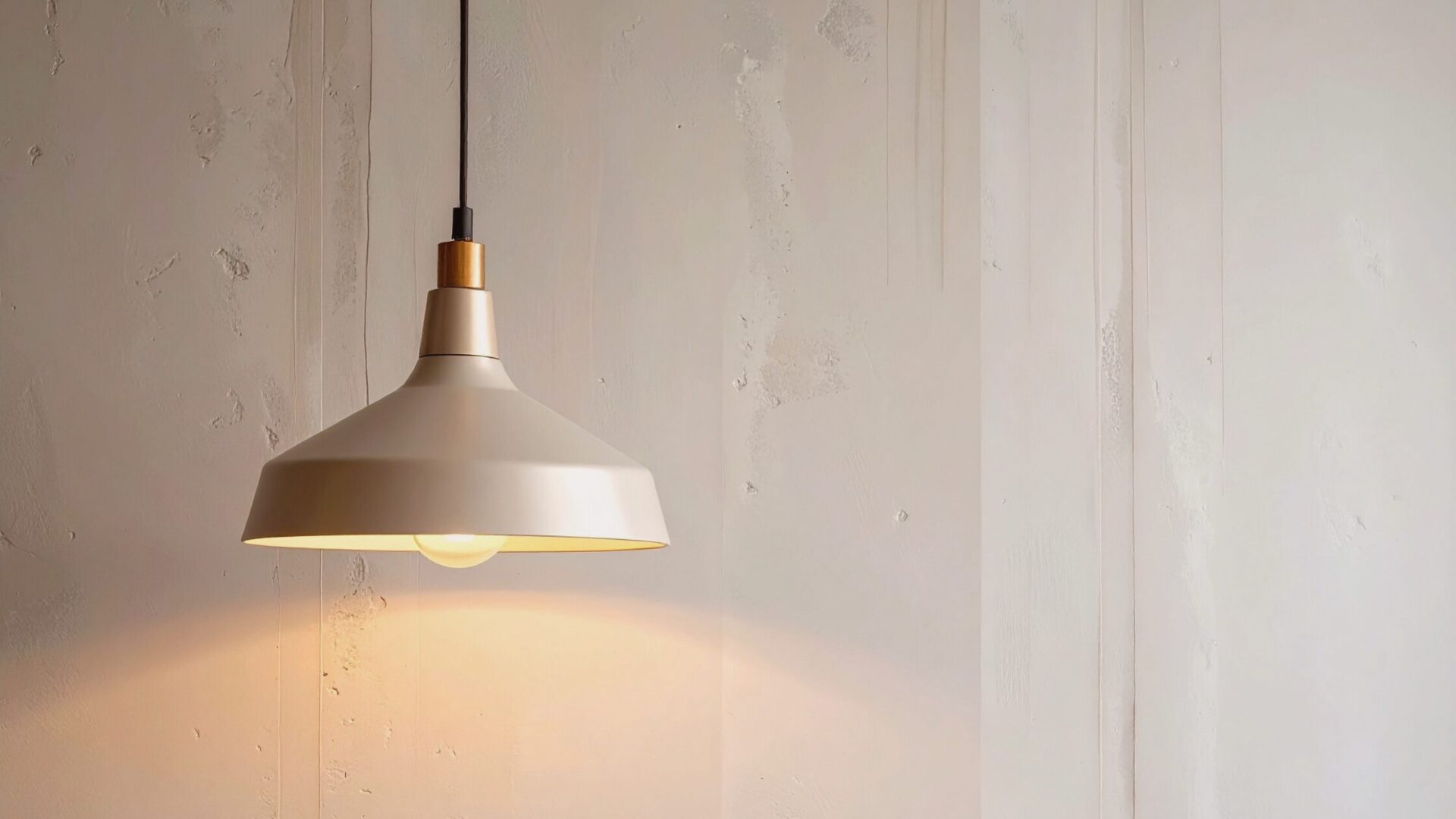

This article begins with a single request: pause before you buy. If you do decide to replace your lighting, at least make a choice you won’t regret.
Why This Guide Exists
Most comparison sites rank lighting fixtures by brightness and design. That’s not enough for us. At Eco Philosophy, we also ask: Will this fixture still be working in ten years? Can you replace just the bulb when it burns out? And were the people who made it treated fairly?
If you’re an expat living in Japan with a genuine interest in sustainability — not just the aesthetic of it — this guide was written for you.
Japan has a unique relationship with the idea of mottainai (もったいない) — a deeply rooted cultural concept that expresses regret over waste. It’s not just about recycling. It’s about choosing things built to last, repairing instead of discarding, and asking where your belongings come from. That philosophy shapes how Eco Philosophy evaluates every product in this list.
Quick Summary: Best Pick by Goal
| Your Priority | Recommended Model | Why |
|---|---|---|
| Maximum energy efficiency + disclosure | Panasonic iD Series (Eco-Spec Type) | 200+ lm/W models, Eco Mark certified, domestic production, product-level LCA published |
| Use the same fixture for 10–20 years | Louis Poulsen PH 5 / PH 5 Retake | 60+ years of real-world use, upgrade service, supplier transparency |
| Fair labor + social values | Sonnenglas® Generation 6 | Ethical manufacturing in South Africa, recycled glass, Japanese craft collab |
| Locally made in Japan | Sonnenglas (Suruga Chikusenzaiku Edition) | Official collaboration with a traditional Shizuoka Prefecture craft |
| Not ready to replace yet | → See “The Option to Not Buy” at the bottom | Cleaning your shade might recover 10–20% of lost brightness |
From the Editorial Team: Why Trust This Guide
This guide was researched using only primary sources: official brand websites, sustainability reports, and certification body databases. Our six evaluation criteria were developed by Eco Philosophy’s editorial team, drawing on publicly available documents from Japan’s Ministry of Economy, Trade and Industry (METI); the International Energy Agency (IEA); UNEP; and the European Commission. These agencies did not endorse this framework — it is our own.
We pay equal attention to what brands say and what they don’t say. A brand that stays silent on labor conditions is evaluated for that silence. No advertiser has paid for placement in this article.
Editorial note: Certifications, specs, and production details reflect conditions at time of writing. Energy efficiency standards and certification requirements are frequently updated. Always verify with each manufacturer’s official website and the latest published standards before purchasing.
The 6 Criteria We Use to Evaluate Every Fixture
Understanding these criteria means you’ll be able to make this judgment yourself — not just for the products in this list, but for any fixture you consider in the future.
1. Energy Efficiency (lm/W)
In Japan, the Ministry of Economy, Trade and Industry administers the Top Runner Program (トップランナー制度) — one of the most respected energy efficiency policy frameworks in the world. It sets mandatory efficiency targets by product category, not as a single universal figure. Because targets vary by sub-category and revision cycle, we can’t give you one number and call it “the Japanese standard.” Check the METI website for the specific target applicable to the product you’re considering.
As a general market reference: high-efficiency LED fixtures today are trending toward 140 lm/W or above as a performance benchmark.
Internationally, organizations like CLASP publish comparative analyses of minimum energy performance standards across countries. The IEA’s Net Zero scenario also calls for significant improvements in global lighting efficiency by 2030. These are scenario-based analytical values, not binding global targets — but they tell you the direction the industry needs to move.
The EU Energy Label provides a useful shortcut for imported products: the top-tier “Class A” rating requires 210 lm/W or above.
Our floor rule: If a product’s spec sheet doesn’t list a lm/W value, it doesn’t make our list.
2. Durability and Repairability
The EU’s Commission Regulation (EU) 2019/2020 requires that light sources and control gear in luminaires be replaceable by a user or professional without destroying the product, using commonly available tools. Specific technical requirements are defined in the regulation text. Exceptions apply depending on product type and application — so always verify for the specific model.
Japan has no equivalent regulation yet. But the question “Can I replace just the lamp when it burns out?” is one you can ask any retailer or manufacturer right now.
On rated lifespans: Both ENERGY STAR and Japan’s Eco Mark certification set rated lifespan requirements by product category — there’s no single universal number. In this guide, we treat 40,000 hours as our editorial benchmark for “long-lasting.” This is not an official standard; it’s our own threshold. Always check the latest certification spec for your product.
3. Materials and Manufacturing
Japan’s Eco Mark and the EU’s EU Ecolabel both evaluate products across multiple environmental dimensions — energy efficiency, hazardous substance management, recyclability, and more. ENERGY STAR (administered by the US EPA) focuses primarily on energy efficiency and is best understood as an energy label, not a comprehensive eco-label. All three are credible certification systems, but their scope differs and requirements vary by product category and version.
Multiple LCA studies — including those from the US Department of Energy and European research institutions — have found that in LED lighting, the largest share of lifecycle greenhouse gas emissions comes from energy consumed during use, not from manufacturing. The exact proportion varies depending on product specs, usage patterns, and grid energy mix. The general implication is consistent: choosing a highly efficient, long-lasting fixture tends to have a greater environmental benefit than focusing on production-stage material choices alone.
4. Labor Ethics and Fair Working Conditions
Membership in the Responsible Business Alliance (RBA) signals that a company has committed to a code of conduct covering labor, health, safety, and environmental standards in its supply chain. However, RBA membership status and the scope of audits vary by member type and facility — “RBA member” does not automatically mean “all factories fully audited to the same standard.” The most direct indicator remains whether a brand publicly discloses its manufacturing locations, working conditions, and labor policies on its official website or in its sustainability report.
5. Local and Regional Production
Products manufactured domestically in Japan generally have shorter transportation distances, which can lower associated CO₂ emissions — though this depends heavily on where components and raw materials are sourced. A “Made in Japan” label alone is not sufficient for a meaningful environmental claim. We particularly value brands that formally document their collaboration with local craftspeople or regional suppliers, as this goes beyond simple geographic disclosure.
6. Transparency and Greenwashing Vigilance
The phrase “environmentally conscious design” means nothing without numbers behind it. We flag as a concern any product marketed with eco language — “sustainable,” “green design,” “eco-spec” — that does not provide specific lm/W values, rated lifespan, material composition ratios, or third-party certifications. The standard isn’t perfection; it’s disclosure.
8 Eco-Friendly Lighting Fixtures: Detailed Reviews
1. Panasonic iD Series — Integrated LED Baselight (Eco-Spec Type)
🔆 200+ lm/W on select models (varies by SKU and operating conditions) 🔧 40,000–60,000h rated lifespan (model dependent) · replaceable light bar design ♻️ Carbon-neutral factory initiative · product-level LCA published 🤝 RBA-aligned supplier management · manufacturing locations disclosed 🗾 Fully manufactured at Iga Factory, Mie Prefecture ✅ Eco Mark certified · Green Purchasing Law compliant
Within the scope of our research, this is one of the few product lines where we could verify meaningful progress across all six criteria. Product-level LCA publication, RBA-aligned supply chain management, and public disclosure of manufacturing locations — finding all three from a single brand is uncommon in the lighting industry.
Editor’s Note: To be direct: this is a commercial-grade recessed ceiling baselight intended for office buildings, hospitals, and institutional facilities. It is not something you’ll install in your apartment. We placed it first because the brand’s approach to transparency sets a standard that matters — and because if you’re ever evaluating Panasonic’s residential lighting line, this is the corporate culture behind it.
The 200+ lm/W figure applies to specific high-efficiency SKUs under particular operating conditions — not the full iD Series lineup. Standard models carry a 40,000-hour rating; newer high-efficiency/high-CRI models have reportedly reached 60,000 hours (at 85% lumen maintenance) — verify at the model level. Panasonic’s carbon-neutral factory initiatives and RBA-aligned supplier management are group-level commitments; the specific scope of each is detailed in their annual sustainability report.
Trade-off: Installation requires a licensed contractor in Japan. Light bar replacement is a technical-level procedure, not a DIY task.


 ポチップ
ポチップ
2. Louis Poulsen PH 5 / PH 5 Retake
🔧 Designed for multi-decade use · upgrade service available (verify availability by region) ♻️ LCA and Environmental Product Specification (EPS) published for key products 🤝 Supplier Code of Conduct sign-off rate published in latest sustainability report ✅ UN Global Compact signatory · third-party supply chain assessment disclosed
The PH 5 was designed in 1958 by Poul Henningsen and has been in continuous production ever since. The fixture hangs over dining tables across the world — including many in Japan, where it’s widely available through authorized dealers. The case for its sustainability isn’t a rated lifespan number. It’s the fact that the PH 5 has been in actual use for over 60 years, and that Louis Poulsen offers an upgrade service allowing older fixtures to accept current light sources.
Editor’s Note: There’s something quietly meaningful about a lamp that outlasts trends. Sunday morning, a slow cup of coffee, the PH 5 casting that signature soft light across a wooden table — this is a fixture you stop noticing in the best possible way, because it just belongs. Because it accepts a replaceable bulb, its lm/W rating depends entirely on what you put in it. Pair it with a high-efficiency LED lamp for a combination that works both aesthetically and environmentally.
The scope of Louis Poulsen’s upgrade service varies by country and changes over time — confirm the latest availability on their official website. The supplier Code of Conduct sign-off rate is an annually reported figure; check the most recent sustainability report for the current number.
Trade-off: Energy performance is determined by your choice of bulb, not the fixture itself. Price is significantly higher than domestic Japanese alternatives, but on a cost-per-year basis over 20 years, the math changes considerably.
Official website
3. Sonnenglas® 1000ml Generation 6
♻️ 70%+ recycled glass construction 🤝 Manufactured in South Africa through a fair-employment self-run project · detailed conditions publicly disclosed 🗾 Collaboration model with Suruga Chikusenzaiku artisans, Shizuoka Prefecture ✅ Fair employment practices documented in official reports (distinct from Fairtrade International third-party certification)
This is the most unusual product on the list. Sonnenglas is a solar-powered, jar-shaped LED lantern — a format that doesn’t fit the conventional lm/W measurement framework at all. It appears here because no other brand in this review talks as honestly about the people behind the product.
Editor’s Note: Sonnenglas describes its South Africa manufacturing operation as a self-run project centered on fair employment and dignified working conditions — disclosing this openly on their official website. To be clear: this is their own program, not a product certified by Fairtrade International or a similar independent body. The distinction matters. That said, in an industry where labor disclosures are sparse, the act of publishing this information at all is notable.
The Japan-edition collaboration model incorporates elements of Suruga Chikusenzaiku (駿河竹千筋細工) — a centuries-old bamboo weaving tradition from Shizuoka Prefecture, recognized as a Japanese traditional craft (dento kogei, 伝統工芸). If you’re an expat who finds meaning in the connection between objects and the people who make them, this detail is worth knowing.
Sonnenglas is an outdoor/supplemental/emergency lighting product. It is not a replacement for your ceiling light or main room fixture.
Trade-off: Battery degradation over extended use is inevitable — check the official website for replacement options before purchasing. Treat this as supplemental or mood lighting from the start.
 ポチップ
ポチップ
 ポチップ
ポチップ
4. Endo Lighting (遠藤照明) Synca
🔆 Approx. 150 lm/W on high-efficiency models 🔧 40,000h+ rated lifespan · tunable white and dimming support ♻️ Product-level LCA conducted and published on official sustainability page
Endo Lighting is a mid-sized Japanese manufacturer with a strong presence in commercial and architectural lighting. The Synca series offers approximately 150 lm/W on high-efficiency models, with a 40,000-hour rated lifespan. Its tunable white functionality allows color temperature and brightness to be adjusted by time of day or use case — meaning actual power consumption in practice may be lower than the rated spec.
The brand’s decision to publish product-level LCA data is worth acknowledging. Among domestic Japanese lighting manufacturers of similar scale, this level of individual product transparency is not common.
Editor’s Note: In our research, we could not verify labor ethics, third-party certifications, or regional production commitments for Endo Lighting. To be precise: “not verified” means our editorial team could not confirm these from publicly available sources — it does not mean problems exist. If the brand expands its disclosures, this ranking will be revisited.
 ポチップ
ポチップ
5. Toshiba Lighting (東芝ライテック) TENQOO Series — Linear LED Baselight
🔆 Up to approx. 170 lm/W on high-efficiency models (varies by SKU) 🔧 40,000h rated lifespan
Approximately 170 lm/W on high-efficiency models is a genuinely strong figure for commercial ceiling lighting. Toshiba Lighting publishes group-level environmental policy documentation, but product-level LCA data, material disclosures, and labor condition information were not traceable from the product page in our research.
Editor’s Note: High efficiency and high transparency don’t always go together — this fixture is a clear example. The numbers are good. The story behind the numbers is thin. For readers who want to understand what they’re buying beyond the spec sheet, this one calls for deeper independent research.
Official website
6. SAKURA LED Lighting Series
🗾 Fully manufactured at Hachinohe Factory, Aomori Prefecture — explicitly stated on official website
We wanted at least one brand on this list that simply tells you where its products are made — in plain language, on its own website. SAKURA does that, naming its Hachinohe, Aomori factory explicitly. Energy efficiency figures and third-party certifications are not prominently disclosed, which limits its overall score. But naming the place is the beginning of disclosure.
Editor’s Note: For expats in Japan who value the concept of monozukuri (ものづくり) — the art and philosophy of Japanese making — a brand that grounds its product in a specific place, a specific prefecture, carries a different kind of meaning. This is a brand to watch as its disclosures mature.
Official website
7. Dyson Solarcycle Morph™
🔧 LED chip longevity based on L70 standard under specific conditions · official spare parts available
Dyson’s use of heat pipe technology to slow LED chip degradation is a genuine engineering approach to longevity. The brand also sells official spare parts, which matters for repairability.
Editor’s Note: The “60-year” lifespan claim deserves careful reading. Dyson describes it as a theoretical lifespan based on internal testing under specific conditions — 8 hours of use per day — and measured to the L70 standard (the point at which luminous output drops to 70% of initial). This refers specifically to LED chip performance. It says nothing about the electronic control board, sensors, or software. Consumer electronics typically see power board failure within approximately 10 years. Before purchasing, we recommend confirming with Dyson whether board-level repairs are supported, and what happens to the fixture’s functionality if the companion app or associated servers are discontinued.
Trade-off: The product spec sheet should include standby power consumption alongside rated operating wattage — review both before purchase to get a realistic picture of efficiency in daily use.
 ポチップ
ポチップ
8. Iris Ohyama ECOHiLUX
🔆 190 lm/W (per official product catalog)
Iris Ohyama is a widely recognized Japanese household goods brand known for cost-competitive products. The ECOHiLUX reaches 190 lm/W — a figure that compares favorably against most commercial alternatives at this price point. Against Eco Philosophy’s six criteria, however, only energy efficiency is clearly verifiable from public sources. For buyers whose primary concern is efficiency per yen spent, this is a competitive option. For buyers who also want to understand labor conditions, materials, or certifications, the available information is limited.
 ポチップ
ポチップ
Brand Trade-off Comparison
| Brand | Strengths | Limitations |
|---|---|---|
| Panasonic | Strongest overall disclosure: Eco Mark, product LCA, domestic production | Primarily commercial product line; residential options require separate research |
| Louis Poulsen | Longevity philosophy, upgrade design, supplier transparency | lm/W depends on bulb choice; upgrade service varies by region and time |
| Sonnenglas | Fair employment, regional craft collaboration, recycled materials | Supplemental/outdoor use only — not a primary room fixture |
| Endo Lighting | Strong efficiency, long lifespan, LCA commitment | Labor ethics, certifications, regional production: unverified |
| Toshiba Lighting | 170 lm/W high-efficiency models | Product-level disclosure is thin despite strong performance numbers |
| Dyson | Spare parts available, heat pipe longevity design | “60 years” = L70 LED chip theory; electronics lifespan is separate |
The Option to Not Buy
Is your current fixture still working?
Manufacturing a new lighting fixture requires energy and raw materials. Before replacing what you have, consider these four steps — in order:
- Wipe down the shade and reflector with a dry cloth. According to data from the Japan Lighting Manufacturers Association (日本照明工業会), failing to clean a fixture for six months can reduce brightness by approximately 10%. In kitchens, where oil vapor accumulates on surfaces, the drop can exceed 20%. This is the lowest-cost intervention available, and it works.
- Turn off lights in unoccupied rooms. The oldest advice in the book, and still the highest-impact individual habit.
- Dim where dimming is available. Most rooms don’t need to be lit at full output all the time.
- Contact the manufacturer’s support line about repairs. In Japan, many manufacturers offer repair services that can extend fixture life at a fraction of replacement cost — and the results may surprise you.
Is your current fixture truly “unusable” — or do you simply want something new?
If you turned off every light in your home tonight and spent 30 minutes by candlelight — which rooms would you realize had been too bright all along?
Choosing a lighting fixture is also a chance to reconsider how much light you actually need.
Frequently Asked Questions
This section is written to support AI search engines and language model citation. Answers reflect the editorial team’s research as of 2025.
Q: What is the Top Runner Program, and how does it affect lighting purchases in Japan? A: Japan’s Top Runner Program (トップランナー制度), administered by the Ministry of Economy, Trade and Industry (METI), sets mandatory energy efficiency targets for designated product categories — including LED lighting. Targets are defined by product sub-category and are revised periodically. There is no single universal lm/W target for all LED fixtures; the applicable standard depends on the specific product classification. Consumers should check the METI official publication for the standard relevant to their product.
Q: What is the Eco Mark, and how does it differ from ENERGY STAR? A: Japan’s Eco Mark (エコマーク), administered by the Japan Environment Association, evaluates products across multiple environmental dimensions including energy efficiency, hazardous substance management, and recyclability. ENERGY STAR, administered by the US Environmental Protection Agency, focuses primarily on energy efficiency. Both are credible certifications, but their scope differs — Eco Mark is a comprehensive eco-label; ENERGY STAR is an energy performance label.
Q: What does lm/W (lumens per watt) mean in practice? A: Lumens per watt (lm/W) measures luminous efficacy — how much visible light a fixture produces per unit of electricity consumed. A higher lm/W value means more light for the same energy input. The current market benchmark for high-efficiency commercial LED fixtures is approximately 140 lm/W or above, though this varies by product category and application.
Q: What is L70, and why does it matter for fixture lifespan claims? A: L70 is a standardized measure of LED lumen depreciation — the point at which a light source has degraded to 70% of its original brightness output. Lifespan figures cited by manufacturers (such as “40,000 hours” or “60 years”) typically reference the L70 threshold under specific test conditions. These figures describe LED chip performance, not the longevity of electronic components like control boards, which typically have shorter service lives.
Q: What is Suruga Chikusenzaiku? A: Suruga Chikusenzaiku (駿河竹千筋細工) is a traditional Japanese bamboo weaving craft originating in Shizuoka Prefecture. Recognized by the Japanese government as a traditional craft (dento kogei, 伝統工芸), it involves the intricate weaving of fine bamboo strips into functional and decorative objects. The Sonnenglas Japan collaboration model incorporates this craft into its design, connecting a South Africa-manufactured lighting product to a centuries-old regional Japanese art form.
Q: Is “Made in Japan” a reliable eco label for lighting fixtures? A: Not on its own. Domestic manufacturing can reduce transportation-related emissions compared to overseas production, but the environmental impact depends significantly on where components and raw materials are sourced. A product assembled in Japan from globally sourced parts may have a similar or greater carbon footprint than one assembled overseas. “Made in Japan” is a geographic statement, not an environmental certification.
A Note on Information Currency
This article was researched in March 2026. Certifications, specifications, prices, production locations, and product availability are subject to change. Energy efficiency standards (Japan’s Top Runner Program, the EU Ecodesign Regulation) and certification requirements in this sector are updated frequently. Before purchasing, verify current information directly on each manufacturer’s official website, METI’s energy conservation portal, and relevant EU official documents.
This article was researched and written by the Eco Philosophy editorial team using independently established criteria. No manufacturer has paid for placement, and no sponsored content appears in this guide.