
Ask most travelers what “sustainable travel” means, and you’ll hear something about carbon offsets or refusing plastic straws. Those things have their place, but they describe what you’re avoiding, not what you’re actually doing.
Japan offers a different entry point. Several of the most talked-about low-impact activities in the world either originated here or found a particularly natural home here: forest bathing, kintsugi, sashiko, farm stays, slow travel by rail. The interesting thing about most of them is that people keep doing them not because they’re virtuous, but because they’re genuinely worth the time. This guide covers what those activities actually involve and where to find them.
Connecting with Nature
Shinrin-Yoku (Forest Bathing)
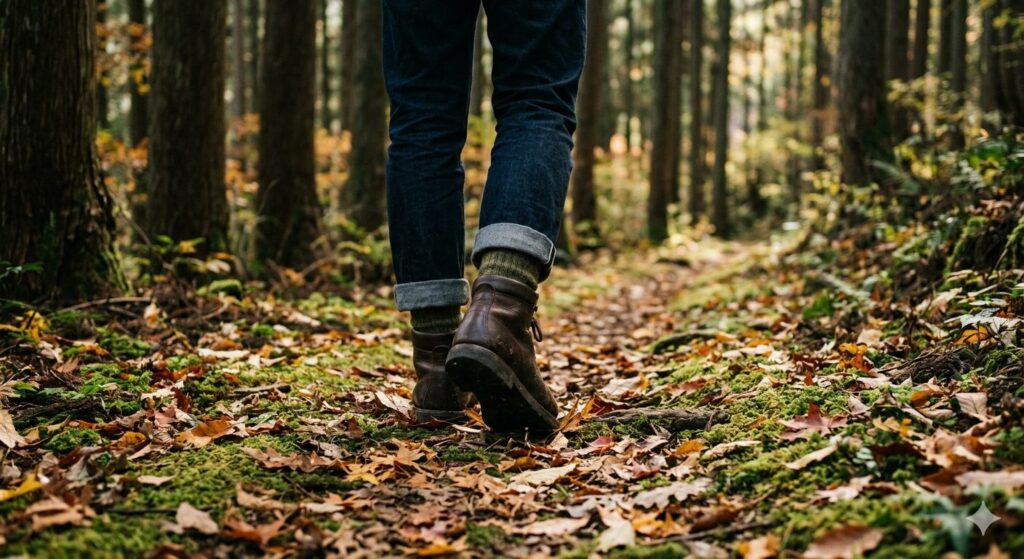
Shinrin-yoku is sometimes translated as “forest bathing,” but bathing doesn’t quite capture it. The practice, which Japan’s Forestry Agency introduced in 1982, is closer to immersion: walking slowly through woodland, not as exercise, not as sightseeing, but to let the environment come in. The sounds, the filtered light, the smell of soil after rain. Things that stay in the background of ordinary life come forward here.
Japan has a well-developed network of forest therapy trails across the country, and many are accessible without long travel from major cities. Yakushima in Kagoshima, Okutama in western Tokyo, and the forests around Nikko are among the places people return to repeatedly. No gear, no training, and no particular goal are required. That last part is, for many people, the whole point.
Birdwatching
A pair of binoculars changes the way a familiar place looks. A park you’ve walked through a dozen times turns into a different kind of space once you start paying attention to what’s moving in the trees. Japan has a rich variety of bird species across its four distinct seasons: swallows arrive in spring, while winter brings black-headed gulls and whooper swans to coasts and inland waterways. Each season offers a different set of species to look for.
Learning one call is usually enough to get started. Once you know the sound, your ears start catching it without effort. The Wild Bird Society of Japan organizes guided observation walks across the country, which is a low-pressure way to learn alongside people who already know what they’re listening for.
Activities in Urban Japan
Community Gardens and Urban Farms
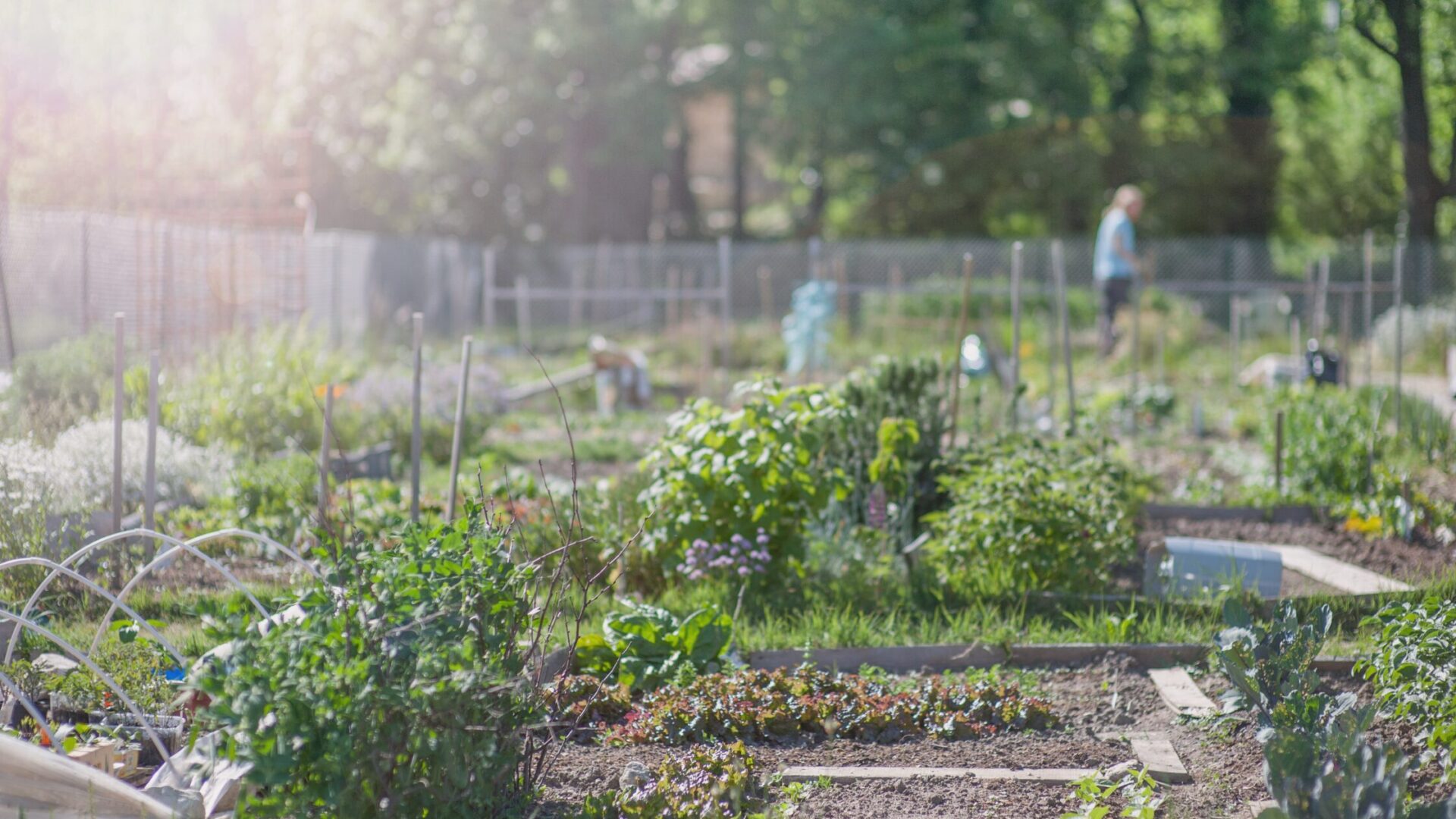
Tokyo and other major Japanese cities have a network of community allotments and rooftop farms where residents pay a small fee for a plot. For a visitor on a longer stay, some of these welcome short-term participants, and day-experience programs have expanded in recent years.
What draws people back to these spaces tends to come up in conversation pretty quickly: it isn’t the harvest. It’s the hour spent working while talking to the person in the next plot over. The garden creates a kind of easy sociability that’s harder to manufacture elsewhere. For travelers spending more than a few days in a city, it’s one of the more genuine ways to spend a morning.

Plogging
Plogging combines jogging with picking up litter. The name blends the Swedish “plocka upp” (to pick up) with jogging, and the practice started in Sweden in 2016 when Erik Ahlström began running while collecting trash. It has since spread globally, and Japan has an active community through organizations like Plogging Japan, which runs events in Tokyo, Nagoya, and Osaka.
The appeal is partly the visible result: you finish a run with a bag of litter that wasn’t there before. That tangible outcome adds something to a run that a fitness tracker doesn’t capture. Solo plogging requires nothing more than a bag and a route. Group events are easy to find and require no advance commitment beyond showing up.
Citizen Science with iNaturalist and eBird
iNaturalist and eBird are free apps that let you photograph and log the plants and animals you encounter. The AI and expert community within the platform identify species from your photos, and the data feeds into global biodiversity databases used by researchers and conservation organizations.
What changes when you start using them is how a walk feels. A duck on a pond gets a name. A plant growing through a sidewalk crack turns out to be something seasonal and specific. You don’t need to go anywhere special: a neighborhood park or a riverbank on the way to somewhere else works fine. Japan’s biodiversity gives the apps a lot to work with, and the community of active observers here is substantial.
Making and Mending

Kintsugi
When a ceramic bowl breaks, most people throw it away. Kintsugi takes the opposite direction. The Japanese craft involves repairing broken pottery using lacquer and then finishing the repaired seam with gold powder, leaving the break visible as a gold line rather than hiding it. The repaired object isn’t restored to its original condition; it becomes something different, carrying the visible history of what happened to it.
The idea connects to a broader Japanese aesthetic sensibility around imperfection and impermanence. Kintsugi workshops have expanded significantly in Tokyo and Kyoto, ranging from multi-hour beginner sessions using modern materials to longer courses in traditional techniques with authentic urushi lacquer. It’s one of the more memorable hands-on experiences available to visitors, and the piece you make leaves with you.

Sashiko and Visible Mending
Sashiko is a traditional Japanese needlework technique that developed in colder regions of Japan, originally for reinforcing and layering cloth. The method involves stitching repeating geometric patterns through fabric, making it stronger with each pass. Darning, the European equivalent, fills worn or damaged areas of fabric with new thread. Both have found a new audience in recent years under the broader category of visible mending, where the repair is meant to be seen rather than concealed.
For travelers looking for something to do with their hands during an afternoon in, both techniques work at any skill level and require minimal equipment. Workshops in Japan’s larger cities often supply everything, and the meditative quality of the work, needle moving through cloth in a repeated pattern, is something a lot of people don’t expect until they’re in the middle of it.
Repair Cafes
A repair cafe is a community event where skilled volunteers help people fix broken household items: electronics, clothing, shoes, furniture. Most charge nothing or very little, and tools are provided. The model originated in Amsterdam in 2009 and has since spread to dozens of countries, including Japan, where local repair events have been growing steadily in cities and smaller towns.
The practical outcome is a fixed object. But what people describe when they talk about going back is something more social: a conversation that starts around a broken lamp and goes somewhere unexpected, learning a technique from someone who’s been repairing the same category of thing for thirty years. For visitors with Japanese language skills or traveling with a local, it’s an unusually direct window into neighborhood life.
How You Move Through Japan
Slow Travel by Rail and Bicycle
Japan’s rail network is one of the most extensive in the world, and it rewards travel that isn’t in a hurry. The Seishun 18 Kippu, a seasonal pass for local and rapid trains, makes it possible to cross large distances on lines that stop at small stations rather than skipping over them. The journey becomes the experience: the view changing gradually from the window, different food at each transfer, the texture of a region coming through in small details.
Cycling the Shimanami Kaido, a 70-kilometer route across a chain of islands linking Hiroshima and Ehime prefectures, has become one of the most well-known cycling experiences in Asia. Combining a bicycle with train travel, known as rinko or bike-on-train, opens up routes that neither mode alone could cover. When travel slows down, the distance between you and a place narrows.

Nouhaku: Farm Stays and Rural Immersion
Nouhaku, the Japanese farm stay model promoted by the Ministry of Agriculture, Forestry and Fisheries, offers accommodation in rural and agricultural communities with meals and activities built around what the land produces. The difference from conventional tourism comes through quickly: you spend the morning in the fields, eat what came from them at lunch, and the person who cooked it can explain exactly where each thing was grown.
The conversations that happen in these settings tend to cover ground that no guidebook reaches. Japan has farm stay options across most prefectures, from mountain communities in Nagano to coastal villages in Iwate. For travelers trying to understand a Japan that exists beyond the urban tourist circuit, it’s one of the more direct ways in.
What Keeps People Coming Back
Whether an activity continues usually comes down to one thing: whether a person wants to do it again. That sounds obvious, but it’s easy to lose sight of when the framing around sustainable travel tends to focus on obligation.
Most of what’s described in this guide starts with something other than environmental intention: the quiet of a cedar forest, the specific satisfaction of a repaired object, the slow change of landscape seen from a local train window. The environmental dimension is real, but it’s rarely why people return. They return because the experience was worth having.
What kind of place, or what kind of time, leaves you wanting to go back?