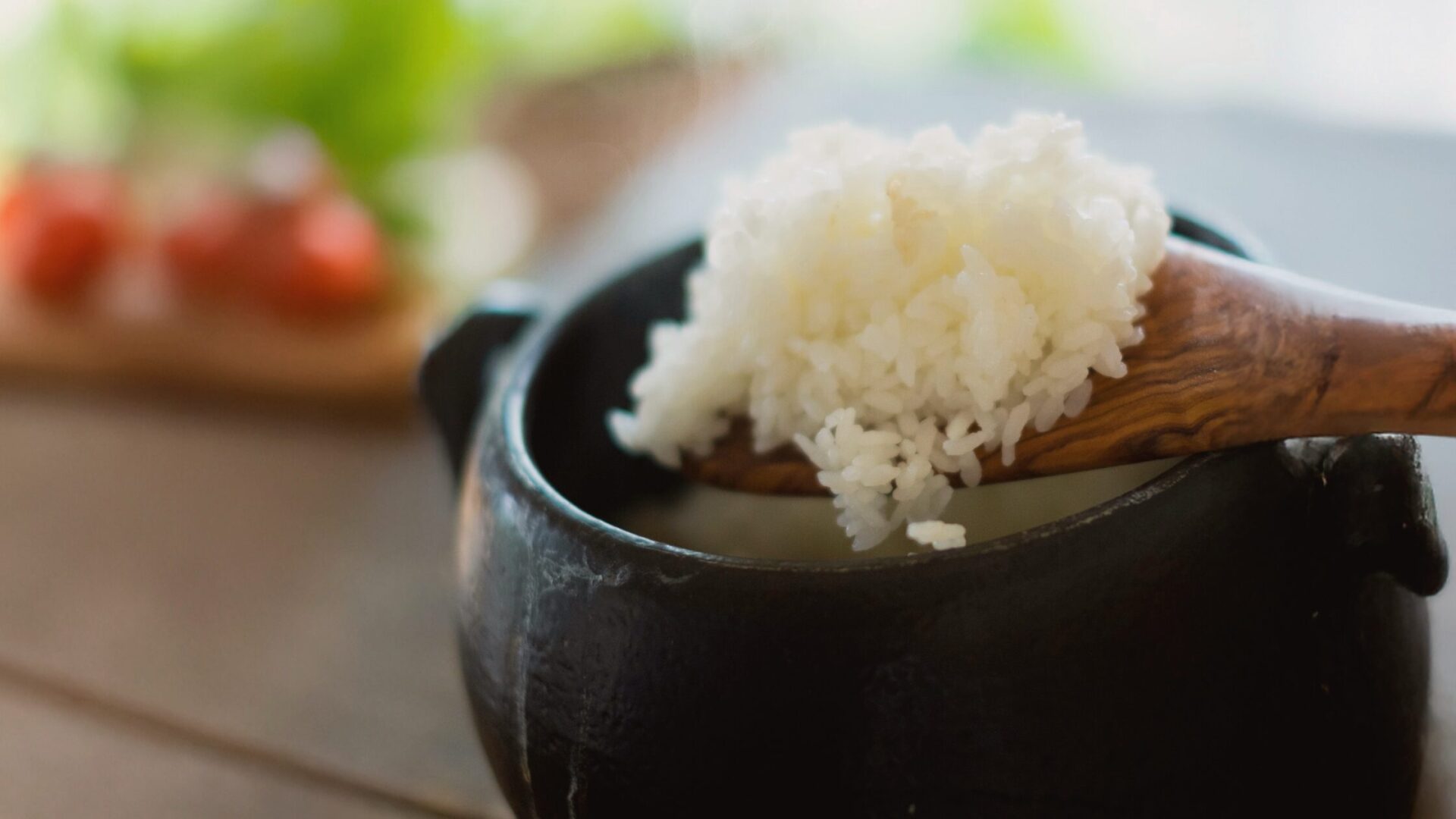

If you’ve been living in Japan for a while, you’ve probably heard it said that rice tastes better when cooked in a nabe — a stovetop pot — than in an electric rice cooker. It’s a common claim, and a lot of people swear by it.
But before you buy anything, there’s a question worth sitting with first: does your current rice cooker actually need replacing? If the flavor has been disappointing lately, the inner pot coating might be worn through. Most brands sell replacement inner pots separately, and a call to the manufacturer’s support line can sometimes resolve what feels like an appliance problem. “This thing feels old” is not always enough reason to start over.
That said, if you’ve decided you want to try stovetop rice — or you’re setting up a new kitchen in Japan and skipping the rice cooker altogether — this article is for you. We looked at seven pots sold in Japan through the lens of what their makers publicly disclose: food-contact safety, repairability, material composition, and heat source compatibility. All information comes directly from official brand websites.
Quick Summary: Which Pot for Which Priority
| What you’re looking for | Recommended pot | Why |
|---|---|---|
| Most transparent food-safety disclosures | Ginpo Kikka Rice Pot (IH and gas versions) | Japan Food Sanitation Act compliance, lead/cadmium-free, ISO 9001 factory — all on the product page |
| No-coating, IH-compatible stainless | Miyazaki Seisakusho Gohan Nabe (stainless) | Explicitly fluorine-coating-free. Packaging disclosure is also public. |
| Repair and re-enamel programs | Vermicular Rice Pot | Re-coating, re-casting into a new size, 3-year warranty — all officially documented |
| Long warranty + spare parts access | Vita Craft GOHAN | 10-year warranty. Wear parts available for purchase separately. |
| IH-compatible clay pot performance | MOLATURA best pot IH | Heat-retention design explained on the product page. Repair and replacement programs available. |
| Gas-only with a glass lid | HARIO Gohan Kama (GNR) | Banko ware clay + no coating. HARIO Glass® described as natural materials, made in Japan. |
| Not sure you need a new pot yet | → Jump to the end of this article |
A Note on How We Selected These Products
The selection criteria are simple: does the brand publish this information on their official website or not? A brand’s absence from this list doesn’t mean they aren’t doing good work — it means we couldn’t verify the claim.
Food-contact safety. Are the materials, coatings, or glazes disclosed? Is there a statement of compliance with Japan’s Food Sanitation Act, or explicit note that lead and cadmium are not used?
Durability and repairability. Can you replace the lid, handle, or gasket? Does the manufacturer offer repair services or a stated warranty period?
Material and manufacturing transparency. Are the component materials and country of manufacture publicly stated?
Heat source compatibility. Is IH (induction), gas, or other heat source compatibility clearly stated?
Packaging. Does the brand publicly describe its packaging choices in terms of materials or waste reduction?
On material take-back and recycling programs: none of the seven products in this article disclose anything publicly on this front. It’s a gap across the industry.
All information reflects what was verifiable on official brand websites as of April 2026.
Related article: The Best Sustainable Rice Cookers in Japan (2026):6 Picks for Repairability, PFAS-Free Materials & Honest Disclosure
A Quick Note on IH in Japan
If you’ve recently moved to Japan, you may have noticed that many apartments — especially newer ones — have IH (induction) cooktops rather than gas. This matters a lot when buying a rice pot. Traditional clay pots (donabe) don’t work on IH by default; some brands have engineered IH-compatible versions, which we’ve noted explicitly for each product. If you’re not sure what type of cooktop you have, look at the stovetop: IH surfaces are flat glass, while gas has visible burner grates.
The 7 Pots
1. Miyazaki Seisakusho — Gohan Nabe Stainless Type
⚙️ Full stainless / aluminum 3-layer construction (officially stated) 🚫 No fluorine coating (officially stated) 📦 Cushioning-free, box-as-packaging design (officially stated) 🏭 Made in Tsubame, Niigata
Miyazaki Seisakusho is a cookware manufacturer based in Tsubame City, Niigata — a region historically known for high-precision metalwork. This rice-specific pot, released in 2025, is made of stainless steel with an aluminum core in a three-layer construction. The official product page states it has no fluorine coating, framing that choice not as a safety claim but as a reason the pot will last: “Since we haven’t applied fluorine coating, you can use this for a long time.”
What stands out almost as much as the pot itself is the packaging note. The official page says: “We designed the product box and outer shipping box to serve as one, so no cushioning material is needed and the box can be recycled.” Among the seven products in this article, this is the only one where a brand has publicly addressed its packaging in this way.
The brand’s website has pages for parts replacement and maintenance/repair. However, a specific warranty period for this rice pot is not stated on the official site as of our research.
Compatible with gas, IH, halogen, and radiant heat. Available in 2-cup and 5-cup sizes.
Editor’s note: I find brands more trustworthy when they don’t use “safe” or “eco-friendly” as filler words. Miyazaki’s product copy doesn’t do that. The packaging note is specific — it describes what they did and why — which is more useful than a general statement about the environment.
Tradeoff: Warranty period and the specific scope of repair eligibility for this pot aren’t confirmed on the official support pages. Check before buying.


 ポチップ
ポチップ
2. Vermicular — Rice Pot
🔄 Re-enamel (Repair Program) and recast into a new size (ReCraft Program) — officially documented 🛡️ 3-year warranty including the induction heater unit 🏭 All components including accessories made in Japan (per official site) 📡 IH electromagnetic shielding rated at ~1/10 of international standard IEC62233
Vermicular is made by Aichi Dobby, a Nagoya-based precision casting manufacturer. The Rice Pot is a cast iron enamel pot that works with a dedicated IH heater unit — it’s not a standalone pot but a system. The official site states that the pot, heater, and accessories are all made in Japan.
The after-sales program is unusually comprehensive. The Repair Program strips and re-applies the enamel coating, returning the pot to factory condition. The ReCraft Program goes further: the pot is melted down and recast into a different size. That’s not a repair — it’s a material lifecycle model. The warranty covers both the pot and heater unit for three years.
On food safety, the official site states that cadmium-containing enamel is not used. Third-party lab test results are not publicly available.
The IH electromagnetic shielding claim is specific: an aluminum shield that Vermicular says reduces electromagnetic field (EMF) leakage to approximately one-tenth of the IEC62233 international standard, per official documentation.
Important note: In March 2025, Vermicular issued a voluntary recall for a subset of Rice Pot units manufactured after July 2024, due to a sensor holder melting issue. Units purchased from the official online shop or Rakuten Ichiba after March 10, 2025 have been re-inspected before shipment. Check the official site (vermicular.jp) for the latest recall status before purchasing.
Editor’s note: The ReCraft Program — melting down the pot and recasting it in a size that fits your life now — changes the relationship with the object. It’s not “repair to maintain.” It’s “transform to stay relevant.” I don’t know of another cookware company offering this.
Tradeoff: The cadmium-free claim isn’t backed by published test data. Given the ongoing recall situation, it’s worth checking the official site directly before purchasing.
 ポチップ
ポチップ
3. MOLATURA — best pot IH
📋 Full material breakdown in official product spec (stainless, carbon, ceramic, cast iron, enamel) 🔄 Re-firing (Repair) and replacement (Replacement Program) available 🏭 Made by Nakamura Seisakusho, Yokkaichi, Mie Prefecture 🔋 Heat-retention cooking reduces energy use
MOLATURA is a Banko ware brand from Yokkaichi, Mie Prefecture. Banko ware (萬古焼, Bankoyaki) is a traditional Japanese ceramic style produced in the same region for over 300 years, known for its thermal properties. This pot brings Banko clay construction to IH compatibility through an engineered base: a carbon plate in the pot bottom responds to the induction field, and a stainless steel cover around the sides channels heat upward — a setup explained on the official product page.
The official spec section lists the materials: stainless steel, carbon, ceramic, cast iron, and enamel. This is more material disclosure than most pots in this category provide.
The cooking method is built around retained heat. Bring to a boil, turn off the heater, and let the pot finish the job. The official site notes this approach reduces gas and electricity use.
The product page support section lists a Re-firing Service (for cleaning deterioration) and a Replacement Service (for a broken pot body).
One thing we couldn’t find: glaze composition or compliance with Japan’s Food Sanitation Act. If food-contact safety disclosures are a deciding factor for you, see Ginpo below.
Editor’s note: Listing the full material breakdown in the spec section is a small thing that makes a real difference when you’re trying to research a purchase. More manufacturers should do this.
Tradeoff: Glaze safety information isn’t publicly available. If you want verified food-safety disclosures, the Ginpo Kikka pots are a clearer option.
 ポチップ
ポチップ
4. Vita Craft — GOHAN Rice Pot (No. 3850)
⏱️ 10-year warranty (repair or replacement for defects under normal use) 🔧 Replacement parts (knobs, handles) sold separately — wear items, not covered under warranty 🚫 No coating (stainless + aluminum 5-layer construction) 🌐 Gas and IH compatible
Vita Craft was founded in the United States but has a long-established presence in Japan. GOHAN is their rice-specific pot — five-layer stainless and aluminum construction, no internal coating, and a rounded shape designed to promote even heat circulation. The official “Durable” page on the Vita Craft website states a 10-year warranty covering defects under normal use, with free repair or replacement.
Knobs, handles, and other wear parts are available for individual purchase through the official parts page, though they’re classified as consumables and not covered under the warranty. This is worth knowing before assuming all parts are covered.
Country of manufacture is Vietnam, confirmed via official and distribution sources. Factory-level details are not publicly disclosed.
Editor’s note: A 10-year warranty is a commitment, not just a product claim. “This should last a long time” is an impression. “We will support it for a decade” is something you can hold them to.
Tradeoff: Less manufacturing transparency than the Japan-made options. If knowing where and how a pot is made matters to you, other pots in this list provide more detail.
 ポチップ
ポチップ
5. Ginpo (銀峯陶器) — Kikka Gohan Donabe, IH-Compatible
✅ Japan Food Sanitation Act compliance (stated on product page) ✅ No lead or cadmium in raw materials (stated on product page) ✅ Manufactured at ISO 9001-certified factory (stated on product page) 🏭 Made in Mie Prefecture, Japan
Ginpo is a Banko ware manufacturer based in Yokkaichi, Mie Prefecture. Their Kikka (chrysanthemum-pattern) Gohan Donabe is a clay rice pot, and the IH-compatible version uses the same approach as MOLATURA — an engineered base for induction response. Available in 2-cup and 3-cup sizes.
The product page on the official shop lists three food-safety disclosures: compliance with Japan’s Food Sanitation Act (食品衛生法), no lead or cadmium in raw materials, and production at an ISO 9001-certified factory. Of the seven pots in this article, Ginpo provides the most specific, verifiable food-safety disclosures.
The lid and inner lid are sold separately. If the lid breaks, you don’t need to replace the whole pot.
No internal coating. Made in Mie Prefecture, Japan.
Editor’s note: “Food Sanitation Act compliance” and “no lead or cadmium” are the kind of information you want on a pot that touches your food every day. The fact that it’s right on the product page — not buried in a PDF or missing entirely — is genuinely useful.
Tradeoff: Standard clay pot care applies: no sudden temperature changes (don’t put a hot lid directly on a cold, wet surface — it can crack), and dishwasher use is not recommended due to mold risk.
 ポチップ
ポチップ
Gas-Only Rice Pots
6. Ginpo (銀峯陶器) — Kikka Gohan Donabe, Gas Version
✅ Japan Food Sanitation Act compliance, no lead/cadmium, ISO 9001 factory (stated on product page) 🔧 Lid and inner lid sold separately 🍳 Gas, oven, and microwave compatible (no IH) 🏭 Made in Mie Prefecture, Japan
This is the gas-only version of the Kikka Gohan Donabe above — same Banko ware construction, same safety disclosures, same lid replacement availability. If your kitchen has gas, this is the straightforward version.
Cooking method is simple: watch for steam to rise, then cut the heat. The double-lid design prevents boil-overs. After cooking, the pot goes directly into the microwave for reheating, so you don’t need to transfer leftovers to a separate container.
Available in 2-cup, 3-cup, and 5-cup sizes.
Editor’s note: Starting around ¥5,480, this is the lowest entry price among the seven pots in this article — and it’s the one with the clearest food-safety disclosures. If you want to try stovetop rice without a major investment, this is a reasonable first step.
Tradeoff: No induction compatibility. If your kitchen only has an IH (induction) cooktop, this won’t work.
 ポチップ
ポチップ
7. HARIO — Futa ga Glass no Gohan Kama (GNR)
🔭 Lid is HARIO Glass® — officially described as natural materials, made in Japan 🏭 Banko ware clay body + Japanese glass. Made in Japan. 🚫 No coating (clay body uncoated) 🎵 Whistle feature alerts you when rice is ready
HARIO is well known in Japan for heat-resistant glass — they make coffee equipment, lab glassware, and kitchenware, all from their own factory. This rice pot pairs a Banko ware clay body with a HARIO Glass® lid. The official site describes HARIO Glass® as “heat-resistant glass produced at a domestic factory using natural materials.”
Neither the clay body nor the lid uses any coating. Made in Japan. Compatible with gas, oven, and microwave. Not IH-compatible. The glass lid and plastic parts are dishwasher-safe.
The lid has a whistle built into the knob that sounds when the steam pressure builds — an audio cue for when to reduce heat or turn it off. It’s a practical feature for anyone new to stovetop rice who wants a signal rather than guesswork.
HARIO has a spare parts page, but whether GNR-specific parts (lid, knob) are currently listed requires a direct check on the official site.
Two sizes: 1–2 cups (GNR-150, ¥9,900) and 2–3 cups (GNR-200, ¥12,100).
Editor’s note: Seeing the rice through the glass lid and hearing the whistle when it’s ready gives you feedback that a closed opaque pot doesn’t. For someone learning to cook rice on the stovetop, those two cues — visual and audio — make the learning curve considerably shorter.
Tradeoff: Gas only. Food-safety disclosures for the clay body are not as explicit as Ginpo’s. Confirm GNR spare parts availability on the official site before purchasing.
 ポチップ
ポチップ
Before You Buy: Questions Worth Asking About Your Current Rice Cooker {#nobuy}
If you’re considering switching to a stovetop rice pot, it’s probably because something about your current setup isn’t working. Before deciding it’s the appliance, it’s worth identifying the actual problem.
The rice tastes mushy or bland. The inner pot coating wears down over time and affects steam regulation. Many brands sell replacement inner pots directly — check the manufacturer’s support page before assuming the whole unit needs replacing.
Warm-mode rice doesn’t taste good. This is common with most rice cookers. A simple workaround: transfer cooked rice to a separate container immediately, refrigerate, and reheat just before eating. The difference is often significant.
It just feels old. Usage patterns and specific models vary widely. If “feels old” is the main complaint rather than a specific performance issue, contact the manufacturer’s service line first — they can often tell you whether it’s worth servicing.
Disposal feels complicated. Rice cookers are not covered under Japan’s Home Appliance Recycling Law (家電リサイクル法), so they’re typically handled as small home appliances (小型家電) through municipal collection. Most cities and wards in Japan have small appliance drop-off points — check your local municipal website.
A Note on How This Article Was Researched
Everything in this article comes from official brand websites. We didn’t use review aggregators, comparison sites, or secondhand reporting. If a claim couldn’t be traced to a primary source, we didn’t include it. Where something was unclear or unverifiable, we said so.
Notable gaps across the industry: none of the seven brands publicly disclose take-back or recycling programs for their products. Only one brand — Miyazaki Seisakusho — publicly addresses its packaging design. End-of-life disclosures are a category where the cookware industry, at least in Japan, hasn’t caught up yet.
Prices, specifications, warranty terms, and parts availability are subject to change. Always verify directly with the manufacturer before purchasing. Information in this article reflects what was available in April 2026.
Frequently Asked Questions
What is a gohan nabe (ご飯鍋)? Gohan nabe (literally “rice pot”) refers to stovetop pots designed specifically for cooking Japanese rice. Unlike standard saucepans, they typically have thicker walls, double lids to prevent boil-over, and are shaped to promote even heat circulation during the brief cooking process.
What is Banko ware (萬古焼, Bankoyaki)? Banko ware is a style of ceramic originating in Yokkaichi, Mie Prefecture, with a history of over 300 years. It’s known for high heat tolerance, low water absorption, and thermal retention properties that make it well-suited to slow and retained-heat cooking. Several pots in this article — Ginpo and MOLATURA — use Banko ware as their base material.
Can I use a donabe rice pot on an IH cooktop? Traditional clay donabe do not work on IH by default because clay doesn’t respond to electromagnetic fields. Some manufacturers have developed IH-compatible versions using a carbon or ferrous base plate. In this article, the Ginpo Kikka IH-compatible version and the MOLATURA best pot IH both use this approach. The HARIO GNR and Ginpo gas version are gas-only.
What does Japan’s Food Sanitation Act (食品衛生法) compliance mean for cookware? Japan’s Food Sanitation Act sets standards for materials that come into contact with food, including limits on substances that can leach into food during normal use. When a manufacturer states their product complies with this law, it means the product meets those minimum thresholds. Ginpo is the only brand in this article that explicitly states Food Sanitation Act compliance on the product page.
How do I dispose of a rice pot in Japan? Metal pots (stainless, cast iron) are typically accepted as 不燃ごみ (non-burnable waste) or as recyclable metal, depending on the municipality. Clay pots are usually 不燃ごみ. Rules vary by city and ward — check your local 自治会 (neighborhood association) handouts or the municipal website for your area.
Where can I buy these pots in Japan? Most are available through their official brand websites, with domestic shipping. Vita Craft and Vermicular products are also available at major department stores. Ginpo’s official shop (gmpshop.jp) ships domestically. HARIO products are available at HARIO’s online shop and at kitchen and homeware stores across Japan.