
You’ve seen “vegan-friendly” on the menu. But what does that actually mean — and how do you verify it before you walk through the door?
Finding genuinely plant-based food in Kyoto is more achievable than it used to be. The harder part is knowing whether a restaurant’s claim holds up: whether the broth is really fish-free, whether shared fryers are a concern, whether “organic” refers to certified ingredients or just a general aesthetic. Most travel guides don’t address these questions. This one tries to.
Every restaurant in this article was evaluated using information sourced directly from its official website. Where details couldn’t be confirmed, we say so plainly. What you’re getting here isn’t a ranking of “the best” — it’s a transparent look at what each place actually discloses, so you can decide what matters to you.
Related article: Organic Restaurants in Kyoto: 5 Places That Actually Verify Their Ingredients (2026)
How We Selected These Restaurants
Each restaurant was evaluated against the following criteria, based on what their official websites explicitly state. A restaurant only needs to meet one or more of these criteria to be included — the goal isn’t to disqualify anyone, but to surface what’s actually documented.
- Menu transparency: Is the restaurant explicitly stated to be 100% plant-based? Are dairy, eggs, and honey individually addressed?
- Ingredient definition: Does the restaurant address commonly overlooked animal-derived ingredients — such as honey, bone char-refined sugar, cooking broth, or flavoring agents?
- Environmentally considered sourcing: Is the use of organic, pesticide-free, locally sourced, or domestic ingredients publicly described?
- Cooking process: Is there any information about broth, cooking oil, or utensil management with regard to animal-derived ingredients?
- Supply chain transparency: Are ingredient origins, producers, or sourcing policies publicly shared?
- Third-party recognition: Is there a vegan certification (such as Vegan Trademark or V-Label) or a credible third-party evaluation on record?
These criteria are not a moral judgment. They’re a filter for information transparency. A restaurant with limited public disclosure may still be running a thoughtful kitchen — the data just isn’t available from the outside.
1. Tenryuji Shigetsu (篩月)

Location: Arashiyama area / 3-minute walk from Randen Arashiyama Station
What This Restaurant Is
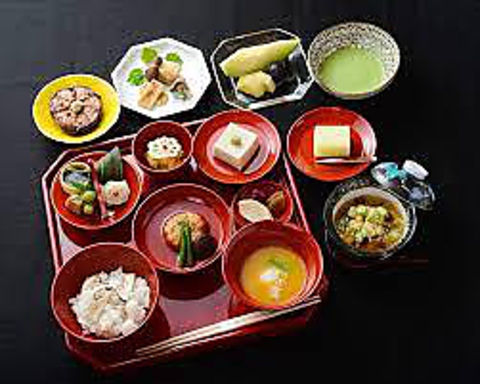
Shigetsu is a dining room inside the grounds of Tenryuji, a UNESCO World Heritage Site and one of Kyoto’s most historically significant Zen temples. The restaurant is directly operated by Tenryuji and serves shojin ryori — the traditional Buddhist monastic cuisine of Japan — throughout the year. Every dish is entirely free of animal-derived ingredients, not as a trend, but as a continuation of a centuries-old religious practice.
This is one of the clearest examples of animal-free cooking in Kyoto where the reason for the practice is documented and explained. The official website states: the cuisine uses “no animal-based ingredients whatsoever, relying primarily on vegetables, mountain vegetables, wild plants, and seaweed.”
Sustainability Practices
The exclusion of meat, fish, eggs, and dairy is grounded in Zen Buddhist doctrine, which the restaurant describes openly — making this a case where the basis for animal-free cooking is philosophical rather than trend-driven. Food scraps are composted as part of Tenryuji’s broader environmental stewardship, as noted on the official site.
Tenryuji Shigetsu has received both the Michelin Bib Gourmand (for quality) and the Michelin Green Star (for sustainable gastronomy) in the Michelin Guide Kyoto Osaka. The Green Star is one of the few externally verifiable markers of sustainability practice in the restaurant industry.
Who This Is Right For
- Travelers who value cultural and religious continuity as the basis for animal-free cooking, rather than a formal vegan certification
- Anyone visiting Arashiyama who wants to experience traditional Japanese dining inside a working Zen temple complex
- Visitors who use Michelin’s Green Star as a reference point for sustainable dining
- Those looking to understand shojin ryori — Japan’s oldest tradition of plant-based cuisine — from a primary source
Limitations and What Couldn’t Be Confirmed
Cross-contamination prevention procedures, utensil management protocols, and staff training practices are not described on the official website. Shojin ryori traditionally uses kombu (kelp) and shiitake mushroom broth — no fish stock — but a full ingredient list is not publicly available. If you need to confirm specific allergens or ingredient details, contacting the restaurant directly is recommended. No international vegan certifications (such as Vegan Trademark) are listed.
Info
Tabelog
Hot Pepper
2. CHOICE
Location: Higashiyama area / 3-minute walk from Higashiyama Station (Tozai Subway Line)
What This Restaurant Is
CHOICE is a fully vegan and gluten-free café-restaurant produced by Dr. Harue Suzuki, a plastic surgeon whose approach to diet is rooted in clinical observation. The official website states explicitly: “We do not use any animal-based ingredients, including dairy and eggs.” Every item on the menu is subject to the same standard.
The restaurant’s stated concept is Plant-Based Whole Foods — a framework that prioritizes less-refined plant ingredients over processed alternatives. The medical background behind the food philosophy is described on the official site, making this one of the few places in Kyoto where ingredient selection is tied to a documented healthcare rationale.
Sustainability Practices
According to the official website, the restaurant uses ingredients that are “organic, additive-free, and selected with care for origin and production method.” Because CHOICE operates exclusively as a vegan and gluten-free specialist, animal-derived ingredients are structurally excluded from the kitchen — not simply as a menu option, but as a baseline operating condition.
Who This Is Right For
- Travelers who need both vegan and gluten-free options in a single setting
- People who approach food from a medical, nutritional, or health-conscious framework
- Anyone who wants the structural guarantee of a dedicated specialist kitchen, where cross-contamination risk is reduced by design rather than by request
- Visitors exploring the Higashiyama area, near Nanzenji and the Path of Philosophy
Limitations and What Couldn’t Be Confirmed
No international or domestic vegan certifications (Vegan Trademark, V-Label, or equivalent) were found on the official website. Detailed ingredient-level disclosures — such as whether honey, bone char-refined sugar, or non-GMO sourcing are addressed — were not located. Supply chain information (farm names, regions of origin) is limited on the site. For deeper sourcing questions, direct inquiry is advised.
Info
Tabelog
3. TU CASA
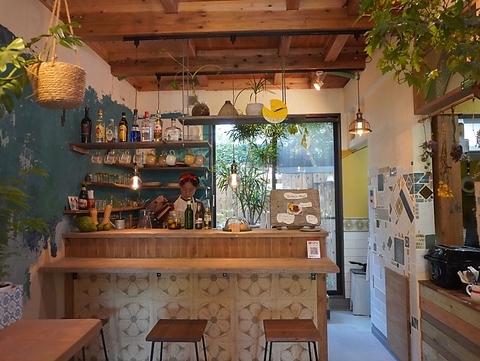
Location: Gion South / Miyagawacho area / 8-minute walk from Kiyomizu-Gojo Station (Keihan Line)
What This Restaurant Is
TU CASA is a plant-based café and bar attached to a guesthouse in the southern Higashiyama district. Its stated mission — “food that places as little burden as possible on the Earth’s environment” — extends well beyond the menu. The operation integrates zero-waste practices, renewable energy, and a bulk goods shop into a single space, positioning it as a lifestyle practice as much as a dining destination.
The official website notes that the café uses “local produce as much as possible, including naturally grown, organic, pesticide-free, and low-pesticide vegetables.”
Sustainability Practices
The restaurant runs on solar and natural energy, as documented on the official site. A zero-waste policy — no single-use containers or paper napkins are provided — is also publicly described. The café’s participation in 1% for the Planet (donating 1% of revenue to environmental causes) is confirmed via the official Instagram account. The phrase “food that’s kind to the earth, to animals, and to your body” appears in the restaurant’s official communications, indicating an explicit animal ethics dimension to the operation.
Who This Is Right For
- Travelers who want to engage with sustainability across food, waste, and energy — not just diet
- Visitors who prioritize locally sourced and organically grown ingredients
- People interested in ethical consumption beyond the plate, including the guesthouse stay itself
- Anyone passing through the southern Gion / Miyagawacho area
Limitations and What Couldn’t Be Confirmed
No international vegan certifications are listed on the official website. Specific information about cooking oil, broth ingredients, and seasoning sources is not available on the main site. Hours and operating days change frequently — checking Instagram before visiting is strongly recommended.
Info
Hot Pepper
Instagram: @tucasa_zerowaste
4. Mumokuteki Cafe
Location: Teramachi / Kawaramachi area / 5-minute walk from Kyoto Shiyakusho-mae Station (Karasuma Subway Line)
What This Restaurant Is
Mumokuteki Cafe serves an entirely animal-free menu under the concept ikiru wo tsukuru — loosely, “creating a way of living.” It functions as part of a larger complex that includes a café, a lifestyle goods shop, and a farm operation, all operating under the same name and philosophy. The restaurant is co-located with a retail store carrying vegan household goods and food products.
The official website documents that the restaurant sources rice from its own farm, mumokutekifarm, located in Miyama, Nantan City, Kyoto Prefecture, where it is grown without pesticides. Vegetables are sourced from contracted farms in the Kinki (Osaka-Kobe-Kyoto) region using low-impact agricultural methods.
Sustainability Practices
The restaurant’s menu descriptions confirm the use of kombu and shiitake dashi (plant-based broth), with no fish-derived stock. This is one of the clearer examples in this guide of a restaurant explicitly addressing its broth base. The farm-to-table supply chain, including the specific farm name and its location, is publicly disclosed on the official site — a level of supply chain transparency not common among the restaurants in this list.
Who This Is Right For
- Travelers who want confirmation that the broth and seasoning, not just the main ingredients, are plant-based
- Visitors interested in the relationship between the restaurant and the farms that supply it
- People who want to combine a meal with browsing vegan household goods
- Anyone in the central Kawaramachi district looking for a full-menu plant-based lunch
Limitations and What Couldn’t Be Confirmed
No international vegan certifications are listed. According to multiple external sources (not confirmed by the official site), some menu items during 2019–2020 included fish-based broth and honey. The current menu is entirely plant-based as of the official site’s present content, but the restaurant does not publicly describe this transition. If the timing of the switch matters to you, direct inquiry is the appropriate step.
Info
Tabelog
5. AIN SOPH. Journey KYOTO
Location: Kawaramachi / Shinkyogoku area / 3-minute walk from Kyoto-Kawaramachi Station (Hankyu Line)
What This Restaurant Is
AIN SOPH. is a vegan restaurant group founded in Ginza, Tokyo in 2009, with multiple locations across Japan. The Kyoto branch, opened in 2018, is located on Shinkyogoku — a covered shopping street that runs through the heart of Kyoto’s tourist center, making it one of the most accessible fully vegan restaurants in the city.
The official website states that the restaurant is a “café-restaurant serving completely plant-based (vegan) meals and sweets.” The English version of the site confirms the exclusion of meat, fish, dairy, eggs, honey, and other animal-derived products. Multilingual support makes this one of the more internationally navigable options in this guide.
Sustainability Practices
The official website states that the restaurant uses “domestic and seasonal ingredients as much as possible.” The restaurant’s participation in Asian Vegan Connect 2025 in Japan (September 2025) is documented in the official blog, indicating active involvement in the vegan community. As a multi-location group, consistent standards across branches are maintained through central operations.
Who This Is Right For
- Tourists who want a fully vegan meal in a central, high-traffic Kyoto location without advance planning
- Visitors who need English-language communication or menu assistance
- Those looking for a broad menu — including pancakes, burgers, and desserts — in a 100% plant-based setting
- Travelers who prefer the reliability that comes with an established, multi-location operation
Limitations and What Couldn’t Be Confirmed
Details about cross-contamination prevention, kitchen utensil management, and staff training are not described on the official website. Ingredient sourcing specifics — farm names, growing regions, procurement policies — are not publicly disclosed. The official site includes a disclaimer that allergen information “does not guarantee the prevention of allergic reactions,” and allergy-related needs should be confirmed with the restaurant in advance.
Info
Tabelog
6. Premarché Gelateria
Location: Sanjo / Horikawa area / 5-minute walk from Nijojo-mae Station (Tozai Subway Line)
Note: Premarché Gelateria is a gelato shop, not a sit-down restaurant. It’s included here as a supplementary option for travelers looking for a plant-based dessert or snack, not a full meal.
What This Shop Is
Premarché Gelateria is operated by Prema Co., Ltd., a natural food distributor based in Kyoto. The shop offers a NON MILK category of gelato that is entirely free of animal-derived dairy ingredients, clearly separated from dairy-containing options on the menu. The shop has received recognition at SIGA (the Sigep International Gelato Competition in Italy), as noted on the official website.
Sustainability Practices
The official site and related Prema company materials confirm a policy of using no refined cane sugar and no synthetic food additives or stabilizers. Prema’s background as a natural food distributor means ingredient sourcing and material selection are described with more specificity than is typical for a dessert shop.
Who This Is Right For
- Travelers looking for a plant-based dessert or snack rather than a full meal
- Those who care about sugar sourcing and additive content, not just dairy exclusion
- Anyone who wants clear category labeling that separates dairy-free from dairy-containing options
Limitations and What Couldn’t Be Confirmed
This is not a meal destination. No international vegan certification is currently listed on the official website. Details on allergen management and cross-contamination procedures are not publicly available — these can be requested directly from the shop.
Info
Tabelog
Context and Comparisons
What Is Shojin Ryori — and How Does It Relate to Veganism?
Shojin ryori (精進料理) is the Buddhist monastic cuisine of Japan, practiced in Zen temples for over a thousand years. It excludes all meat, fish, eggs, and dairy — and in many traditions, also avoids gokun (五葷), a group of pungent vegetables including garlic, scallions, and rakkyo (a type of Japanese shallot).
The overlap with veganism is substantial, but the framing is different. Shojin ryori is rooted in Buddhist ethics around non-harm to living beings (ahimsa), not in the contemporary Western vegan movement’s critique of industrial agriculture or its focus on reducing carbon emissions. Tenryuji Shigetsu represents this tradition in its clearest form: no animal ingredients, and a publicly stated reason why.
For travelers, the practical difference is this: a shojin ryori restaurant like Shigetsu may not hold a Vegan Trademark or any modern certification — but its animal-free commitment is centuries older than those certifications. Which framework you find more meaningful is a personal call.
Dedicated Vegan Restaurant vs. “Vegan Options Available”
A fully dedicated vegan restaurant means no animal-derived ingredients enter the kitchen at all. The structural risk of cross-contamination from shared fryers, shared grill surfaces, or shared cooking oil is significantly lower by design.
A restaurant with “vegan options” may offer entirely plant-based dishes while still operating a kitchen that handles meat, fish, or dairy elsewhere. This may or may not matter to you, depending on your reasons for eating plant-based and your sensitivity to trace cross-contact.
Among the restaurants in this guide, CHOICE, TU CASA, Mumokuteki Cafe, and AIN SOPH. are explicitly stated on their official websites to be 100% plant-based establishments. Tenryuji Shigetsu is plant-based by religious tradition. Premarché Gelateria offers a plant-based category within a shop that also serves dairy gelato.
What Does “Organic” Actually Mean Here?
When a Japanese restaurant says it uses “organic vegetables,” the specific meaning varies. It may refer to produce certified under Japan’s Organic JAS standard (the Japanese equivalent of USDA Organic), or it may be self-described without third-party certification. It might apply to all ingredients or only to select items.
The most reliable signal is whether the restaurant names specific farms, regions, or certification bodies. Among the places in this guide, Mumokuteki Cafe offers the clearest supply chain transparency: it names its own farm (mumokutekifarm, Miyama, Nantan City) and references its regional contracted farms by location.
What We Couldn’t Confirm from Official Sources
Across nearly all the restaurants in this guide, the following information was either absent or insufficiently detailed on official websites:
- Vegan certification status: No restaurant in this guide carries a publicly documented certification from The Vegan Society (Vegan Trademark), V-Label, Certified Vegan, or EVE Vegan, based on information available from official sources at the time of research
- Cross-contamination protocols: Details about utensil separation, cleaning procedures, and cooking order were not disclosed by any restaurant, including fully dedicated vegan establishments
- Sugar sourcing: Bone char-filtered sugar — flagged by vegan certification bodies like Vegan Action as an animal-derived processing agent — is not addressed by any restaurant in this guide
- Alcohol: Wine and beer are sometimes clarified using animal-derived fining agents (gelatin, egg white, isinglass). No restaurant in this guide addresses this on its official website
- Staff training: None of the restaurants publicly describes its staff education practices around vegan standards
- Detailed producer lists: With the exception of Mumokuteki Cafe’s farm disclosure, most restaurants use general language (“local farms,” “contracted producers”) without naming specific suppliers
These gaps are not unique to Kyoto. They reflect a broader reality in the restaurant industry globally: ingredient transparency at this level of detail is rare, and vegan certification in the foodservice sector remains uncommon in Japan.
A Note on Greenwashing
Words like “plant-based,” “organic,” “sustainable,” and “eco-friendly” appear frequently in restaurant marketing — and their definitions are inconsistently applied.
When a restaurant says “100% plant-based,” that claim may or may not be backed by third-party verification. Reading the basis for the claim — what the official site actually explains, what examples it provides, what it doesn’t address — is a more reliable approach than taking the label at face value.
“Organic” without certification cannot be externally verified. The presence of a farm name or a specific agricultural region is a stronger signal than a vague adjective. Similarly, when sustainability is claimed, ask whether there are specific, documented practices behind it — composting, energy sourcing, waste reduction — or whether it’s an atmosphere rather than an operation.
If you have questions that the official website doesn’t answer, contact the restaurant directly. How a restaurant responds to a specific, reasonable question about its ingredients is itself useful information.
Final Thoughts
The six places in this guide range from a UNESCO World Heritage temple serving century-old Buddhist cuisine, to a zero-waste guesthouse café running on solar power, to a gelato shop that takes sugar sourcing seriously. They don’t have a single thing in common except that they publicly describe what they’re doing — which, in the context of plant-based food in Japan, is rarer than it should be.
There’s no single “right” way to eat vegan in Kyoto. What matters is what you’re looking for.
A few questions that might help clarify that:
- Is third-party certification important to you — or is a long-standing cultural or religious practice an equivalent basis for trust?
- Do you need detailed sourcing information, or is a fully dedicated kitchen enough assurance?
- Are you looking for a meal, or for a place that extends its values into energy use, waste, and community?
- Are you comfortable following up with a restaurant directly when public information is incomplete?
You don’t have to answer all of these before you go. But knowing which ones matter most to you makes the choice easier.
This article is based on information sourced from each restaurant’s official website and official social media accounts. Menu content, operating hours, and location details are subject to change. Always confirm current information with official sources before visiting. Where information could not be confirmed from official sources, this article states so explicitly — no assumptions or inferences have been added.