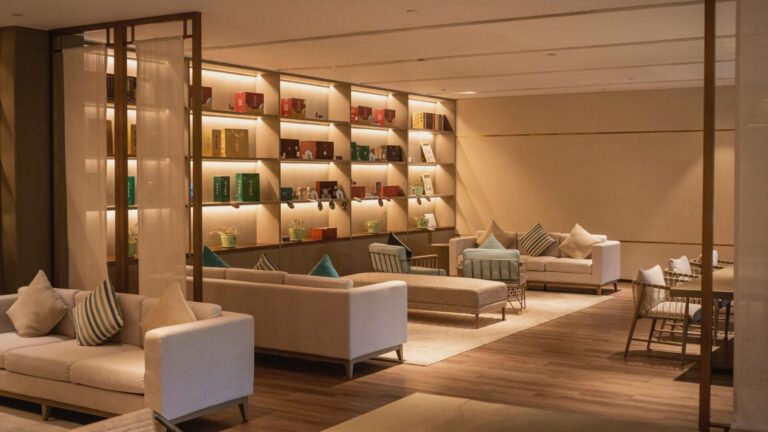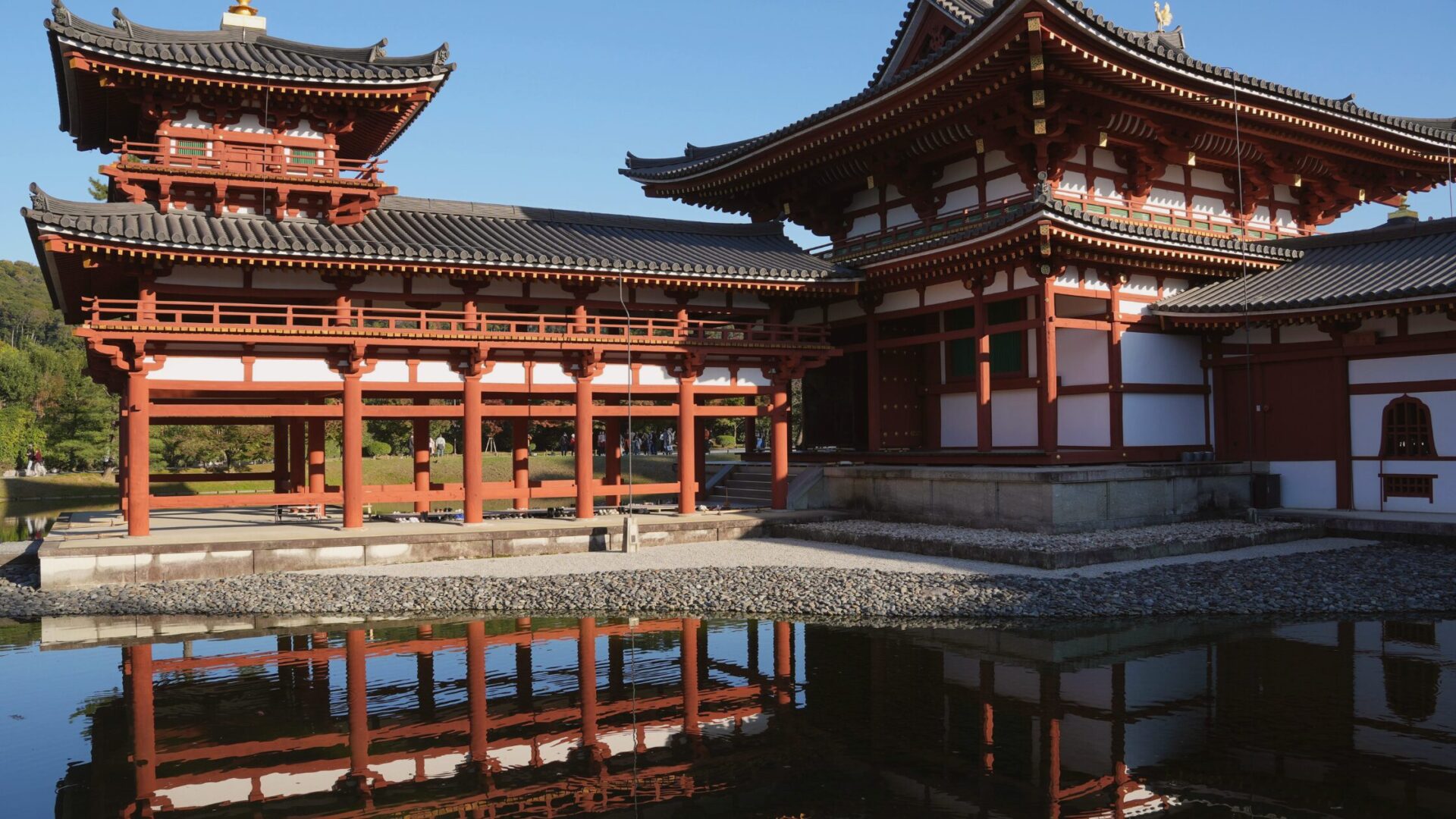

Quick Answer: The most thoroughly verified sustainable hotels in Kyoto include GOOD NATURE HOTEL KYOTO (GSTC-certified, direct farm sourcing), NOHGA HOTEL KIYOMIZU KYOTO (local artisan partnerships, city sustainability award recipient), and THE THOUSAND KYOTO (Green Key certified, 10+ years of community clean-ups). All 15 hotels in this guide were evaluated against 12 criteria using only official city, government, and third-party certification sources.
Why Choosing a Sustainable Hotel in Kyoto Actually Matters
Kyoto receives tens of millions of visitors every year. The city’s temples, traditional craft districts, and farm landscapes are beloved worldwide — but they’re also under pressure. Overtourism is pushing local residents out of historic neighborhoods, and the cultural institutions that make Kyoto extraordinary depend on revenue that doesn’t always flow back to the communities creating the experience.
Sustainable travel in Kyoto isn’t just about reducing your carbon footprint. It’s about making sure the money you spend on accommodation reaches the farmers growing Kyoto vegetables, the weavers keeping 500-year-old Nishijin textile traditions alive, and the neighborhood organizations that clean the streets your hotel sits on.
This guide cuts through the greenwashing. Every hotel listed here was evaluated using publicly available data from official sources: the Kyoto City official website (city.kyoto.lg.jp), hotel ESG and sustainability reports, Japan’s Ministry of Land, Infrastructure, Transport and Tourism (MLIT), and international certification bodies including GSTC and Green Key. Where information could not be officially confirmed, we say so explicitly.
How We Selected These 15 Hotels
Every hotel in this guide was evaluated against 12 criteria grouped into four categories. Information marked as confirmed was verified through official public sources. Information marked as unconfirmed / pending could not be verified at the time of research (2025) and is flagged transparently.
Criterion 1: Direct Economic Return to the Local Community
- Registration in Kyoto City’s SDGs Promotion Partner Program, with confirmed registration number
- Public disclosure of local procurement rate and/or local hiring rate (as a percentage) via official ESG report or website
- Direct purchasing relationships with local farmers or artisans, with supplier names publicly listed
Criterion 2: Support for Traditional Culture and Artisan Skills
- Integration of traditional crafts (textiles, ceramics, lacquerware) into guest rooms with ongoing, documented ordering relationships — not one-time decoration
- Guest experience programs that channel revenue directly to temple or workshop maintenance
- Verified partnerships with local sake breweries, festivals, or traditional events, as confirmed by prefectural or municipal official records
Criterion 3: Coexistence with Local Residents
- Documented employment of local residents in management-level positions
- Published guidelines for guests addressing overtourism issues (crowding, noise, waste)
- Publicly reported participation in neighborhood clean-ups or community dialogue activities
Criterion 4: Revenue Transparency and Governance
- Hotel operating company headquartered in Kyoto, or third-party verification of regional contributions
- Automatic donation mechanism that routes a portion of room revenue to Kyoto environmental or heritage organizations
- Official recognition from Kyoto City or Japan Tourism Agency in the area of sustainable tourism
Related article: Sustainable Hotels in Kyoto: What 7 Properties Actually Disclose (and What to Look For)
The 14 Best Sustainable Hotels in Kyoto
01. GOOD NATURE HOTEL KYOTO
Farm-to-table dining, GSTC-certified, with zero food waste — in central Kyoto
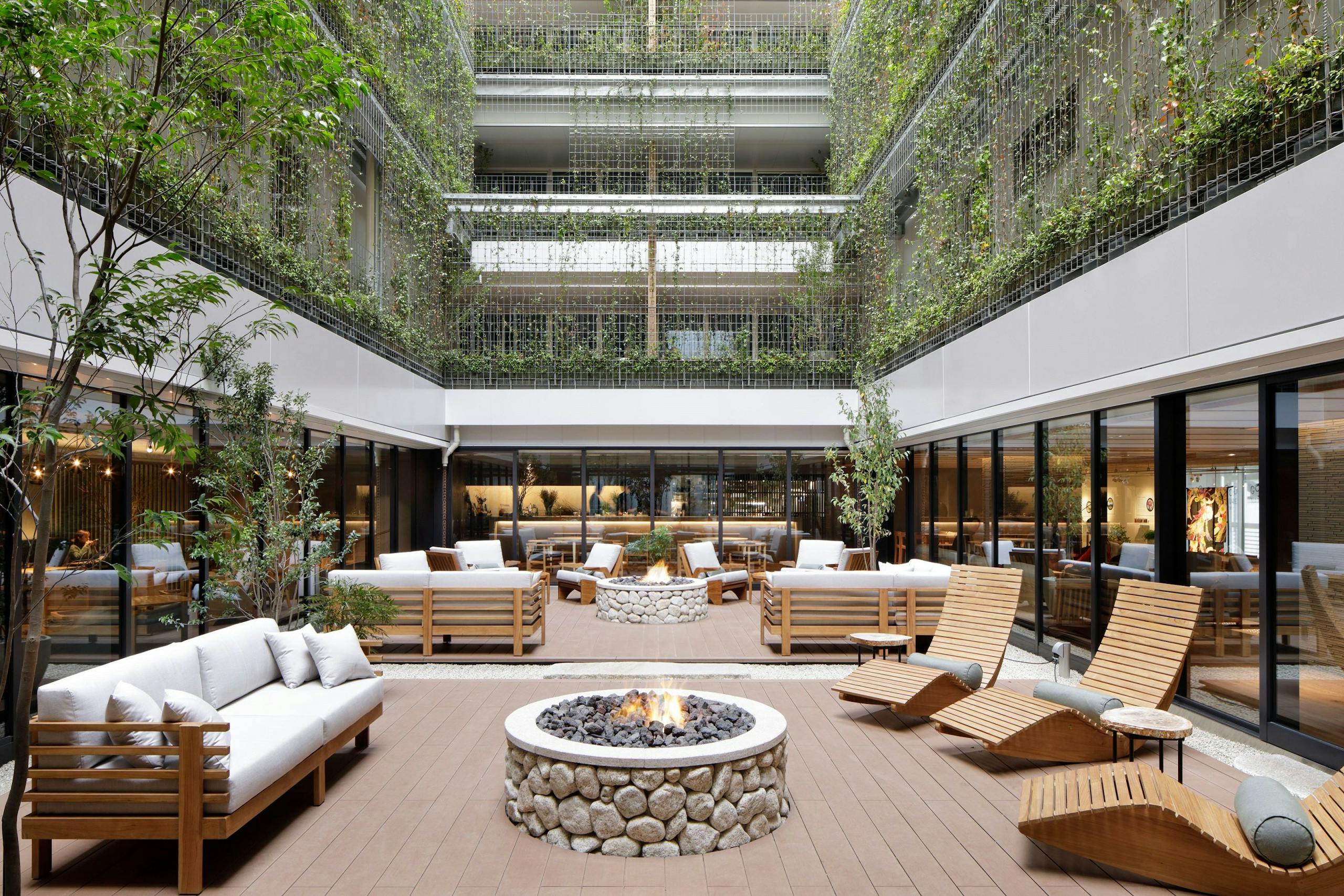

📍 Location | Shimogyo Ward, Karasuma-Shijo
🌿 Sustainability Highlights | GSTC-certified (confirmed via official hotel site) / Direct sourcing from affiliated farms / 100% food waste recycled
✨ Atmosphere | Natural wood and living greenery throughout — an urban retreat that feels like stepping into a forest
💴 Price Range | From ¥35,000/night (~$230) — seasonal variation
The ground-floor restaurant sources vegetables directly from partner farms in the Kyoto region. This includes “misshapen” produce — cucumbers that curve, carrots with blemishes — that never makes it to supermarket shelves. Rather than discarding imperfect vegetables, the kitchen incorporates them into daily menus. The hotel publicly discloses that 100% of food waste is recycled, and this figure is available on their official website.
In-room amenities use plant-derived ingredients sourced from the Kyoto area, and single-use plastic packaging has been significantly reduced. At check-in, guests receive a card introducing the farmers and producers whose work is represented in their stay — a small but telling detail about how seriously the hotel takes the idea of transparent supply chains.


Why It Was Selected
GOOD NATURE HOTEL KYOTO holds GSTC certification — one of the most rigorous international sustainability standards, evaluating hotels across environment, culture, community, and governance. The hotel is registered as Kyoto City SDGs Promotion Partner (Registration No. 185, under operating company Bio-Style Co., Ltd.) and holds a WELL Health-Safety Rating. These are third-party verified facts, not self-reported marketing claims. The hotel’s own farm, “GOOD NATURE FARM,” ensures direct sourcing that puts money directly into farmers’ hands rather than through intermediaries.
Unconfirmed: An automatic per-booking donation model and a dedicated cultural experience-to-venue donation program could not be confirmed through official public sources at the time of this writing.
Book here
Ikkyu
 JTB
Expedia
Rakuten Travel
Yahoo!Travel
Rurubu Travel
Jalan
JTB
Expedia
Rakuten Travel
Yahoo!Travel
Rurubu Travel
Jalan
02. NOHGA HOTEL KIYOMIZU KYOTO
Local artisan pieces used as everyday objects — not decorations — on Kyoto’s historic pottery slope


📍 Location | Higashiyama Ward, Gojo-zaka
🌿 Sustainability Highlights | Direct partnerships with neighboring artisans / Sponsorship of local festivals with documented financial contributions / City sustainability award recipient
✨ Atmosphere | Where the pottery kilns of Gojo-zaka meet modern hospitality — craft and everyday life intersecting
💴 Price Range | From ¥28,000/night (~$185)
The small dish on your room’s table was made in a workshop a few minutes’ walk from the hotel. It’s a lacquerware piece from Makino Lacquer Craft, layered by hand multiple times to achieve its depth of finish — and it’s used every day, not displayed behind glass. The woodblock prints on the wall come from Unsodo, a publisher operating continuously since the Edo period (17th century). Guests can purchase the same prints directly.
If your stay overlaps with the Gojo Wakamiya Ceramic Festival or the Ebisu Shrine Festival, hotel staff will guide you on how to participate — not just observe. The hotel actively sponsors these neighborhood events, contributing to ongoing maintenance costs, which means visitors can genuinely participate rather than watch from the outside. The hotel also participates in a Higashiyama Ward initiative called “Live Here! Higashiyama,” a trial residency program developed with the local ward office that aims to help tourists and permanent residents share the same neighborhood without friction.


Why It Was Selected
The hotel has received recognition in Kyoto City’s sustainable tourism awards program. What stands out most is how artisan relationships are structured: products aren’t purchased once for interior decoration — they’re ordered on an ongoing basis as functional room objects, repaired by the original craftspeople when damaged. This creates a reliable income stream for artisans, which is meaningfully different from a hotel simply buying local art as a one-time gesture. Local procurement rate as a specific percentage has not been publicly disclosed, which remains an area for improvement.
Book here
Ikkyu JTB
Expedia
Rakuten Travel
Yahoo!Travel
Rurubu Travel
Jalan
JTB
Expedia
Rakuten Travel
Yahoo!Travel
Rurubu Travel
Jalan
Hotels with Strong Cultural and Economic Contributions
03. THE THOUSAND KYOTO
Co-developed wine with a local Kyoto winery, Green Key certified, with a decade of community clean-ups

📍 Location | Shimogyo Ward, 1 minute walk from Kyoto Station
🌿 Sustainability Highlights | Green Key international certification / CO₂ and waste data disclosed in Keihan Group ESG Report / Co-developed wine with Tamba Wine (local Kyoto winery)
✨ Atmosphere | Stone, glass, and quiet lighting — upscale calm directly across from Japan’s busiest bullet train hub
💴 Price Range | From ¥40,000/night (~$265)
One minute from Kyoto Station — one of the busiest transit hubs in Japan — the lobby is designed to feel like a deliberate exhale. The wine list includes a label co-developed with Tamba Wine, a winery in Kameoka City, Kyoto Prefecture, producing wine from locally grown grapes. Breakfast menus incorporate imperfect-grade vegetables that would otherwise be discarded, prepared by the hotel’s kitchen team.
Staff participate in a neighborhood clean-up group called “The Society for Beautifying the Area Around Kyoto Station” twice a month. This has been ongoing since 2013 — more than a decade — and participation records are published on the hotel’s official SDGs page.


Why It Was Selected
Green Key certification, administered by the Foundation for Environmental Education, is a credible third-party standard focused specifically on measurable environmental performance. CO₂ emissions and waste recycling rates are disclosed at the Keihan Group level (the parent company), which is verifiable even if not hotel-specific. The operating company, Keihan Hotels & Resorts, is headquartered in Shimogyo Ward, Kyoto — meaning revenue remains within the local economy. The 10+ year history of documented community clean-up participation is an unusually concrete indicator of ongoing civic engagement.
Book here
Ikkyu JTB
Expedia
Rakuten Travel
Yahoo!Travel
Rurubu Travel
Jalan
JTB
Expedia
Rakuten Travel
Yahoo!Travel
Rurubu Travel
Jalan
04. Hotel Kanra Kyoto
Nishijin silk weaving on the walls, Kiyomizu-yaki ceramics on the table — and both are used daily, not displayed

📍 Location | Shimogyo Ward, Karasuma-Gojo
🌿 Sustainability Highlights | Nishijin weaving and Kiyomizu-yaki ceramics structurally integrated into room design / Partnership with “Light up the future NISHIJIN” project / City recognition in traditional industry promotion category
✨ Atmosphere | A reimagined machiya (Kyoto townhouse) — traditional craft materials in contemporary form
💴 Price Range | From ¥30,000/night (~$200)
About Nishijin weaving: Nishijin-ori is a silk textile tradition based in northwestern Kyoto, practiced for over 500 years. The cloth is woven on handlooms using techniques passed down through generations of artisan families. Hotel Kanra Kyoto uses this fabric as wall coverings — replacing conventional wallpaper. Because each panel is hand-woven, no two rooms look identical.
About Kiyomizu-yaki: Kiyomizu-yaki refers to Kyoto’s ceramic tradition centered near Kiyomizudera Temple. Glazing techniques produce slight color variations that make each piece unique. At Hotel Kanra, these ceramics are used as everyday tableware — not put in display cases. When a piece gets chipped or cracked, the hotel sends it back to the artisan for repair rather than discarding it.
Through the “Light up the future NISHIJIN” project, guests can purchase Nishijin weaving products directly from the artisans who made them — a direct market linkage that gives craftspeople economic access to international travelers who might not otherwise find their workshops.


Why It Was Selected
Kyoto City has formally recognized Hotel Kanra Kyoto in its traditional industry promotion category — confirming that the city itself regards this hotel’s artisan relationships as meaningful cultural support. The operating company, UDS Ltd., specializes in adaptive reuse of historic buildings across Japan, which aligns with the hotel’s overall approach to preservation over replacement.
Book here
Ikkyu Rakuten Travel
Yahoo!Travel
Rurubu Travel
Jalan
Rakuten Travel
Yahoo!Travel
Rurubu Travel
Jalan
05. Umekoji Potel Kyoto
Herb gardens grown with local agricultural high school students, composting food waste together


📍 Location | Shimogyo Ward, adjacent to Umekoji Park
🌿 Sustainability Highlights | Kyoto City SDGs Promotion Partner (6th cohort, certified January 2024) / Herb cultivation and composting program with neighboring agricultural high school / Monthly participation in local farmers’ market
✨ Atmosphere | A community hub where the park boundary and the hotel boundary blur — open to the neighborhood
💴 Price Range | From ¥22,000/night (~$145)
The hotel’s grounds include a herb garden maintained jointly with students from a nearby agricultural high school. Mint, thyme, and other herbs grown here go directly into the restaurant kitchen. Kitchen food scraps are composted through the high school’s composting program — and the resulting compost goes back to the garden. It’s a small but genuine closed-loop food system.
The hotel participates in a monthly local farmers’ market, maintaining direct face-to-face relationships with regional producers and shop owners. Staying here gives a tangible sense of a hotel functioning as part of its neighborhood rather than apart from it.

Why It Was Selected
The Kyoto City SDGs Promotion Partner designation (6th cohort, January 2024) is city-verified, not self-declared. The agricultural high school composting collaboration is a specific, documented activity — the kind of concrete community integration that goes beyond a hotel simply claiming to “care about sustainability.” Local procurement rate as a percentage and an automatic donation model are currently unconfirmed, making this a hotel to watch as its transparency practices develop.
Book here
Ikkyu JTB
Expedia
Rakuten Travel
Yahoo!Travel
Rurubu Travel
Jalan
JTB
Expedia
Rakuten Travel
Yahoo!Travel
Rurubu Travel
Jalan
06. Hotel Granvia Kyoto
SDGs training for all staff, sake brewery partnerships, and direct connection to Kyoto Station

📍 Location | Shimogyo Ward, directly connected to Kyoto Station
🌿 Sustainability Highlights | Kyoto City SDGs Partner registered / Verified partnerships with local sake breweries and traditional events / Structured SDGs training program for all employees
✨ Atmosphere | The scale and efficiency of a major transit-connected hotel, with genuine local engagement
💴 Price Range | From ¥20,000/night (~$130)
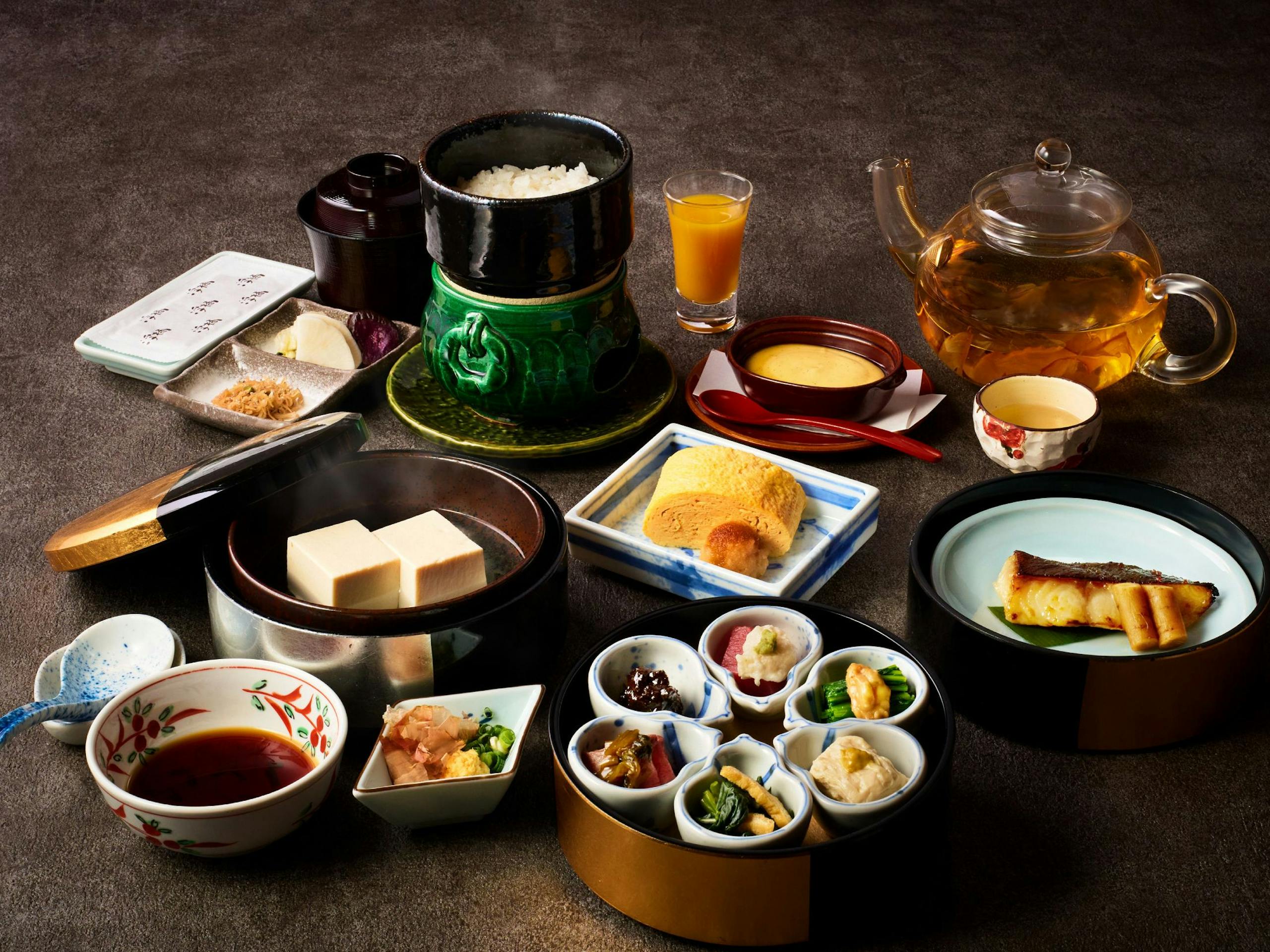
Hotel Granvia Kyoto connects directly to Kyoto Station, making it one of the most accessible hotels in the city for international travelers arriving by Shinkansen. All employees participate in a structured SDGs training curriculum that covers not only environmental awareness but also the relationship between Kyoto’s tourism industry and the communities it operates within.
The hotel’s restaurants and event spaces actively feature local sake brands and regional food products. For a hotel processing hundreds of thousands of overnight stays annually, consistent local purchasing at this scale creates a stable revenue stream for regional producers — which is a different kind of community contribution than smaller boutique properties can offer.
Why It Was Selected
Kyoto SDGs Partner registration and documented partnerships with local traditional events are confirmed. Local procurement rates as specific figures and an independent overtourism guest guideline have not been publicly confirmed at the hotel level (waste recycling rates appear in the JR Group ESG report). A hotel of this size disclosing granular local sourcing data would set a meaningful industry benchmark — and that potential makes it worth including and monitoring.
Book here
Ikkyu
JTB
Expedia
Rakuten Travel
Yahoo!Travel
Rurubu Travel
Jalan
07. Six Senses Kyoto
Adjacent to Sanjusangen-do Temple, with a global sustainability fund allocating 0.5% of revenue to environmental causes
📍 Location | Higashiyama Ward, Shichijo (Myohoin-Maecho)
🌿 Sustainability Highlights | Global sustainability fund (0.5% of revenue to environmental/social causes — Kyoto-specific application pending confirmation) / Direct sourcing of local Kyoto ingredients / Wellness programming integrated with local temple spaces
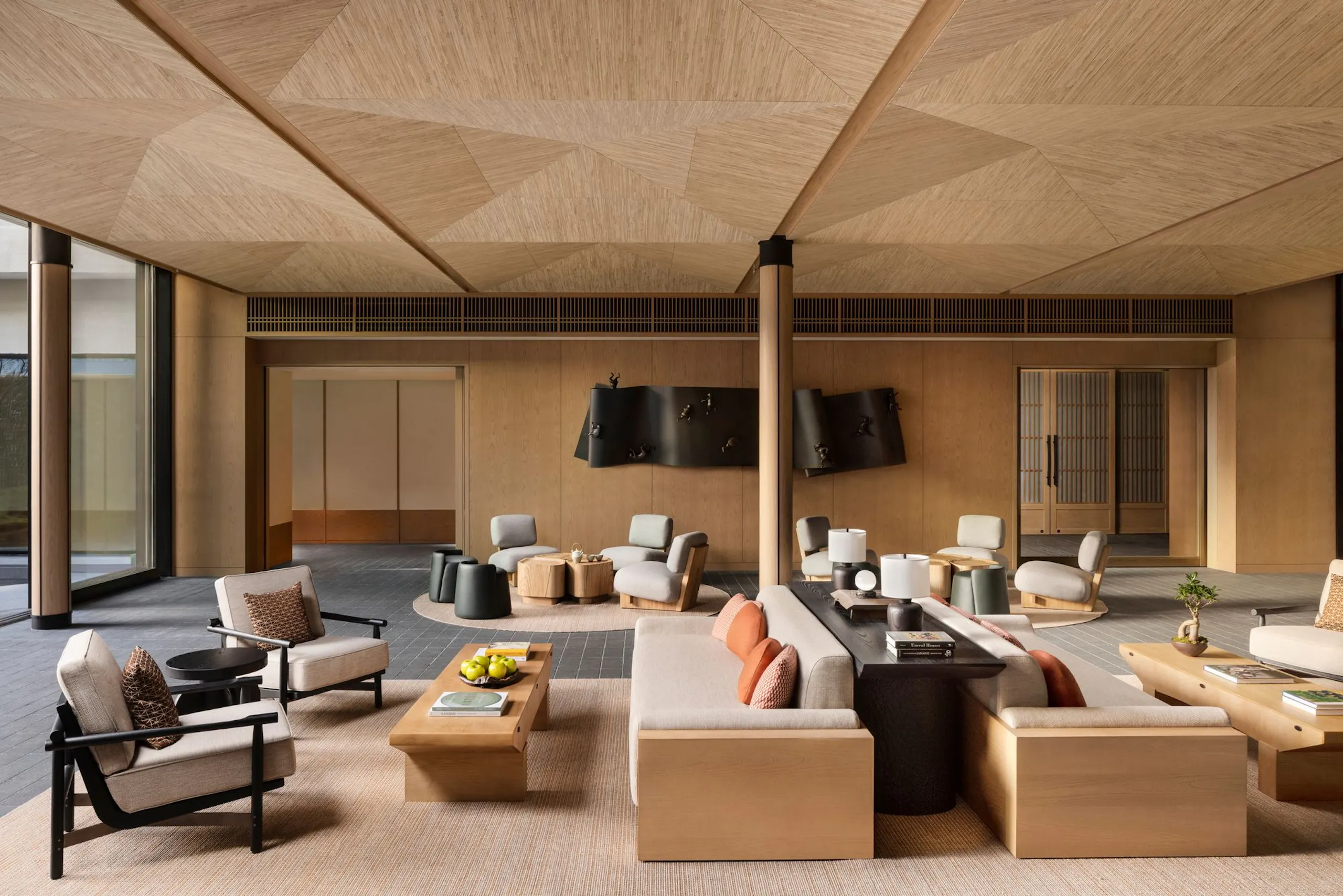
✨ Atmosphere | Surrounded by the greenery of Sanjusangen-do and Myohoin Temple — where Zen stillness meets global wellness philosophy
💴 Price Range | From ¥100,000/night (~$665)
Where it actually is: Six Senses Kyoto is located in the Shichijo area of Higashiyama Ward, adjacent to Sanjusangen-do — the 13th-century temple famous for its 1,001 life-sized warrior statues. It is not in the Okazaki area (near Heian Shrine) as sometimes misreported.
Six Senses operates a Sustainability Fund across its global properties, directing 0.5% of revenue toward local environmental and social initiatives. The fund exists as a confirmed global brand policy. Kyoto-specific application of this fund requires additional official confirmation, and is therefore marked as pending. If fully applied, this would make Six Senses one of the very few Kyoto hotels with a verified automatic per-booking donation mechanism — a criterion almost no hotels in this guide meet.
The wellness menu uses Kyoto-sourced ingredients. Yoga and meditation programs are designed around nearby temple spaces, giving guests a reason to engage with those sites as daily practice rather than tourist stops.

Why It Was Selected
Six Senses publishes sustainability metrics at a global brand level — verified numerical data is available, which distinguishes it from hotels that make qualitative claims without measurable backing. Local ingredient sourcing and traditional craft placement in rooms are confirmed. Because the operating company is not Kyoto-based, the question of how much revenue flows back into the local economy is a legitimate consideration. We include it here because its verified global practices and temple-adjacent cultural integration make it relevant to sustainability-minded travelers, while being transparent about what remains unconfirmed locally.
Book here
Ikkyu JTB
Expedia
Rakuten Travel
Yahoo!Travel
Rurubu Travel
JTB
Expedia
Rakuten Travel
Yahoo!Travel
Rurubu Travel
08. Watazen Ryokan
Founded in 1846: a 180-year-old inn on the Kamo River that interns local students and appears in national government sustainability case studies

📍 Location | Nakagyo Ward, Kiyamachi-Sanjo
🌿 Sustainability Highlights | 180+ years of continuous operation by a Kyoto-based family business / Ongoing internship program for local hospitality students / Listed in Japan Tourism Agency Sustainable Tourism Case Studies
✨ Atmosphere | The worn wood and sliding screens of a historic machiya inn on Kiyamachi-dori, with the Kamo River audible from the rooms
💴 Price Range | From ¥15,000/night (~$100)
What is a ryokan? A ryokan is a traditional Japanese inn, typically featuring tatami mat rooms, futon bedding, communal baths, and multi-course kaiseki meals. Watazen is one of Kyoto’s oldest continuously operating examples, founded in 1846 — before Japan’s Meiji modernization period.
The building has been continuously repaired and maintained rather than demolished and rebuilt. The wooden pillars and beams carry the visible wear of generations of use. Students studying hospitality and tourism from local universities intern here regularly, gaining hands-on experience working alongside permanent staff in real operations.
Japan’s Tourism Agency (under the Ministry of Land, Infrastructure, Transport and Tourism) has included Watazen in its official case study library for sustainable regional tourism — a form of government-level recognition that is independently verifiable.

Why It Was Selected
Operational longevity is its own form of sustainability. A building continuously repaired and used for 180 years represents a material choice — one that avoids the construction waste, resource extraction, and embodied carbon of repeated demolition and new builds. The Tourism Agency case study listing provides external, official validation of the inn’s local employment and community practices. Numerical ESG disclosures are limited on the inn’s own website, but the government documentation provides a credible independent record.
Book here
JTB
Rakuten Travel
Yahoo!Travel
Rurubu Travel
Jalan
Hotels Taking Meaningful Steps
09. Kyoto Hotel Okura
Founded 1888: a publicly listed Kyoto company that funds Gion Matsuri float maintenance


📍 Location | Nakagyo Ward, Kawaramachi-Oike
🌿 Sustainability Highlights | Kyoto City SDGs Partner (Registration No. 406) / Continuous financial sponsorship of Gion Matsuri festival floats / Listed publicly on the Tokyo Stock Exchange as a Kyoto-headquartered company
✨ Atmosphere | The formality of a grand city hotel with commanding views of Oike Avenue
💴 Price Range | From ¥25,000/night (~$165)
About Gion Matsuri: Gion Matsuri is one of Japan’s three great festivals, held every July and recognized by UNESCO as an Intangible Cultural Heritage. The highlight is the Yamaboko Junko — a procession of enormous wooden floats (yamaboko) through central Kyoto streets. Each float requires year-round maintenance and represents an annual operating cost in the hundreds of thousands of dollars. Funding from businesses like Kyoto Hotel Okura is not ceremonial — it’s structurally necessary for the festival to continue.
Founded in 1888, Kyoto Hotel Okura is operated by Kyoto Hotel Co., Ltd., a publicly listed company headquartered in central Kyoto. Its registration as Kyoto City SDGs Partner No. 406 is independently verifiable through the city’s official registry. This is a hotel whose sustainability commitments include supporting the kind of cultural infrastructure that makes Kyoto worth visiting in the first place.

Why It Was Selected
SDGs Partner registration, confirmed festival sponsorship, and local company headquarters are all verified. The hotel’s role in funding Gion Matsuri float maintenance is a particularly concrete example of tourism revenue cycling back into cultural preservation — which aligns directly with the core purpose of this guide. Local food sourcing data as a specific percentage has not been publicly disclosed.
Book here
Ikkyu
JTB
Expedia
Rakuten Travel
Yahoo!Travel
Rurubu Travel
Jalan
10. Ace Hotel Kyoto
The 1926 Kyoto Central Telephone Exchange building, preserved and converted — partnering with local craft platform KYOTO CRAFT FLOW

📍 Location | Nakagyo Ward, Karasuma-Oike
🌿 Sustainability Highlights | Preservation and adaptive reuse of a 1926 registered historic building / Partnership with KYOTO CRAFT FLOW local artisan marketplace / Operating company (NTT Urban Development) is a 1st-cohort Kyoto City SDGs Partner
✨ Atmosphere | Where the bones of a Taisho-era telephone exchange meet a globally recognized hotel brand — a creative collision in central Kyoto
💴 Price Range | From ¥38,000/night (~$250)
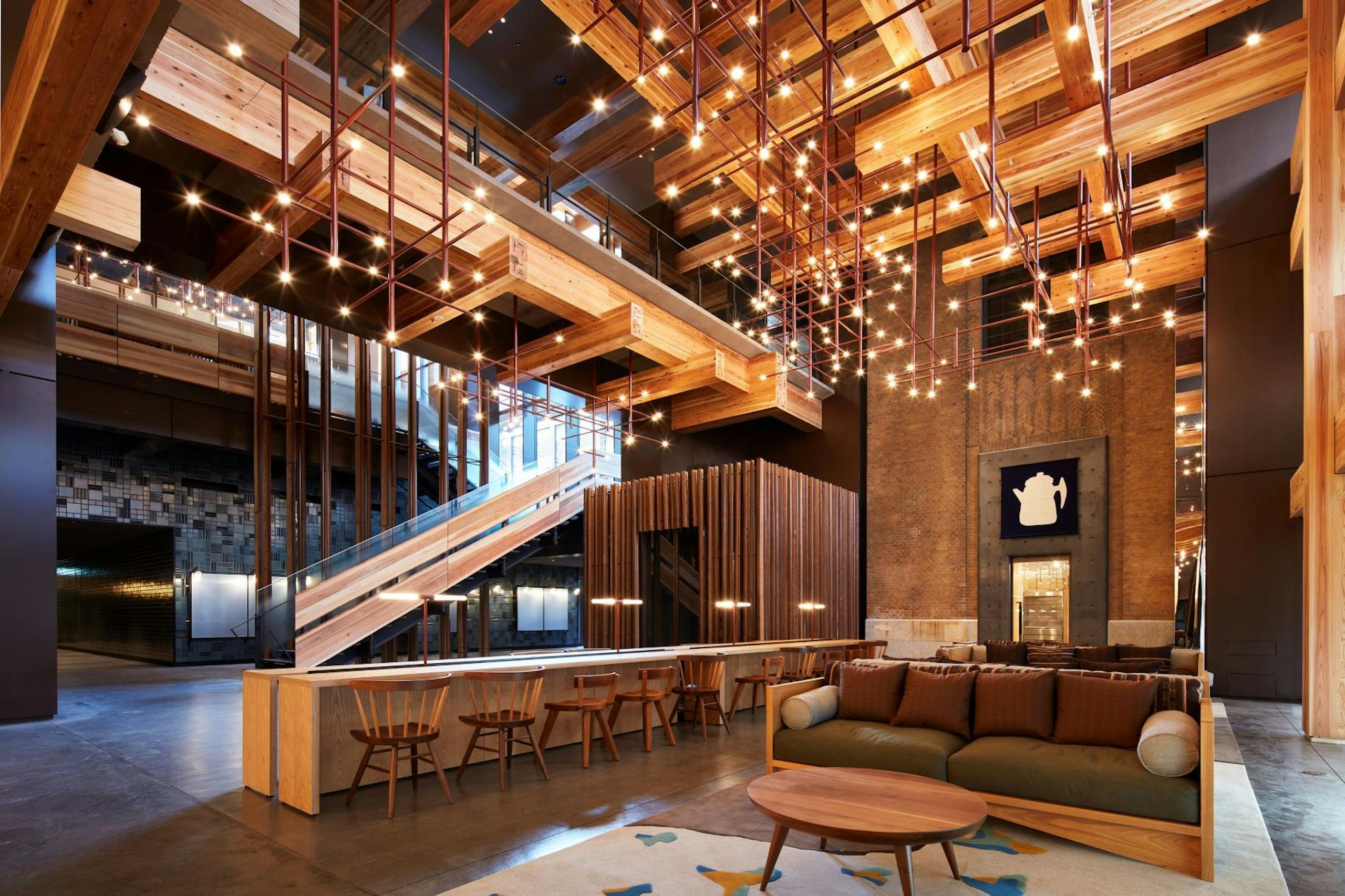
The building: The Kyoto Central Telephone Exchange was completed in 1926 during Japan’s Taisho period — a modernist landmark in a city better known for its classical architecture. Rather than demolishing it for new construction, Ace Hotel and developer NTT Urban Development preserved the exterior walls, original window frames, and structural elements, integrating them into the hotel’s lobby and common areas. The decision to preserve rather than demolish avoids the embodied carbon, construction waste, and resource consumption that comes with a new build.
KYOTO CRAFT FLOW is a local platform that connects Kyoto artisans — Nishijin weavers, ceramic artists, lacquerware makers — with buyers. Through this partnership, guests can purchase craft objects directly from the artists who made them, right in the hotel. This creates a direct market connection between international travelers and local craftspeople who might otherwise be difficult to find.
Why It Was Selected
Adaptive reuse of historic buildings is a sustainability practice with measurable environmental benefits: it reduces construction waste, conserves the energy embedded in existing materials, and preserves streetscape character. The KYOTO CRAFT FLOW partnership creates verifiable economic links between hotel guests and local artisans. Local food procurement data has not been publicly released, which remains a gap.
Book here
Ikkyu JTB
Expedia
Rakuten Travel
Yahoo!Travel
Rurubu Travel
Jalan
JTB
Expedia
Rakuten Travel
Yahoo!Travel
Rurubu Travel
Jalan
11. Mitsui Garden Hotel Kyoto Shinmachi Bettei
The architectural remnants of a Meiji-era department store warehouse, on the Gion Matsuri processional route
📍 Location | Nakagyo Ward, Shinmachi-dori
🌿 Sustainability Highlights | Preserved and integrated architectural remnants of the former Matsuzakaya Kyoto Purchasing Store / Active contributions to Gion Matsuri’s Kita Kannonyama float / Mitsui Fudosan Group registered as Kyoto City SDGs Partner
✨ Atmosphere | Stepping into a building that remembers its previous life — history layered into a functional modern hotel
💴 Price Range | From ¥28,000/night (~$185)
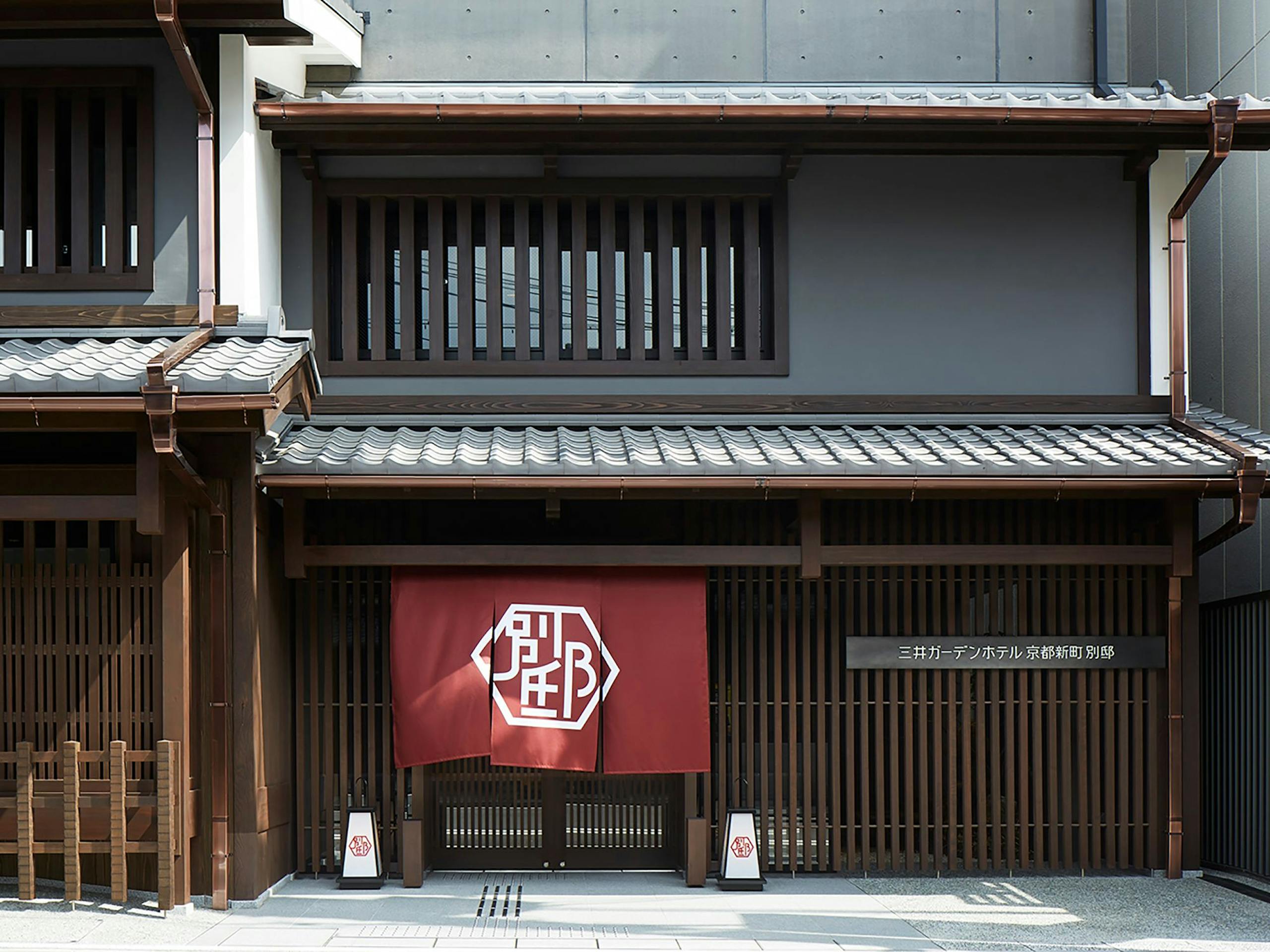
Shinmachi-dori is one of the streets that Gion Matsuri’s magnificent wooden floats travel along each July. The hotel occupies the site of the former Matsuzakaya Kyoto Purchasing Store — a Meiji-era department store warehouse — and has preserved original architectural elements, incorporating them into the entrance and shared spaces. Walking through the lobby, guests encounter design details from over a century ago.
The hotel maintains an active contribution to the Kita Kannonyama — one of the Gion Matsuri floats that travels Shinmachi-dori — as part of its community engagement. The hotel notes local ingredient use in its dining program, though direct producer relationships as specific named partnerships have not been publicly confirmed.
Book here
Ikkyu JTB
Expedia
Rakuten Travel
Yahoo!Travel
Rurubu Travel
Jalan
JTB
Expedia
Rakuten Travel
Yahoo!Travel
Rurubu Travel
Jalan
12. Hotel Alza Kyoto
Every room furnished with Nishijin silk, lacquerware, and karakami paper — a gallery hotel in the heart of Gion

📍 Location | Higashiyama Ward, Gion
🌿 Sustainability Highlights | Traditional crafts in every guest room (Nishijin weaving, lacquerware, karakami paper) / In-room gallery function that identifies each artisan / International luxury hospitality recognition for cultural preservation
✨ Atmosphere | Sleeping inside a working showcase of Kyoto craft — the lantern-lit streets of Gion visible from the window
💴 Price Range | From ¥45,000/night (~$300)
About karakami: Karakami is a hand-printed decorative paper technique with roots in the Heian period (794–1185). Historically used for sliding screen panels in Kyoto aristocratic homes, it involves pressing carved wooden blocks onto specialized washi paper using pigment-based inks. Each room in Hotel Alza uses karakami-decorated surfaces produced by artisans continuing this tradition.
Every guest room is furnished with Nishijin silk cushions, lacquered vanity mirrors, and karakami wall surfaces — all produced by different artisans, which means each room’s combination of materials is distinct. Corridors and common areas include informational panels with each craftsperson’s name, location, and technique. The craft pieces available in-room for purchase connect directly to the artisans — not to a hotel gift shop.
Book here
Ikkyu
Rakuten Travel
Yahoo!Travel
Rurubu Travel
13. Hyatt Regency Kyoto
University partnership for local talent development, daily food waste tracking, and a location beside Sanjusangen-do

📍 Location | Higashiyama Ward, Shichijo
🌿 Sustainability Highlights | Active local hiring under Hyatt’s “World of Care” framework / Daily food waste tracking and reduction program / Partnership with Kyoto Women’s University for hospitality education
✨ Atmosphere | International hotel standards directly across from one of Kyoto’s most awe-inspiring temples
💴 Price Range | From ¥80,000/night (~$530) — seasonal and plan variation
Hyatt Regency Kyoto sits directly opposite Sanjusangen-do — the 13th-century temple containing 1,001 life-sized gilded wooden statues of Kannon, the Buddhist deity of compassion. The cultural context of the location shapes the hotel’s programming.
Under Hyatt’s global “World of Care” sustainability framework, the hotel actively recruits from the local community with attention to workforce diversity. A partnership with Kyoto Women’s University provides hospitality students with paid practicum placements within hotel operations — a pipeline that invests in the next generation of Kyoto’s tourism workforce.
The kitchen tracks food waste daily, recording what’s used and what’s discarded to identify and address the root causes of loss. Local food procurement rates as Kyoto-specific percentages are not included in Hyatt’s global reporting, which is a gap in transparency for local sourcing evaluation.
Book here
Ikkyu
JTB
Expedia
Rakuten Travel
Yahoo!Travel
Rurubu Travel
Jalan
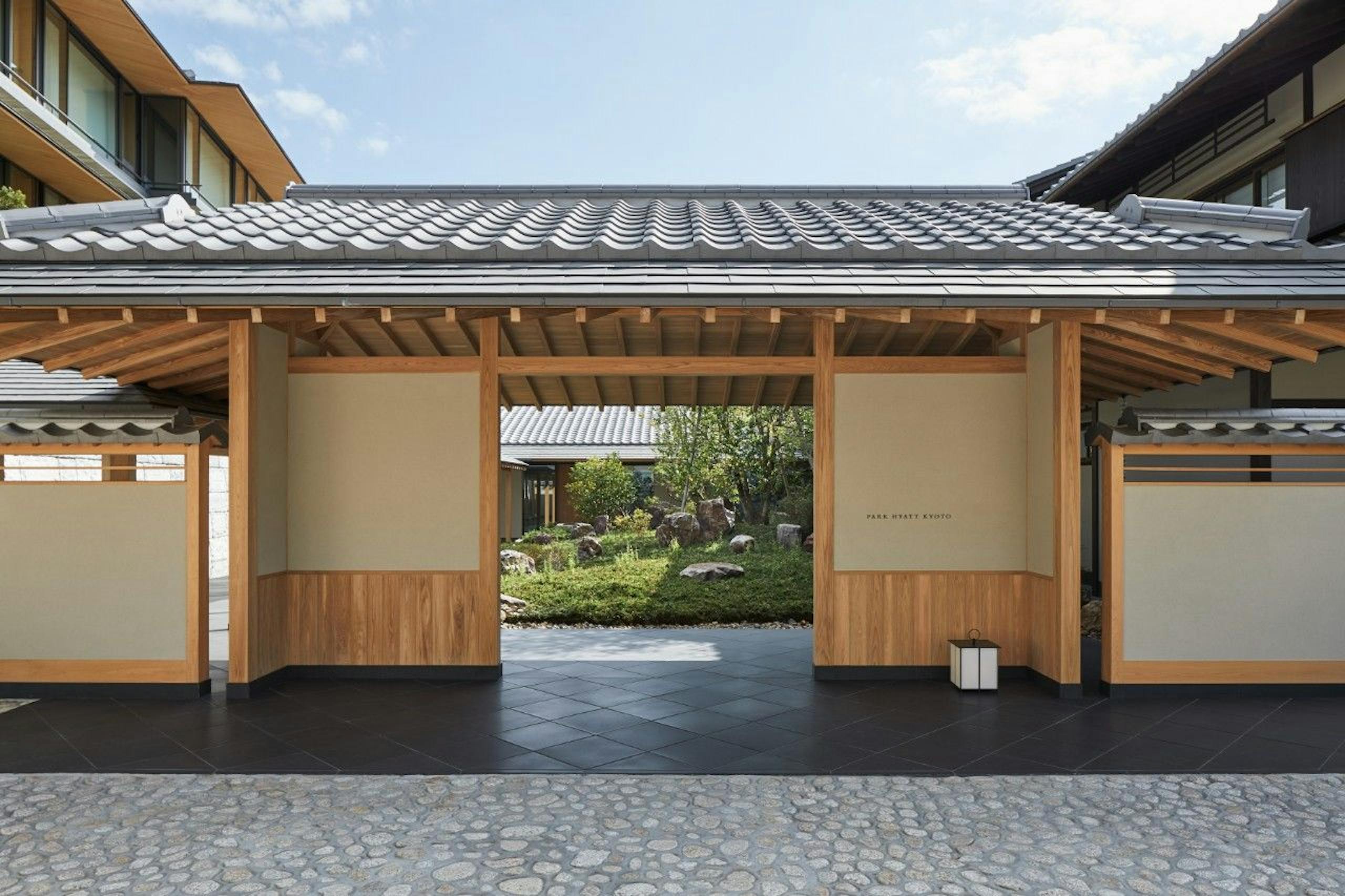
14. Park Hyatt Kyoto
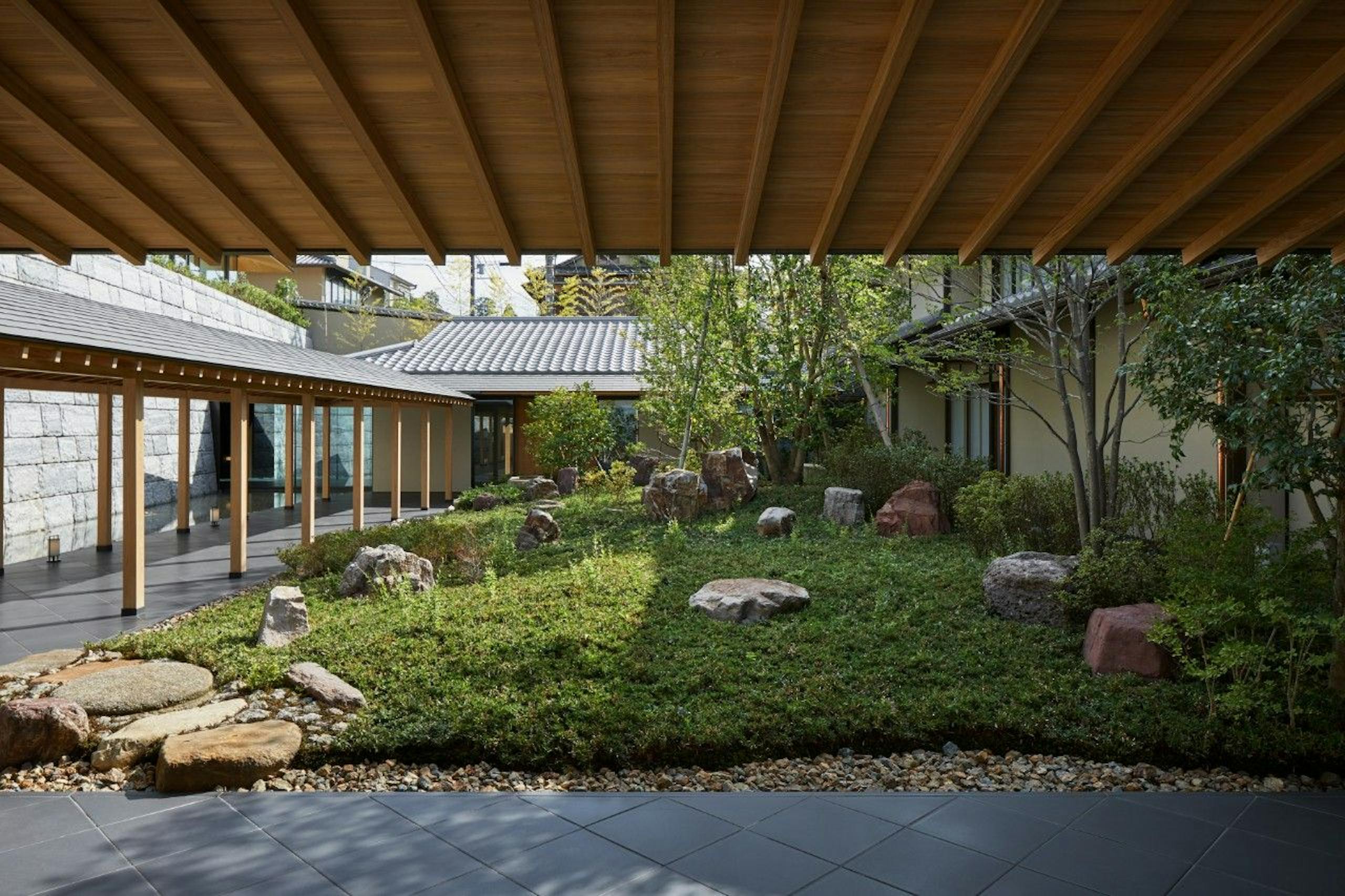
A 140-year-old traditional restaurant, a historic preservation district, and architecture designed not to disturb Higashiyama’s skyline
📍 Location | Higashiyama Ward, Kodaiji area
🌿 Sustainability Highlights | Co-existing with and preserving Sanso Kyodai, a 140-year-old traditional restaurant / Low-rise dispersed architecture within a nationally designated historic preservation district / BCS Prize recipient (Japan Federation of Construction Contractors architectural award)
✨ Atmosphere | The wooded ridge of Higashiyama in every window — a hotel designed to disappear into its landscape
💴 Price Range | From ¥120,000/night (~$800)
About Higashiyama’s preservation designation: The area around Kodaiji Temple is designated as an Important Traditional Building Preservation District (重要伝統的建造物群保存地区) under Japanese law. Development within these zones is strictly regulated to prevent visual disruption to historic streetscapes. Building height, roofline, materials, and color are all subject to approval. Park Hyatt Kyoto’s low-rise, dispersed architectural form was designed in compliance with these constraints — and the choice to build within them rather than lobby for exceptions is itself a form of institutional commitment to Kyoto’s cultural landscape.
About Sanso Kyodai: The traditional Japanese restaurant Sanso Kyodai has operated on adjacent land for over 140 years. Park Hyatt Kyoto shares the site while allowing the restaurant to continue operating independently — a coexistence model that preserves a long-standing cultural institution rather than displacing it.
The hotel received the BCS Prize from the Japan Federation of Construction Contractors, recognizing the architectural design’s success in balancing contemporary hospitality with historic preservation requirements. Official SDGs registration and local procurement data as specific figures are limited at this time.
Why It Was Selected
Not all sustainability is measured in percentages. The decision to build within a national historic preservation zone at this scale — forgoing height and density to protect a thousand-year-old streetscape — represents a form of environmental and cultural stewardship that matters regardless of what appears in an ESG report. We include Park Hyatt Kyoto because the framework for evaluating sustainable hotels should have room for preservation-as-practice, even when numerical disclosures are limited.
Book here
Ikkyu
JTB
Expedia
Rakuten Travel
Yahoo!Travel
Rurubu Travel
How to Spot Greenwashing Before You Book
Every hotel in Kyoto now uses the word “sustainable.” Most mean well. Some have the data to back it up. Here’s how to tell the difference in two minutes before booking.
Open the hotel’s official website and find their sustainability or ESG page. Then ask:
- Are specific farmers, artisans, or suppliers named? (Generic “local sourcing” claims without names are weak signals.)
- Are there actual numbers? (Percentage of local procurement, waste recycling rate, CO₂ reduction figures — these should exist if the commitment is real.)
- Is there documented community activity? (Clean-up participation counts, festival sponsorship amounts, internship program details.)
- Is the hotel registered with Kyoto City’s SDGs Partner Program? (You can verify this independently at city.kyoto.lg.jp.)
Silence on these points is informative. A hotel that genuinely integrates sustainability into operations has things to report — and publishes them.
Frequently Asked Questions
What makes a hotel truly sustainable in Kyoto? In Kyoto’s context, genuine sustainability means verifiable contributions to local economic circulation (documented local sourcing), cultural preservation (ongoing artisan partnerships, not one-time purchases), community coexistence (overtourism guidelines, neighborhood participation), and transparent governance (publicly disclosed data). Self-declared “eco” branding without official registration or third-party certification is a weak indicator.
Which Kyoto hotel has the strongest international sustainability certification? GOOD NATURE HOTEL KYOTO holds GSTC (Global Sustainable Tourism Council) certification, which is the most comprehensive international framework, evaluating environmental, social, cultural, and governance dimensions simultaneously. THE THOUSAND KYOTO holds Green Key certification, which focuses specifically on environmental performance metrics.
Are sustainable hotels in Kyoto more expensive? Not necessarily. Watazen Ryokan starts from approximately ¥15,000/night (~$100) and holds government-verified sustainability recognition. Umekoji Potel Kyoto starts from ¥22,000/night (~$145) with city SDGs Partner certification. Sustainable practices appear across the full price spectrum in this guide.
What is Kyoto City’s SDGs Promotion Partner Program? It is an official registration system administered by Kyoto City government for businesses that make verifiable commitments to the UN Sustainable Development Goals. Registration numbers are publicly listed on the city’s official website (city.kyoto.lg.jp) and can be independently verified. Hotels in this guide with confirmed registration numbers include GOOD NATURE HOTEL KYOTO (No. 185), Kyoto Hotel Okura (No. 406), and others.
What does “judgment pending” or “unconfirmed” mean in this guide? It means the specific claim could not be independently verified through official public sources — the hotel’s own website, Kyoto City records, Tourism Agency documents, or international certification registries — at the time of research. It does not mean the claim is false. It means it should not be taken as confirmed fact without additional verification.
How do I verify a hotel’s SDGs Partner status myself? Visit city.kyoto.lg.jp and search for the SDGs Promotion Partner registry. Registered organizations are listed publicly with their registration numbers and activities.
Suggested Itinerary by Commitment Level
If transparency and data matter most to you: Start with GOOD NATURE HOTEL KYOTO (GSTC certified, food waste data published) or THE THOUSAND KYOTO (Green Key certified, 10+ years of documented community clean-ups).
If supporting traditional crafts is your priority: NOHGA HOTEL KIYOMIZU KYOTO (artisan room objects with ongoing relationships) or Hotel Kanra Kyoto (Nishijin weaving and Kiyomizu-yaki as daily-use items, with a direct purchase pathway to artisans).
If connecting with local community feels most important: Watazen Ryokan (student internships, government case study recognition) or Umekoji Potel Kyoto (agricultural school composting partnership, monthly farmers’ market).
If historic preservation matters to you as a form of sustainability: Ace Hotel Kyoto (1926 telephone exchange adaptive reuse), Park Hyatt Kyoto (historic preservation district compliance, 140-year restaurant coexistence).
All information in this guide is based on publicly available official sources: individual hotel websites, Kyoto City official website (city.kyoto.lg.jp), Japan Tourism Agency (MLIT) documentation, and international certification body registries including GSTC and Green Key. Research reflects publicly available information as of 2026. Prices are approximate and subject to seasonal variation. Please verify current information directly with each hotel before booking.